
A Barbet can be a bright, affectionate companion, especially if you enjoy walking, swimming, and training. Its friendly nature can make ownership feel easy at first.
Yet its curly coat, active mind, and sensitive temperament require steady care.

The worst Barbet owner pitfalls usually come from underestimating daily coat care, exercise, socialization, health screening, and long-term costs. Planning for these needs before your dog comes home helps you prevent stress, discomfort, and avoidable behavior problems.
1. Skipping Daily Line Brushing Before Mats Reach The Skin
A Barbet’s curls can hide tight tangles close to the skin. Waiting until you can see a mat often means the knot has already become painful and may need clipping instead of gentle brushing.
Use a slicker brush in small sections, then check your work with a metal comb. Pay special attention to the ears, armpits, collar area, belly, and legs.
A short daily routine is easier on you and your dog than one long struggle each weekend. Keep sessions calm and reward cooperation.
If the comb cannot pass through a section, stop pulling and ask a professional groomer for help.
2. Treating A Water Retriever Like A Low-Energy Doodle
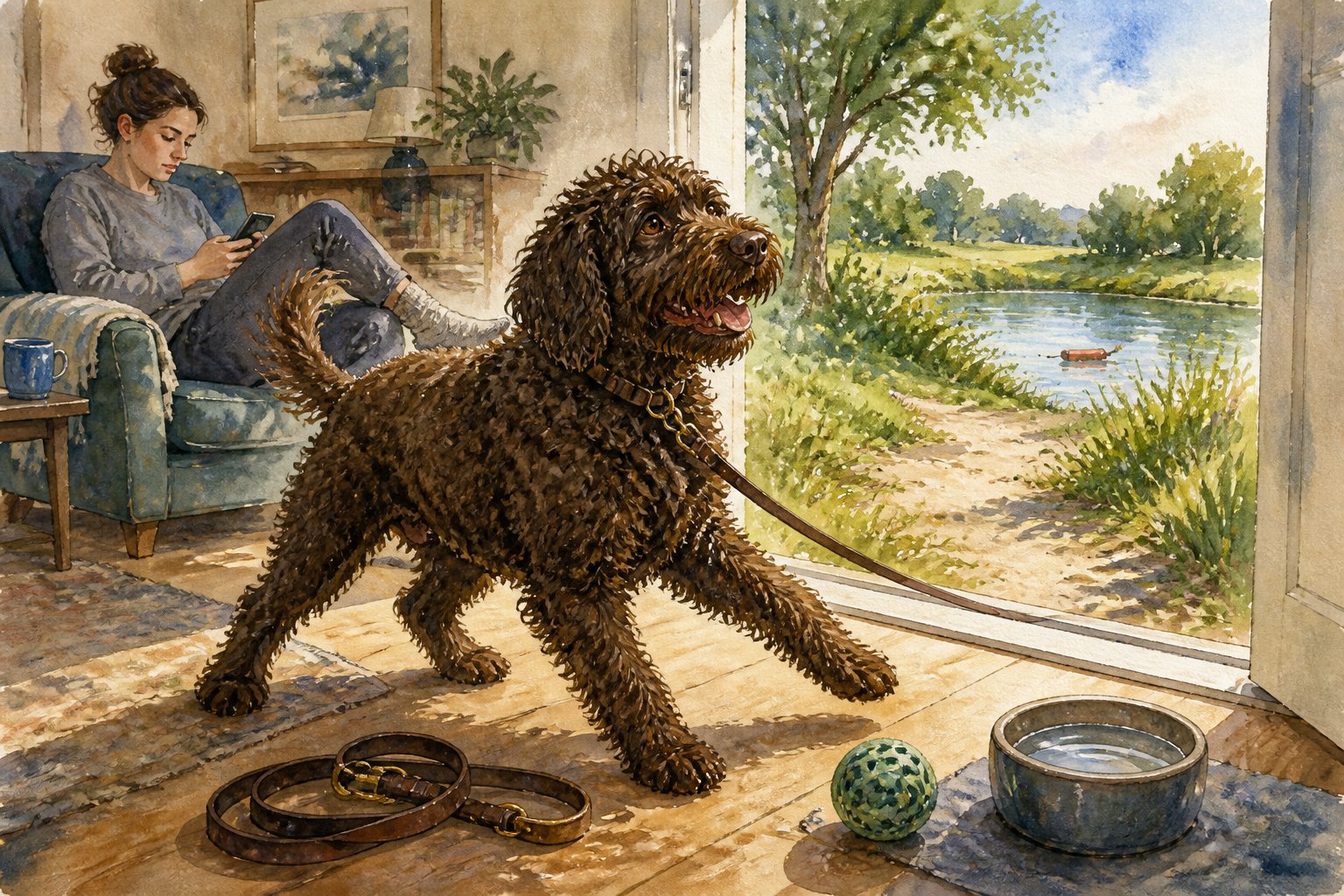
A Barbet was developed to work around water and retrieve game. A quick bathroom walk rarely meets the needs of a healthy adult, especially when your dog receives little mental activity.
Build variety into your routine with brisk walks, fetch, swimming, scent games, hiking, or short training sessions. You do not need to exhaust your dog every day, yet you do need consistent outlets for movement and problem-solving.
Watch for warning signs such as chewing, barking, pacing, or demanding behavior. These often point to an unmet need rather than a “bad” dog.
Give your Barbet a job before frustration becomes a habit.
3. Waiting Until Adolescence To Socialize A Sensitive Barbet

Early socialization helps your Barbet learn that new people, surfaces, sounds, dogs, cars, and handling can be safe. Waiting until adolescence can make unfamiliar experiences feel overwhelming.
Keep introductions brief and positive. Let your puppy observe from a comfortable distance, then offer treats or play.
Avoid forcing greetings, crowded dog parks, or rough interactions that teach your puppy to fear social situations. Include gentle practice with brushing, ear checks, nail handling, car rides, visitors, and calm dogs.
If your puppy freezes, hides, or refuses food, increase distance and slow down. A reward-based puppy class can provide structure without flooding your dog with stimulation.
4. Buying From An Unscreened Breeder Instead Of Reviewing OFA Results
A charming website and a friendly phone call do not prove that a breeder protects your puppy’s health. Before you place a deposit, request verifiable orthopedic, eye, and genetic health records for both parents.
Review results through the Orthopedic Foundation for Animals or an equivalent registry. Ask what each test covers, when it was completed, and whether any findings affect breeding plans.
A responsible breeder should answer clearly and share records without pressure. Pay attention to the breeder’s questions for you, too.
Someone focused only on payment may not provide reliable support. Ask to see where puppies are raised, meet the mother when possible, and receive a written contract with return and health provisions.
5. Using Harsh, Repetitive Training With A Soft-Natured Dog

Barbets are intelligent and often eager to cooperate, yet repeated corrections can make a sensitive dog hesitant. Yelling, leash jerks, or drilling the same cue after your dog is confused can damage trust and slow learning.
Use short sessions with clear rewards. Mark the behavior you want, then offer a treat, toy, or access to something your dog enjoys.
If your Barbet stops responding, change the exercise, lower the difficulty, or give a brief break. Practice real-life skills such as settling on a mat, coming when called, walking politely, and releasing toys.
A qualified reward-based trainer can help you solve problems without intimidation.
6. Leaving The Curly Coat Wet And Dirty After Swimming
Water, mud, leaves, and trapped debris can create tangles quickly in a Barbet’s dense curls. Moisture held against the skin may also contribute to odor, irritation, or hot spots.
Rinse your dog with clean water after swimming in ponds, lakes, pools, or saltwater. Check the ears, paws, belly, and areas beneath the collar.
Gently towel-dry, then use a pet dryer on a low, comfortable setting if your dog tolerates it. Do not aggressively brush a soaking-wet coat.
Remove large debris with your fingers, let the coat become partly dry, and work through small sections with care. Schedule a bath when dirt remains after rinsing.
7. Assuming A Fenced Yard Replaces Daily Training And Enrichment
A yard gives your Barbet room to move, yet it does not automatically provide exercise or purpose. Many dogs simply patrol the fence, chase distractions, or wait by the door after a few minutes outside.
Use the yard for structured games, recall practice, scent searches, and short obedience sessions. Rotate toys and hide treats so your dog has a reason to explore.
Supervise outdoor time, since barking and fence running can become self-rewarding habits. Your Barbet still needs walks and exposure to different places.
Those outings build leash skills, confidence, and calm behavior in the wider world.
8. Underestimating Grooming, Veterinary, And Professional Training Costs
A Barbet’s purchase price is only the beginning. You may need regular professional grooming, quality brushes, bathing supplies, preventive veterinary care, dental care, training classes, boarding, and emergency treatment.
Ask local groomers for pricing before you commit, and confirm that they have experience with dense, curly coats. Set aside money for unexpected care rather than budgeting only for routine visits.
Pet insurance or a dedicated emergency fund can reduce financial pressure when illness or injury occurs. Training support is also a practical expense, not a luxury.
Early help may prevent costly problems such as severe matting, reactivity, destructive behavior, or unsafe recall.
Before You Bring Home A Barbet
Time Available For Exercise, Training, And Coat Care
Plan for daily movement, brief training, and frequent coat checks. Puppies need supervision and routine, while adults still need varied physical and mental activities.
Access To A Skilled Curly-Coat Groomer
Find a groomer before your puppy arrives. Ask how often they recommend appointments, what length they suggest for your lifestyle, and how they handle nervous dogs.
Budget For Health Testing, Insurance, And Routine Care
Price preventive visits, vaccines, parasite control, grooming, food, supplies, training, and emergency care. Consider insurance or a savings account before you need either one.
Questions To Ask A Barbet Breeder
Which OFA Or Equivalent Health Clearances Are Available?
Ask for the parents’ documented orthopedic, eye, and genetic results. Confirm that the records belong to the dogs being bred and ask how findings influence breeding decisions.
How Are Puppies Socialized Before Placement?
Ask about household sounds, handling, grooming practice, visitors, safe outdoor exposure, crate training, and contact with stable adult dogs. Look for calm, age-appropriate experiences rather than constant stimulation.
What Support Is Provided After The Puppy Goes Home?
A dependable breeder should explain feeding, grooming, veterinary care, training, and emergency contact procedures.
Ask whether the contract includes a return policy.
Find out if the breeder remains available throughout your dog’s life.