
Bernese Mountain Dogs are affectionate, intelligent, and deeply attached to their families. Their calm expression can make care seem easy, yet their size, sensitivity, exercise needs, and health risks require thoughtful daily habits.

Most Bernese Mountain Dog owner mistakes come from mismatched expectations, inconsistent training, or missed health planning, not from a “bad” dog. Recognizing these problems early helps you raise a calmer, safer, and healthier Berner.
1. Underestimating How Much Daily Companionship a Berner Needs
Berners form strong bonds with their families and often struggle with long, sudden periods of isolation. Pacing, barking, drooling, destructive chewing, and frantic greetings can signal separation distress rather than disobedience.
Build alone time gradually. Start with brief departures while your dog remains calm, then increase the duration in small steps.
A stuffed food toy, a safe resting area, and exercise before you leave can help. Keep departures and arrivals quiet.
If your schedule regularly leaves your Berner alone for most of the day, consider a dog walker, sitter, family help, or professional behavior support. A sudden change in behavior deserves a veterinary check because pain or illness can also affect behavior.
2. Using Harsh Corrections With a Sensitive Dog
Bernese Mountain Dogs often respond poorly to yelling, leash jerks, intimidation, or physical punishment. You may see avoidance, lowered body language, slower responses, or a loss of trust instead of better manners.
Use reward-based training with clear limits. Mark the behavior you want, then provide a treat, praise, play, or access to something your dog enjoys.
Keep sessions short and upbeat, especially when teaching recall, stay, handling, or calm greetings. When your Berner makes a mistake, calmly prevent repetition and show an acceptable alternative.
A qualified positive-reinforcement trainer can help if fear, reactivity, or aggression appears.
3. Skipping Early Loose-Leash Training

A small puppy pulling may seem harmless until that puppy becomes a powerful adult. Berners can weigh 70 to more than 100 pounds, making leash habits a safety issue for you, your dog, and other people.
Begin indoors with a comfortable, well-fitted harness or flat collar. Reward your puppy for looking at you, walking beside you, and keeping the leash loose.
Move to quiet outdoor areas before practicing near traffic, crowds, or exciting dogs. If your Berner pulls, stop or calmly change direction rather than turning the walk into a tugging contest.
Frequent short practice sessions usually work better than one long walk filled with corrections.
4. Allowing Jumping Up as a Puppy
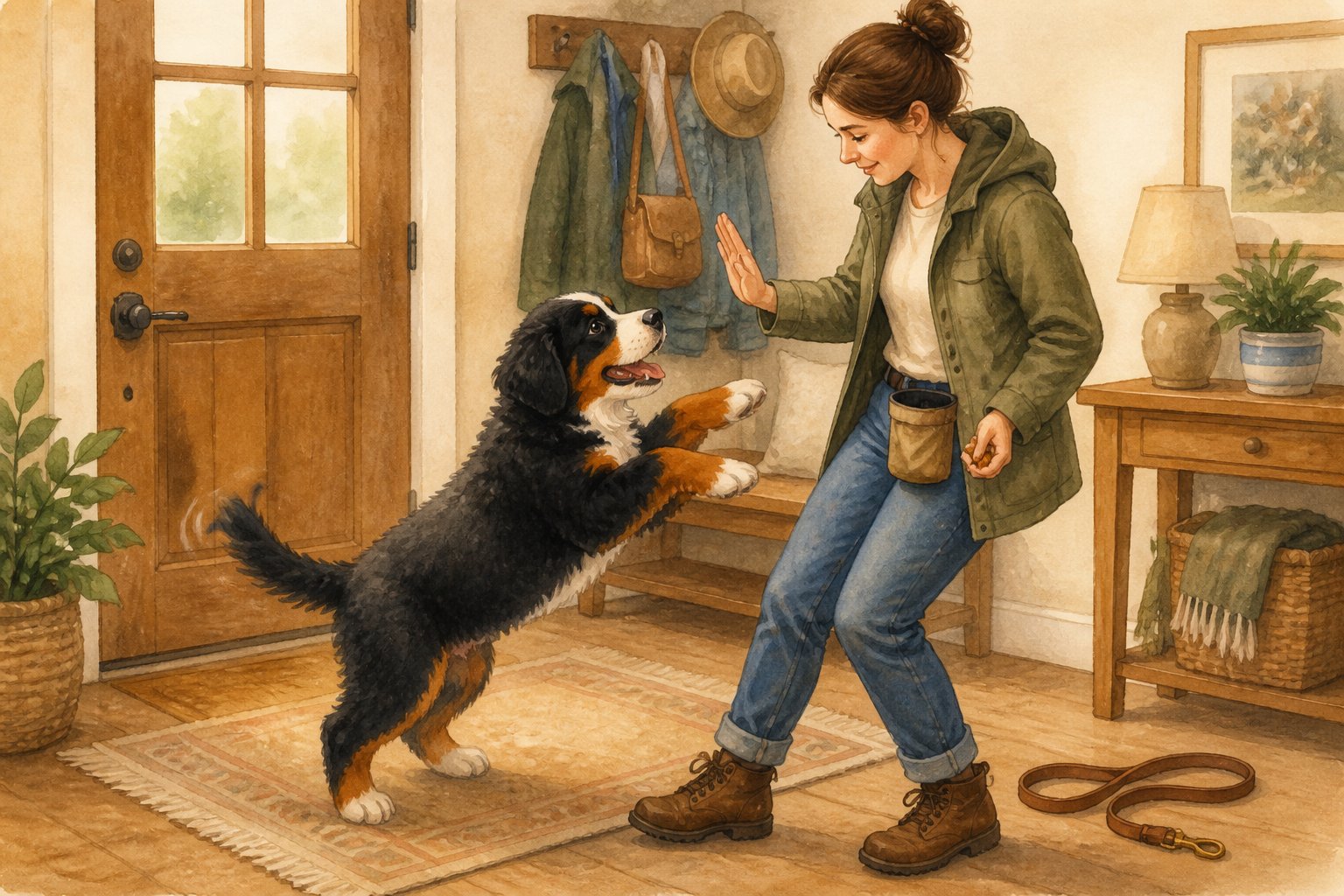
Puppy jumping is cute only until a large adult dog knocks over a child, soils clothing, or frightens a visitor. Every successful jump teaches your Berner that paws on people can earn attention.
Choose a replacement behavior, such as sitting or standing with four paws on the floor. Reward it immediately, and ask visitors to ignore jumping by turning away and keeping their hands still.
You may need to use a leash, baby gate, or separate room during greetings. Avoid pushing your dog down, since physical attention can reward the behavior or increase excitement.
Everyone in your home must follow the same greeting rule.
5. Leaving a Berner Alone Too Long Too Soon

A new puppy or recently adopted Berner needs time to learn that departures are temporary. Leaving for several hours before building that skill can trigger vocalizing, house-soiling, chewing, pacing, or attempts to escape.
Practice very short absences after your dog has exercised and relieved itself. Return before distress begins, then slowly extend the time.
A camera can reveal whether your dog settles or struggles after you leave. Use a dog-proofed area, comfortable bedding, and a safe enrichment toy.
A crate can help some dogs, but it should never be used as forced isolation or punishment. Persistent separation anxiety calls for a veterinary behaviorist or qualified trainer.
6. Waiting Until Adolescence to Start Consistent Training

Your Berner begins learning household habits from the first day home. Waiting until adolescence can make jumping, pulling, mouthing, poor recall, and selective listening harder to change.
Start with simple skills, including name recognition, sit, wait, leave it, recall, calm handling, and settling on a mat. Pair training with safe socialization to people, surfaces, sounds, grooming, car rides, and veterinary handling.
Keep expectations suitable for your puppy’s age and attention span. Several two-minute sessions can build more progress than one tiring lesson.
Reward calm behavior when you notice it, not only when you give a command.
7. Failing to Provide Enough Mental Enrichment
Berners need more than physical exercise. Without problem-solving activities, sniffing opportunities, training games, and social contact, your dog may invent entertainment through barking, digging, chewing, or restless behavior.
Rotate food puzzles, scatter feeding, scent searches, trick training, and supervised chew items. Hide treats around a safe room, practice name games, or teach your dog to place toys in a basket.
Match enrichment to your dog’s age, mobility, and temperament. Puppies need rest between activities, while older dogs may enjoy gentle scent work and short training sessions.
Mental work should leave your Berner satisfied, not frantic or overtired.
8. Punishing Chewing Instead of Managing and Redirecting It
Chewing is normal for puppies and can also increase with boredom, stress, teething, or discomfort. Punishment after you find damage teaches little, because your Berner may not connect the correction with the earlier action.
Prevent access to shoes, cords, furniture, and other tempting objects. Provide durable, size-appropriate chew toys, then praise your dog for choosing them.
If you catch inappropriate chewing, calmly trade the object for an approved item. Use gates, a pen, or a dog-proofed room when supervision is not possible.
Sudden or intense chewing in an adult dog may reflect anxiety, dental pain, or another medical concern.
9. Being Inconsistent About Household Rules
Your Berner cannot follow rules that change from person to person. If jumping earns attention from one family member but earns a correction from another, the behavior may become more persistent and confusing.
Agree on simple rules for furniture, greetings, feeding, doorways, barking, and sleeping areas. Use the same cue words and reward the same replacement behaviors.
Everyone should reinforce calm choices, including visitors when practical. Consistency does not mean rigidity.
You can allow couch access or relaxed greetings if those choices are safe and intentional. The key is making the rule clear and predictable.
10. Choosing a Puppy Without Reviewing Documented Health Tests
Bernese Mountain Dogs can face inherited concerns involving hips, elbows, eyes, the heart, blood clotting, and degenerative myelopathy. A friendly breeder and attractive puppy are not substitutes for documented health screening.
Ask to review verifiable records for both parents, not just verbal assurances. Look for orthopedic evaluations, cardiac and eye clearances, and relevant genetic results.
The breeder should also explain family longevity, causes of death, and recurring health patterns. Health testing cannot guarantee a problem-free dog, yet it improves informed decision-making.
Be cautious if records are missing, altered, difficult to verify, or replaced with vague statements about a puppy being “vet checked.”
11. Mistaking Stress or Overwhelm for Stubbornness
A Berner that stops, turns away, yawns, pants, hides, or ignores a cue may be stressed, tired, confused, distracted, or in pain. Calling the dog stubborn can lead you to increase pressure when your dog actually needs a break or clearer guidance.
Lower the difficulty, add distance from the trigger, and reward small signs of calm participation. Keep lessons brief and allow recovery after busy outings.
Watch patterns around heat, crowds, unfamiliar dogs, grooming, and handling. If a behavior changes suddenly, schedule a veterinary examination.
Pain, vision changes, illness, and medication effects can appear first as reluctance or unusual irritability.
How to Build Better Berner Habits
Use Calm, Reward-Based Guidance
Teach your Berner what to do instead of focusing only on what to stop. Reward loose-leash walking, four paws on the floor, quiet settling, coming when called, and voluntary cooperation during grooming.
Use food, praise, toys, and access to preferred activities. If your dog cannot respond, make the task easier rather than repeating the cue louder.
Create Predictable Daily Routines
A steady routine for meals, walks, training, rest, grooming, and alone time helps reduce anxiety. Predictability is especially useful for puppies, newly adopted dogs, and Berners that become unsettled by household changes.
Include planned naps and quiet periods. A dog that is constantly stimulated may become irritable, mouthy, or unable to settle.
Match Exercise and Enrichment to Life Stage
Puppies need controlled activity, socialization, training, and substantial sleep. Avoid forcing long runs, repetitive jumping, or strenuous stair work while bones and joints develop.
Healthy adults often benefit from walks, sniffing, hiking suited to their condition, training games, and social time. Older Berners may need shorter outings, softer surfaces, mobility support, and more frequent veterinary monitoring.
What Responsible Puppy Buyers Should Verify
OFA or PennHIP Hip and Elbow Results
Ask for official hip and elbow evaluations for both parents. OFA results and PennHIP measurements provide useful information about orthopedic risk, though no screening removes every possibility of joint disease.
Review the actual records and registered names. A breeder should explain the results clearly and discuss family history of hip dysplasia, elbow dysplasia, arthritis, and mobility problems.
Cardiac and Eye Clearances
Verify current heart and eye examinations completed by qualified veterinary specialists when recommended. These checks can identify concerns that a routine puppy examination may not detect.
Ask how often clearances are repeated and whether close relatives have developed heart disease, cataracts, or other eye problems. Keep copies with your puppy’s medical records.
DM and vWD1 Results
Ask for genetic test results for degenerative myelopathy and von Willebrand disease type 1. Learn whether each parent is clear, a carrier, or affected, and ask how the pairing affects the puppies.
A carrier is not automatically unhealthy, yet breeding decisions should prevent affected offspring. Your breeder should explain the results without hiding behind technical terms.
Berner-Garde Pedigree Records
Review Berner-Garde records, when available, for relatives, longevity, causes of death, and reported health conditions.
A broad pedigree view gives you more context than a single certificate.
Ask direct questions about cancer, bloat, orthopedic disease, heart problems, and lifespan in the family.
Responsible breeders welcome careful questions and provide records that support their claims.