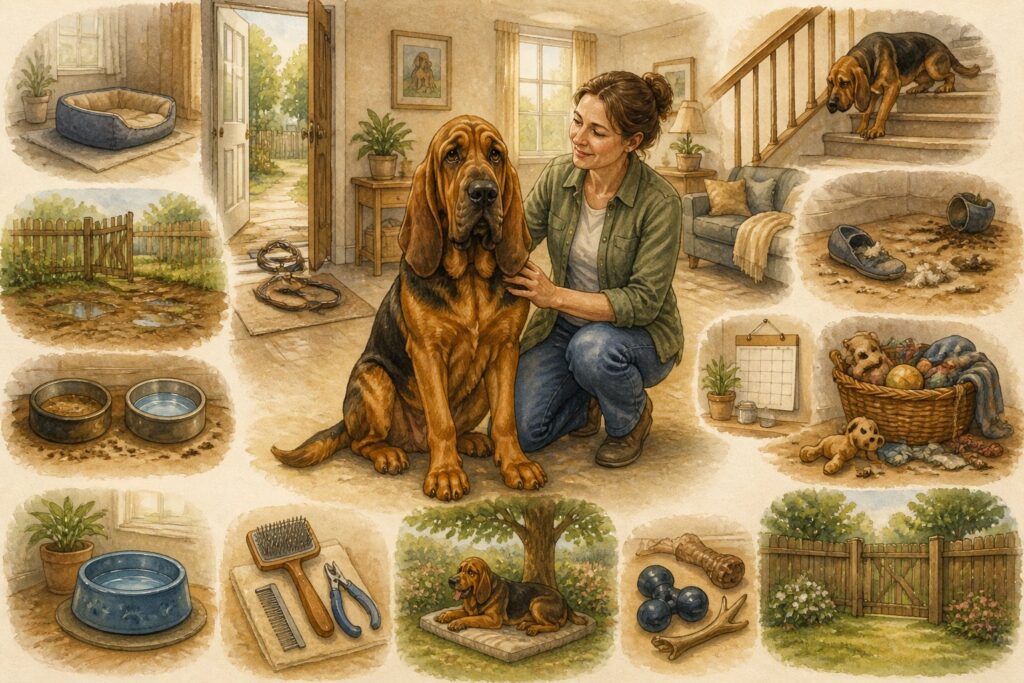
Bloodhounds are affectionate, intelligent, and remarkably driven by scent. Those traits make them rewarding companions, yet they can also create serious safety and training challenges when you rely on ordinary dog-ownership habits.
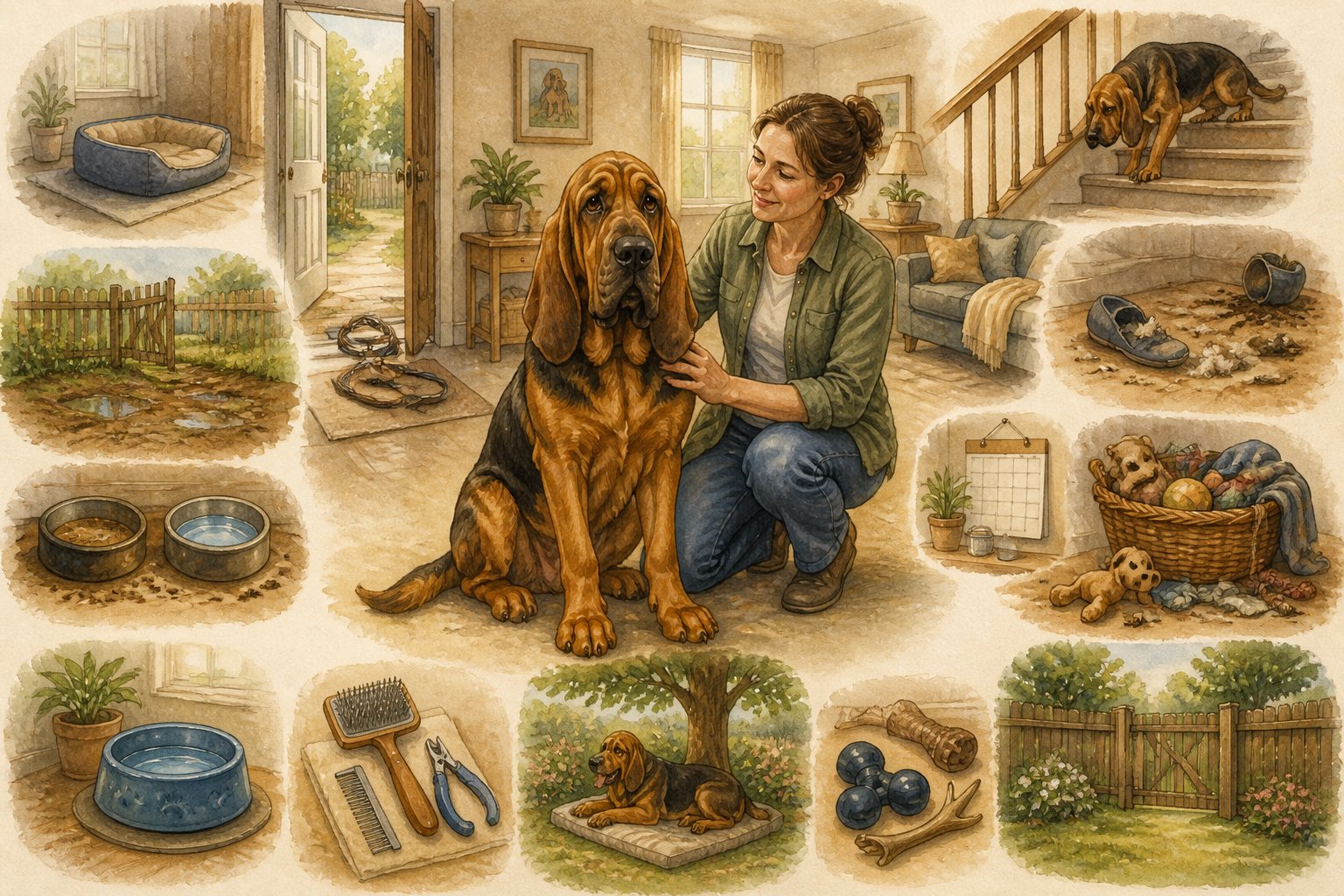
The most important rule is simple: manage your Bloodhound’s environment while you build reliable skills, especially recall, leash manners, and impulse control. Avoiding these common mistakes helps protect your dog, your property, and your relationship.
1. Letting Your Bloodhound Off-Leash Before Recall Is Proven
A Bloodhound can appear attentive in your yard and still ignore you once a powerful scent reaches its nose. Off-leash freedom is risky until your dog returns promptly from mild distractions, outdoors, and at different distances.
Build recall with a long line, high-value treats, and a cheerful cue. Call once, move away from your dog, and reward the instant it turns toward you.
Never use recall only to end fun, since that can make the cue less appealing. Use a secure harness or flat collar, and choose enclosed areas for early off-leash practice.
Reliable recall means repeated success around squirrels, trails, people, and fresh animal scents, not just inside your home.
2. Using Punishment Instead Of Positive, Food-Based Training
Yelling, leash corrections, and harsh punishment can make a sensitive Bloodhound worried, resistant, or less willing to work with you. These methods also fail to teach the behavior you want.
Use reward-based training instead. Mark the moment your dog makes a good choice, then offer a small treat, praise, access to sniffing, or a favorite toy.
Food rewards are especially useful when you compete with outdoor smells. Keep your cues clear and consistent.
If your Bloodhound ignores “come,” do not repeat it in an angry voice. Reduce the distraction, guide your dog with the long line, and practice the behavior at an easier level.
3. Allowing Pulling To Continue During Scent-Driven Walks
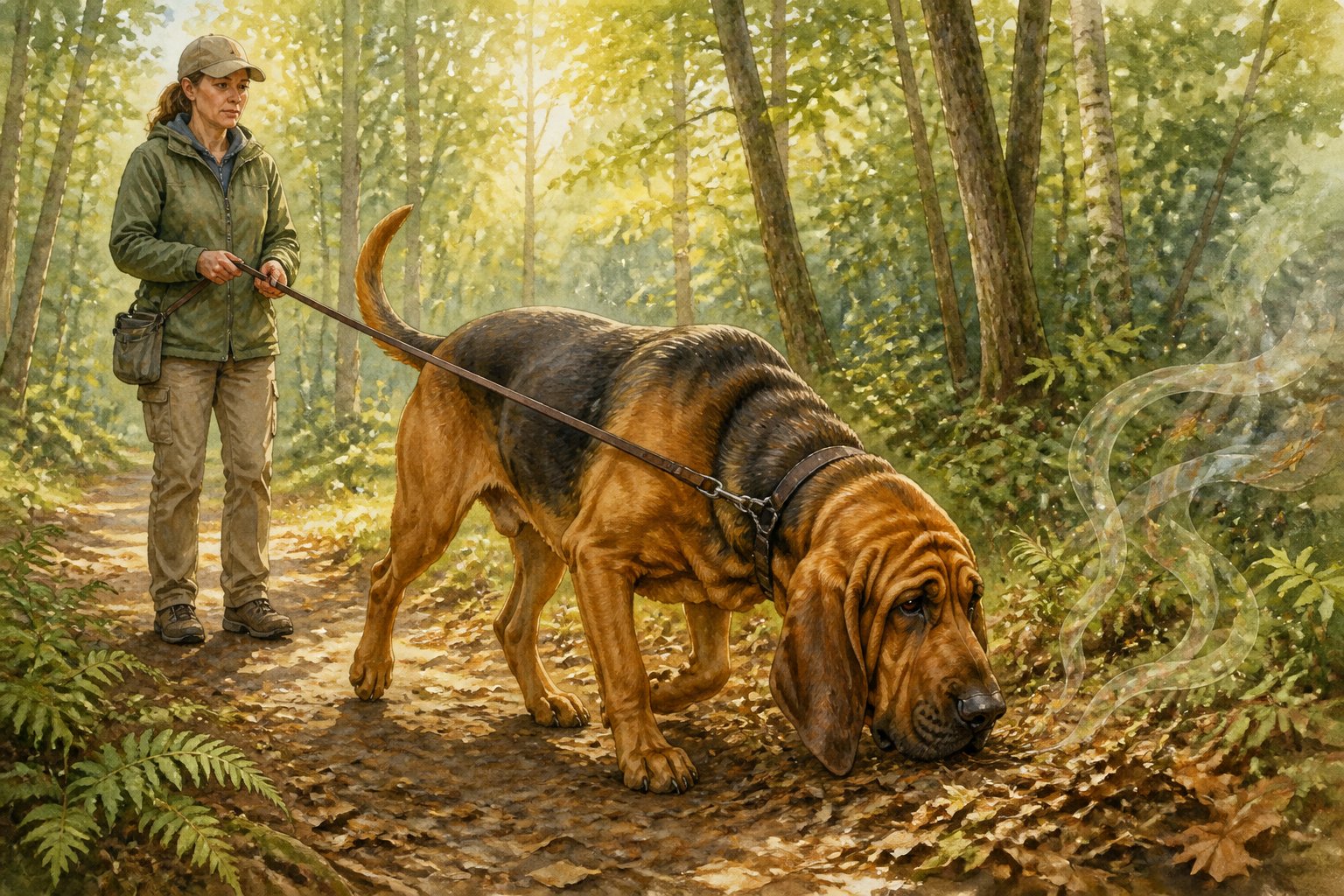
A mature Bloodhound can pull with surprising force when it catches a trail. Allowing constant tension teaches your dog that pulling is the fastest way to reach interesting smells.
Use a well-fitted harness, sturdy leash, and calm stop-and-reset routine. When the leash tightens, stop moving.
Resume only after your dog returns attention to you or creates slack. Reward loose-leash steps frequently.
You do not need to prevent sniffing. Instead, make sniffing a reward for polite walking.
Say a release cue such as “go sniff,” then allow your dog to investigate safely. This gives your Bloodhound an outlet without surrendering control of the walk.
4. Relying On A Weak Fence Or Unsecured Yard
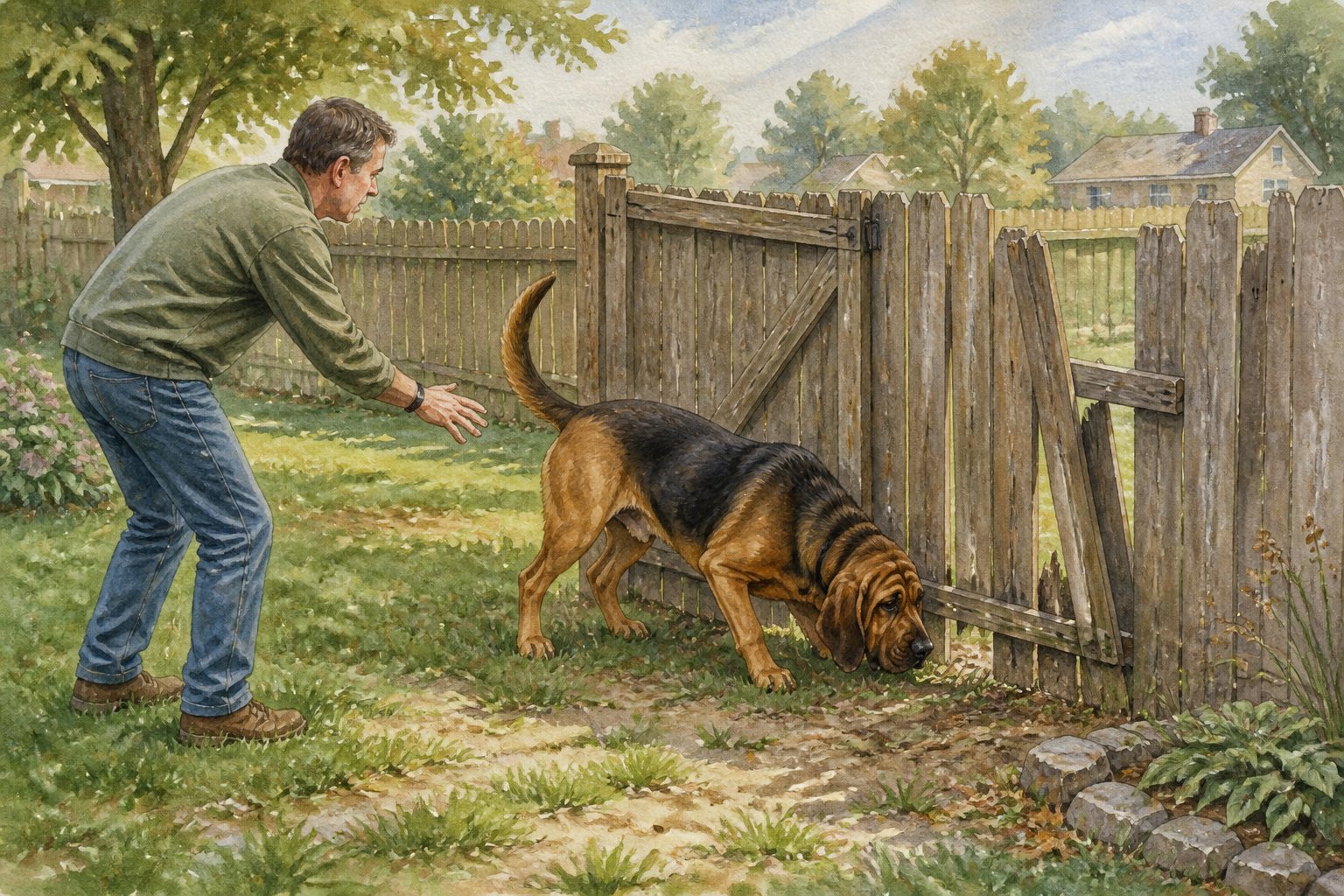
A Bloodhound may investigate every gap, loose gate, and weak section of fencing. A scent trail can turn a relaxed yard visit into roaming, digging, or an escape attempt.
Inspect the fence line at your dog’s eye level and along the ground. Secure gates with reliable latches, block crawl spaces, and check whether your dog can climb or push through sections.
Do not assume height alone makes a fence safe. Supervise outdoor time, especially during the first weeks in a new home.
A microchip, identification tag, and current contact details add protection if your dog gets out. A long line can provide extra freedom while you repair or improve the yard.
5. Expecting Obedience When A Strong Scent Takes Over
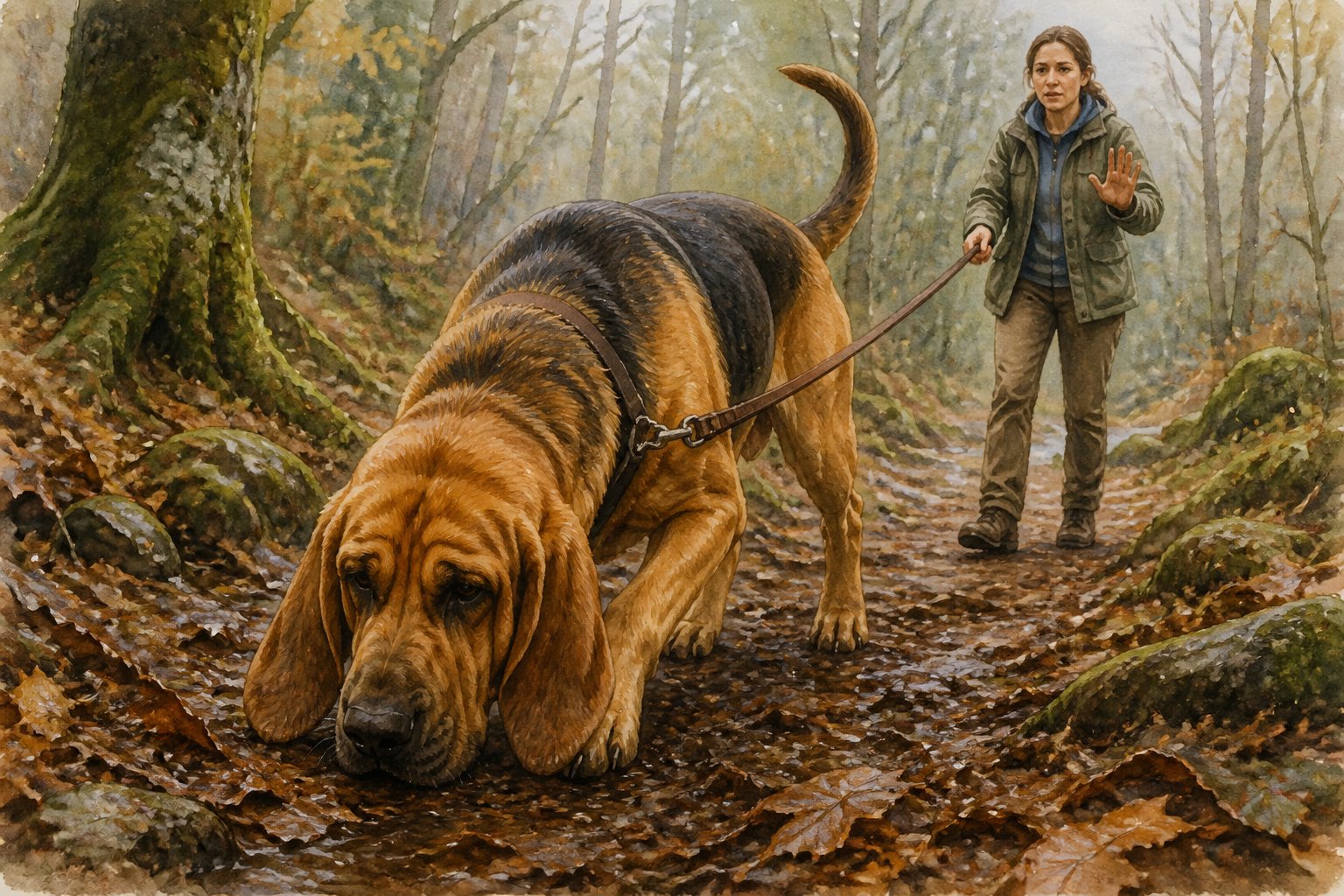
A Bloodhound’s nose can overpower familiar commands. When your dog lowers its head, slows down, and locks onto a trail, repeating “sit” or “come” may not solve the problem.
Train around scent in gradual steps. Start with mild smells, reward eye contact, then increase distance and distraction.
Use a long line outdoors so you can prevent your dog from rehearsing unwanted tracking or wandering. Give scent work a legal outlet through treat searches, scent boxes, tracking games, and controlled trail exercises.
A Bloodhound that regularly uses its nose may be easier to guide because its strongest instinct has a safe place to go.
6. Running Or Over-Exercising A Growing Bloodhound Puppy
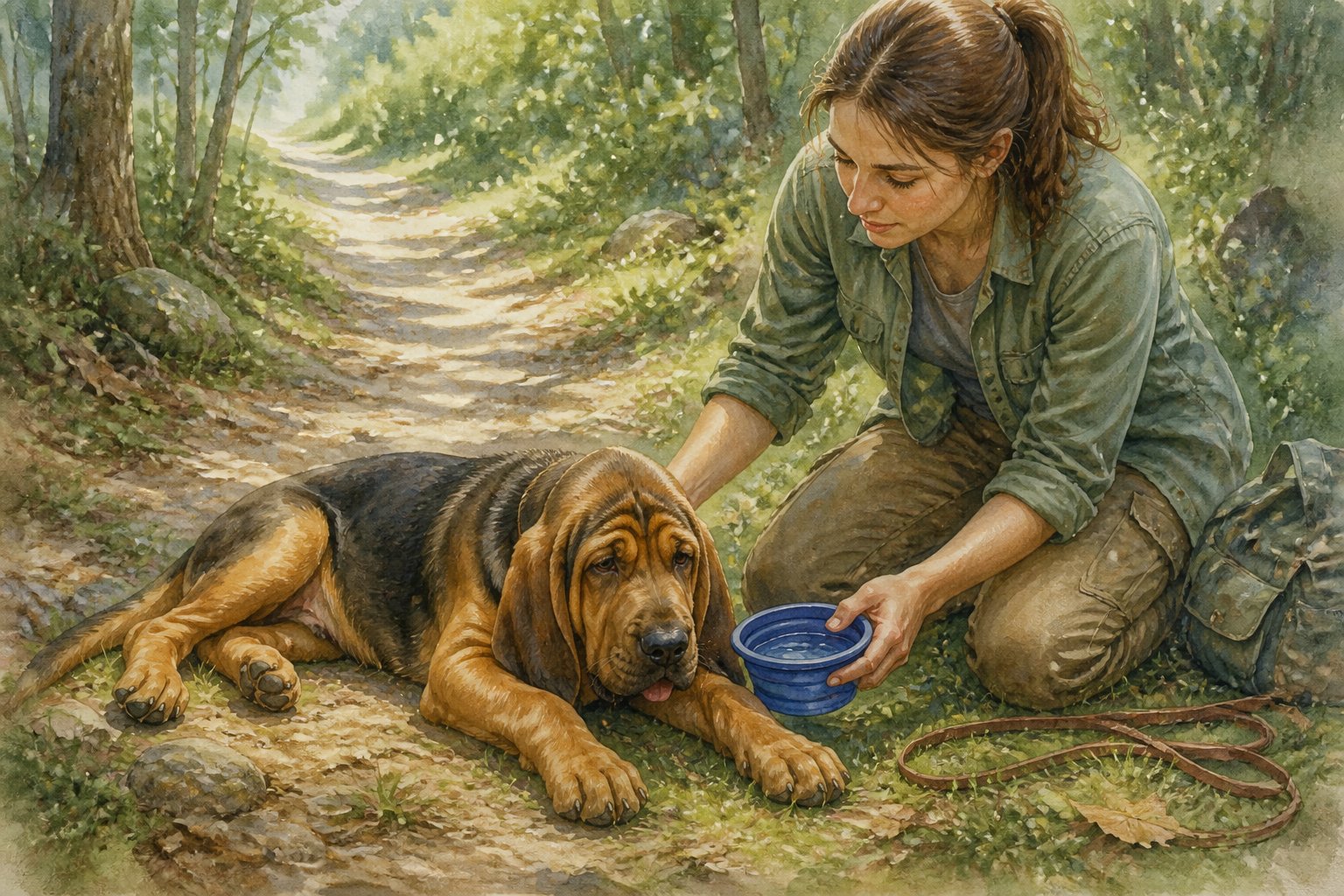
Long runs, repeated jumping, and forced hikes can place too much stress on developing bones and joints. A tired puppy is not automatically a well-exercised puppy.
Choose gentle movement, free play on safe surfaces, short walks, and mental enrichment. Let your puppy set a comfortable pace, and stop when you notice lagging, stiffness, excessive panting, or reluctance to move.
Avoid frequent stairs, high-impact fetch, and slippery floors during growth. Ask your veterinarian for exercise guidance based on your puppy’s age, body condition, and health.
Gradual conditioning is safer than trying to build endurance quickly.
7. Making Training Sessions Longer Than Ten Minutes
Bloodhounds often learn quickly, yet their attention can fade when training becomes repetitive. Long sessions may lead to wandering, sniffing, or apparent stubbornness.
Keep most puppy sessions short, often two to ten minutes. Practice one skill at a time, such as “sit,” leash pressure, name response, or recall.
End while your dog is still engaged, then repeat later. Use everyday moments as training opportunities.
Ask for a sit before opening a door, a pause before meals, or eye contact before releasing your dog to sniff. Several brief sessions usually produce better results than one exhausting lesson.
8. Leaving A Bloodhound Understimulated And Bored At Home
A Bloodhound needs more than physical exercise. Without regular mental work, boredom may appear as chewing, digging, baying, counter surfing, or persistent attention-seeking.
Offer food puzzles, scatter feeding, cardboard search games, safe chew items, and supervised scent hunts. Rotate activities so familiar toys remain interesting.
A few minutes of nose work can be more satisfying than another repetitive walk. Teach your dog how to settle, too.
After enrichment, guide your Bloodhound to a quiet bed with a chew. Predictable rest periods help prevent a cycle of constant activity and demand behavior.
9. Accidentally Rewarding Jumping, Whining, Or Demand Barking
Attention can reward unwanted behavior even when you scold. If jumping earns petting, whining opens a door, or barking produces food, your Bloodhound learns to repeat the pattern.
Choose a replacement behavior. Ask for four paws on the floor, quiet eye contact, or a sit before giving attention, meals, play, or access outside.
Reward the calm behavior quickly so the correct choice is clear. Every household member must follow the same rule.
Occasional rewards make persistent behavior harder to change because your dog keeps trying in case the behavior works this time.
10. Assuming Baying And Roaming Will Disappear With Age
Baying and roaming are linked to communication, scent, breed instincts, and habit. They may change with maturity, yet waiting for them to vanish can allow unsafe patterns to become established.
Manage triggers with secure fencing, supervised yard time, window barriers, white noise, and planned enrichment. Reward quiet behavior before your dog reaches full excitement.
Avoid shouting across the yard, which can sound like participation. Spaying or neutering may affect some behaviors, but it will not replace training or containment.
Continue recall practice, leash work, and scent activities throughout adulthood. Training remains useful after puppyhood.
When To Get Professional Training Help
Signs Management Is No Longer Enough
Seek help if your Bloodhound repeatedly escapes, drags you, guards resources, shows fear or aggression, cannot settle, or ignores safety cues despite careful practice. Sudden behavior changes warrant a veterinary checkup before training continues.
Choosing A Force-Free Trainer
Look for a certified professional who uses reward-based methods and has experience with scent hounds or large breeds. Ask which tools and techniques the trainer uses, and avoid anyone who promotes intimidation, pain, or dominance-based punishment.
A good trainer observes your dog in context and teaches you practical handling skills, not just isolated commands.
Preparing For A Behavior Consultation
Record when the behavior occurs, what happens before it, and how you respond.
Bring your dog’s veterinary history, feeding schedule, exercise routine, equipment, and training notes.
Use secure management before the appointment.
Preventing another escape, chase, or bite helps keep everyone safe while your trainer develops a behavior plan.