
An Airedale Terrier can be one of the most rewarding dogs you ever bring home. This breed is smart, loyal, and bursting with personality.
But that same intelligence and independence trips up a lot of new owners in predictable ways. Most Airedale problems do not come from a bad dog.
They come from small habits that snowball over weeks and months. This list covers the mistakes real owners make most often, from the first day home through adulthood.
Some are about training. Others are about exercise, socializing, or grooming.
Fix these early, and life with your Airedale gets a lot easier.
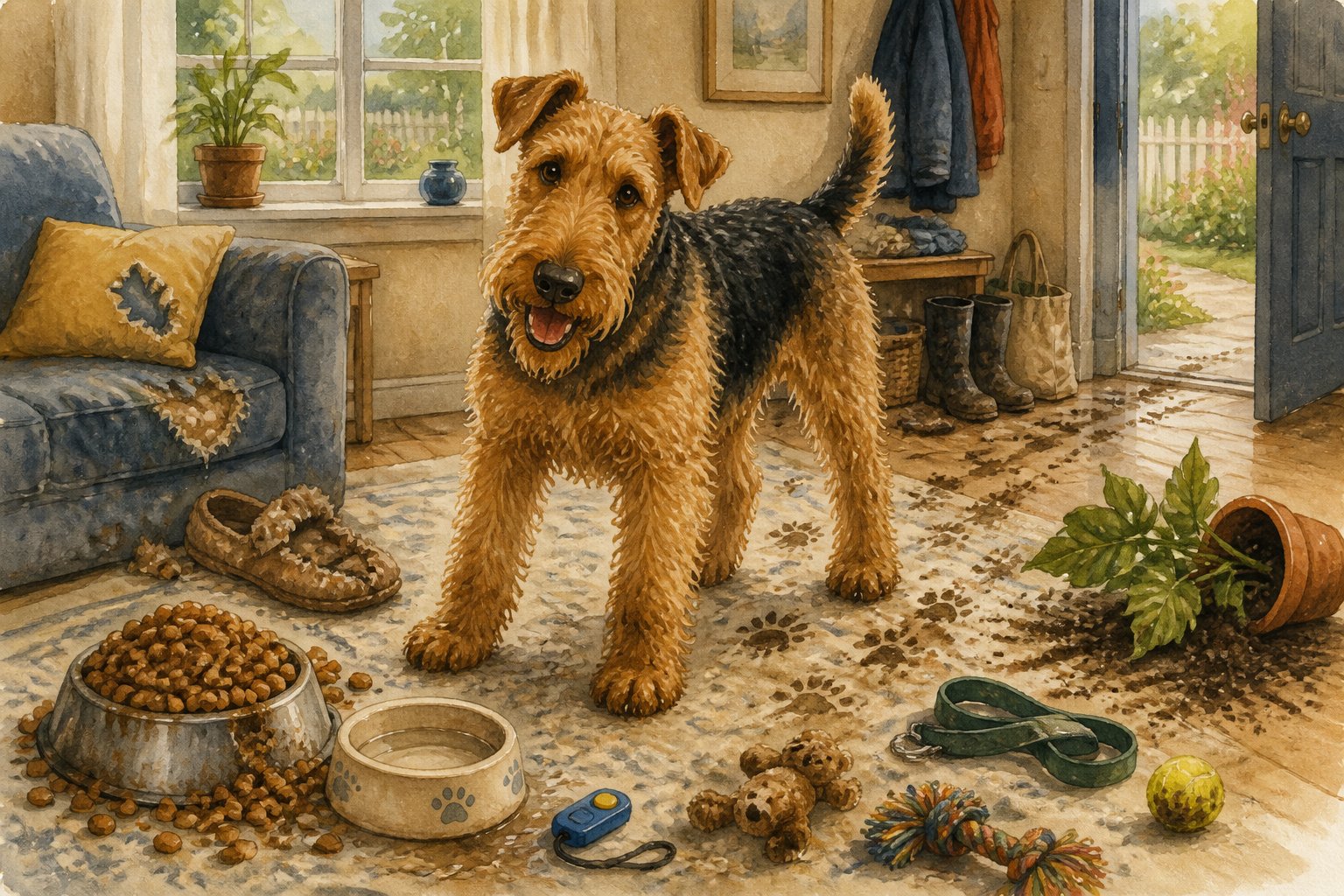
1. Choosing An Airedale As A First Dog Without A Training Plan
Airedale Terriers are often listed among the more challenging breeds for new dog owners. They are smart, stubborn, and physically strong from an early age.
Bringing one home without a plan for training is a common first mistake. Many new owners assume the dog will just “figure it out,” but Airedales need structure from day one.
Before you even bring your puppy home, line up a puppy training class. Research a private trainer as a backup option.
Have a leash indoors ready for those first few weeks, since many experienced owners recommend keeping a light leash on the puppy inside the house to redirect behavior quickly. Set basic house rules with everyone in the family before the dog arrives.
Decide who feeds, who walks, and what commands you will use. Consistency from day one prevents confusion later.
Think of the first 90 days as a foundation period. What you build now shapes the dog you will have for the next 12 years.
2. Skipping Daily Nose Work And High-Energy Exercise
A tired Airedale is a good Airedale. Skipping daily exercise is one of the fastest ways to end up with a destructive, restless dog.
This breed was built to hunt and work all day. A short walk around the block will not cut it for most Airedales past six months old.
Mix physical exercise with mental work. Try these ideas:
- Scavenger hunts for treats hidden around the house or yard
- Long sniffing walks where the dog sets the pace
- Fetch or tug sessions that burn energy fast
- Basic obedience drills mixed into playtime
Owners often notice that a bored Airedale gets creative in bad ways, chewing baseboards or digging up the yard. Thirty to sixty minutes of real exercise daily, split into two sessions, keeps most Airedales settled.
Nose work matters just as much as running. This breed relies heavily on scent, and letting them use it burns mental energy that pure exercise does not touch.
3. Treating An Airedale Like An Eager-To-Please Golden Retriever

Airedales do not train the same way as breeds bred purely for obedience. Expecting instant compliance because you offered a treat often leads to frustration on both ends of the leash.
This breed has an independent streak baked in from its terrier and working dog roots. They think for themselves and often question why they should follow a command.
Training works better when it feels like negotiation instead of demand. Short sessions, high-value rewards, and a mix of play keep an Airedale engaged longer than repetitive drills.
Patience matters more than volume here. Ten focused minutes beat thirty minutes of a bored, checked-out dog.
Owners who compare their Airedale to a Golden Retriever’s eagerness usually end up disappointed. Adjust your expectations to match the breed, and training becomes far less stressful.
4. Allowing Puppy Nipping To Continue Past The First Weeks

Airedale puppies are notoriously mouthy, and their teeth are sharp enough to leave marks even during gentle play. Letting this slide for months makes it much harder to correct later.
Start redirecting nipping the moment it happens, not after weeks of “it’s just a puppy thing.” A sharp “ow” followed by handing over a chew toy teaches bite inhibition fast.
Keep a variety of textures on hand for the teething phase:
- Frozen washcloths or carrots
- Rubber chew toys
- Rope toys for tug
- Bully sticks or dental chews
Consistency across every family member matters here. If one person allows rough mouthing and another stops it, the puppy gets mixed signals.
Most owners see real improvement by month four or five if they stay consistent. Waiting until adolescence to address it usually means dealing with a much stronger jaw and a harder habit to break.
5. Giving An Airedale Unsupervised Access To Resident Cats

Airedales carry a strong prey drive, and cats often trigger a chase response even when the dog just wants to play. Leaving them alone together before trust is built is a risky shortcut.
Introductions need to happen slowly, over weeks, not days. Use baby gates, crates, or a leash indoors so the dog cannot rush a cat that wants space.
Give your cat an escape route at all times. Cat shelves, tall furniture, or a separate room let the cat retreat without feeling trapped.
Teach “leave it” and “place” commands before trusting the two animals alone together. These commands give you a way to interrupt a chase before it starts.
Some Airedale and cat pairs never reach full unsupervised trust. That is normal, and separating them when you are away is not a failure, it is just good management.
6. Waiting Until Adolescence To Socialize With Visitors And Dogs

The socialization window closes fast, usually by around four months old. Waiting until adolescence to introduce new people and dogs means missing the easiest learning period.
Airedales that skip early socialization often grow into adults that bark at strangers or react poorly to unfamiliar dogs. This is not aggression, it is unfamiliarity turning into fear or overexcitement.
Invite friends over during puppyhood, even for short visits. Let the puppy approach on its own terms instead of being cornered by excited guests.
Puppy classes offer controlled dog-to-dog exposure in a safe setting. This matters more for Airedales than many breeds since their terrier instincts can misread rough play as a challenge.
Aim for short, positive exposures weekly rather than one overwhelming event. Quality of exposure beats quantity every time with this breed.
7. Relying On Repeated Commands Instead Of Clear Consequences
Saying “sit” five times in a row teaches an Airedale that the first four attempts do not matter. This breed picks up on patterns fast, including the pattern that ignoring you has no real cost.
Give a command once. If the dog does not respond, guide them into position gently or remove a reward instead of repeating yourself.
Consistency between family members matters here too. If one person repeats commands and another does not, the dog learns to wait out whoever is more lenient.
Consequences do not need to be harsh. A simple pause in play, a step back, or withholding a treat sends a clear message without conflict.
Owners who switch from repetition to clear follow-through often see faster results within a few weeks. The dog starts responding the first time because it learns that is the only time that counts.
8. Leaving A Bored Airedale Loose In The House All Day
An unsupervised, bored Airedale with full run of the house is a recipe for chewed furniture and shredded baseboards. This breed gets creative when left without a job to do.
Crate training or a gated safe space solves this problem for most owners. It is not a punishment, it is a management tool that prevents destructive habits from forming.
Leave puzzle feeders or frozen treats when you head out for a few hours. Mental engagement during alone time reduces anxiety-driven chewing.
Build up alone time gradually, starting with short absences before working toward a full workday. Rushing this step often backfires with separation-related destruction.
A tired dog handles alone time better than a restless one. Combine exercise before you leave with a safe, contained space, and most Airedales settle down fine.
9. Ignoring Recall Training Around Squirrels And Other Prey
Airedales were bred to hunt vermin and small game, and that instinct does not disappear with domestication. Skipping recall training around distractions sets up a dangerous gap in control.
Start recall training in a quiet, low-distraction space before adding challenges. Once the dog reliably comes on command indoors, practice in the yard, then on a long line outdoors.
Squirrels, rabbits, and other small animals will test recall harder than almost anything else. A long training leash gives you a safety net while the behavior solidifies.
Reward recall heavily, every single time, even if the dog took its time getting there. Punishing a delayed return teaches the dog that coming back leads to trouble.
This skill can genuinely prevent an Airedale from running into traffic or getting lost chasing prey. It is worth the months of practice it takes to make it solid.
10. Using Harsh Corrections With A Smart, Strong-Willed Terrier
Airedales respond poorly to harsh physical corrections or yelling. Instead of submission, this breed often meets force with more resistance or shuts down entirely.
Positive reinforcement paired with firm, consistent boundaries works far better than punishment-based methods. This breed wants to know the rules, not fear the consequences of breaking them.
A raised voice occasionally is fine, but repeated yelling or physical corrections damage trust over time. An Airedale that stops trusting its owner becomes harder to train, not easier.
Redirect unwanted behavior toward an acceptable outlet instead of just punishing the unwanted one. Stopping a behavior without giving an alternative usually just delays the problem.
Owners who switch to reward-based methods after using harsh corrections often see faster progress within weeks. This breed thrives on partnership, not domination.
11. Putting Off Hand-Stripping And Coat Maintenance
Airedale coats need hand-stripping, not just a basic haircut, to maintain their wiry texture and skin health. Putting this off for months leads to a soft, dull coat that mats easily.
Hand-stripping pulls dead hair from the root rather than cutting it. This keeps the coat’s natural wire texture.
Clipping alone, done repeatedly, softens the coat over time and can affect its protective qualities. Set a maintenance schedule instead of waiting until the coat is a tangled mess.
- Brush two to three times weekly to prevent mats
- Schedule hand-stripping every few months
- Check ears, paws, and skin during grooming sessions
- Trim nails on a regular rotation
Many owners find a groomer experienced specifically with terrier coats makes a big difference. Not every groomer knows proper hand-stripping technique, so ask directly before booking.
Matted fur can trap moisture and lead to skin irritation underneath.
Building A More Successful Airedale Routine
A well-adjusted Airedale usually comes down to routine more than luck. Owners who build consistent habits early tend to avoid most of the missteps covered above.
Daily Physical Exercise Versus Mental Work
Physical exercise and mental work are not the same thing, and Airedales need both daily. A 30 to 45 minute walk or jog covers physical needs, but scent games, puzzle feeders, and training drills fill the mental gap.
Balance both across the day instead of front-loading one. A dog that is physically tired but mentally understimulated can still act out.
House Rules Every Family Member Should Follow
Pick a short list of non-negotiable rules and get every household member on board. Furniture access, feeding schedules, and command words should stay the same no matter who is handling the dog.
Mixed signals confuse an Airedale fast. Consistency across the whole family speeds up training and reduces behavior problems.
When To Bring In A Breed-Savvy Trainer
Consider a professional trainer familiar with terriers if nipping, reactivity, or recall issues do not improve within a few weeks of consistent effort.
A breed-savvy trainer understands the independent streak that makes generic advice fall flat.
Early intervention costs less time and frustration than waiting for problems to become habits.