
The Aidi, also known as the Atlas Mountain Dog, brings a rare mix of independence and loyalty that most American households have never encountered before. Bred in Morocco to guard livestock and property, this breed reads situations differently than a Labrador or a Golden Retriever.
Many new owners run into trouble not because their Aidi is difficult, but because they apply generic dog advice to a breed that needs a more specific approach.

This guide walks through the seven blunders that trip up Aidi owners most often. Some mistakes seem harmless at first, like skipping early socialization or letting a dog off leash too soon.
Others build slowly, such as inconsistent rules or ignoring warning signs between pets in the same household.
1. Waiting Too Long To Socialize A Suspicious Guardian
Aidis were bred to watch over livestock and property without much human direction. That instinct means they naturally size up strangers instead of greeting them like a friendly retriever would.
Skipping socialization during puppyhood lets that watchfulness turn into real suspicion. By six months old, a poorly socialized Aidi may bark, lunge, or freeze around new people.
Start exposure early and keep it positive. Invite calm visitors over during the first few months.
Reward relaxed behavior with treats and praise instead of forcing interactions. Dog parks and crowded events are not the best classroom for this breed.
Quiet walks past new people, calm car rides, and short visits to pet-friendly stores work better. Skipping this step does not make the guarding instinct disappear.
It just makes it harder to manage once your dog reaches full size and confidence.
2. Trusting An Aidi Off-Leash Without A Proven Recall
Aidis have strong independent streaks left over from their guarding history. They were expected to make decisions on their own, far from a handler’s voice.
That independence makes off-leash reliability tricky. A dog that listens perfectly in the backyard may ignore you completely once something interesting crosses its path outdoors.
Many owners assume basic obedience classes are enough. They are not, at least not for this breed’s instincts around chasing or investigating.
Build recall in stages before trusting an open space. Practice in a fenced yard first, then a quiet park, then somewhere with mild distractions.
A long training leash bridges the gap safely. It lets your dog explore while you keep control if needed.
Skipping these steps risks a bolted dog near traffic or wildlife. Patience here protects your Aidi’s life.
3. Underestimating Daily Exercise And Mental Work

A short walk around the block will not satisfy an Aidi. This breed was built to patrol mountain terrain for hours, and that stamina does not disappear in a suburban home.
Under-exercised Aidis often turn to barking, chewing, or pacing. Owners sometimes mistake this for stubbornness when it is really pent-up energy.
Plan for at least an hour of active movement daily. Hiking, jogging, or structured play sessions work well.
Split the time into two sessions if your schedule allows it. Mental work matters just as much as physical activity.
Puzzle feeders, scent games, and short training sessions tire out the brain in ways a walk cannot.
Skipping mental stimulation leaves a smart dog bored and looking for its own entertainment, which rarely ends well for your furniture.
4. Ignoring Same-Sex Tension At Social Maturity
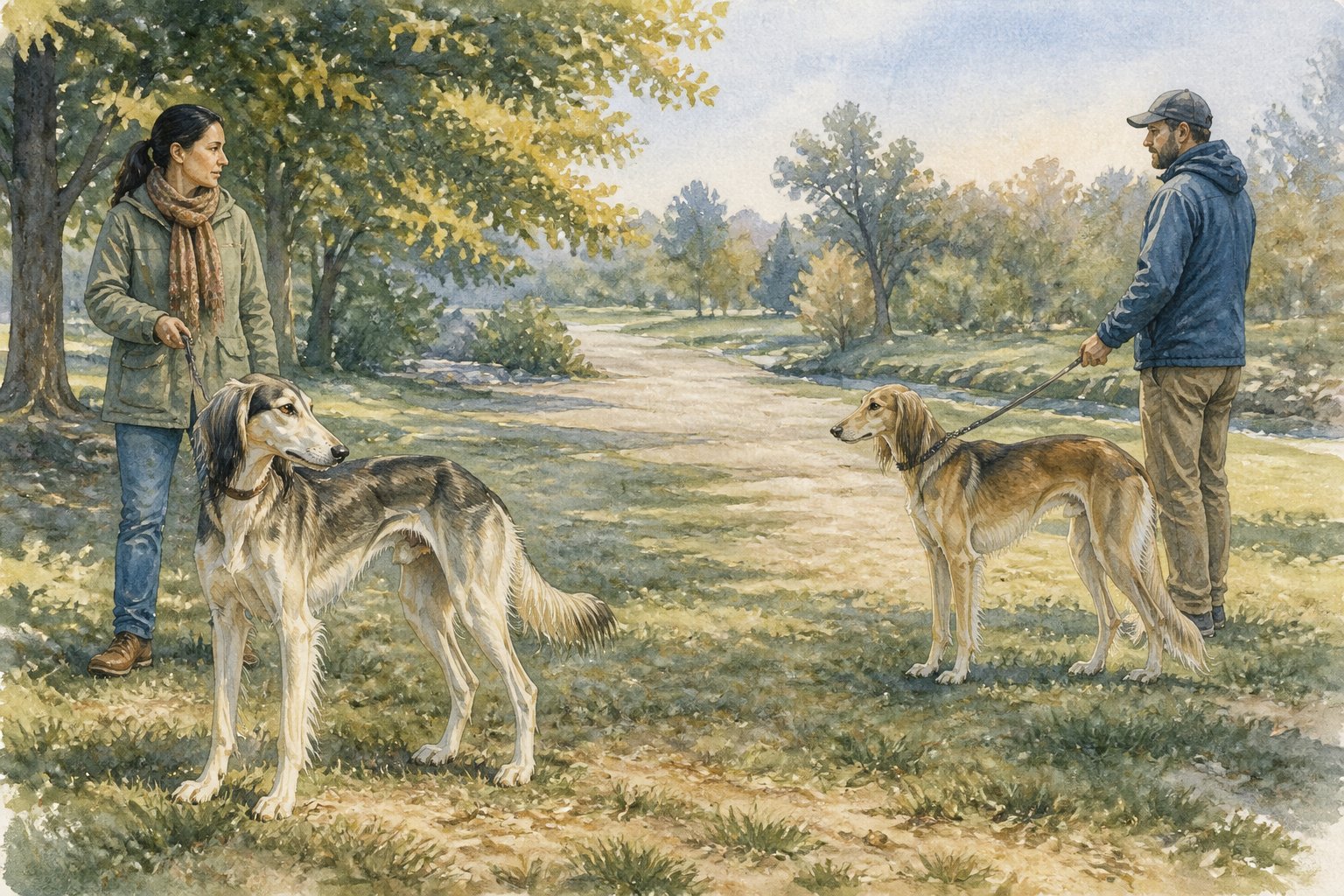
Aidis often get along fine as puppies, then tension appears once they hit social maturity around one to three years old. Same-sex pairs, especially two males or two females, can develop friction that was not there before.
This shift catches many owners off guard. The dog that used to nap beside its housemate suddenly stiffens or growls over small things.
Watch for early signals like hard stares, raised hackles, or stiff body posture. These signs show up before an actual fight, giving you a chance to step in.
Separate feeding areas and supervised interactions reduce friction. Some households manage this permanently by rotating space and attention rather than expecting constant harmony.
Ignoring the early signs and hoping dogs “work it out” often leads to a serious fight. Prevention beats damage control every time with this breed.
5. Letting Food, Toys, Or Doorways Become Guarded Resources

Resource guarding fits naturally with a breed bred to protect flocks and territory. Food bowls, favorite toys, and even doorways can become things your Aidi feels the need to defend.
Owners often miss the early signs. A stiff body over a bowl or a low growl when someone walks past a toy looks minor until it escalates into snapping.
Teach a reliable “drop it” and “leave it” from puppyhood. Trade items for treats instead of taking things away by force.
This builds trust instead of triggering defensiveness. Feed dogs separately if you have more than one pet in the house.
Doorways deserve attention too, since guarding entry points is common in guardian breeds.
Letting this behavior slide because it seems small now sets up bigger conflicts later, especially around children or visiting guests.
6. Forcing Coexistence With Cats, Rabbits, Or Pet Birds

Aidis carry strong prey drive alongside their guarding instincts. Small pets that move quickly, like rabbits or birds, can trigger that drive fast.
Owners sometimes assume time will fix things. Forcing a cat, rabbit, or bird into the same space too soon rarely builds trust and often creates lasting fear on both sides.
Introduce small pets gradually and always under control. Use baby gates, crates, or leashes during early meetings.
Reward calm behavior generously. Some Aidis learn to coexist peacefully with supervision and time.
Others never fully relax around small prey-sized animals, and that reality needs respect. Never leave an Aidi alone with a small pet until you have seen months of calm, consistent behavior.
One bad moment can undo all the progress you built.
7. Using Inconsistent Rules Or Punishment-Based Corrections
Aidis respond poorly to harsh corrections. Punishment often makes a guardian breed more suspicious and less willing to trust its handler.
Inconsistency causes just as much damage. Letting your dog on the couch one day and scolding it the next confuses a breed that already leans independent.
Set clear household rules and stick to them every day. Everyone in the family needs to enforce the same boundaries the same way.
Reward-based training builds cooperation faster than fear ever will. A treat, a calm tone, and clear timing teach lessons that stick without damaging trust.
Skipping consistency now means fighting the same battles for years. Aidis remember patterns, good and bad, longer than most owners expect.
When To Call A Qualified Behavior Professional
Warning Signs That Need Prompt Help
Some behaviors signal it is time to bring in outside help right away. Growling or snapping at family members, sudden aggression toward other pets, or extreme fear around visitors are not problems to wait out.
Sudden behavior changes deserve attention too. A dog that was calm for years and suddenly guards resources or reacts to strangers may have an underlying medical or stress issue worth investigating.
Choosing A Credentialed Trainer Or Veterinary Behaviorist
Look for a Certified Professional Dog Trainer or a veterinary behaviorist with real experience in guardian breeds. Ask about their approach before booking a session.
Avoid trainers who rely heavily on punishment or dominance-based methods. Reward-based, science-backed training fits this breed’s temperament far better and builds trust instead of eroding it.
Management Steps While You Wait For Support
Waiting for an appointment does not mean doing nothing. Separate pets that show tension, limit stressful situations, and keep your Aidi on leash around unfamiliar people or animals.
Consistent routines and reduced triggers keep things stable until a professional can step in and build a real plan.
Aidi Ownership Readiness Checklist
Secure Containment And Visitor Management
A six-foot fence with a secure gate keeps a determined Aidi contained. Check for gaps or weak spots regularly, since this breed notices weaknesses in a fence line quickly.
Plan ahead for visitors. Announce guests before they arrive and give your dog a calm space to settle before introductions happen.
Time For Training, Enrichment, And Supervision
Set aside real time daily for training, exercise, and mental games. This is not a breed that thrives on minimal attention or a quick walk before work.
Supervision matters most during the first year with any new pet or child in the home. Never assume good behavior on day one means it will continue without ongoing guidance.
Household Pets, Children, And Long-Term Fit
Think honestly about your household before bringing home an Aidi.
Homes with small pets, very young children, or frequent unpredictable visitors need extra planning and patience.
This breed rewards experienced, consistent owners with deep loyalty.
It asks for structure, time, and respect for its instincts in return.