Conjunctivitis can make your dog’s eyes red, itchy, and messy. You want to help quickly and safely.
You can ease your dog’s discomfort at home with simple, vet-safe steps that focus on cleaning, soothing, and preventing reinfection.
I’ll walk you through gentle ways to clear discharge and calm swelling. You’ll also pick up tips for keeping your dog’s bedding and environment clean so the problem doesn’t just keep coming back.
Sometimes, home care is enough for mild cases—other times, you’ll need to call the vet. Let’s get into it.
Clean your dog’s eyes gently with a saline solution to remove discharge.
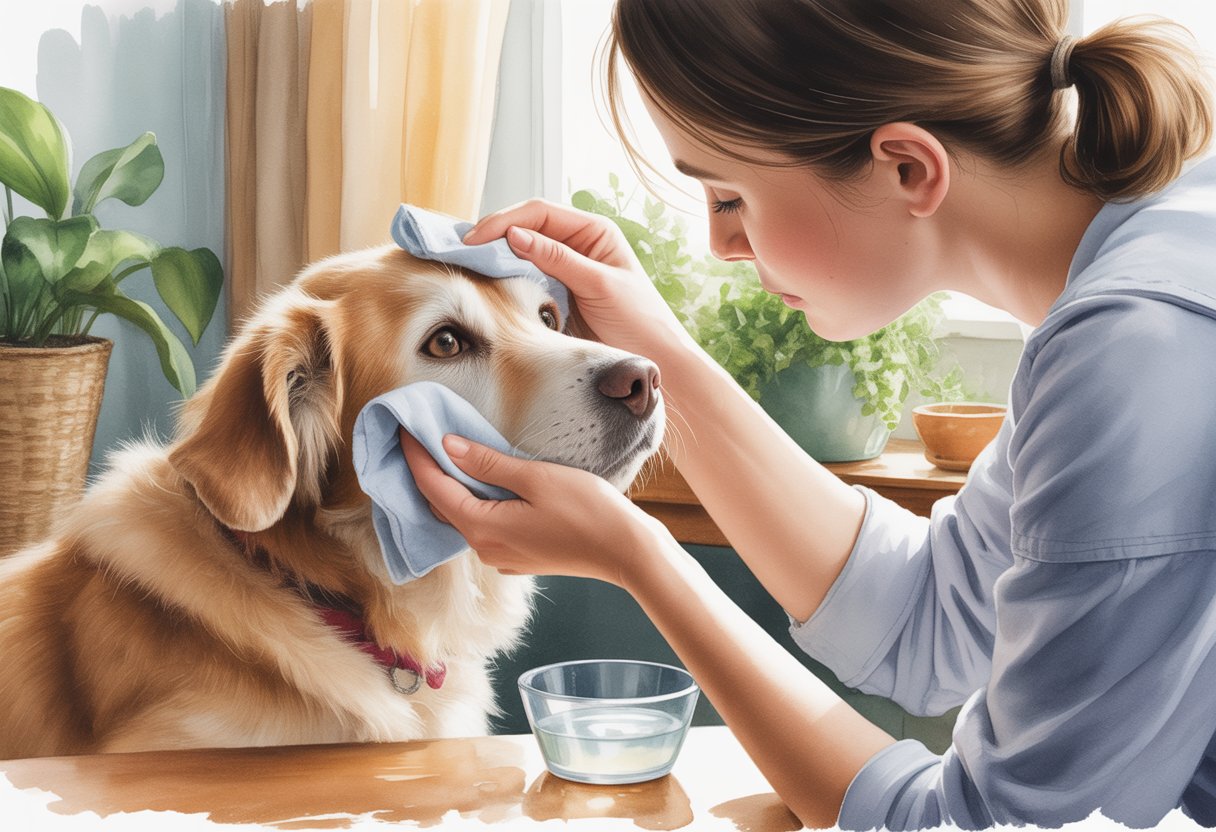
You can make a sterile saline solution at home with lukewarm water and plain non-iodized salt—about 1/2 teaspoon salt per 8 ounces of boiled, cooled water. If you’ve got store-bought sterile saline, that’s even better.
Sit with your dog somewhere quiet. Gently hold their head still.
Use a soft-tipped syringe, a sterile dropper, or a clean cotton ball soaked in saline. Apply a few drops or wipe from the inner corner outward.
Don’t let the tip of the dropper or syringe touch the eyeball. Wipe away any softened discharge using a fresh cotton ball or pad each time—don’t reuse, or you’ll just spread bacteria.
Repeat as needed, maybe a few times a day. If your dog seems more painful or the eye looks worse, stop and call your vet.
If you see redness, swelling, cloudiness, heavy bleeding, or vision loss, contact your veterinarian right away. Saline rinses help clean debris, but they won’t treat infections or ulcers.
Use a cold compress to reduce swelling and soothe irritation
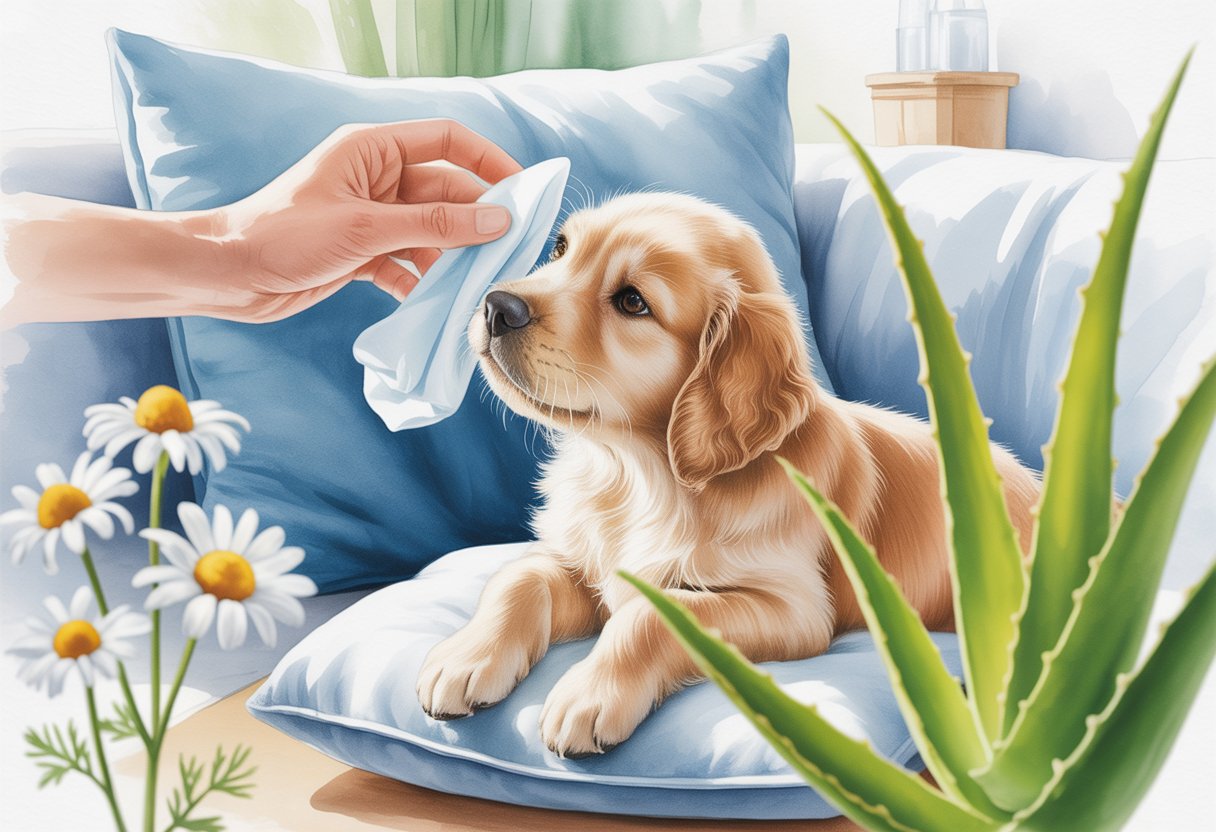
Gently press a cold compress against your dog’s closed eye. This can help with swelling and itching.
Wrap a clean cloth or towel around a bag of ice, some frozen peas, or a chilled gel pack. Never put ice right on the skin—always wrap it up to protect those sensitive tissues.
Hold the compress in place for about 5–10 minutes at a time. Keep the pressure light.
You can repeat this every few hours while your dog’s awake. If your dog pulls away, cries, or you see more redness, stop right there.
If swelling spreads, your dog has trouble breathing, or things look worse, get to the vet. Cold compresses help symptoms, but they don’t fix the root problem.
Apply a few drops of chamomile tea solution as a natural anti-inflammatory
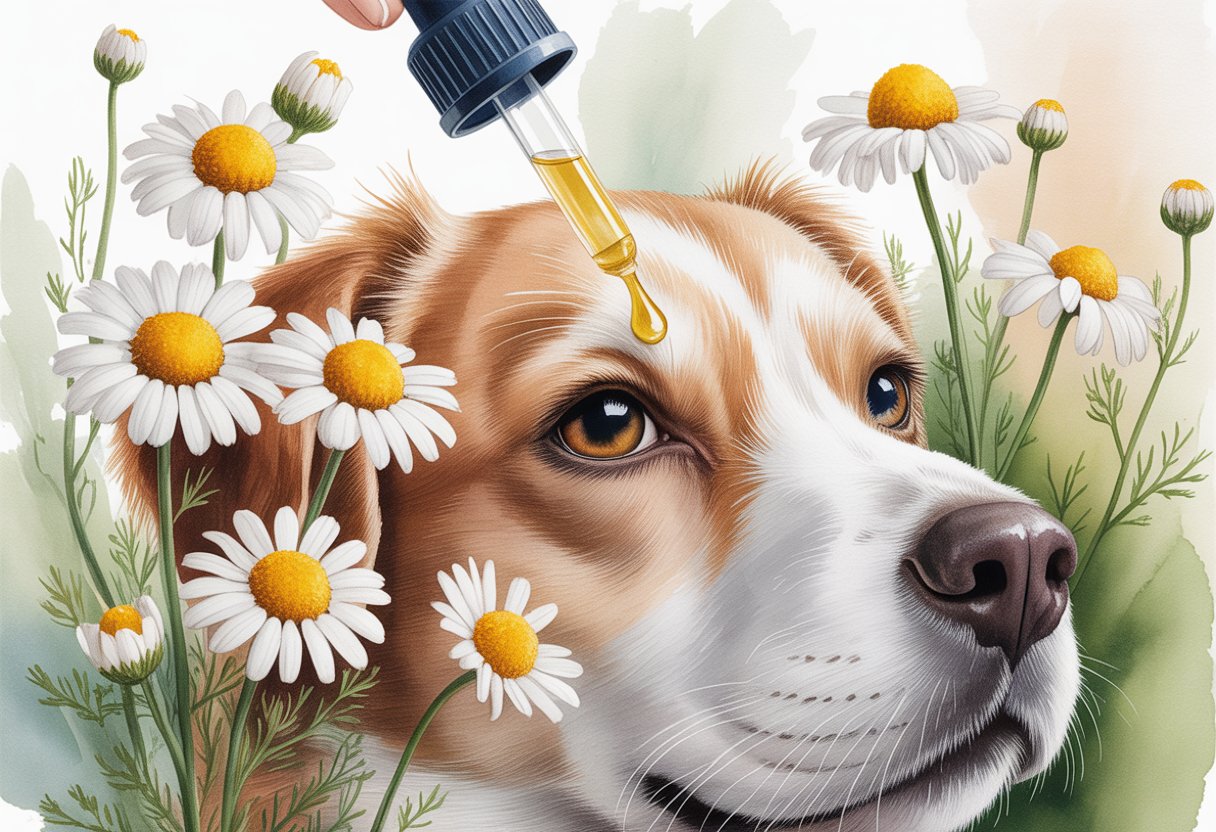
Brew a weak chamomile tea: one teabag (or a teaspoon of dried flowers) per cup of boiling water. Let it steep for 5–10 minutes, then cool it all the way to room temp.
Strain the tea well—no bits left behind. Use a clean dropper or sterile gauze to apply a drop or two to the affected eye, or gently wipe the outer eyelid.
Try this once or twice daily for a few days. Chamomile can soothe mild irritation, but some dogs are sensitive, so keep a close eye.
If you notice more redness, discharge, swelling, or your dog starts rubbing the eye a lot, stop and call your vet. Never use essential oils, undiluted extracts, or anything hot near your dog’s eye.
Keep your dog’s bedding clean to prevent reinfection.

Wash your dog’s bedding at least weekly while they’re dealing with conjunctivitis. Regular washing gets rid of pus, discharge, and bacteria that could reinfect their eyes.
Use hot water and a mild detergent if the fabric can take it. Toss in 1/2 to 1 cup of white vinegar to help deodorize and cut down on germs.
If the bed isn’t machine washable, soak it in warm water with detergent and vinegar, then rinse thoroughly. Dry everything completely—sunlight or a dryer both work, and both help kill germs and mites.
Vacuum and steam clean any furniture or rugs where your dog likes to rest. Swap out or wash soft toys and blankets that touch their face.
Wear gloves when you handle soiled bedding, and always wash your hands after. It’s just not worth risking spreading bacteria between pets—or back to your dog.
Use a mild, vet-approved eye wash recommended for dogs
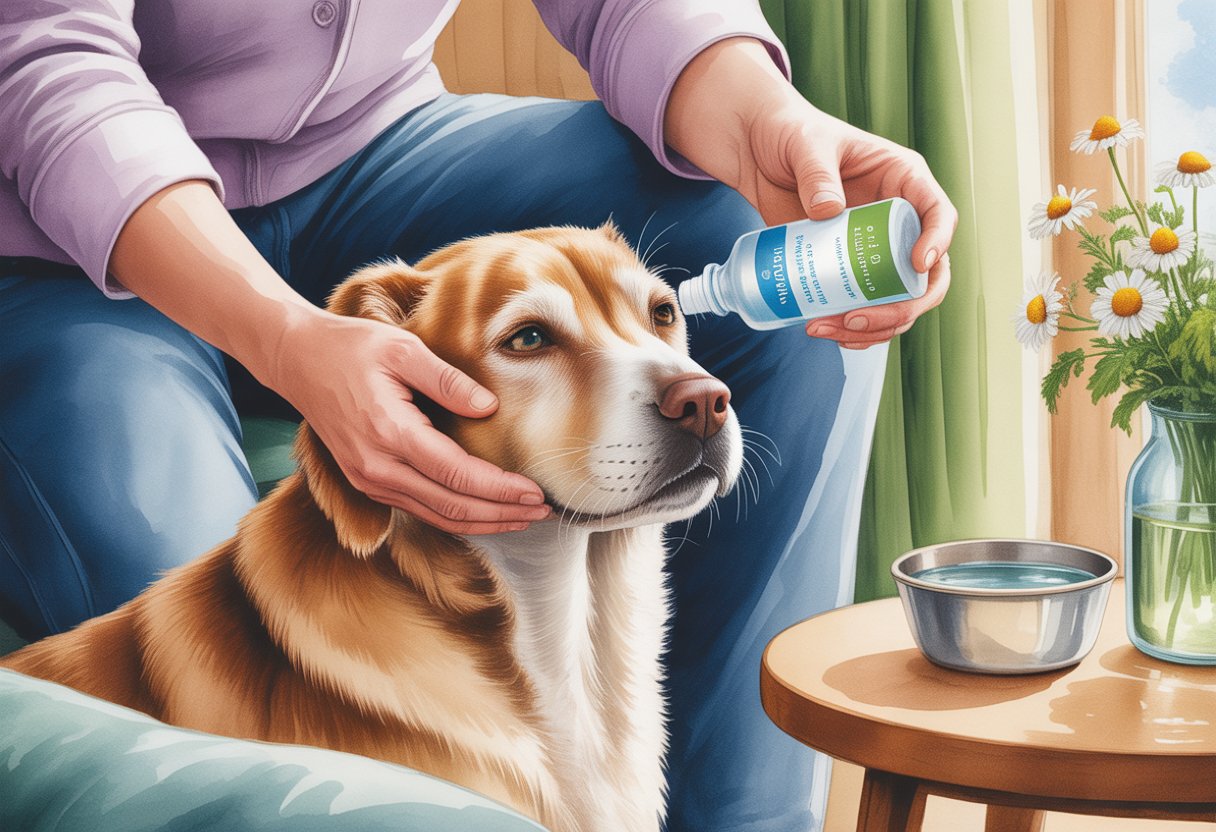
Pick a sterile, saline-based eye wash that your vet recommends. These washes rinse away dirt, pollen, and discharge without stinging your dog’s eyes.
Hold your dog gently and tilt their head back. Squirt or drop the wash so it flows across the eye for a couple of seconds, then let the excess drip onto a clean cloth.
Use a fresh bottle for each dog. Follow the label for how often to use it.
If you spot more redness, swelling, changes in pupil size, or discharge that won’t quit, stop using the wash and call your vet.
Skip human eye drops or antiseptics unless your vet says otherwise. Dog-specific products are just safer and less likely to cause irritation.
Understanding Dog Conjunctivitis
Conjunctivitis means inflammation of the tissue around your dog’s eye. It can bring redness, discharge, and discomfort.
Allergies, infections, or just plain irritation can cause it.
Symptoms and Causes
Here’s what to look for: red or pink eyelids, swollen eyelids, excessive tearing, yellow or green discharge, frequent pawing at the eye, and lots of squinting or blinking. Sometimes, you’ll see crust on the lashes after your dog sleeps.
Common causes:
- Bacterial or viral infections — usually mean thick yellow or green discharge.
- Allergies — clear, runny discharge and itching; these often pop up seasonally or after new products.
- Irritants — dust, shampoo, or smoke can suddenly make eyes red and watery.
- Foreign bodies — grass seeds or other debris can cause one-sided irritation and lots of rubbing.
- Underlying eye problems — things like dry eye, eyelid malformation, or glaucoma can also trigger these signs.
Notice if it’s just one eye or both, how quickly symptoms started, and if there were any new exposures (cleaners, plants, other dogs, that kind of thing).
When to Seek Veterinary Care
Call your vet right away if your dog has thick yellow or green discharge, keeps the eye closed or it’s really swollen, suddenly can’t see, there’s blood in the eye, or they seem in real pain (like constant pawing or whimpering).
You should also get help if:
- Symptoms stick around more than a day or two, even with home care.
- Both eyes get involved and things spread fast.
- Your dog is super young, old, or has a weak immune system.
Your vet can check for foreign objects, run some tests, prescribe antibiotics or anti-inflammatories, and rule out anything serious.
Safety Tips for At-Home Care
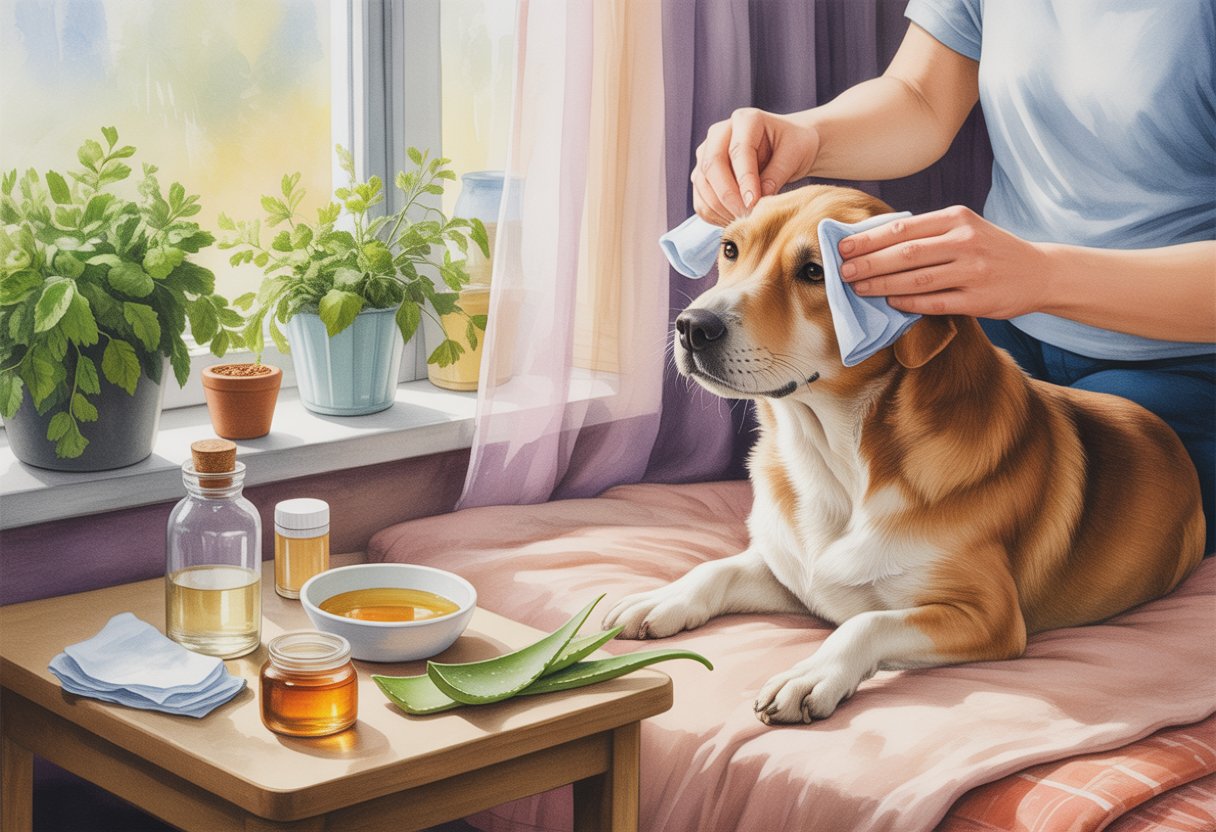
Keep your dog’s eyes clean and avoid contamination. Watch for signs that mean you need a vet.
Use gentle cleaning and clean tools. Try not to touch the eye more than you have to, and don’t spread infection by accident.
Hygiene and Prevention
Wash your hands with soap and water before and after you touch your dog’s eyes. Always grab a clean towel for each cleaning session and toss it in the wash after.
If you’re using gauze or cotton, open a fresh pack every time and throw it away after one use. Make saline rinse from sterile saline or use store-bought sterile eyewash.
Warm a sterile compress to body temperature and hold it gently on the closed eye for a couple of minutes to loosen crust. If fur rubs the eye, trim it carefully with blunt-tip scissors.
Keep infected dogs away from other pets until your vet says it’s safe. Disinfect or swap out toys, bedding, and food bowls.
Wear disposable gloves if you have to touch discharge, and toss them when you’re done. Sometimes it’s the little things that make the biggest difference.
Common Mistakes to Avoid
Don’t use human eye drops or ointments on your dog unless your vet tells you to. A lot of these products have preservatives or drugs that can actually hurt your dog’s eyes.
Keep hydrogen peroxide, alcohol, and bleach far away from your dog’s eyes. Those will cause pain, and honestly, they can do real damage.
Never try to force your dog’s eye open. Please don’t poke around with cotton swabs, either.
Applying pressure to a swollen eye? Not a good idea. If you notice thick green or bloody discharge, bulging, cloudiness, or a sudden change in vision, stop any home care and call your vet right away.
If your dog’s symptoms stick around for more than 48 hours, get worse, or show up after an injury, don’t wait—get your pup checked out. Only your vet can figure out if it’s an allergy, infection, foreign object, or injury, and that makes all the difference in treatment.