You want safe, gentle ways to help your dog when their ears feel sore or itchy.
Here are nine natural remedies you can try at home to ease discomfort, clean the ear, and support healing while you keep an eye out for signs that need a vet’s attention.

You’ll find straightforward steps, why each remedy might help, and some tips on when to skip the DIY and call your vet.
Think of these as practical options that work best alongside good ear hygiene and your vet’s advice.
Apple cider vinegar diluted with water as an ear rinse
You can mix apple cider vinegar (ACV) with water as a gentle ear rinse for mild cleaning.
Blend equal parts ACV and water to lower acidity and help fight yeast or bacteria that thrive in a high pH.
Before you start, check your dog’s ear for open wounds, lots of redness, swelling, or a nasty smell.
If you notice any of those, skip the ACV and get your vet involved.
Tilt your dog’s head and use a dropper or soft cloth to apply a little of the diluted mix into the ear canal.
Gently massage the base of the ear, let your dog shake, then wipe away anything left with a clean cotton ball.
Only use this rinse once in a while.
If your dog seems to hurt more, shakes their head, or scratches like crazy, stop right away.
ACV can help with mild debris and pH balance, but it won’t fix moderate or bad infections.
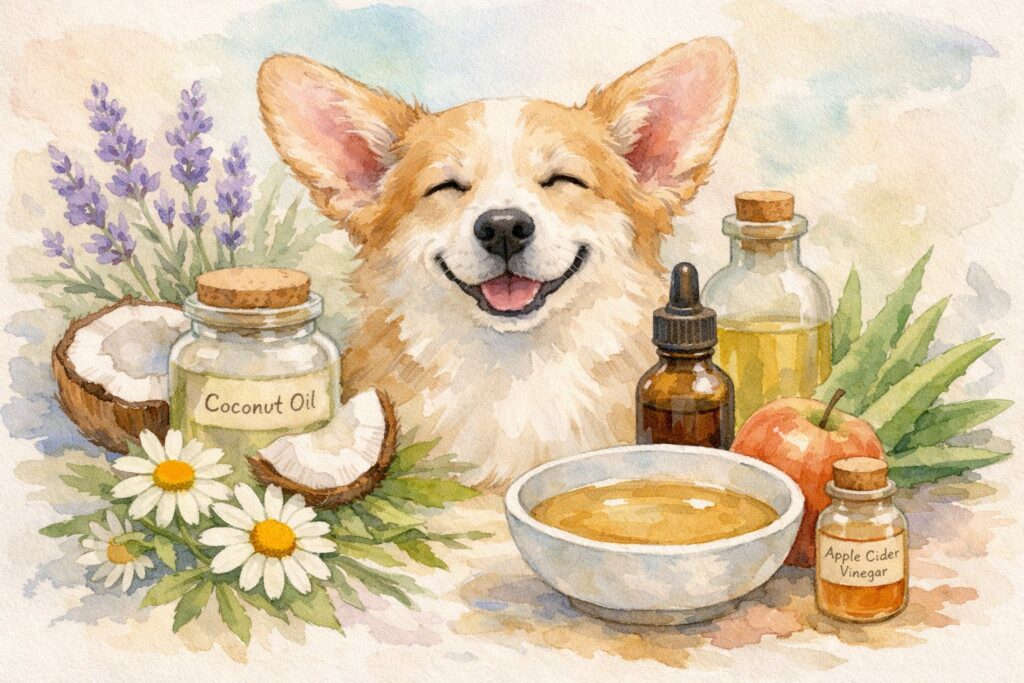
Coconut oil applied gently inside the ear canal
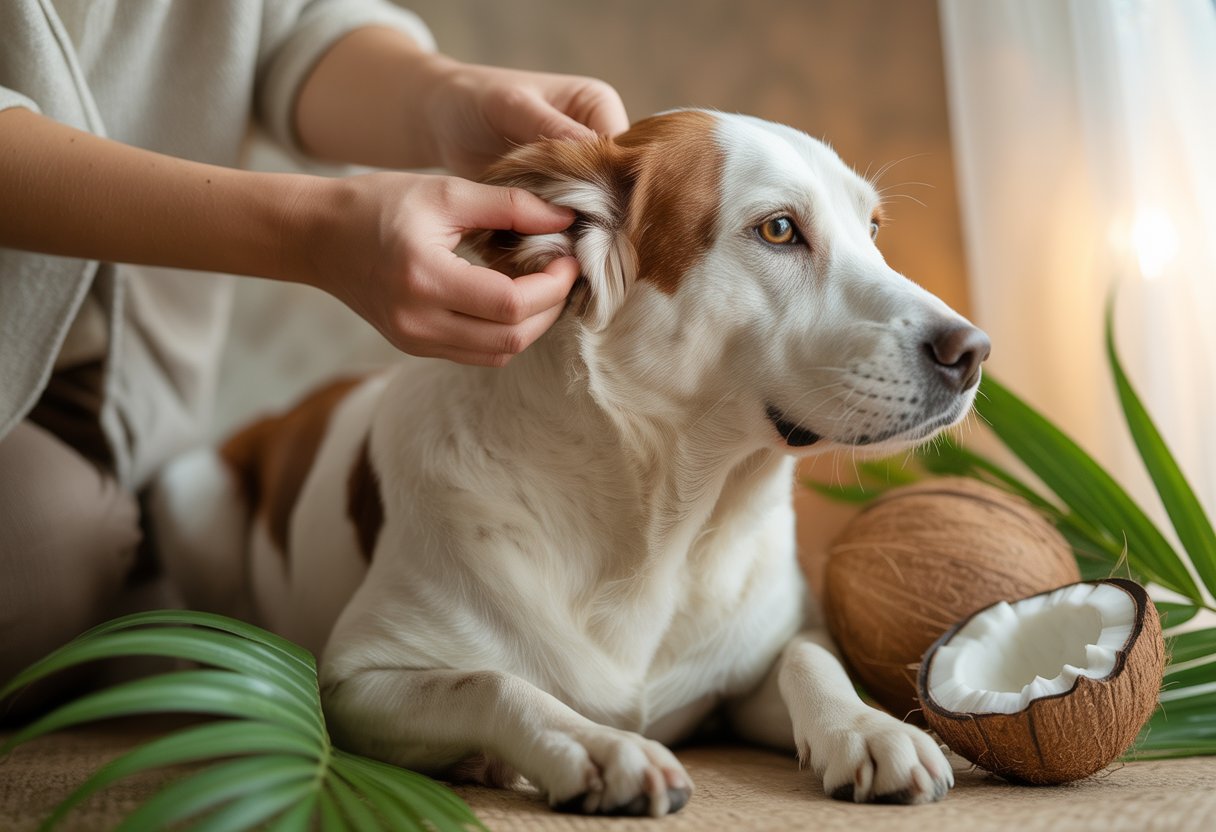
You can use coconut oil to soothe mild irritation and knock down some bacteria and yeast on the ear skin.
Just warm a little until it’s liquid (not hot!), and test it on your wrist.
Tilt your dog’s head, put a few drops just inside the ear opening, and gently massage the base for half a minute so the oil spreads around.
Use a cotton ball or soft cloth to wipe away any extra oil from the outside.
Don’t stick cotton swabs into the ear canal—nobody needs that mess.
If your dog gets more painful, you smell something bad, see heavy gunk, or blood, it’s time to call your vet.
Coconut oil works for mild irritation, but it’s not a substitute for real medical care if there’s a full-blown infection.
Aloe vera gel to soothe irritation and inflammation
You can use pure aloe vera gel to calm redness and irritation in your dog’s outer ear.
Aloe’s anti-inflammatory and soothing properties might help the skin feel less itchy.
Only use 100% natural aloe—skip anything with alcohol, fragrances, or weird additives.
Dab a small amount on the outer ear with clean fingers or a cotton ball; don’t shove gel deep into the ear canal.
After the first use, watch your dog for any sensitivity, like more rubbing or swelling.
If things get worse, you see gunk, a bad odor, or your pup acts like it hurts, stop right there and call your vet.
Aloe vera helps surface irritation, but it’s not going to cure an infection.
Chamomile tea compresses for calming effects
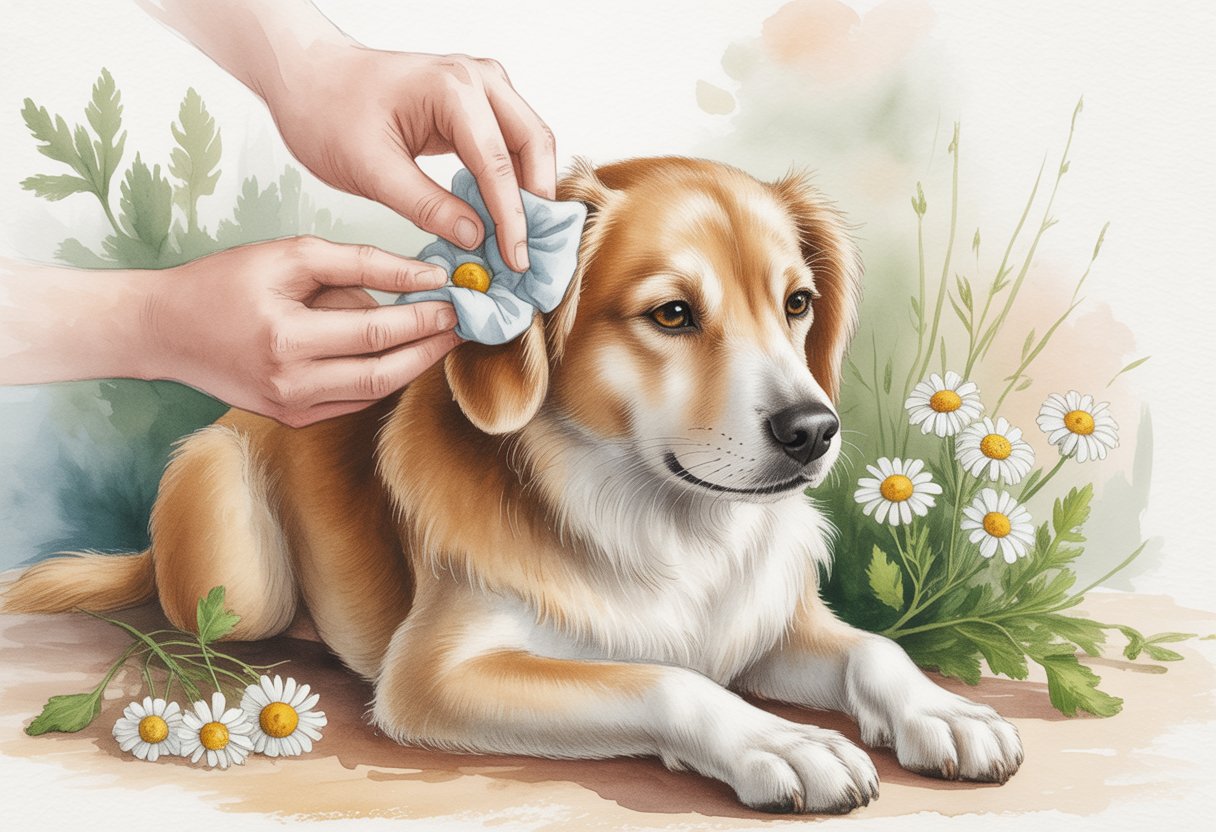
Brew a weak chamomile tea and let it cool all the way before using it.
Stick to plain, unsweetened tea—no sugar or extras that could bother your dog’s ear.
Soak a cotton pad or soft cloth in the cooled tea and gently press it to the outer ear flap and ear canal entrance.
Don’t poke the cloth inside; just wipe what you can see.
Chamomile has mild anti-inflammatory and soothing effects that can help calm redness and itching.
It might make your dog feel better, but it’s not a fix for infections.
Use the compress once or twice a day for a few days and see if things improve.
If the ear stays red, smells gross, or your dog seems in pain or off-balance, head to the vet.
Green tea rinses to reduce bacteria and yeast
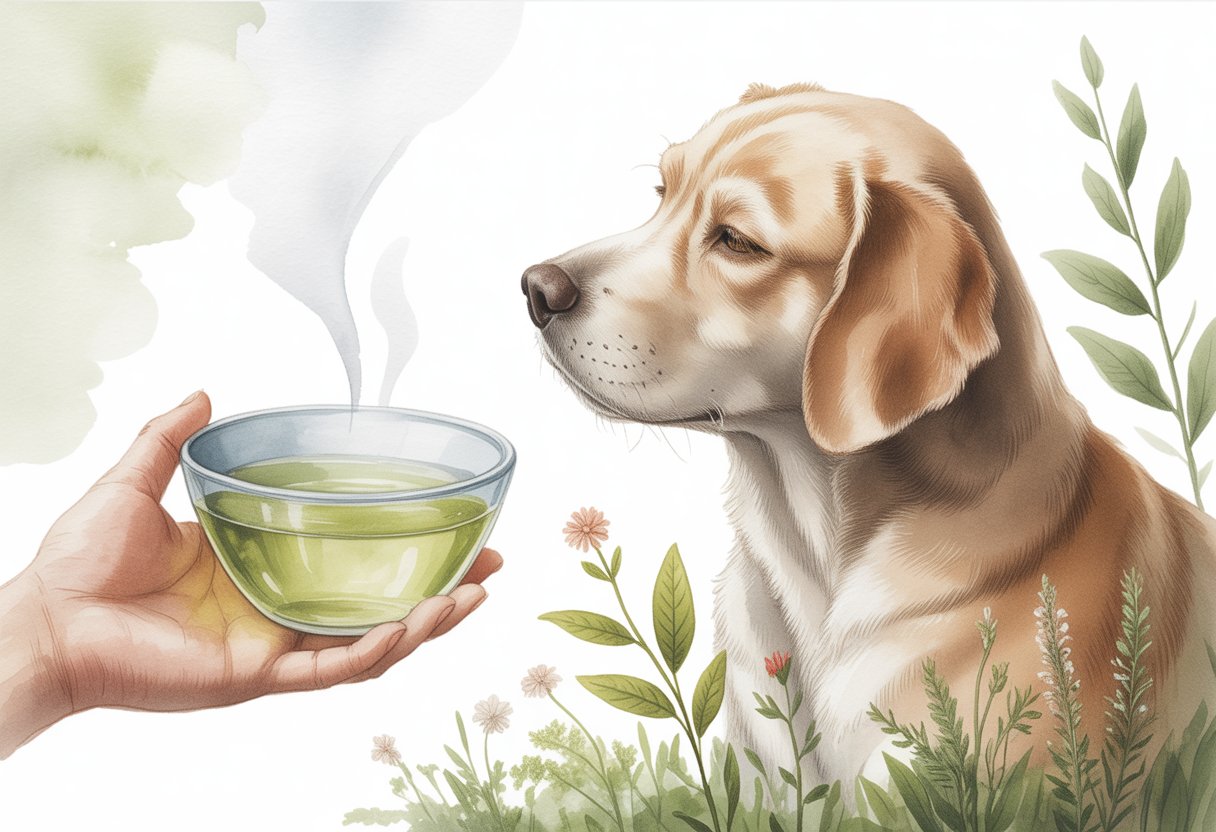
You can use cooled green tea as a gentle rinse for your dog’s outer ear.
Green tea brings antioxidants and mild tannins that might help with inflammation and make the ear less welcoming to yeast and some bacteria.
Brew a weak cup, let it cool, and strain out all the leaves.
Take a clean cloth or dropper and put a little on the visible ear flap and canal entrance—don’t force anything deep.
Watch your dog for pain, shaking, or more redness after the rinse.
If your pup seems upset, the ear smells really bad, or you see discharge or blood, stop and call your vet.
Green tea rinses are for mild, surface irritation, not for serious infections.
Calendula oil for its natural antifungal properties

You can use calendula oil to soothe irritated ears and tackle mild fungal growth.
It’s got gentle antifungal and anti-inflammatory effects that might ease redness and itching without harsh stuff.
Put a few drops of diluted calendula oil on the outer ear or use a cotton pad to wipe the ear flap.
Don’t push cotton deep into the canal, and if your dog seems bothered, stop.
Calendula oil is for mild problems or after vet care, not for anything smelly, swollen, or painful.
If things look or smell bad, get to a vet.
Witch hazel used sparingly to clean outer ear areas
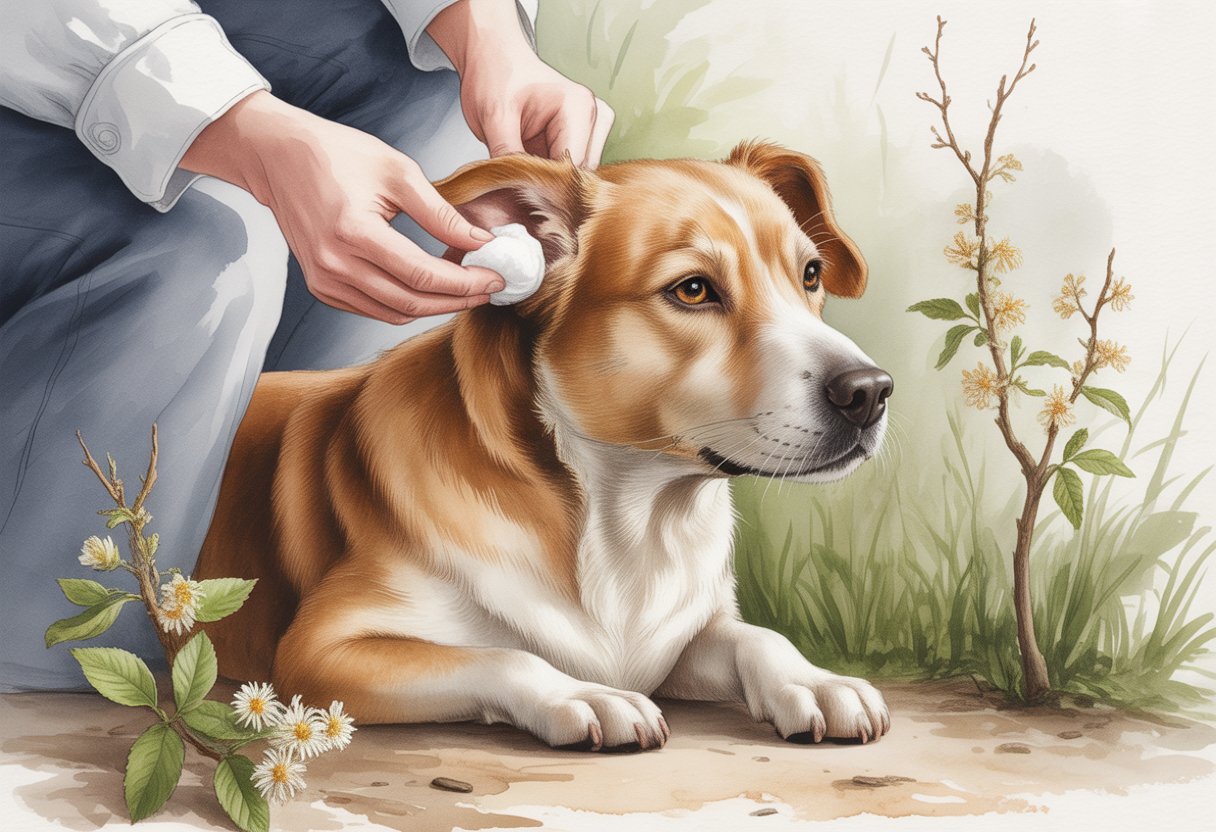
You can use witch hazel to gently clean the outer parts of your dog’s ear if you see dirt, wax, or mild irritation.
Dab a little on a cotton ball and just wipe the folds and entrance—never stick anything into the ear canal.
Pick alcohol-free, pure witch hazel to avoid drying or stinging.
If your dog acts painful, scratches a lot, or there’s a nasty smell, stop and see a vet before trying home remedies.
Use witch hazel once or twice a day for a few days and keep an eye out for redness or more scratching.
If things don’t get better fast, or you notice discharge or bleeding, go see your vet.
Probiotic supplements to support immune health
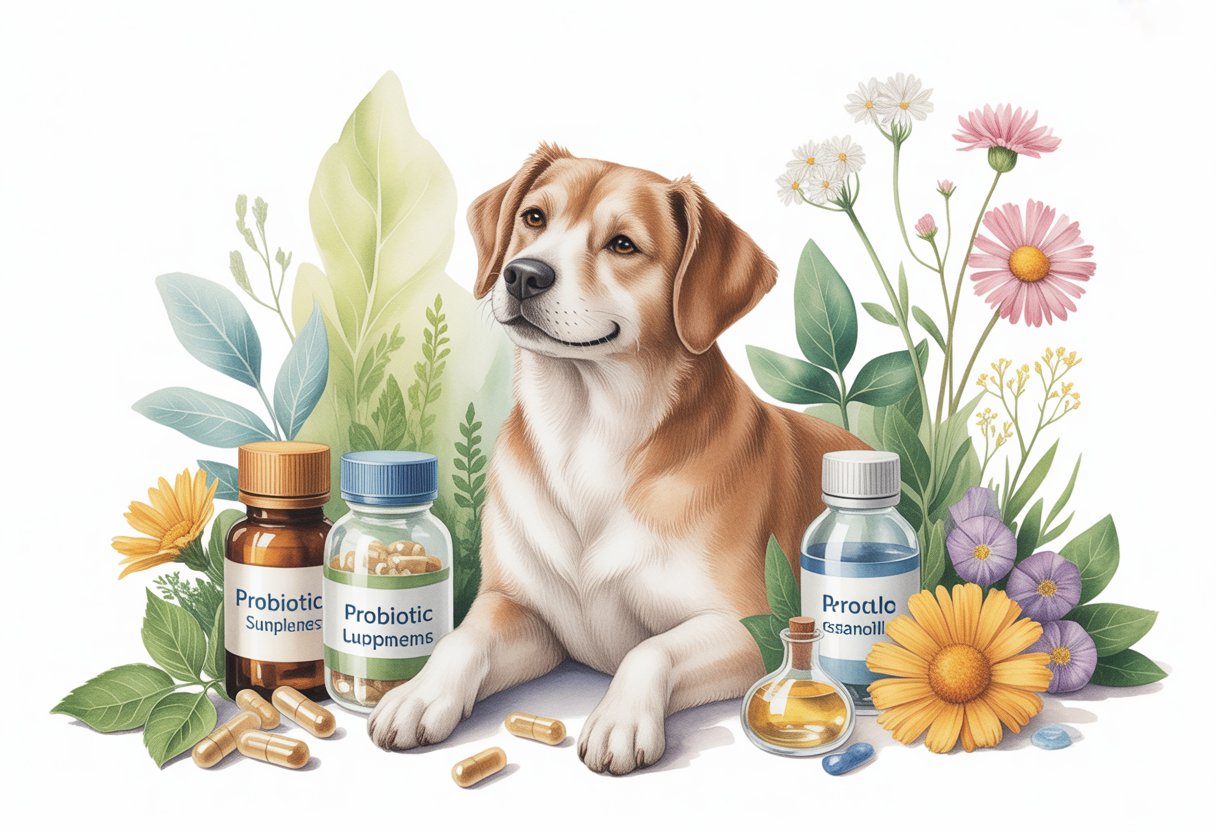
You can try probiotic supplements to help your dog’s gut health, which ties into immune function.
Probiotics add good bacteria that can balance things out after stress, diet changes, or antibiotics.
Pick products made for dogs and follow the label for dosing and age.
Look for strains that have been studied in pets, and go for brands that list colony counts and storage info.
Start slow and watch for changes in stool, appetite, or energy.
If your dog keeps getting ear infections, ask your vet before starting probiotics so they can check for bigger issues and make sure nothing clashes with other treatments.
Olive oil to loosen debris and moisturize skin
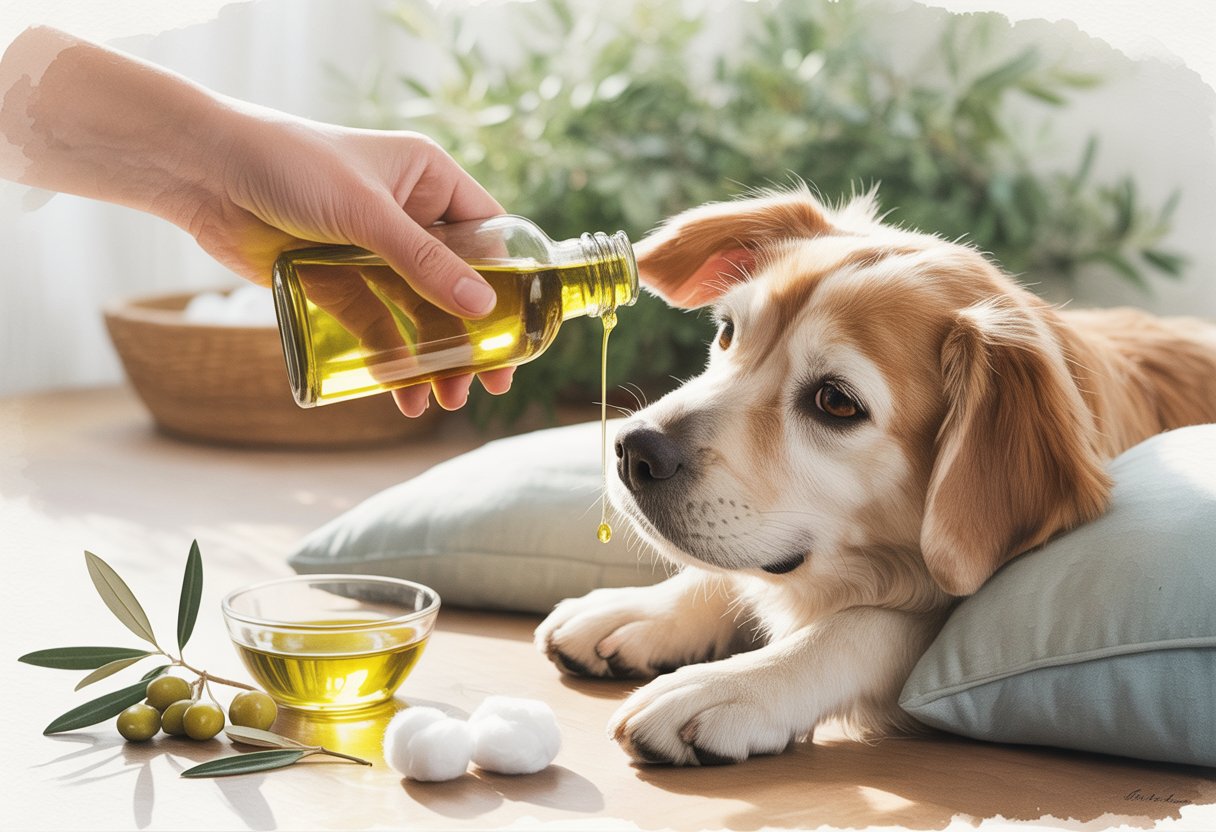
You can use plain olive oil to soften wax and debris in your dog’s ear before cleaning.
Warm a small amount to body temperature and put just a few drops into the ear canal with a clean dropper or cotton ball.
The oil helps loosen crusts and trapped dirt so you can gently wipe the outer ear with a soft cloth.
It adds light moisture to dry, flaky skin without harsh chemicals.
Don’t force oil deep into the ear or poke around with cotton swabs.
If your dog shows pain, a strong smell, heavy discharge, or keeps scratching, stop and see your vet.
How Natural Remedies Work for Dog Ear Infections
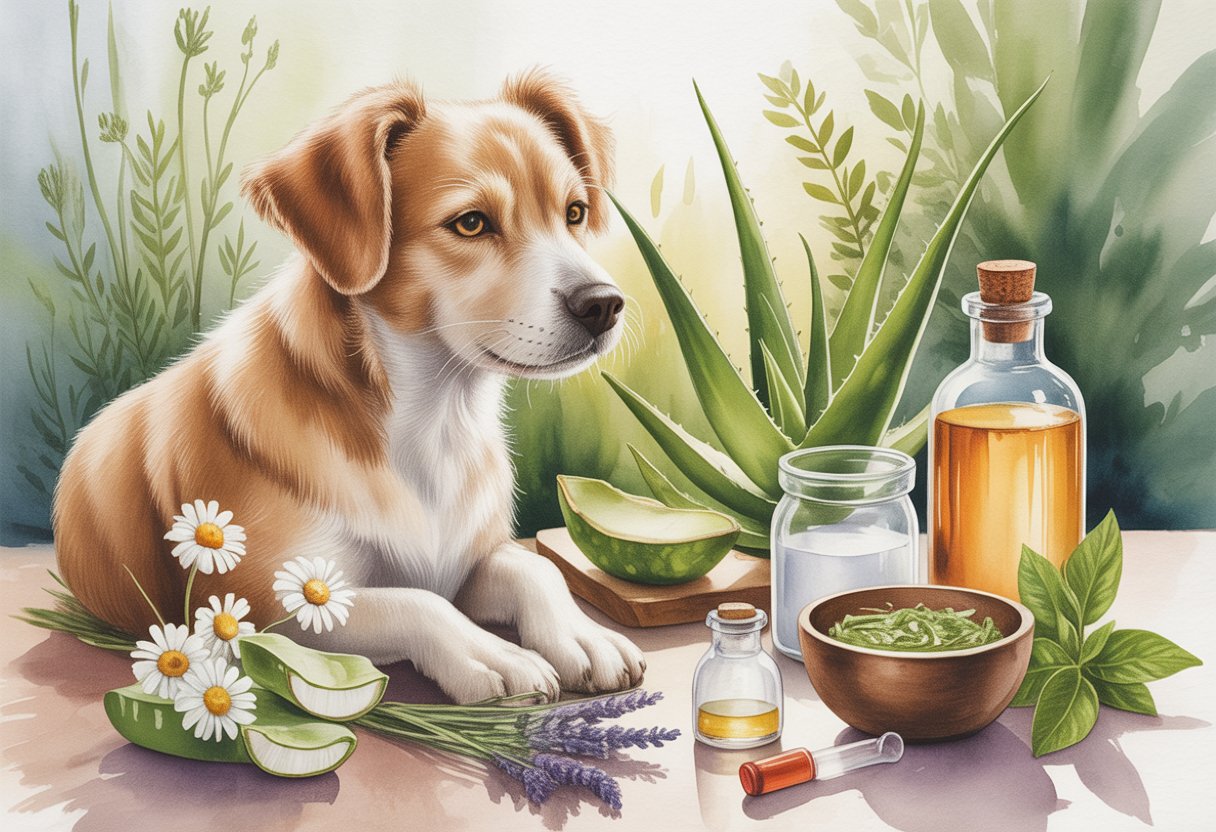
Natural remedies aim to dry up moisture, clear out debris, calm inflammation, and help good microbes in the ear.
You’ll get a sense of how infections begin and why home treatments might help—or why sometimes they just can’t cut it.
Understanding the Causes of Ear Infections
Ear infections usually start when the normal ear balance gets thrown off.
Extra moisture, wax buildup, stuff stuck in the ear, or allergies can let bacteria or yeast move in.
Breeds with floppy ears or lots of ear hair tend to trap more moisture and debris.
Check for redness, odor, discharge, head shaking, or scratching—these can mean a secondary infection from things like food allergies, skin issues, or poor airflow.
Natural remedies can help with drying, debris removal, and lowering yeast or bacteria, but they don’t fix the root causes like food sensitivities or hormone problems.
Benefits and Limitations of Natural Approaches
Natural treatments sometimes help if you catch the infection early and it’s mild.
Stuff like diluted vinegar or saline can dry and clean; coconut oil or some herbs can soothe skin; probiotics and diet tweaks can help the microbiome over time.
But there are limits.
If your dog has bad pain, fever, thick pus, or keeps having problems, natural care probably isn’t enough.
Home remedies might even hide symptoms and delay real help.
Stop anything that stings or swells, and see your vet for severe, ongoing, or worsening infections.
When to Seek Veterinary Attention

Watch for warning signs that mean you need a vet right away.
Pain, heavy discharge, fever, or sudden behavior change all call for quick professional care.
Recognizing Severe Symptoms
If your dog yelps in pain when you touch their ear, or keeps shaking their head and pawing at it, get to a vet as soon as possible.
Thick discharge that smells bad—especially if it’s yellow, green, or bloody—should set off alarm bells.
Notice any swelling or heat around the ear? A stubborn odor that sticks around even after gentle cleaning can signal trouble.
Keep an eye out for changes in balance, walking in circles, a tilted head, or sudden hearing loss. Those signs might mean the infection’s moved deeper into the ear.
A fever, loss of appetite, or heavy lethargy? Those symptoms suggest the infection could be spreading.
If your dog takes immunosuppressive meds, has diabetes, or a weak immune system, don’t wait—call your vet right away.
Potential Risks of Delayed Treatment
If you put off treatment, the infection can dig deeper into the ear and nearby tissues. That might mean permanent damage to the eardrum, chronic ear disease, or even hearing loss.
A stubborn infection can cause scarring and thickening in the ear canal. This makes future infections more likely—and honestly, much harder to treat.
In really bad cases, the infection can reach bone or cartilage. At that point, vets may need to do surgery or prescribe long-term medication.
Very rarely, an untreated ear infection can spread throughout the body and cause a much more serious illness. If things get worse after home care, or if new symptoms show up within 48–72 hours, it’s time to call your vet.