A Belgian Malinois is not simply a more energetic family dog. You are living with a bright, athletic working breed that needs structure, guidance, and meaningful tasks every day.
Without those outlets, you may see destructive chewing, fence jumping, frantic barking, nipping, or constant pacing.
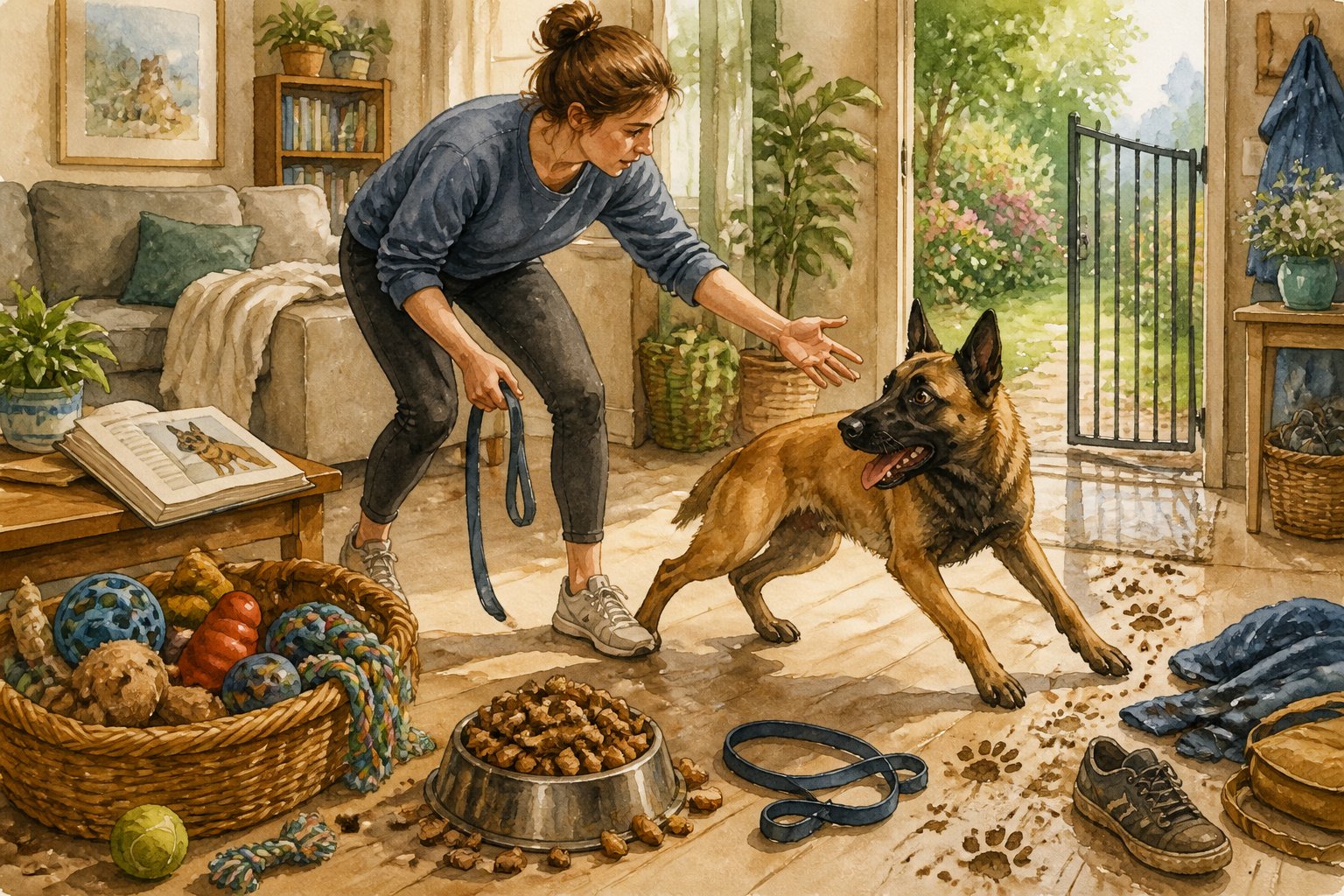
You can prevent most Belgian Malinois behavior problems by combining early socialization, reward-based training, mental enrichment, leash skills, and deliberate rest. The nine mistakes below show where owners commonly go wrong and what you can do instead.
1. Treating A Belgian Malinois Like A Backyard Pet
A fenced yard gives your Belgian Malinois room to move, not a complete lifestyle. This working breed needs interaction, training, problem-solving, and supervised activity with you.
When left alone for long periods, your dog may dig, chew, bark at every sound, or test the fence.
Create a daily job. Short obedience sessions, scent games, structured tug, retrieve practice, and household routines can give your dog useful direction.
Rotate activities so your Malinois does not depend on one endless game of fetch.
A secure yard still matters, especially because athletic Malinois may climb or clear ordinary fencing. Treat outdoor space as one tool in a larger plan, not as a substitute for companionship and training.
2. Delaying Early Socialization And Exposure
Waiting for your Belgian Malinois puppy to “grow up” before training or socialization can create fear and overreaction. Early experiences help your puppy learn that people, surfaces, vehicles, sounds, and calm dogs are normal parts of life.
You do not need to force greetings. Take your puppy to safe locations, keep enough distance for relaxed behavior, and pair new sights with small, high-value treats.
Introduce umbrellas, delivery carts, elevators, hats, traffic, grooming tools, and different flooring at a gentle pace. Watch your puppy’s body language.
If your dog freezes, hides, lunges, or stops taking food, increase distance and make the exposure easier. Your goal is calm neutrality, not excitement toward every person or dog.
3. Relying On Exercise Instead Of Mental Work
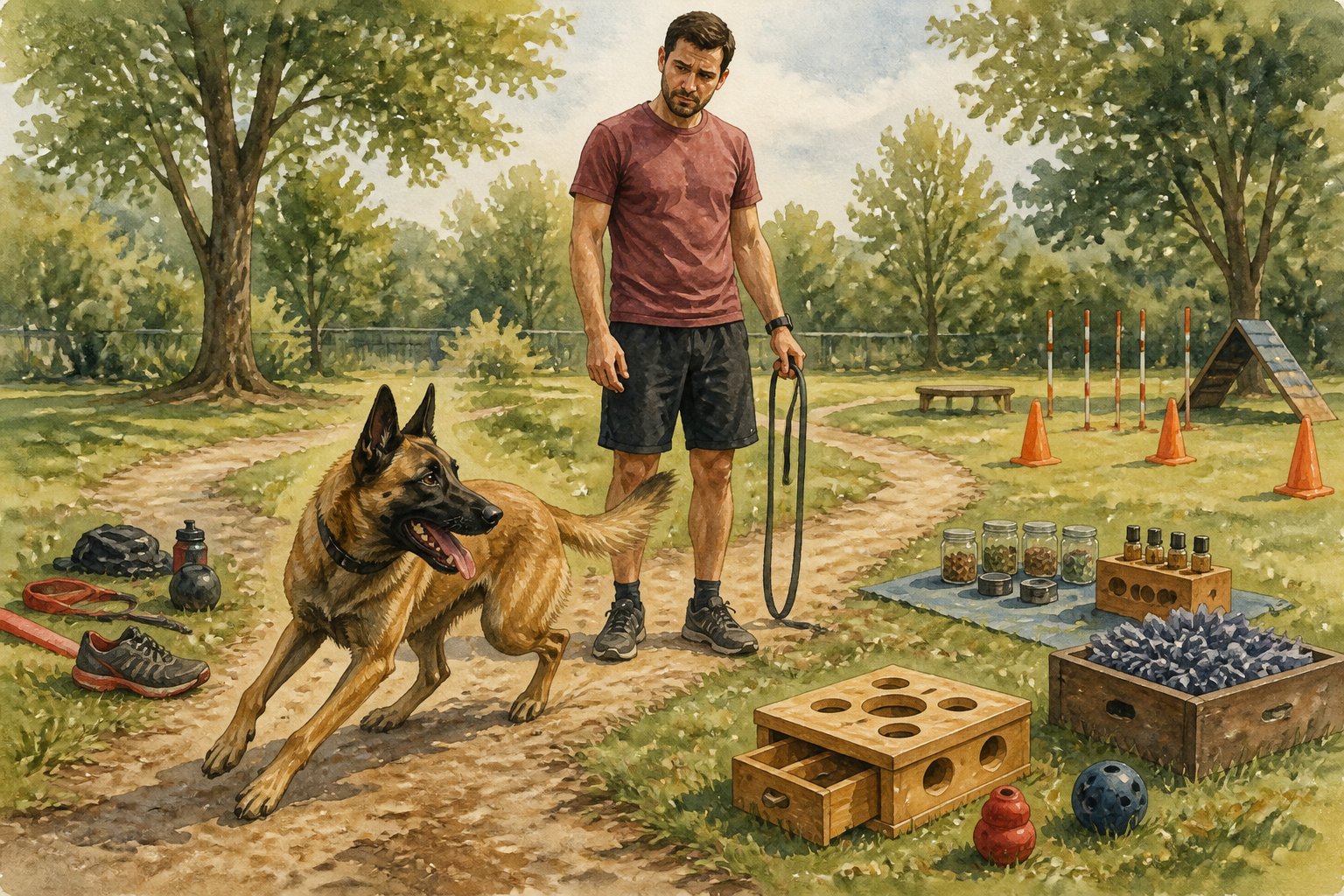
Running your Belgian Malinois harder each day can build stamina without improving self-control. A dog that once tired after a long walk may soon need even more physical activity to reach the same result.
Add mental work before simply adding distance. Practice obedience sequences, scent searches, shaping games, trick training, food puzzles, and controlled toy retrieves.
You can hide kibble around a room, ask for a down before releasing a toy, or teach your dog to back up and weave through your legs. Short sessions often work well.
Ten focused minutes of nose work or problem-solving may settle your dog more effectively than an hour of frantic ball chasing. Balance physical exercise with thinking, sniffing, and calm exploration.
4. Failing To Teach A Calm Off-Switch
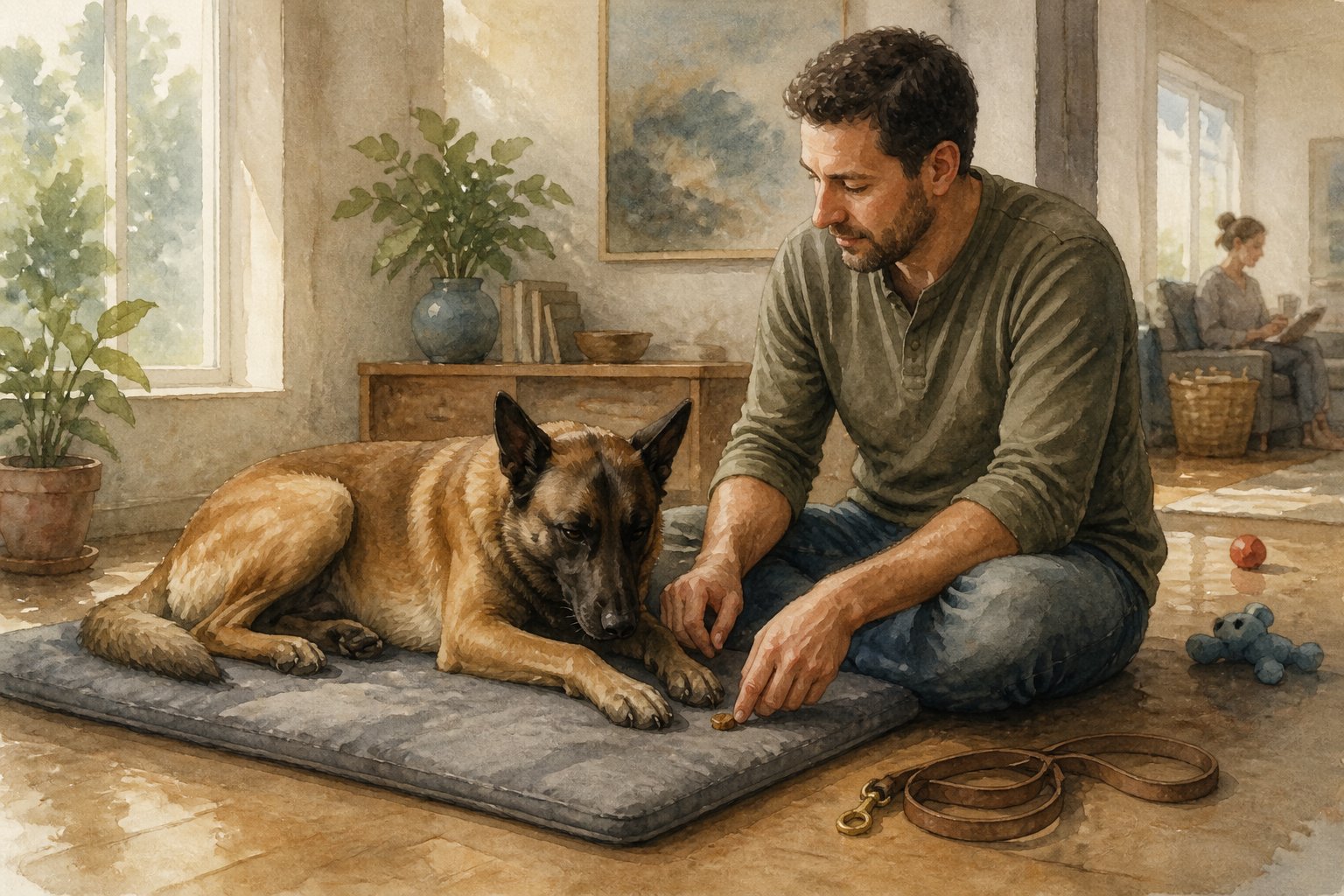
Many Belgian Malinois do not automatically know how to relax. If you reward constant motion, demand barking, or frantic toy behavior with more activity, your dog may learn that staying aroused keeps the fun going.
Teach a “place” or mat behavior in a quiet room. Reward four paws on the mat, then gradually reward longer periods of stillness.
Quietly mark relaxed signs such as a sigh, lowered head, soft eyes, or a hip rolled to one side. A crate can provide a safe rest area when introduced positively.
Keep sessions short at first, offer a chew or stuffed food toy, and never use the crate as punishment. Planned naps are especially useful for puppies and dogs that become mouthy or overstimulated.
5. Allowing Bite Drive To Escalate During Play
Belgian Malinois often have strong prey drive and intense toy motivation. If you let your puppy chase hands, grab clothing, or bite ankles for entertainment, the behavior can become painful and difficult to control as your dog grows.
Use long toys to keep hands away from teeth. Start and stop tug with clear cues such as “take it” and “drop,” then pause the game if teeth touch skin or clothing.
Resume only when your dog is calm. Give your Malinois appropriate outlets, including durable chew items, structured tug, retrieve games, and scent work.
Avoid rough wrestling that encourages uncontrolled grabbing. If biting includes stiff body language, guarding, or escalating pressure, seek qualified help early.
6. Using Harsh Corrections Or Physical Punishment
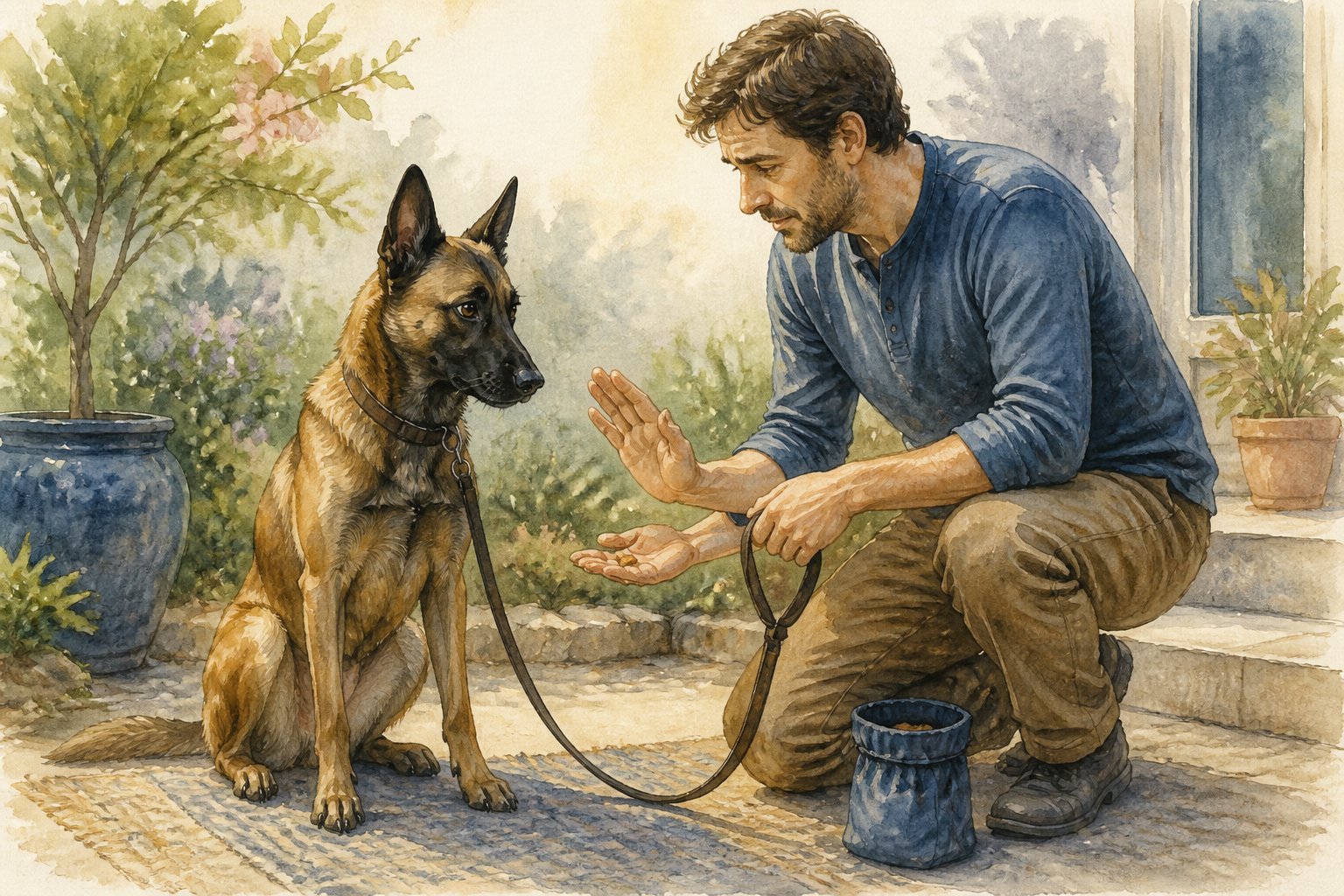
Hitting, scruffing, pinning, leash jerking, and shouting can damage your relationship with a sensitive, observant working dog. Punishment may suppress warning signals without changing the fear, excitement, or confusion driving the behavior.
Use clear cues, careful management, and rewards for the behavior you want. If your dog jumps, remove attention and reward four paws on the floor.
If your dog ignores a cue, lower the distraction, guide the behavior with a known signal, and reinforce the correct response. Reward-based training does not mean allowing poor behavior.
You can calmly end access to a toy, pause play, close a gate, or remove your dog from a tempting situation. Physical safety and professional guidance matter when aggression or serious fear is present.
7. Being Inconsistent With Rules And Boundaries
A Belgian Malinois quickly notices when a behavior earns permission one day and correction the next. If jumping is acceptable in old clothes but not before guests, or furniture access changes by mood, your dog receives unclear information.
Choose simple household rules before problems develop. Decide where your dog may rest, how greetings happen, which rooms are restricted, and what cue releases your dog from a position.
Every person in the home should follow the same plan. Reward compliance often, especially around distractions.
Consistency does not require constant control. Predictable routines help your dog make good choices without repeated conflict, which builds confidence and improves reliability.
8. Letting Leash Pulling Become A Daily Habit
Allowing your Belgian Malinois to drag you toward dogs, scents, or people rewards pulling with access. Over time, the behavior becomes stronger, and a powerful adult dog can make ordinary walks unsafe.
Start in a quiet area with a well-fitted harness or collar and high-value rewards. Reinforce your dog whenever the leash is loose or your Malinois checks in with you.
If pulling begins, stop or calmly change direction instead of moving toward the distraction. Build difficulty gradually.
Practice near your home before adding busy sidewalks, parks, bicycles, and other dogs. A short walk with good leash skills is more useful than a long walk filled with pulling and frustration.
9. Over-Training A High-Drive Dog Into Burnout
A dog that loves work may keep performing after fatigue, stress, or discomfort begins. Repeating drills for too long can create sloppy responses, irritability, frantic behavior, or a dog that struggles to settle after training.
Keep sessions brief and end while your Belgian Malinois is still eager. Mix easy wins with harder tasks, provide water and quiet breaks, and vary the setting without constantly increasing pressure.
Watch for yawning, sniffing, avoidance, slower responses, excessive panting, or loss of interest. Rest supports learning and physical health.
Puppies need substantial sleep, and adults also benefit from days with lighter activity. If your dog shows persistent soreness, reluctance to move, or a sudden behavior change, arrange a veterinary evaluation.
Building A Sustainable Daily Malinois Routine
Balancing Physical Exercise, Training, And Rest
Build your routine around several modest activities rather than one exhausting workout. A day might include a sniffing walk, two short obedience sessions, a controlled play period, food enrichment, and scheduled rest.
Adjust the plan for age, health, weather, and temperament. Your goal is a dog that can work with focus, recover calmly, and sleep well at home.
Using Food, Toys, And Play As Reinforcement
Use part of your Belgian Malinois’s daily food for training, scent games, scatter feeding, or puzzle toys. Reserve favorite toys for recall, leash work, and impulse-control practice so they retain value.
Keep rewards timely and varied. Food may help with calm behavior, while tug or a ball may motivate a high-drive dog during obedience.
Teach your dog to release toys and wait politely before play resumes.
When To Work With A Qualified Professional Trainer
Seek help early if your dog shows fear, guarding, lunging, repeated biting, escape behavior, or aggression.
Choose a trainer who has experience with Belgian Malinois and uses humane, reward-based methods.
A qualified professional can assess triggers and improve your handling skills.
Veterinary support is also important when pain, anxiety, or another health issue may affect your dog’s behavior.