
Australian Shepherds are bright, athletic dogs. Their biggest behavior problems often come from well-meaning routines that miss what the breed needs.
A long walk, constant ball throwing, or occasional training may leave your dog fitter without making your home calmer.
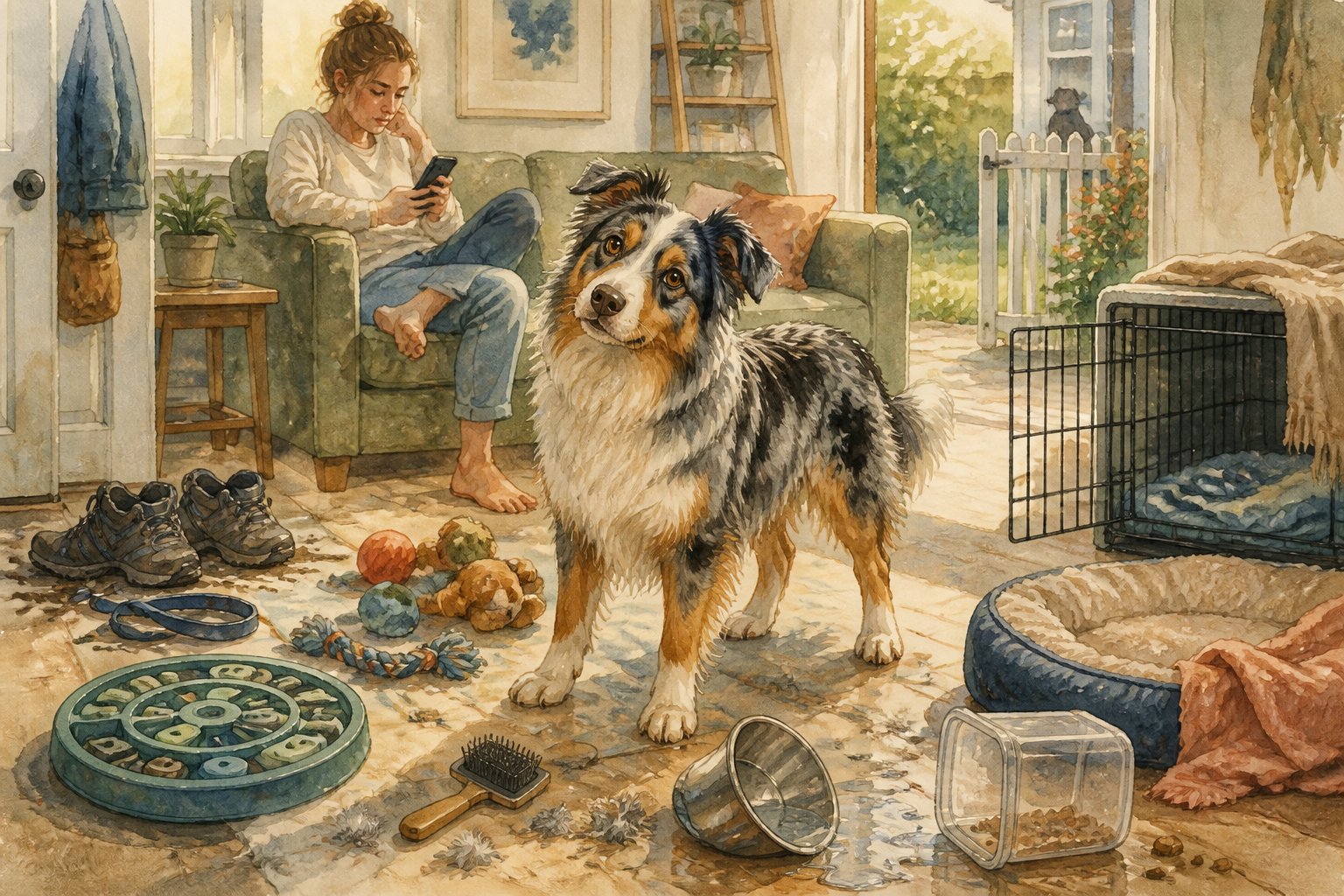
The goal is not to keep your Aussie busy every minute. It is to teach your dog when to work, when to relax, and how to make good choices around people and animals.
1. Relying On Long Walks Instead Of Daily Brain Work
A long walk exercises your Aussie’s body, yet it may not satisfy the alert, problem-solving side of the breed. You may notice your dog pacing, barking, or searching for trouble again a few hours later.
Add short mental tasks to the day. Scatter kibble in the yard, use a puzzle feeder, practice new tricks, or play a simple “find it” game with treats.
Five to ten focused minutes can be more useful than adding another mile. Rotate activities so your dog does not expect constant high-speed action.
Sniffing walks, calm leash practice, and brief training sessions help build a dog who can think instead of simply becoming more fit.
2. Failing To Teach A Mat Settle From Puppyhood
Many Aussies do not automatically switch off. Without a settle skill, your puppy may trail you from room to room, whine when nothing happens, or invent a job such as shredding a cushion.
Choose one mat or bed and reward your dog for stepping onto it, lying down, and staying there briefly. Deliver treats calmly, then release your dog before restlessness takes over.
Extend the time in small steps. Practice while you read, answer emails, or watch television.
A reliable mat settle becomes useful at home, in the car, at a café, and during visits. If your puppy struggles, reduce distractions and reward calm behavior more often.
3. Letting Heel Nipping And Kid Herding Become A Game
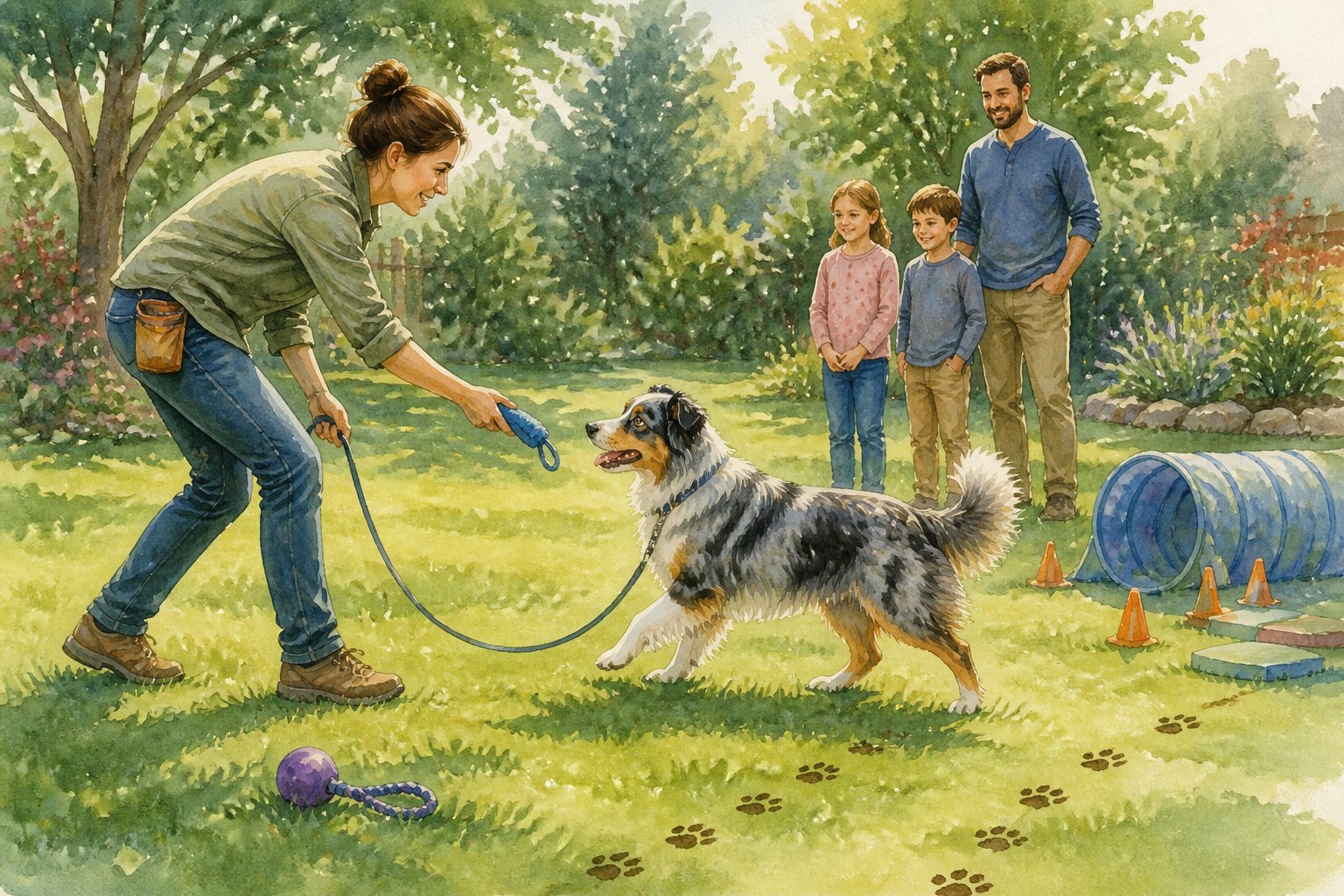
Chasing children can look funny until your Aussie begins circling, barking, or nipping at moving heels. Running away, squealing, or playing along can make the behavior more exciting.
Use gates, leashes, or close supervision around active children. Interrupt early, call your dog away, and reward a sit, hand target, or calm toy interaction.
Teach “leave it” and “come” during quiet practice before you need them in a busy yard. Give the herding instinct a safe outlet through scent games, structured tug, trick training, or controlled toy play.
Children should not be expected to train the dog or tolerate nipping. If teeth touch skin, calmly separate everyone and reset the activity.
4. Using Different Cues And Couch Rules In Each Room
Aussies quickly notice when household rules change by person or room. If “down” means lie down for one family member and get off the sofa for another, your dog receives unclear information.
Agree on simple rules before confusion grows. Decide whether furniture is always allowed, allowed by invitation, or off limits.
Use one cue for each behavior, and make sure everyone rewards the same response. When your dog makes a mistake, guide the correct choice instead of repeating the cue louder.
For example, invite your Aussie to a mat, reward the choice, and keep the sofa rule consistent. Clear patterns reduce arguments and help your dog respond confidently.
5. Creating A Fetch Addict With Endless Ball Throwing
Endless fetch can build intense arousal rather than calm satisfaction. Your Aussie may begin staring at the ball, barking at your hands, or demanding another throw whenever you pause.
Use fetch in short sets with clear starts and finishes. Ask for a drop, brief eye contact, or a calm sit before each throw.
Put the toy away while your dog is still successful, then offer a sniffing game or a rest period. Rotate in lower-impact activities, especially for puppies and dogs with joint concerns.
Food searches, trick training, chewing, and relaxed walks give your dog other ways to use energy. If your Aussie cannot disengage from the ball, keep it out of sight between planned sessions.
6. Skipping Early Exposure To Joggers, Visitors, And Busy Cafés

Avoiding new experiences can leave your Aussie unsure around strangers, traffic, or busy public places. Flooding your puppy with crowded parks and constant greetings can create the same problem through overwhelm.
Choose calm, controlled exposure. Watch joggers from a comfortable distance, reward your dog for noticing them, and leave before your puppy becomes tense.
Invite one quiet visitor at a time, and allow your dog to approach rather than forcing contact. At a café, begin during a slow period with a mat, water, and a short visit.
Signs that you have gone too fast include hiding, frantic pulling, repeated barking, or refusal of treats. Increase distance and make the next session easier.
7. Mistaking Pacing, Barking, And Chewing For Simple Disobedience
Pacing, door chewing, dusk barking, and constant shadowing often signal unmet needs. Your Aussie may need mental work, a quiet nap, a safe chew, or help coping with a trigger.
Before correcting the behavior, review the day. Did your dog sniff, train, rest, and chew appropriately?
Was the environment too busy? A punishment may stop the sound for a moment while leaving the stress or boredom in place.
Manage the setting and offer a better option. Close the blinds for passing-car barking, provide a food puzzle, or guide your dog to a mat.
If the behavior appears suddenly, becomes intense, or includes fear, pain, or aggression, schedule a veterinary check.
8. Leaving An Aussie Unsupervised With Running Children Or Small Pets
Australian Shepherds can react quickly to movement, especially when children run or small pets dart away. Even a friendly dog can chase, grab, or injure another animal during an exciting moment.
Use active supervision, secure barriers, and separate spaces. Do not rely on your dog’s good intentions or a child’s ability to read canine signals.
Give your Aussie a mat or gated area where calm behavior earns rewards. Practice recalls, “leave it,” and gentle disengagement away from the main trigger.
Keep small pets protected behind secure barriers, and never allow chasing as entertainment. If your dog fixates, stiffens, stalks, or cannot respond to you, increase distance and seek qualified force-free help.
9. Buying An Aussie For Looks Without Planning A Working-Dog Routine
The striking coat and bright eyes attract many people. Appearance does not show you the daily work an Aussie may need.
A dog bred for alertness and movement can struggle in a home with little training, structure, or time outdoors. Before bringing one home, plan weekday care, exercise, enrichment, grooming, supervision, and training.
Include rainy-day activities and a safe way to manage your dog when you are busy. Puppies also need gradual freedom, frequent rest, and careful social exposure.
Ask whether your schedule suits an active, sensitive working breed rather than assuming a yard will solve everything. Without that plan, intelligence and energy may appear as barking, chasing, or destruction.
Building A Sustainable Aussie Routine
Pair Physical Exercise With Scent Work And Training
Give your Aussie a mix of movement, sniffing, and learning. A practical day might include a relaxed morning walk, a short training session, a food search, and quiet rest.
Adjust intensity for age, health, weather, and your dog’s recovery.
Use Predictable Household Rules And Reward-Based Boundaries
Keep cues, furniture rules, greetings, and feeding routines consistent. Reward calm choices generously, then redirect unwanted behavior without yelling, leash jerks, or physical punishment.
Your dog learns faster when the correct option is clear and safe.
Know When A Qualified Force-Free Trainer Or Veterinarian Is Needed
Persistent fear, reactivity, aggression, sudden behavior changes, or inability to settle deserves professional support.
Your veterinarian can check for pain and health problems.
A qualified force-free trainer can create a safe behavior plan.
Mention the breed during medical visits and ask about relevant health screening, including medication sensitivity risks.