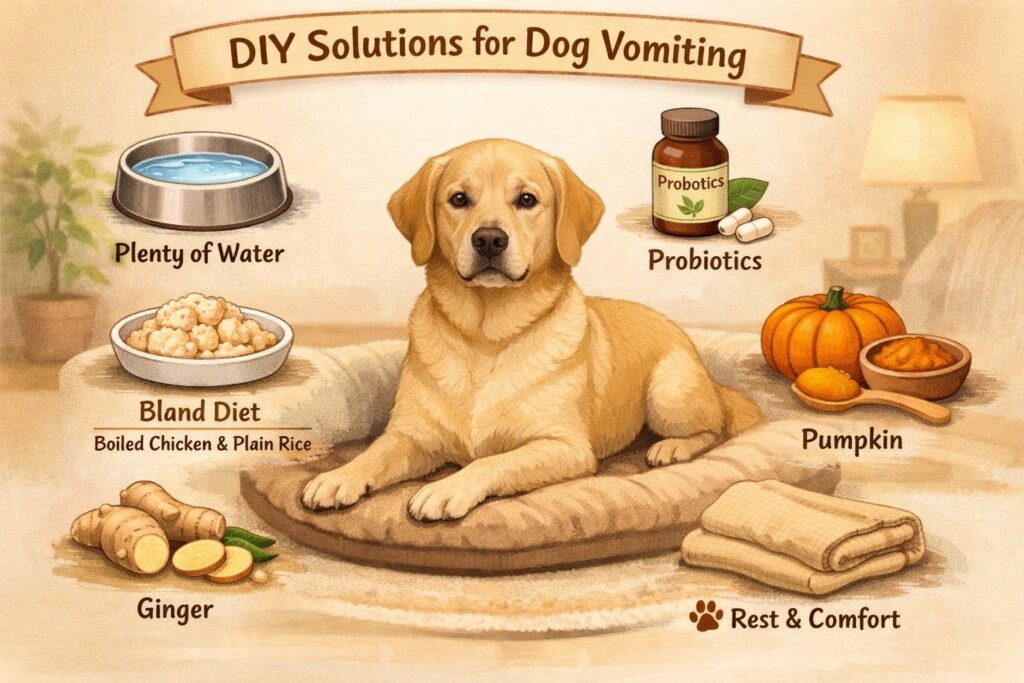
Dogs vomit for all sorts of reasons, and honestly, you can make a big difference just by staying calm and practical. Here, I’ll walk you through some simple, safe things you can try at home to help an upset stomach, cut down on dehydration, and support your pup’s recovery—without accidentally making things worse.
You’ll find easy, low-risk tips—stuff like short fasting, gentle foods, hydration tricks, and ways to keep your dog calm—that often help with mild vomiting. I’ll also flag when it’s time to call your vet.
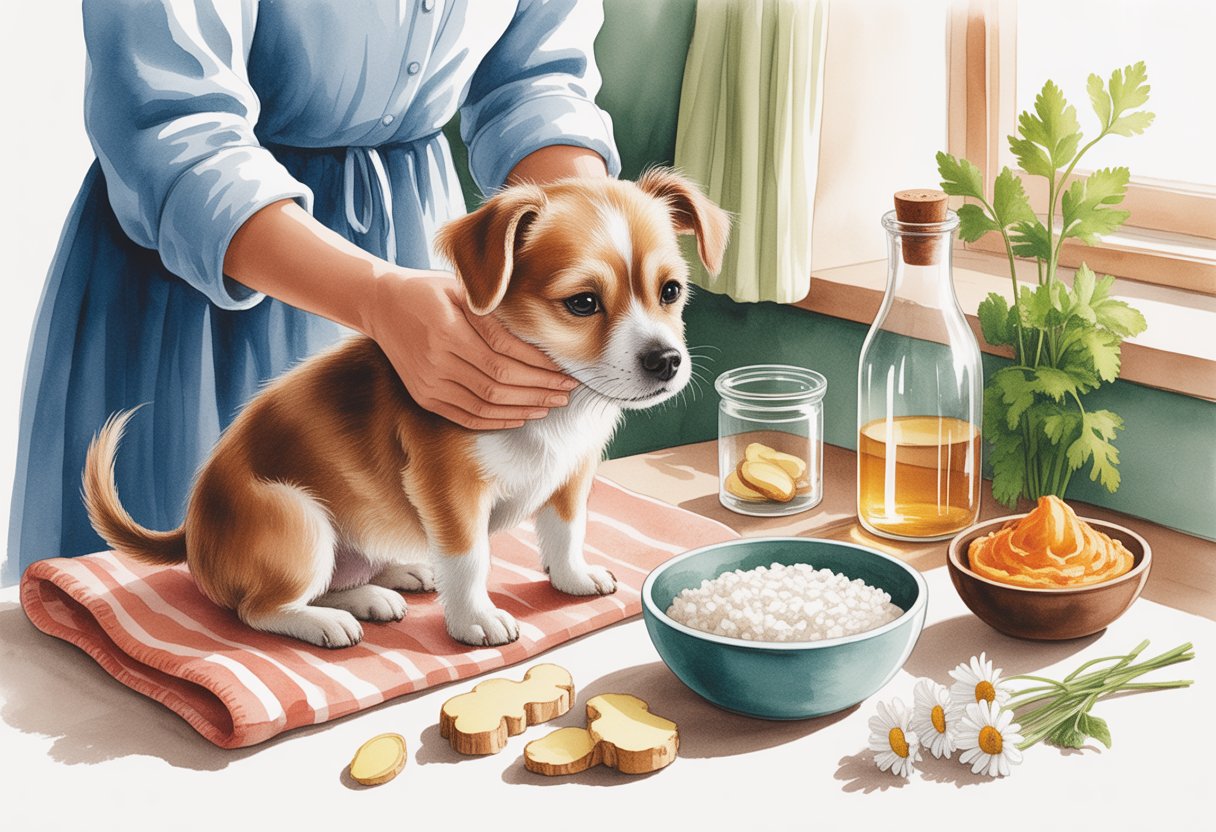
Just follow the straightforward advice below to try some at-home fixes. You’ll also learn how to spot warning signs that mean you need professional help.
Fasting your dog for 12-24 hours to rest the stomach

If your adult dog vomits a little but still acts alert, try skipping food for 12 to 24 hours. This short break gives the gut a chance to settle down and can help stop more vomiting.
Always leave out fresh water so your dog doesn’t get dehydrated. Offer small sips often rather than letting them gulp a bunch at once, since long gulps might bring the vomiting right back.
After the fast, start with tiny, bland meals—plain boiled chicken and white rice in small amounts. Feed every few hours and see if your dog’s appetite and energy return to normal.
Don’t fast puppies, tiny dogs, elderly dogs, or pets with health issues like diabetes. Those dogs might need food or medical care fast, so if you’re not sure, call your vet.
Offering small amounts of boiled white rice and boiled chicken
Start with a spoonful or two of plain boiled white rice mixed with shredded, skinless boiled chicken. Give this every couple of hours for a small dog—just a bit more for larger pups.
Keep it bland and just warm, not hot. This combo digests easily and usually won’t upset your dog’s stomach further.
Watch your dog after each small meal. If the vomiting stops and stools look firmer over a day or two, you can slowly bump up the portions and feed a bit more often.
Skip fatty cuts, spices, bones, and brown rice while your dog’s recovering. If your dog keeps vomiting or seems weak, reach out to your vet.
Providing plenty of fresh water to prevent dehydration
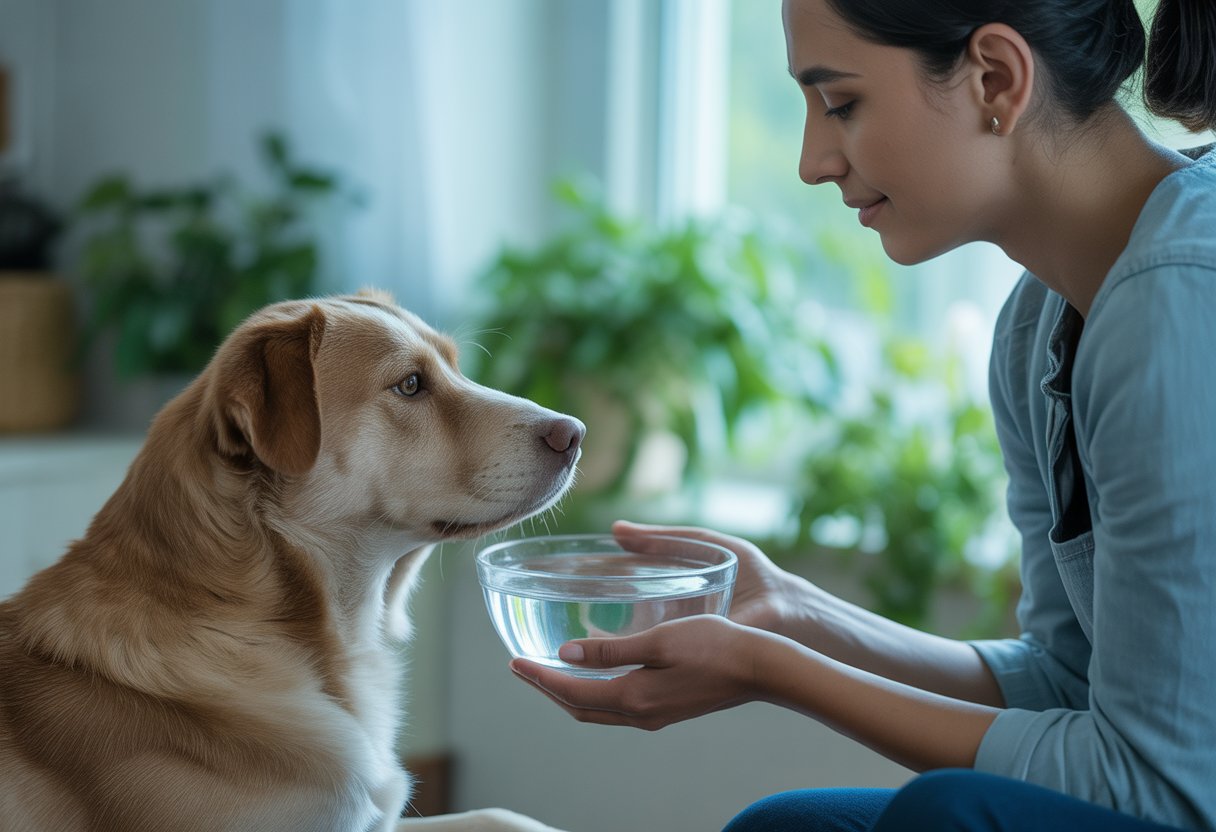
Keep fresh water handy for your dog at all times. Vomiting and diarrhea can drain fluids fast, so regular sipping helps them bounce back.
Swap out the water daily and wash the bowl. Dogs sometimes refuse stale or dirty water, which just ups the risk of dehydration.
Offer small sips often, not a whole bowl at once after vomiting. Too much at once can just trigger another round of puking, so let your dog have a few sips every 10–15 minutes.
If your dog won’t drink, try giving ice chips or a splash of low-sodium chicken broth for flavor. Sometimes that’s enough to tempt a reluctant pup to hydrate.
Watch for dry gums, sunken eyes, or sluggishness—classic dehydration signs. If you spot these or your dog can’t keep fluids down, don’t wait—call your vet.
Feeding plain canned pumpkin to soothe digestion
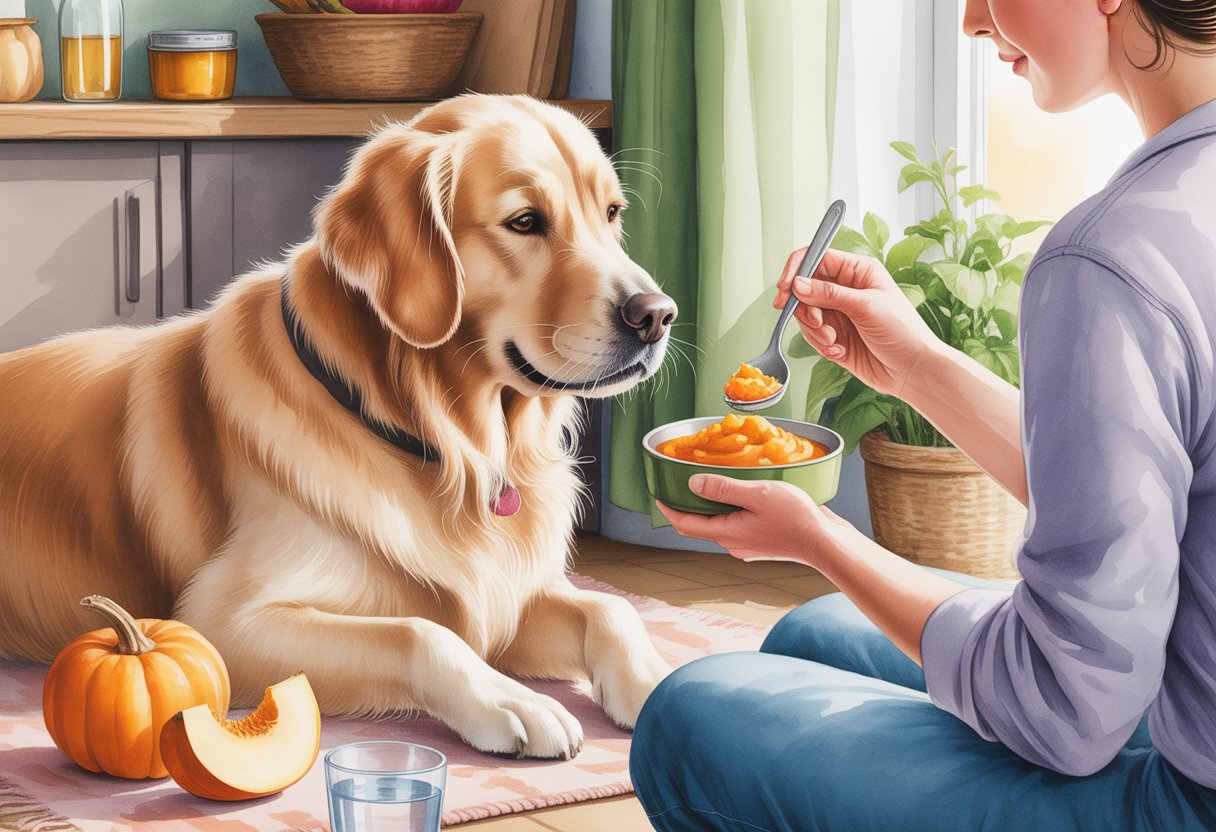
Plain canned pumpkin can really help when your dog has mild vomiting or loose stools. It’s packed with fiber that can both firm up runny poop and help sluggish digestion along.
Start with a small amount: about 1 teaspoon for little dogs, 1 tablespoon for bigger ones, once or twice a day. Keep an eye on your dog’s vomiting, appetite, and energy before giving more.
Only use plain pumpkin puree, not pie filling. Pie filling’s got sugar, spices, and sometimes xylitol, which is toxic for dogs.
If vomiting gets worse, lasts more than a day, or your dog seems weak or super thirsty, stop home remedies and check in with your vet.
Using ginger in small doses as a natural anti-nausea remedy
You can try ginger in tiny amounts to help calm your dog’s stomach. Ginger has a mild anti-nausea effect and, honestly, a lot of people use it for motion sickness or upset tummies in both humans and pets.
Start super small: about 1/4 teaspoon of fresh grated ginger or a sliver of cooked ginger for a little dog. For bigger dogs, up to 1/2 teaspoon should be fine. Give it once and watch for any weird reactions.
Mix ginger into a tiny bit of plain food or a treat to help your dog eat it. Don’t give ginger if your dog’s on blood thinners or has a bleeding disorder—ask your vet first.
If vomiting keeps up, gets more frequent, or you see stuff like lethargy or bloody vomit, call your vet. Ginger’s great for mild nausea, but it’s not a replacement for real medical care if things get serious.
Giving ice chips slowly to encourage hydration
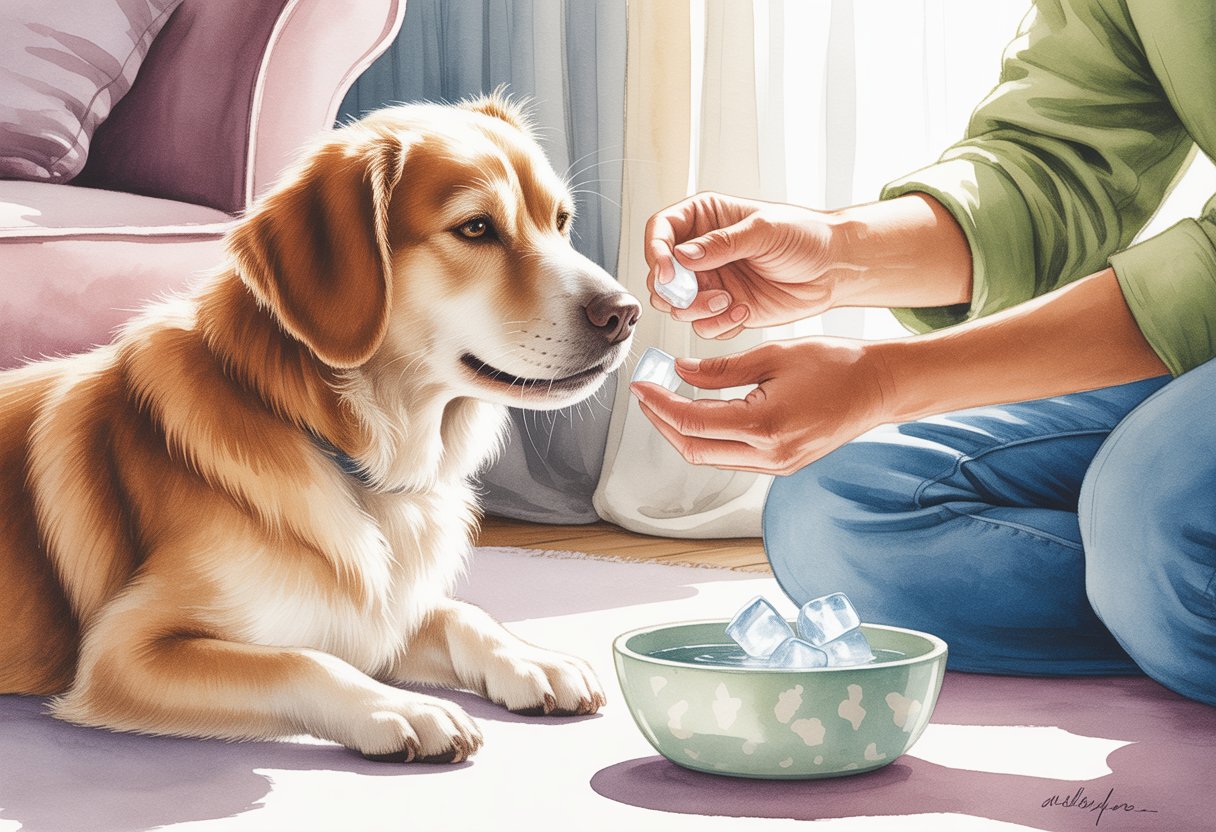
When your dog’s been vomiting, try offering small ice chips instead of a full bowl of water. Ice chips melt slowly, so your dog gets just a little water at a time—less likely to upset the stomach.
Hold the chips in your hand or put a few on a plate. Let your dog lick them off when ready, and repeat every 10–15 minutes.
Look for signs your dog’s getting better—fewer retches, brighter eyes, normal gum color. If your pup coughs, gags, or has trouble swallowing, stop right away.
Never force-feed ice or use big chunks; choking’s a real risk. If your dog refuses all fluids or keeps vomiting, get in touch with your vet.
Keeping your dog in a calm, stress-free environment

Keep your dog in a quiet room after they throw up. Soft lighting and less noise really help them relax.
Give them a comfy bed and a shallow bowl of water nearby. Small, frequent sips work better than letting them chug.
Stick to a basic routine for meals and bathroom breaks. Dogs love predictability—it eases their anxiety and lowers the odds of more vomiting.
Limit visitors, keep things low-key, and skip rough play until your dog’s back to normal. Too much excitement can bring the stomach issues right back.
Talk to your dog in a gentle, reassuring tone. Your calm presence actually helps them feel safe.
If your dog likes their crate, set it up as a cozy hideaway with a blanket and a favorite toy. Don’t force them in—let them choose if that’s their safe spot.
Avoiding sudden diet changes or rich foods
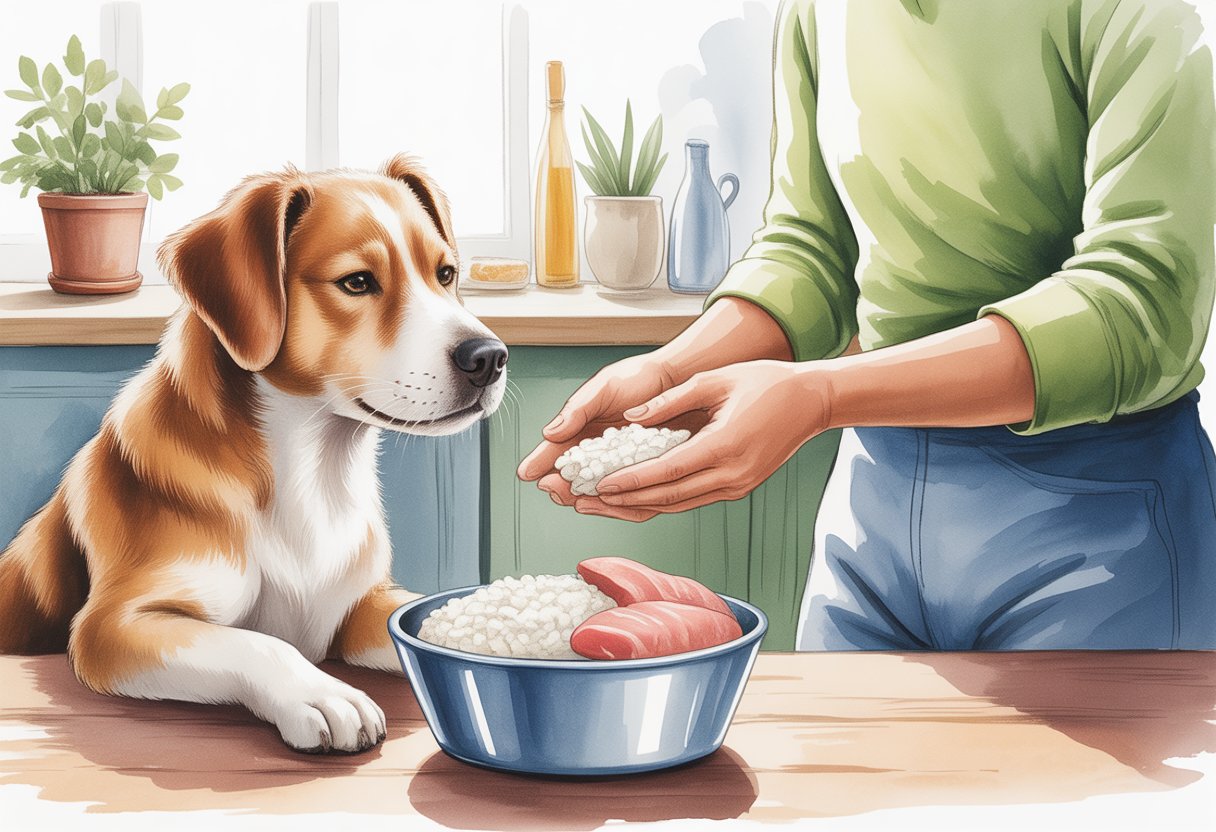
Switch your dog’s food slowly—take about 7–10 days. Mix a little bit of the new food in with the old, and up the new portion day by day.
Skip rich table scraps, fatty leftovers, and people food. Those can easily trigger vomiting or even pancreatitis. High-fat meals are especially risky for sensitive dogs.
If you’re trying a new brand or recipe, start with small amounts. Watch for any vomiting, diarrhea, or loss of appetite for a few days.
Stick to predictable mealtimes and portions. Dogs do best with a steady routine, and it helps prevent stomach upsets from erratic feeding.
Understanding the Causes of Dog Vomiting

It’s smart to figure out what likely set off the vomiting and know what warning signs mean you need a vet. Home triggers can be food changes, poisons, or even motion. Serious signs? Repeated vomiting, blood, or collapse—those aren’t things to mess around with.
Common Triggers in Household Environments
A lot of dogs vomit after eating stuff they shouldn’t. Think garbage, spoiled food, human meds, xylitol gum, and houseplants like lilies or sago palm.
Even a sudden diet change or scarfing food too fast can cause a bout or two of vomiting.
Medications, topical flea stuff, or cleaning chemicals sometimes upset stomachs or even poison dogs. Motion sickness from car rides or stress from loud noises can make dogs gag or puke too.
If vomiting happens right after eating, suspect food or how they ate. If it follows a walk or car ride, maybe they picked up something outside or it’s motion sickness.
Recognizing Symptoms That Require Veterinary Attention
If your dog vomits once and then acts fine, just keep an eye on them. But get to the vet if vomiting’s frequent (say, more than twice in a few hours), looks bloody or black, or comes with lethargy, fever, pale gums, or breathing trouble.
Also, call your vet if you see dehydration signs (dry gums, skin that doesn’t snap back), sudden weakness, belly pain, or if a puppy, senior, or sick dog vomits at all. Jot down what your dog ate, when the vomiting started, and any other symptoms—it’ll help your vet figure things out fast.
When to Consult a Veterinarian

Watch for danger signs that mean you should get help. Keep notes on what you see and when—it’ll help your vet in a pinch.
Warning Signs of Serious Health Issues
If your dog keeps vomiting or can’t hold down water, get to the vet right away. Vomit that’s bloody, looks like coffee grounds, or is black could mean internal bleeding or a serious gut issue.
Look for other red flags: high fever, severe lethargy, collapse, belly pain, fast breathing, or seizures. These are emergencies.
Act fast if your dog swallowed poison, a foreign object, or has ongoing diarrhea and vomiting. Puppies, seniors, and chronically ill dogs can go downhill quickly. If you’re not sure, just call your vet or an emergency clinic—better safe than sorry.
How to Document Vomiting Episodes for Evaluation
Jot down each vomiting event with the time, appearance, and how often it happens. Pay attention to the color and consistency—like whether it’s foam, food, bile—or if you spot blood or anything weird.
This info can really help your vet figure out if it’s something like toxins, a new food, or maybe a blockage. Keep tabs on any changes in appetite, drinking, bathroom habits, or your dog’s energy.
If you changed their diet, or if they got into the trash or plants, make a note of that too. Same goes for any meds or supplements you’ve given recently.
Snapping a photo or short video of the vomit or your dog’s behavior can be super helpful. You might just keep a simple list or timeline on your phone to hand over at the clinic—those details can make a big difference.