
Bernedoodles combine intelligence, energy, and a coat that can mat quickly. Those traits make them affectionate companions, yet they also create predictable challenges when daily care lacks structure.
Your dog’s size, coat type, age, and personality should shape your routine. The right habits protect your Bernedoodle’s comfort and help you build a calm, reliable relationship from puppyhood through adulthood.

1. Skipping Daily Line Brushing With A Slicker Brush And Metal Comb
A Bernedoodle’s wavy, curly, or fleece coat can hide mats close to the skin. Brushing only the visible top layer often leaves tangles behind the ears, under the legs, around the collar, and across the hips.
Use a slicker brush for line brushing, working in small sections from the skin outward. Follow with a metal comb to check that the comb reaches the roots without catching.
Introduce grooming tools with treats and short sessions. If you find tight mats, avoid forcing the brush through them.
A professional groomer can remove severe tangles safely and check for irritated skin.
2. Waiting Past The 8–16 Week Socialization Window
The first 8 to 16 weeks are a key period for building confidence. Your puppy should experience safe, positive exposure to different people, sounds, surfaces, car rides, handling, and calm dogs.
Waiting can make new situations feel threatening instead of routine. Socialization does not mean flooding your puppy with busy places.
Keep exposures brief, controlled, and rewarding. Carry your puppy in areas where vaccinations are incomplete, and follow your veterinarian’s advice about disease risks.
Pair new experiences with treats and praise. If your puppy freezes, hides, or becomes frantic, increase distance and slow down.
Puppy classes led by a skilled trainer can support social skills while reinforcing safe handling and basic cues.
3. Using Inconsistent Rules For Jumping, Mouthing, And Recall

Bernedoodles learn quickly, including habits you meant to allow only once. If one person rewards jumping while another pushes the dog away, your dog receives mixed signals.
The same problem occurs when recall works indoors but is ignored outdoors. Choose simple household rules before problems grow.
Reward four paws on the floor, redirect mouthing to a toy, and use a calm cue such as “sit” before greetings. Practice recall on a long line in safe areas, then gradually add distractions.
Avoid repeating a cue when your dog is unlikely to respond. Move closer, make the task easier, and reward success.
Everyone in your home should use the same words, timing, and consequences.
4. Leaving A Bernedoodle Alone Too Long Without Independence Training
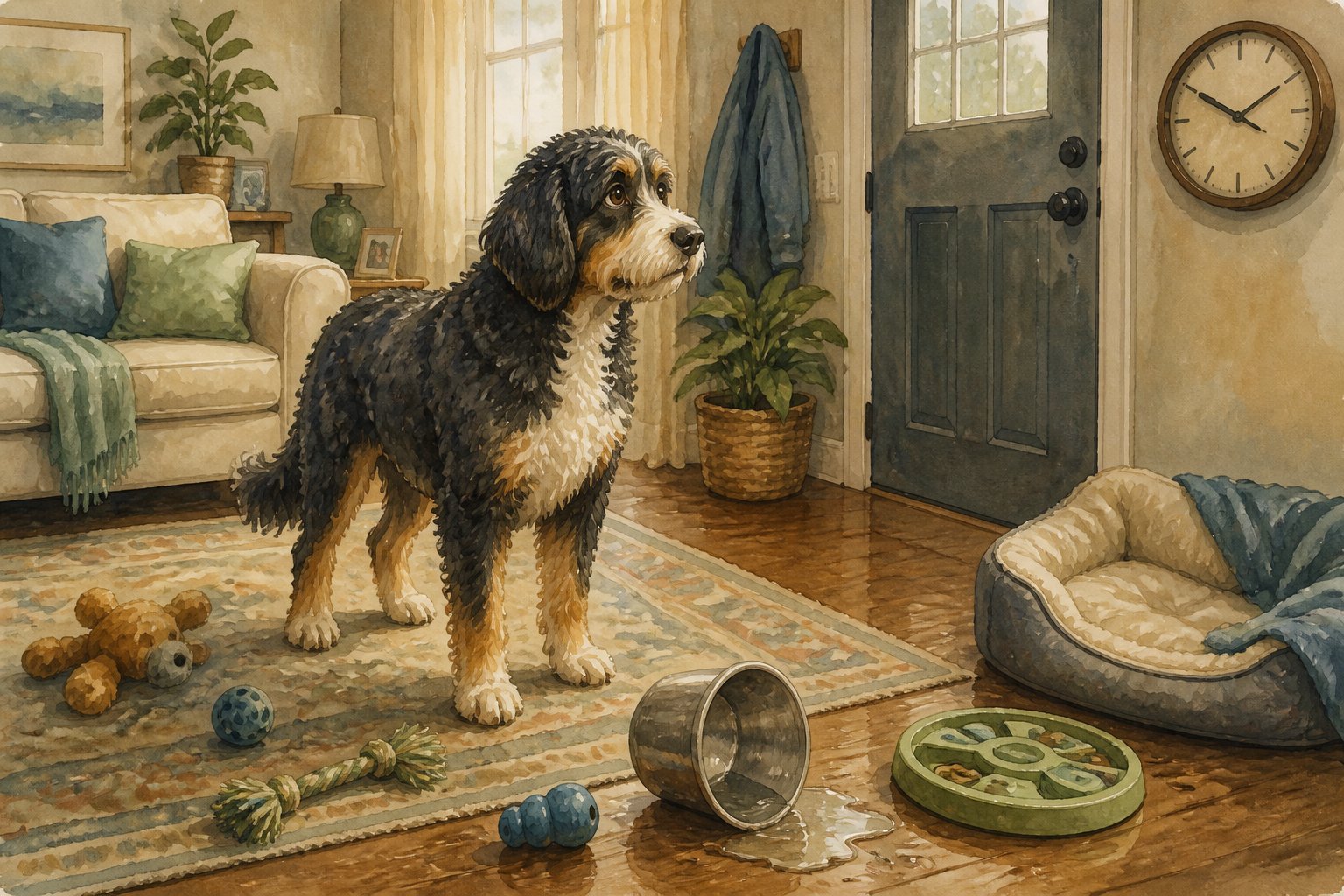
Bernedoodles often form strong attachments to their families. Long absences without preparation can contribute to barking, destruction, house-soiling, or separation anxiety.
A puzzle feeder alone will not fix distress if your dog is already panicking. Build alone-time skills in small steps.
Leave your dog behind a baby gate for a few seconds, return before distress rises, and slowly extend the time. Use a crate only when it has been taught as a safe resting place, never as punishment.
Provide a quiet area, water, safe chew items, and predictable departures. A camera can show whether your dog settles or struggles after you leave.
Persistent vocalizing, escape attempts, drooling, or self-injury calls for help from your veterinarian and a qualified behavior professional.
5. Underestimating The Exercise And Enrichment Needed Each Day
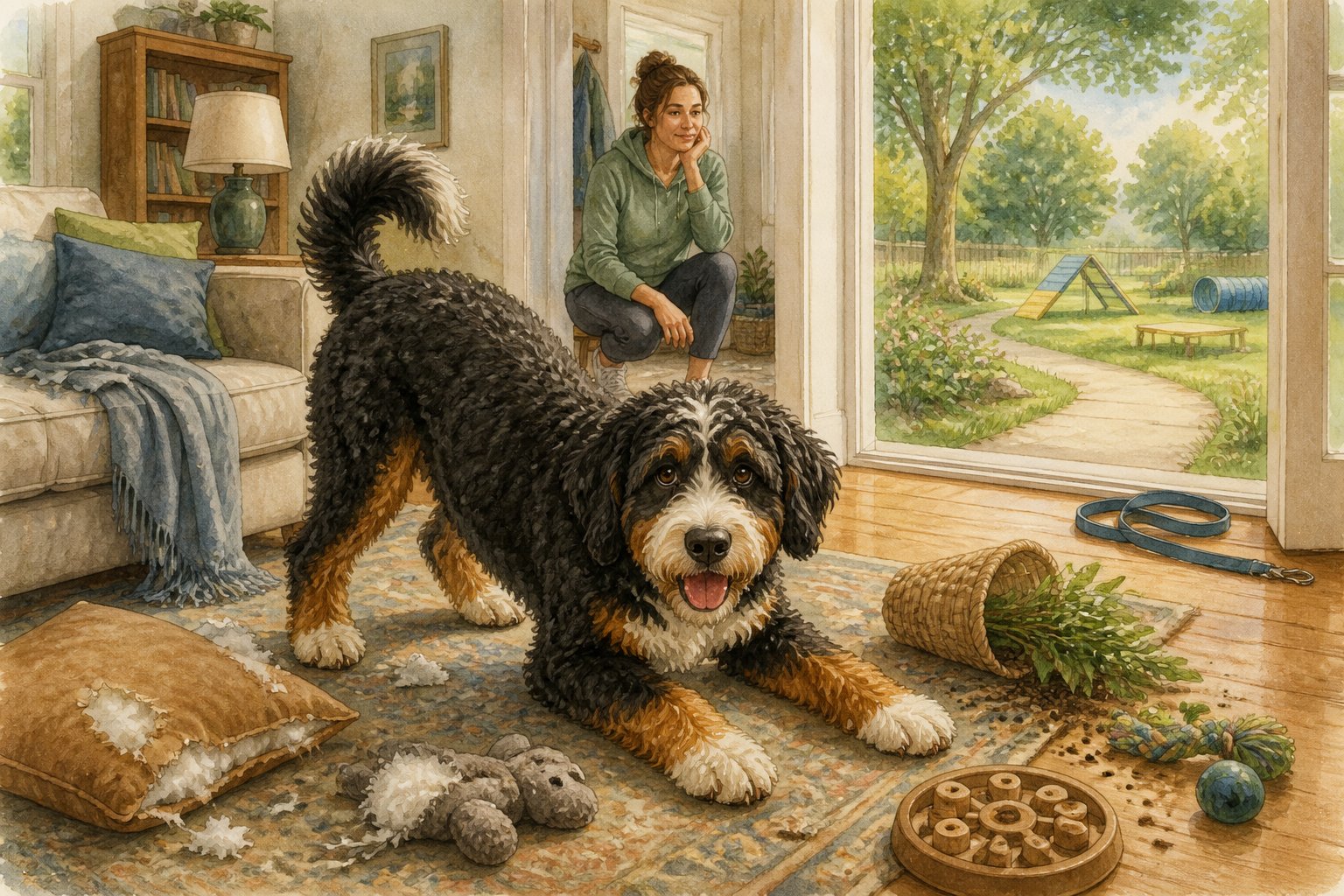
A Bernedoodle may become restless when daily life includes only a short bathroom walk. Exercise needs vary by age, size, health, and temperament, yet most dogs benefit from a mix of movement and mental work.
Offer age-appropriate walks, sniffing time, gentle play, training games, and food puzzles. Hide treats for supervised scent games, practice basic cues, or teach your dog to settle on a mat.
Mental enrichment can tire your dog without placing excessive strain on growing joints. Avoid forcing long runs, repeated jumping, or intense fetch with a young puppy.
Watch for limping, stiffness, heat stress, or unusual fatigue. Your veterinarian can help you create a safe activity plan, especially for a Standard Bernedoodle or a dog with orthopedic concerns.
6. Delaying Professional Grooming Beyond A 6–8 Week Schedule

Home brushing supports coat health, yet it does not replace professional grooming. Most Bernedoodles need an appointment about every 6 to 8 weeks, with timing adjusted for coat growth, length, and matting risk.
A groomer can bathe, dry, trim, clip nails, clean around sensitive areas, and identify skin problems. Waiting too long may turn a routine trim into a short shave because mats are tight against the skin.
That change can be stressful and may expose already irritated areas. Book appointments in advance, especially during busy seasons.
Teach your dog to accept paw handling, ear checks, brushing, dryers, and table restraint through short practice sessions. Share your preferred length and daily maintenance ability so the groomer can choose a practical style.
7. Choosing A Puppy Without Confirming Size, Coat, And Lifestyle Fit
A Bernedoodle’s adult size can range widely. A Standard may weigh 70 to 90 pounds or more, while Mini and smaller varieties may fit different homes, travel plans, and exercise routines.
Coat texture also affects brushing time, grooming cost, and allergy expectations. Ask about expected adult size, parent health testing, coat traits, temperament, and early socialization.
A responsible breeder should discuss your schedule, housing, activity level, and experience rather than focus only on appearance. Do not assume a Bernedoodle is hypoallergenic or naturally easygoing.
No dog is completely allergen-free, and individual temperament varies. Confirm feeding guidance, veterinary records, contracts, and post-adoption support before placing a deposit.
Choose the puppy whose likely needs fit your daily life, not simply the color or coat you find most appealing.
Build A Realistic First-Year Bernedoodle Budget
Your first-year costs can exceed the purchase price once food, veterinary care, training, grooming, equipment, and unexpected illness are included. Planning by category helps you avoid cutting care when expenses arrive together.
Food, Preventive Care, And Pet Insurance
Budget for quality food suited to your dog’s growth stage and size, plus gradual diet changes when needed. Include puppy visits, vaccines, parasite prevention, microchipping, spaying or neutering discussions, and routine testing.
Pet insurance may help with eligible accidents and illnesses, while exclusions, deductibles, waiting periods, and premiums vary.
Training, Grooming, And Essential Equipment
Set aside money for puppy classes, private help if needed, grooming every 6 to 8 weeks, brushes, combs, nail tools, a crate, gates, a bed, leashes, identification tags, and enrichment toys. Large dogs may require sturdier equipment as they grow.
Emergency Fund Planning
Keep a separate emergency fund for urgent exams, diagnostics, injury treatment, or sudden gastrointestinal problems. Insurance can support larger covered claims, yet you may still need to pay upfront.
Review your budget every few months as your Bernedoodle’s size and care needs change.
Create A Low-Stress Daily Routine
A predictable schedule makes training easier and helps your Bernedoodle know when to rest, play, eat, groom, and spend time alone. You can adjust the routine for age, work hours, weather, and health.
Exercise And Mental Enrichment
Combine walks, sniffing, training, play, and food puzzles instead of relying on one exhausting activity. Schedule calm rest after exercise, especially for puppies whose bodies and attention spans are still developing.
Alone-Time Practice
Practice brief separations every day, even when you work from home. Increase duration gradually, provide a safe resting area, and return calmly.
This routine teaches your dog that departures are temporary and manageable.
Consistent Household Rules
Use the same cues for sit, wait, leave it, come, and settle.
Decide where your dog may sleep and whether furniture is allowed.
Determine how greetings should happen.
Consistency from every household member prevents confusion and helps your Bernedoodle become a polite, confident companion.
![Bernedoodle Breeders in Alberta [2025] | List Of 4 Local Breeders](https://images.dog-breeds-expert.com/wp-content/uploads/2023/02/Bernedoodle-Breeders-in-Alberta-1024x536.jpg)