
Boston Terriers are bright, affectionate, and highly social. Their compact size can hide important care needs.
Many behavior problems begin with boredom, anxiety, unclear rules, missed potty breaks, or discomfort rather than stubbornness.

The following mistakes are common, practical to fix, and worth addressing early.
1. Mistaking Sudden Behavior Changes For Disobedience Instead Of A Health Problem
A Boston Terrier that suddenly growls, hides, has accidents, stops eating, or ignores familiar cues may be uncomfortable. Dental pain, an ear infection, urinary problems, allergies, joint pain, and breathing trouble can look like defiance.
Notice when the change began and what happens before it. Record appetite, sleep, bathroom habits, activity, coughing, scratching, and sensitivity to touch.
Share those details with your veterinarian instead of correcting the behavior first. Avoid punishment when your dog seems irritable or confused.
Pain can lower tolerance, and harsh responses may increase fear or make handling harder. A sudden behavior shift deserves a health check, especially in a normally friendly dog.
2. Leaving A Velcro Boston Terrier Alone Without Separation-Anxiety Training
Boston Terriers often follow you from room to room. If you suddenly leave for hours, your dog may bark, pace, chew doors, urinate indoors, or panic.
These actions signal distress, not revenge. Build alone-time skills gradually.
Step outside for a few seconds, return before your dog becomes upset, and extend the time in small increments. Pair departures with a safe food puzzle, a stuffed toy, or calm background sound.
Practice leaving and returning without dramatic greetings. Keep a predictable routine, provide exercise before longer absences, and use a camera to check for hidden signs of anxiety.
If your dog cannot remain calm for short periods, ask a qualified positive-reinforcement trainer or veterinary behavior professional for help.
3. Skipping Daily Exercise And Indoor Mental-Enrichment Games

A small body still needs regular activity. Without enough movement and mental stimulation, your Boston Terrier may bark at sounds, chew household items, chase shadows, or become restless at night.
Use short walks, scent games, food puzzles, trick training, tug, and supervised fetch. Several brief activities often work better than one long session, especially for a young dog or a Boston with breathing limits.
Rotate toys so they stay interesting. Hide part of your dog’s meal around a safe room, teach “find it,” or practice two minutes of sit, touch, and stay.
Watch breathing, posture, and recovery time. Enrichment should leave your dog satisfied, not overheated or exhausted.
4. Using Inconsistent Rules Instead Of Reward-Based Training
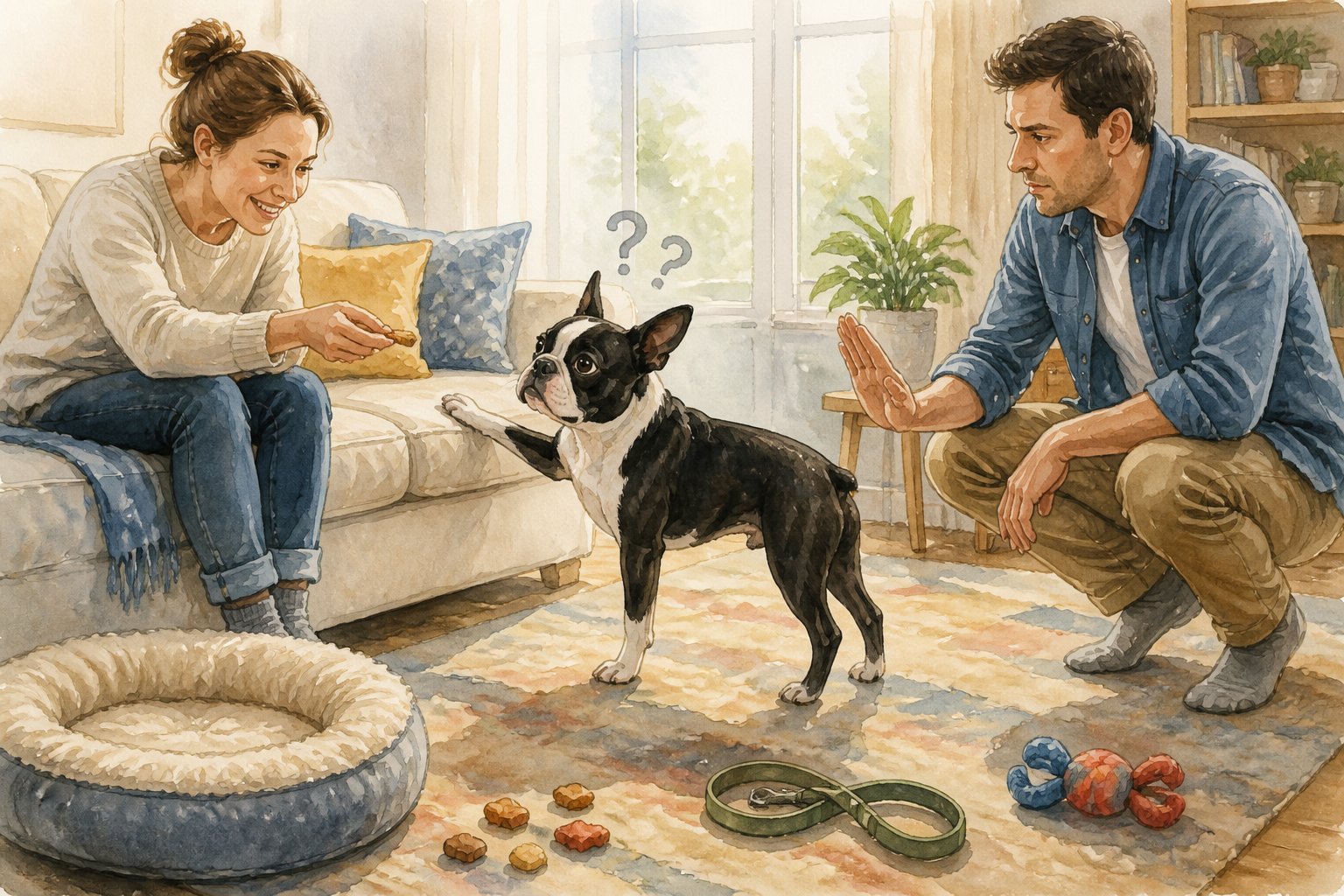
Your Boston Terrier learns from consequences. If jumping earns attention from one person but earns a correction from another, the behavior can persist because the rule is unclear.
Choose simple household rules and use the same cues every day. Reward four paws on the floor, quiet behavior, eye contact, and coming when called.
Small treats, praise, play, and access to favorite activities can all reinforce good choices. Avoid yelling, leash jerks, choke collars, and physical punishment.
These methods can increase fear and may worsen reactivity. Keep training sessions short, upbeat, and frequent.
A few successful repetitions during normal routines often produce better results than a long, frustrating lesson.
5. Waiting Too Long To Socialize A Boston Terrier Puppy

Early socialization helps your puppy view people, sounds, surfaces, handling, travel, and calm dogs as normal parts of life. Waiting until adolescence can make unfamiliar experiences more difficult.
Keep exposures brief and positive. Let your puppy watch a delivery worker from a safe distance, walk across different surfaces, hear household noises at low volume, and meet gentle people who offer treats without crowding.
Follow your veterinarian’s advice about vaccines and safe public areas. Do not force greetings or place a frightened puppy in the middle of a busy dog park.
If your puppy freezes, pulls away, or refuses food, increase distance and make the experience easier. Confidence grows through choice and repetition.
6. Exercising A Flat-Faced Boston Terrier In Heat Or Humidity
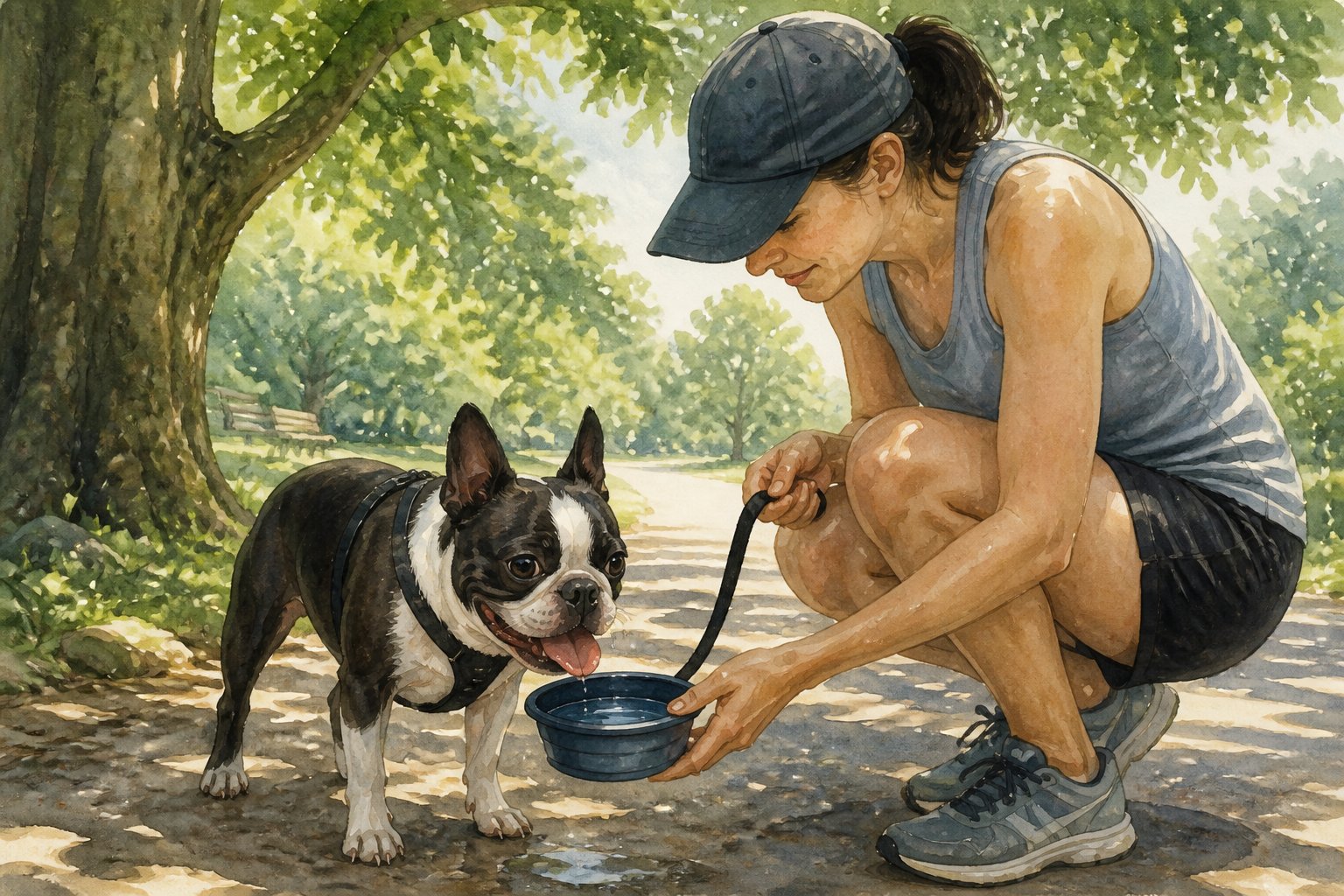
Boston Terriers have short muzzles, which can make cooling themselves harder. Heat, humidity, intense play, and poor air flow can lead to dangerous overheating, even during an activity that seems mild.
Walk during cooler morning or evening hours. Choose shade, carry water, use a well-fitted harness, and avoid hot pavement.
Indoor play and scent work are safer choices during heat waves. Stop immediately for heavy or unusual panting, noisy breathing, weakness, vomiting, confusion, bright red or pale gums, or collapse.
Move your dog to a cool area and contact a veterinarian urgently. Do not rely on fitness alone to protect a brachycephalic dog from heat stress.
7. Ignoring Early Eye, Dental, Skin, And Breathing Warning Signs
Boston Terriers can develop issues involving their prominent eyes, short airways, teeth, skin folds, and allergies. Squinting, redness, discharge, rubbing, bad breath, facial swelling, persistent itching, snoring that worsens, or reduced exercise tolerance should not be dismissed as normal breed traits.
Check your dog’s eyes and skin during routine handling. Brush the teeth with dog-safe toothpaste, inspect the mouth, and keep skin folds clean and dry when needed.
Never use human medication without veterinary guidance. Breathing deserves special attention.
Resting distress, blue or gray gums, fainting, or recovery that takes unusually long is an emergency. Early veterinary care often means simpler treatment and helps you separate a medical problem from a training problem.
8. Being Inconsistent With Potty Breaks And House-Training Routines
Boston Terrier puppies may need frequent bathroom trips because of small bladders, excitement, naps, meals, and play. Waiting for your puppy to signal reliably can lead to repeated accidents and slow progress.
Take your dog outside after waking, eating, drinking, playing, and confinement. Use the same door and toilet area, stay quiet until the job is done, then reward immediately.
A simple log can reveal your puppy’s natural schedule. Clean accidents with an enzymatic cleaner so lingering odor does not invite repeat marking.
Do not punish after the fact, because your dog will not connect the correction to the earlier accident. Regression in a previously trained dog warrants a veterinary check for urinary or digestive problems.
9. Accidentally Reinforcing Barking, Jumping, And Leash Reactivity
Your attention can reward behavior even when you are correcting it. Looking at, speaking to, pushing, or picking up your Boston Terrier may keep barking or jumping going.
Teach a replacement behavior before the trigger appears. Reward quiet looks, sitting for greetings, hand targeting, and walking beside you.
For leash reactivity, create distance from dogs or distractions and feed treats while your dog remains calm. Avoid forcing face-to-face greetings or tightening the leash as your only response.
A comfortable harness, high-value treats, and early intervention make practice easier. If your dog lunges, snaps, or cannot eat near a trigger, work with a qualified trainer and prioritize safety.
Creating A Realistic Daily Care Routine
Matching Exercise To Weather And Breathing Ability
Plan activity around temperature, humidity, pavement, age, fitness, and breathing quality. Your Boston Terrier may need several short outings rather than one demanding walk.
Build in water, shade, rest, and indoor alternatives.
Combining Training With Meals, Walks, And Play
Use part of your dog’s regular food for recall practice, leash skills, puzzle feeders, and calm behavior. Two-minute training sessions during normal activities are easier to maintain than a complicated schedule.
Keeping Household Rules Consistent
Write down key rules for jumping, furniture, barking, greetings, crate use, and potty breaks. Everyone should use the same words and reward the same behaviors.
Consistency reduces confusion and helps your dog make better choices.
When To Call A Veterinarian Or Certified Trainer
Red Flags That Need Prompt Veterinary Attention
Contact your veterinarian for sudden aggression, house-training regression, appetite changes, repeated vomiting, severe itching, eye pain, worsening snoring, exercise intolerance, or unusual lethargy. Seek emergency care for collapse, blue or gray gums, severe breathing difficulty, heatstroke signs, or unresponsiveness.
When A Qualified Positive-Reinforcement Trainer Can Help
Get professional support when barking, separation distress, leash reactivity, guarding, jumping, or puppy fear is disrupting daily life. Choose a trainer who uses reward-based methods and can explain each step clearly.
Why Medical Causes Should Be Ruled Out First
Pain, infection, digestive disease, urinary problems, allergies, and airway trouble can change behavior.
A veterinary exam helps you avoid treating a health problem as disobedience.
Training addresses habits that remain after your dog feels well.