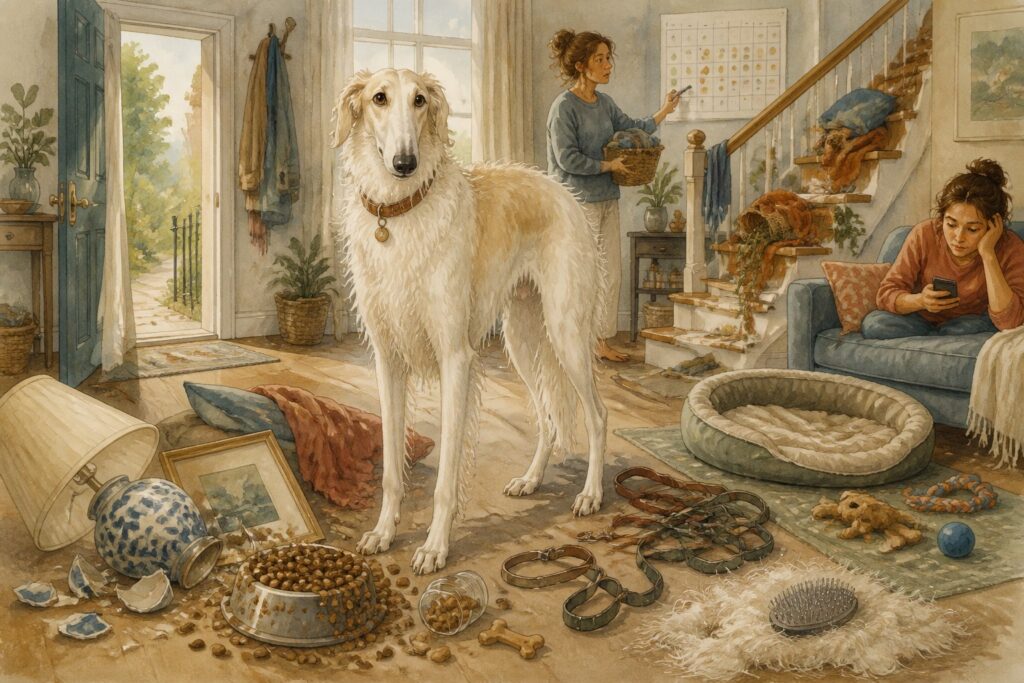
A Borzoi can be calm, affectionate, and remarkably graceful indoors. Yet, they can still make a sudden decision to chase, bolt, or escape.
Their history as Russian Wolfhounds shaped a dog that relies on sharp vision, explosive speed, and independent judgment.
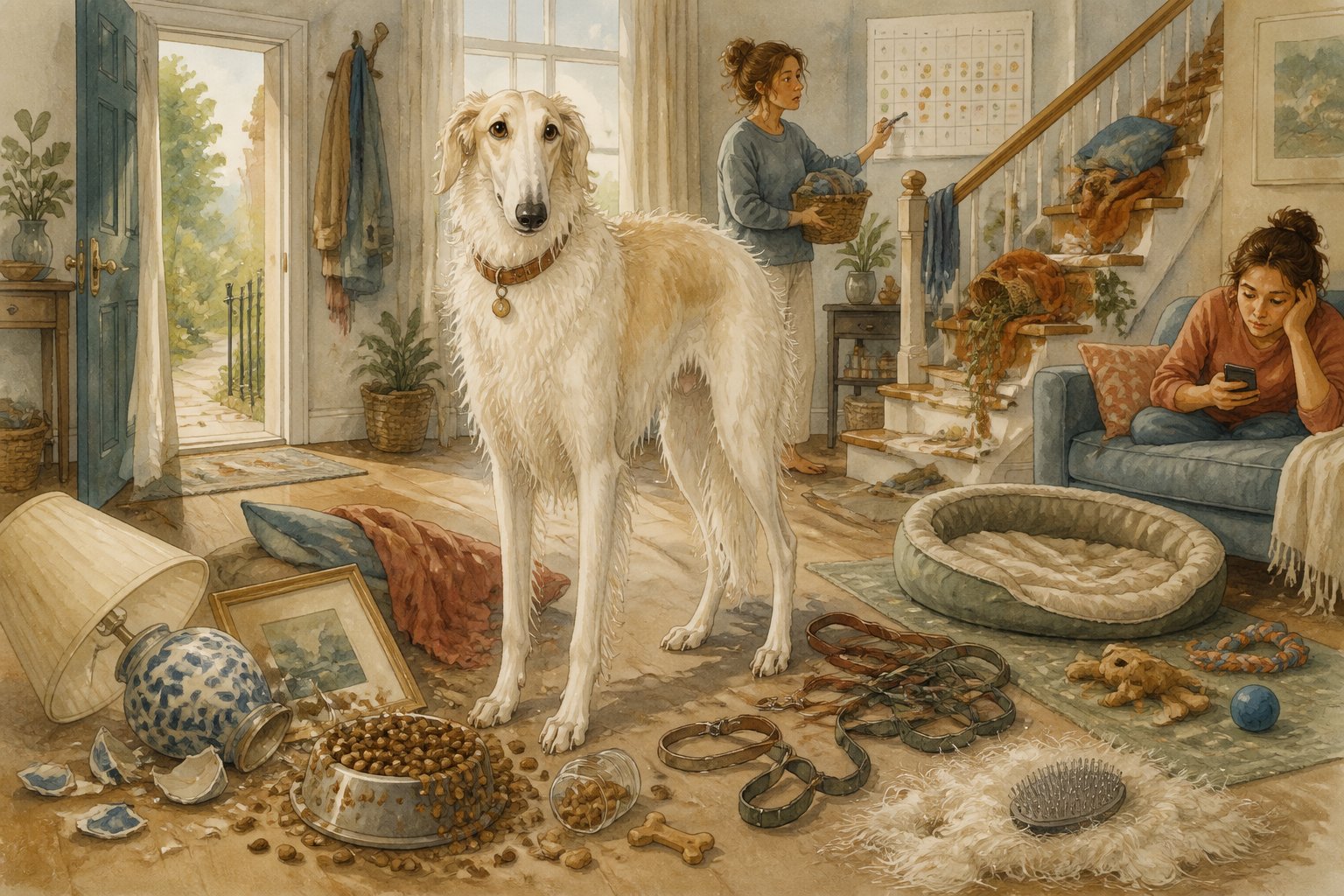
The 10 worst Borzoi owner missteps usually come from treating this sensitive sighthound like a highly biddable retriever.
1. Letting A Borzoi Off-Leash In An Unfenced Area
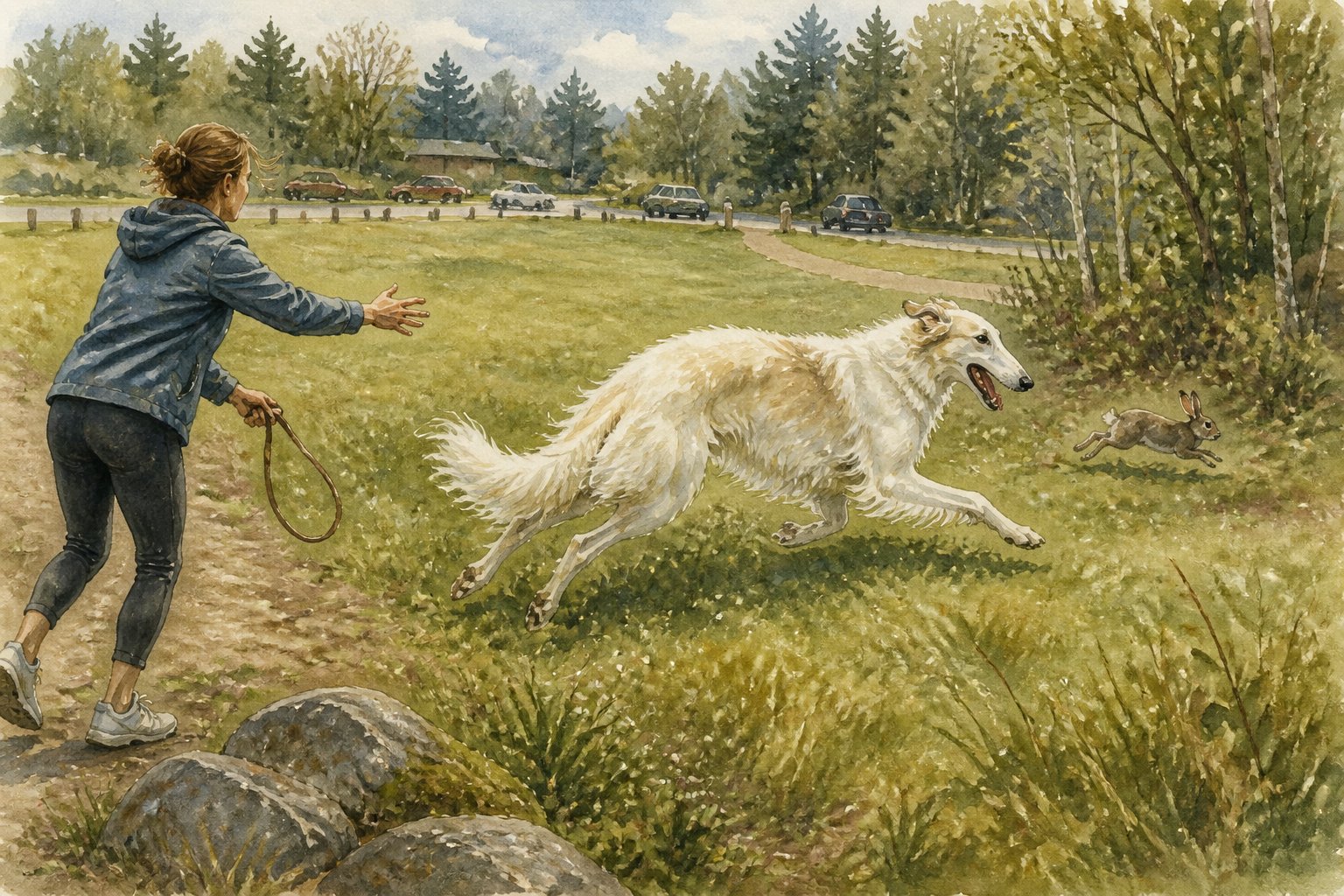
An unfenced field may look empty. Yet, a rabbit, deer, or moving bicycle can appear without warning.
Once a Borzoi locks onto motion, its prey drive can override food, calling, and previous obedience practice. Use a properly fenced dog park or a private exercise area instead.
A long line gives your dog room to move while keeping you connected during recall training. Choose a lightweight line, keep it away from tangled obstacles, and never rely on a verbal cue as your only safety measure.
Before every release, scan the area for gaps, open gates, wildlife, roads, and other dogs. A Borzoi’s speed can turn a small mistake into a dangerous chase within seconds.
2. Relying On Recall When Prey Drive Switches On
Recall training matters, yet you should treat it as a management tool, not a guarantee. Borzois were bred to pursue visible prey independently, so a squirrel or rabbit can create a powerful competing reward.
Build recall in short, upbeat sessions. Start indoors, move to a secure yard, then practice on a long line in a fenced area.
Use a high-value reward that your dog truly wants, and occasionally release your dog again after coming to you. This prevents recall from always ending the fun.
Do not repeatedly call when your Borzoi is already chasing. You may weaken the cue while teaching your dog that ignoring you works.
Prevent the chase first, then keep practicing in situations where success is likely.
3. Using An Insecure Fence Or Unlatched Gate
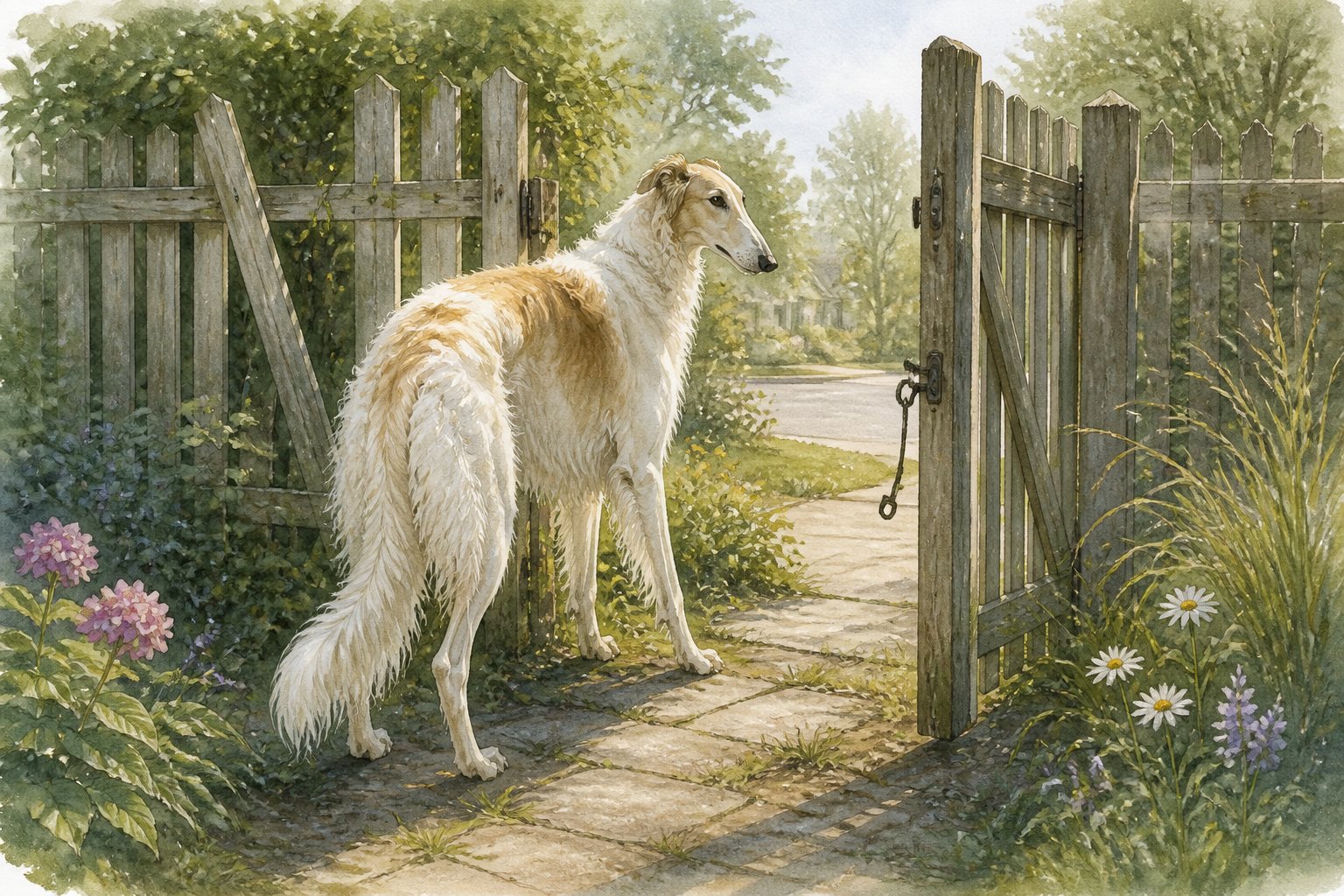
A Borzoi can squeeze through surprising spaces, dig under a barrier, or clear a fence when motivated. Chain-link may also provide footholds, while a visible animal outside can encourage jumping or climbing.
Inspect the perimeter at dog height and from the ground. A tall, smooth privacy fence is often safer than climbable mesh.
Reinforce the bottom with buried wire, paving stones, or another secure barrier where digging occurs. Use two-stage gate security, such as a reliable latch plus a carabiner.
Teach every household member to close the gate fully and check it before releasing your dog. Keep your Borzoi indoors during deliveries, landscaping, and other times when gates may remain open.
4. Underestimating A Borzoi’s Explosive Leash Pulling
A quiet walk can change instantly when your Borzoi spots a bird, cat, or running child. Their long legs and powerful acceleration can pull you off balance, especially if you use a collar that allows the dog to slip free.
Choose escape-resistant equipment fitted for a narrow sighthound neck. A well-fitted martingale collar, secure harness, or carefully selected combination can improve safety.
Check every buckle and attachment point regularly. Practice loose-leash walking in low-distraction areas before visiting busy parks.
Reward your dog for checking in, slowing down, and returning to your side. If your Borzoi becomes highly aroused, increase distance rather than adding harsh leash corrections.
Calm handling protects trust and gives you better control.
5. Leaving Borzois Alone Too Long Without A Plan
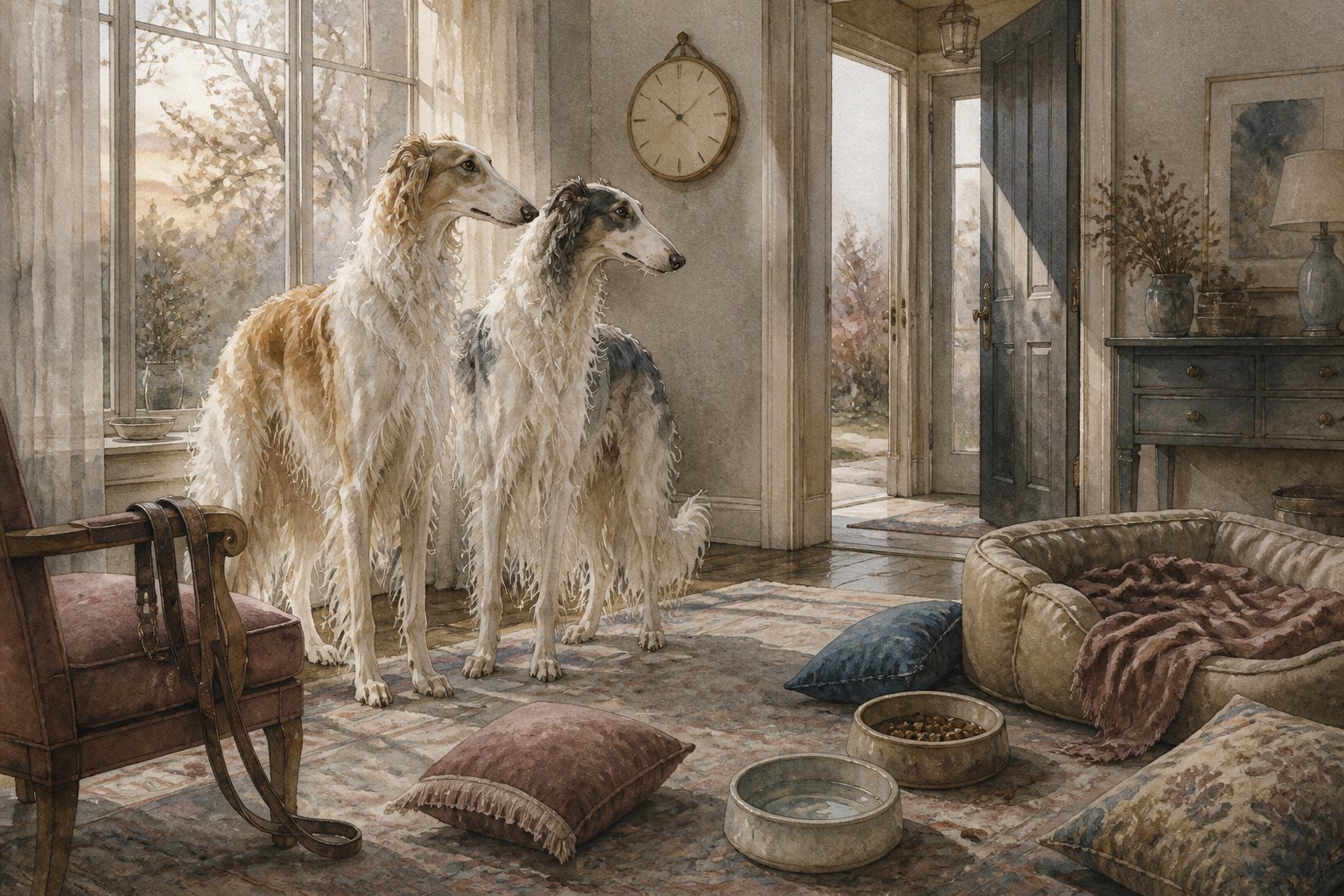
Borzois often enjoy quiet rest, yet they still need companionship and a predictable routine. Long, unplanned absences may lead to pacing, house soiling, loss of appetite, withdrawal, or destructive behavior linked to separation anxiety.
Track what happens while you are away with a camera. This can show whether your dog settles after a few minutes or remains distressed throughout the absence.
Arrange a dog walker, trusted sitter, or family visit when your schedule requires extended time away. Increase alone time gradually.
Offer a safe resting space, a food puzzle, and calm departures without dramatic goodbyes. If your dog panics, escapes confinement, or injures itself, seek professional help rather than forcing longer absences.
6. Treating Independent Training As Stubbornness
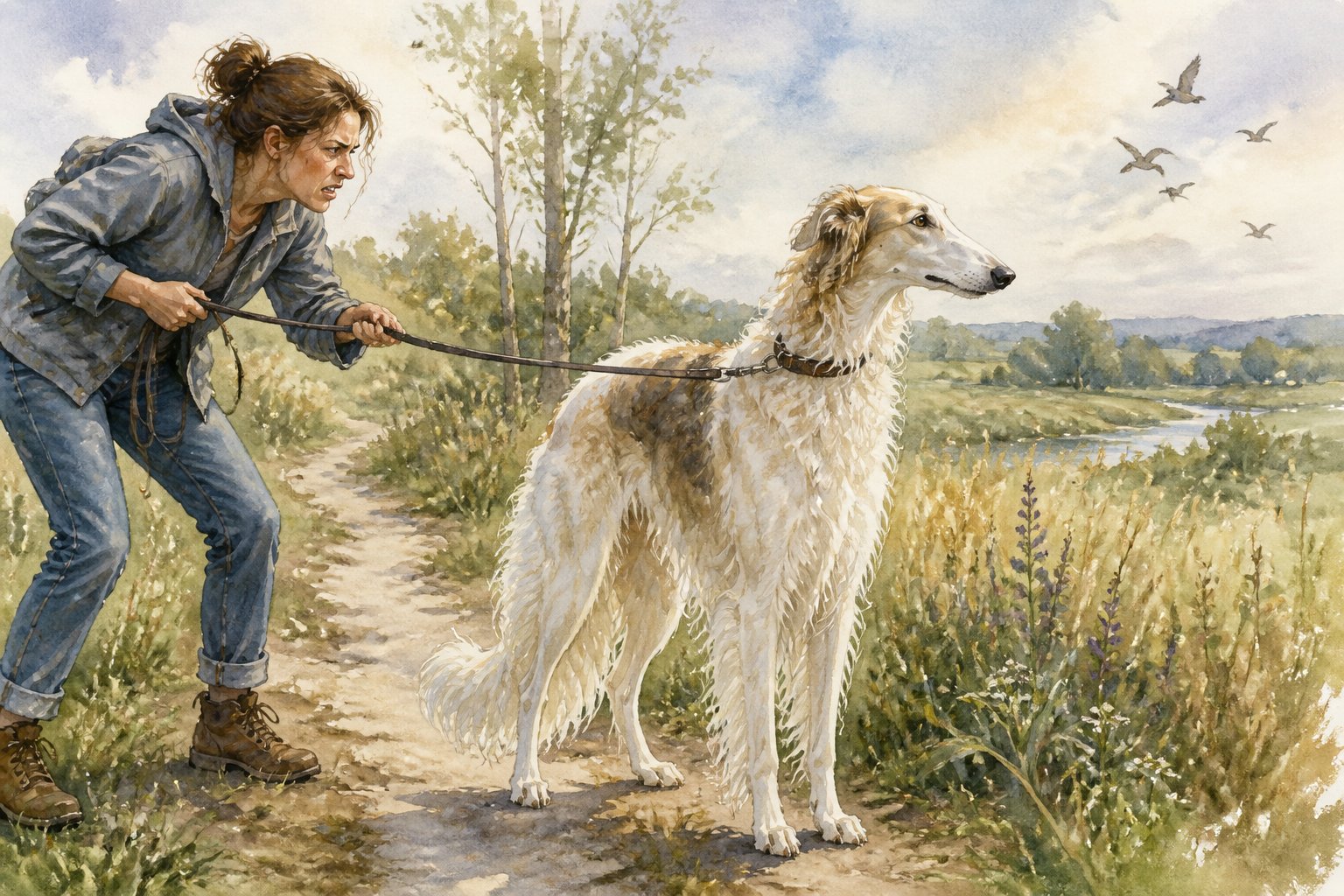
A Borzoi may pause, look away, or decide that a requested behavior is not worth performing. That response often reflects independence, low motivation, confusion, fatigue, or too much distraction, not deliberate defiance.
Use short sessions lasting a few minutes. Reward quickly, vary the treats, and include play or access to a safe sniffing area when food is not enough.
Teach one behavior at a time and stop while your dog is still engaged. Harsh corrections can make a sensitive Borzoi shut down or avoid training.
Clear cues, patient repetition, and positive reinforcement build a willing response. If your dog suddenly loses interest in familiar tasks, arrange a veterinary check to rule out pain or illness.
7. Skipping Secure Sprinting And Mental Enrichment
A daily neighborhood walk may not satisfy a dog bred for high-speed pursuit. Without safe outlets, your Borzoi may invent activities such as counter surfing, digging, pacing, or tearing household items.
Plan regular exercise in a secure area. Short chase games with a flirt pole, controlled running, scent searches, and food puzzles can engage both body and mind.
Let your dog catch the toy during appropriate flirt-pole play, then guide a calm cooldown. Avoid intense exercise immediately after a large meal, and build fitness gradually.
Puppies, seniors, and dogs with health concerns need individualized plans. A balanced routine usually includes a brief active burst, relaxed sniffing, training games, and plenty of sleep.
8. Leaving Food On Counters Within Reach Of Their Long Snout
A Borzoi’s height and narrow head make kitchen counters easier to access than many owners expect. Food left near an edge can become a quick reward, and repeated success teaches your dog to search for more.
Keep meals, medications, wrappers, and cooking scraps behind closed doors or well away from the counter edge. Use a lidded trash can, and teach a reliable station behavior during food preparation.
Baby gates can add protection when supervision is difficult. Pay special attention to toxic foods such as chocolate, grapes, raisins, onions, garlic, and products containing xylitol.
If your dog eats something unsafe, contact your veterinarian or a pet poison service promptly. Do not wait for symptoms to appear.
9. Assuming They Are Safe With Cats Or Small Running Pets
A gentle Borzoi may live peacefully with a familiar cat, yet calm household behavior does not erase prey drive. A fast-moving cat, rabbit, guinea pig, or small dog can trigger pursuit with little warning.
Introduce animals slowly through barriers, leashes, and controlled sessions. Give the smaller pet escape routes and elevated safe areas.
Never leave a Borzoi unsupervised with a small animal until a qualified professional has assessed the situation, and recognize that some pairings remain unsafe. Keep cages and enclosures secure, since a determined dog may knock them over or reach through gaps.
Supervise outdoor time closely, especially where neighborhood cats, squirrels, or wildlife may appear.
10. Waiting Too Long To Address Anxiety Or Destructive Behavior
Chewed doors, repeated pacing, escape attempts, and sudden withdrawal are not behaviors to ignore. They may reflect separation anxiety, fear, pain, boredom, or another medical concern.
Record when the behavior occurs, what happens before it, and how long it lasts. Protect your dog and home immediately with safer confinement, reduced triggers, supervision, and a predictable schedule.
Avoid punishment after the fact, because your dog will not connect it to earlier behavior. Arrange a veterinary evaluation for sudden changes, appetite loss, house soiling, self-injury, or persistent distress.
Early support often makes behavior modification easier and helps prevent a manageable problem from becoming a crisis.
Building A Safer Borzoi Routine
Secure Home And Yard Checklist
- Check fence height, digging points, gaps, and climbable sections each week.
- Secure every gate with a working latch and secondary clip.
- Keep exterior doors closed during arrivals, deliveries, and busy household activity.
- Use identification tags and a registered microchip.
- Store food, medication, chemicals, and small pets behind secure barriers.
- Keep a leash, long line, and flashlight near the main exit.
Exercise And Enrichment Schedule
Give your Borzoi a predictable mix of movement and recovery. A practical day may include a calm morning walk, a short secure sprint or chase game, scent work, and quiet evening companionship.
Adjust intensity for age, fitness, weather, and veterinary advice. Rotate food puzzles, simple trick training, scatter feeding, and safe chew items.
Mental work can reduce boredom without demanding constant high-impact exercise.
Training Priorities For Sighthounds
Prioritize door manners, leash skills, name response, emergency turns, settle behavior, and recall on a long line. Reward attention before your dog notices a trigger, and keep sessions brief enough to remain enjoyable.
Use management alongside training. Secure fencing and supervision are not signs of failure; they are responsible safeguards for a fast, visually driven breed.
When To Get Professional Help
Choosing A Sighthound-Savvy Trainer
Look for a certified trainer who uses reward-based methods and has experience with Borzois or other sighthounds. Ask how the trainer handles prey drive, leash reactivity, recall limits, separation concerns, and sensitive dogs.
Avoid anyone who promotes intimidation, dominance tactics, painful equipment, or guaranteed off-leash control around wildlife. A good professional observes your dog, explains the plan clearly, and adapts exercises to your Borzoi’s motivation and comfort.
Signs A Veterinary Behavior Consultation Is Needed
Seek veterinary behavior support when anxiety lasts beyond ordinary adjustment, destructive behavior causes injury, or your dog cannot settle during absences.
Sudden aggression, major sleep or appetite changes, repeated escape attempts, compulsive pacing, and self-harm also warrant prompt attention.
A veterinarian can check for pain or illness.
They can discuss a complete treatment plan.
Behavior medication may be appropriate for some dogs, alongside gradual training and environmental management.