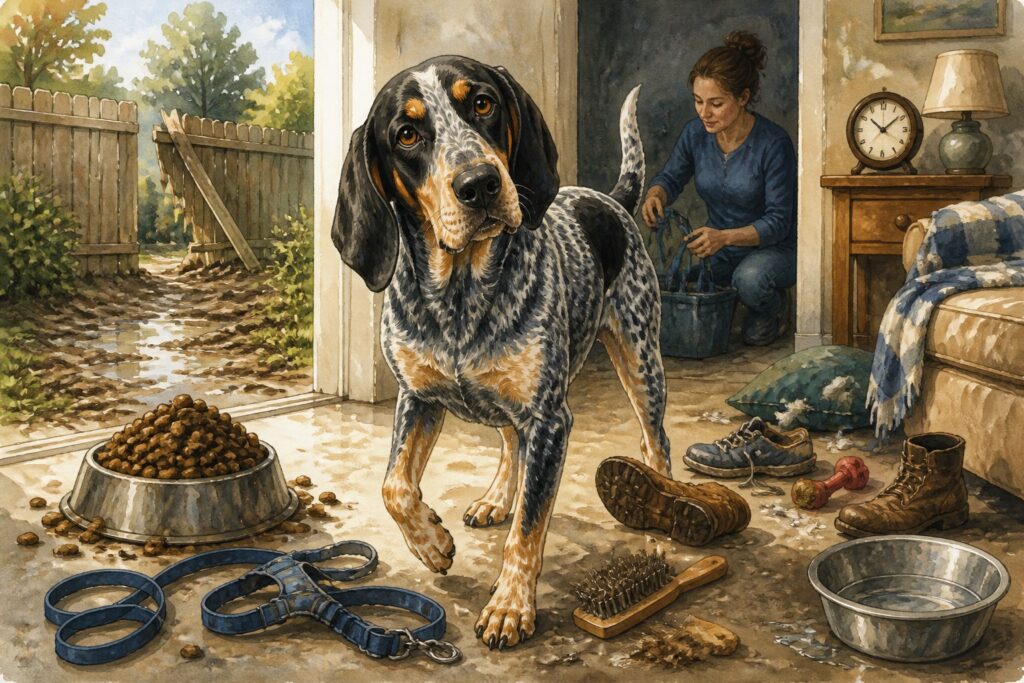
A Bluetick Coonhound can be affectionate, clever, and eager to work. Your daily routine may feel difficult when it ignores the breed’s hunting instincts.
Many training problems come from treating scent-driven behavior like ordinary disobedience.
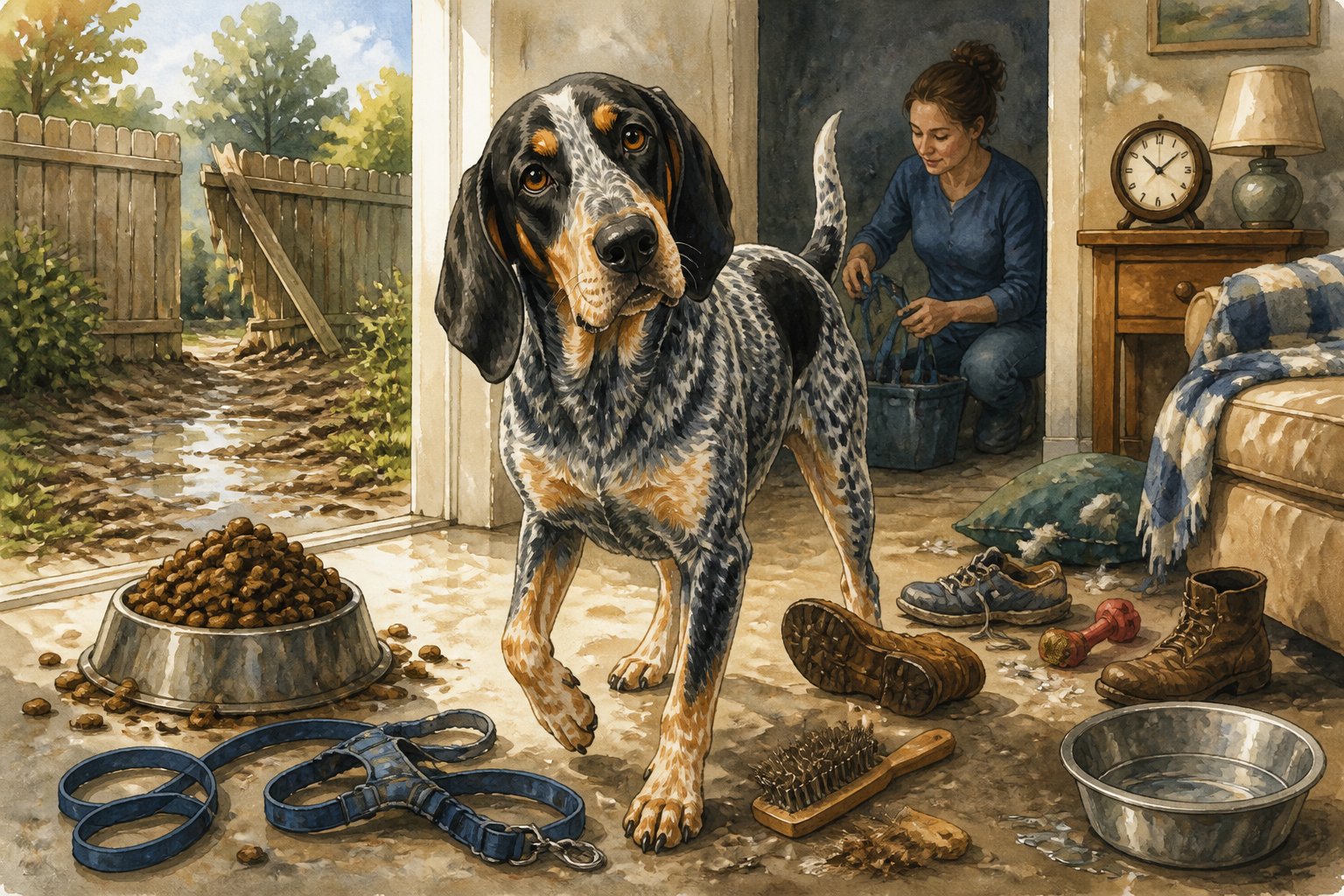
The most common Bluetick Coonhound owner mistakes involve recall, leash control, fencing, barking, exercise, accidental rewards, and harsh corrections. When you match training to your hound’s nose, energy, and independent nature, progress becomes more reliable.
1. Treating Scent-Driven Recall Like Ordinary Obedience
A Bluetick Coonhound may hear your recall cue clearly and still follow a fresh scent. This is not the same as failing to learn.
The scent trail can become more rewarding than your voice, especially outdoors. Start recall in a quiet room, then move to a fenced yard and use a long line.
Reward every turn toward you with high-value food, praise, or a brief game. Practice before your dog is fully distracted, and never call only to end enjoyable activities.
Use one clear cue, such as “come.” Avoid repeating it until it loses meaning.
Keep your Bluetick leashed or behind secure fencing until the response is dependable around wildlife, people, and strong smells.
2. Allowing Leash Pulling To Reach Every Interesting Smell
If pulling always gets your Bluetick to an interesting scent, the behavior becomes self-rewarding. You may intend to keep walking, while your dog learns that tension moves the leash toward the target.
Begin in a low-distraction area. When the leash goes tight, stop or calmly change direction.
The moment your dog returns attention to you and the leash loosens, reward that choice. Sniffing should not disappear from walks.
Build planned scent breaks into the route and use a release cue such as “go sniff.” This gives your hound an appropriate outlet while teaching that polite walking earns access to rewarding smells.
A front-clip harness can improve control during training. Equipment does not replace consistent practice.
3. Underestimating Secure Fencing And Escape Prevention
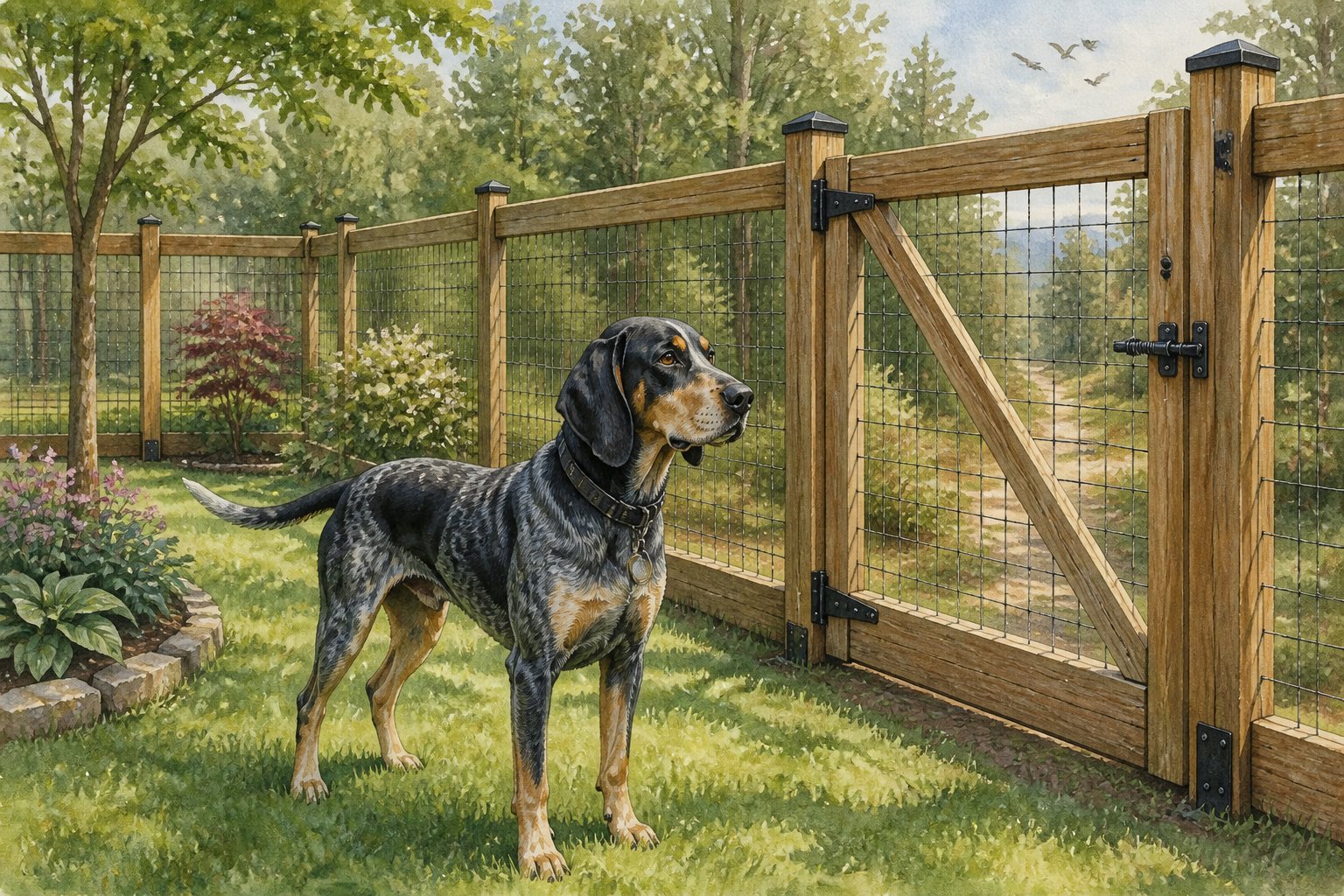
A Bluetick Coonhound can follow a scent farther than you expect. A low fence, loose gate, weak latch, or gap beneath the barrier can create a serious escape risk.
Inspect your yard from your dog’s point of view. Check fence corners, digging spots, gate hardware, and areas where snow, landscaping, or stored items create a climbing route.
Use self-closing latches and keep gates secured even during brief outdoor breaks. Do not rely on an invisible fence as your only safeguard.
A strong scent, wildlife, or fear may outweigh the collar’s warning. Keep identification current, use a microchip, and teach reliable door manners with a wait cue.
Supervise outdoor time until you know your Bluetick’s habits. Secure fencing supports training and protects your dog from traffic, wildlife, and getting lost.
4. Trying To Eliminate Natural Bluetick Baying
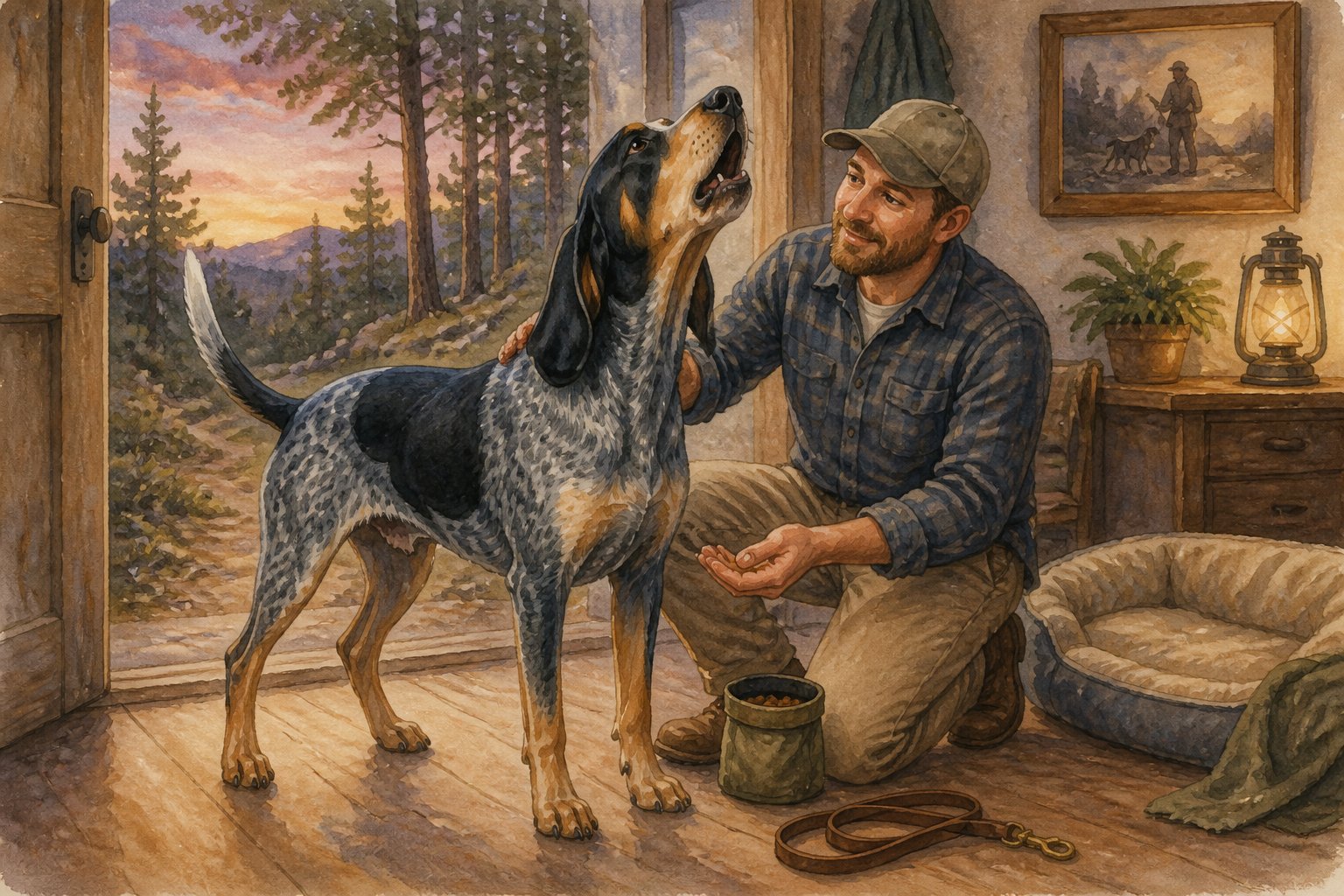
Baying is part of the Bluetick Coonhound’s communication system. Your dog may vocalize when excited, tracking a smell, greeting you, or reacting to activity outside.
Trying to silence every sound can create stress without addressing the cause. Teach a calm “quiet” cue by waiting for a brief pause, marking it, and rewarding it.
Keep your voice neutral, since shouting can sound like participation and increase the noise. Reduce triggers with window coverings, white noise, or greater distance from passing dogs.
Give your Bluetick a daily outlet for sniffing and movement so excess energy does not spill into constant vocalization. Set household limits that fit your living situation.
You can teach your dog when barking should stop, while still accepting that a coonhound will rarely be silent.
5. Relying On Physical Exercise Without Scent Work
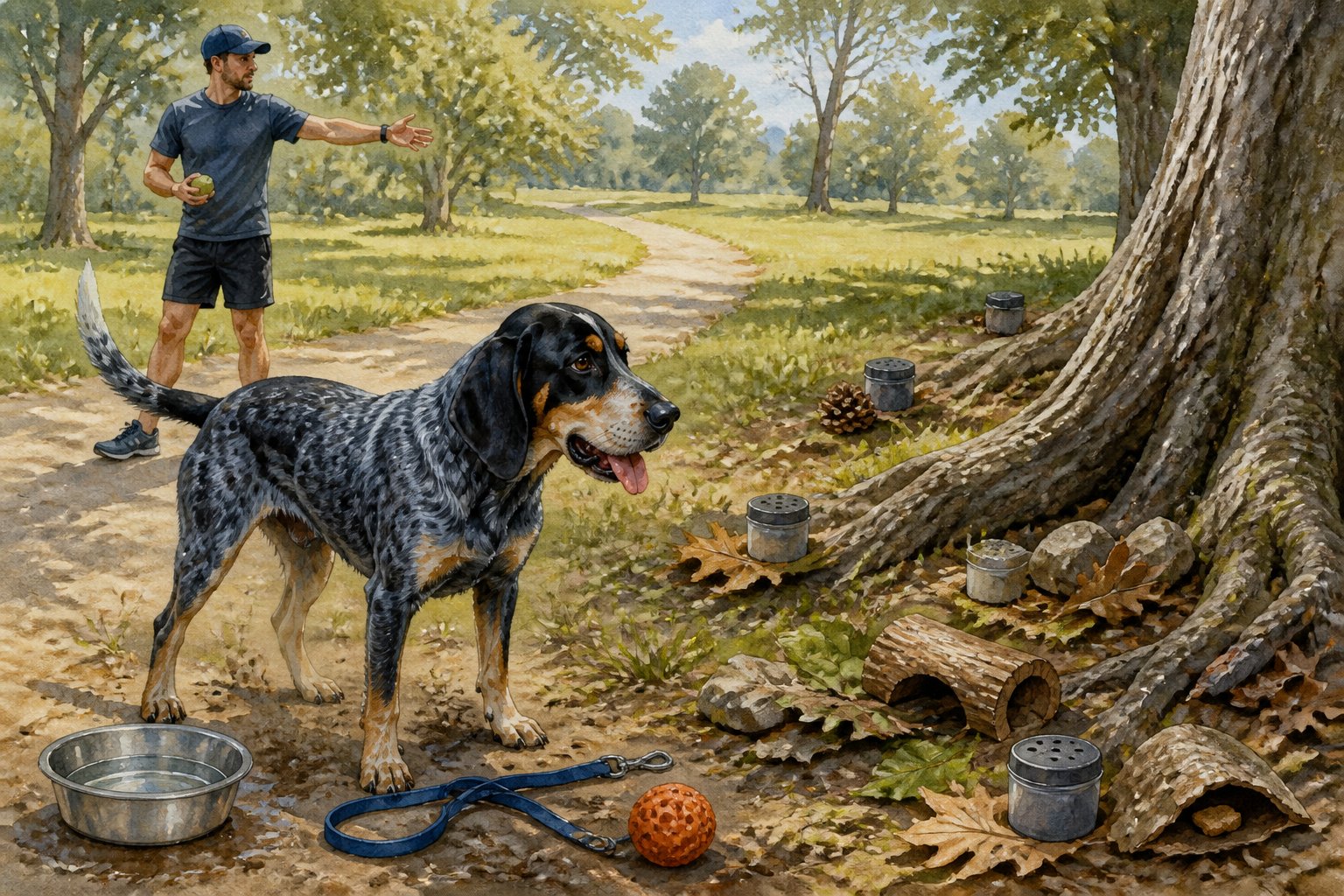
A long walk may tire your Bluetick’s body without satisfying its strongest instinct: using its nose. If you rely only on running or repetitive fetch, your dog may remain restless once you return home.
Add structured scent work to the routine. Hide treats around one room, scatter part of a meal in grass, or place a favorite toy along a simple trail.
Let your dog search at a safe pace, then gradually make the task harder. Short training sessions also provide mental exercise.
Practice leash skills, name recognition, place training, and calm settling after a sniffing game. Balance activity with rest, especially for puppies and growing dogs.
Too much forced running can strain developing joints. Thoughtful scent enrichment can tire your dog without excessive impact.
6. Accidentally Rewarding Barking, Whining, And Jumping
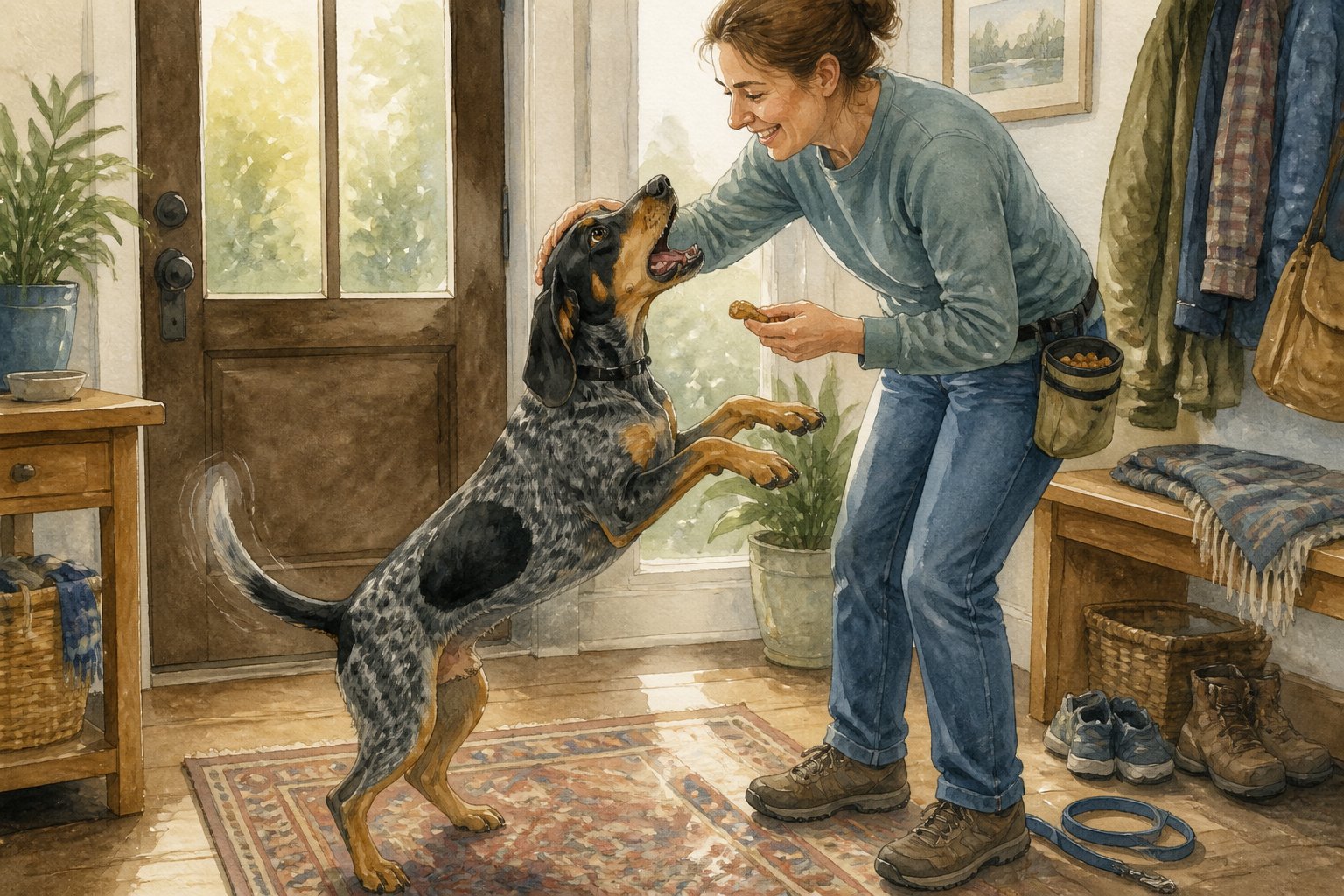
Your response can reward behavior even when you mean to stop it. Touching a jumping dog, opening the door after whining, or talking during barking may teach your Bluetick that noisy behavior gets attention.
Choose a replacement behavior before the next visitor arrives. Ask for four paws on the floor, a sit, or a place on a mat.
Reward calm behavior quickly, then give attention or access to the person. During barking episodes, reduce the trigger and wait for a short quiet moment.
Avoid repeated commands, physical corrections, or dramatic reactions. Everyone in your household should follow the same rule.
Track what happens before and after the behavior. This simple pattern often reveals whether your dog wants food, attention, movement, access, or relief from a stressful situation.
7. Using Harsh Corrections With A Sensitive Independent Hound
Harsh corrections can make a Bluetick Coonhound worried, defensive, or less willing to work with you. A strong reaction may stop behavior briefly while weakening trust and hiding the reason your dog acted that way.
Use clear boundaries, management, and rewards instead. Prevent chasing with a long line, guide your dog away from a trigger, and reinforce the response you want.
Food, play, praise, and access to sniffing can all motivate a hound. Keep sessions short and specific.
If your dog seems confused, distracted, or frustrated, lower the difficulty instead of adding pressure. Reward small choices, such as turning toward you or releasing an object.
A calm, consistent approach respects the Bluetick’s intelligence and independence. You still provide firm guidance, yet your dog learns that cooperation is safe and worthwhile.
Building A Practical Bluetick Training Routine
A workable routine combines physical activity, scent enrichment, clear cues, and planned rest. Your goal is not constant control.
You are creating repeated patterns that make good choices easier.
Daily Exercise And Scent-Enrichment Balance
Give your Bluetick a mix of walking, free movement in a secure area, short training, and nose-based games. Use meals for scatter feeding, treat searches, or simple tracking trails.
Watch for signs of overarousal, such as frantic pulling, nonstop barking, or difficulty settling.
Consistent Cues And Household Rules
Choose one cue for each behavior and teach every household member to use it the same way. Decide whether jumping, furniture access, door rushing, and bedroom entry are allowed.
Reward calm behavior often, especially when your dog offers it without being asked.
When To Consult A Qualified Trainer Or Behaviorist
Seek help when escape attempts, aggression, severe anxiety, persistent reactivity, or unsafe chasing continues.
Choose a qualified trainer or veterinary behaviorist who uses reward-based methods and has experience with scent hounds.
A veterinarian can also check for pain, hearing changes, or medical issues that affect behavior.