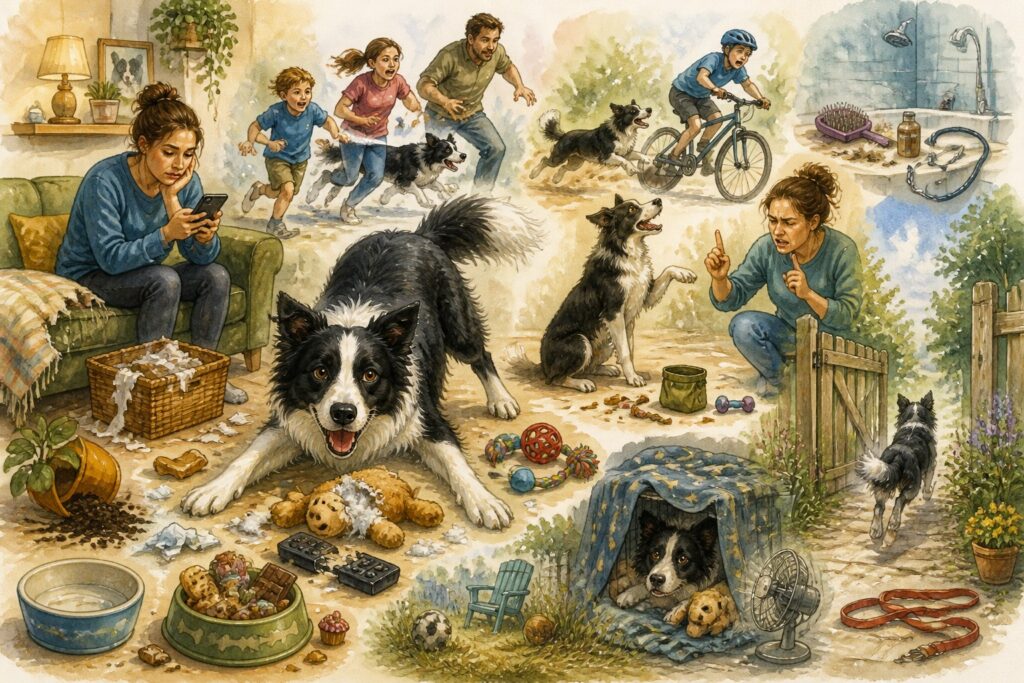
Border Collies are bright, athletic, sensitive dogs bred to notice movement and work closely with people. Those traits make them rewarding companions, yet they also make careless routines show up quickly as barking, chasing, nipping, anxiety, or frantic behavior.
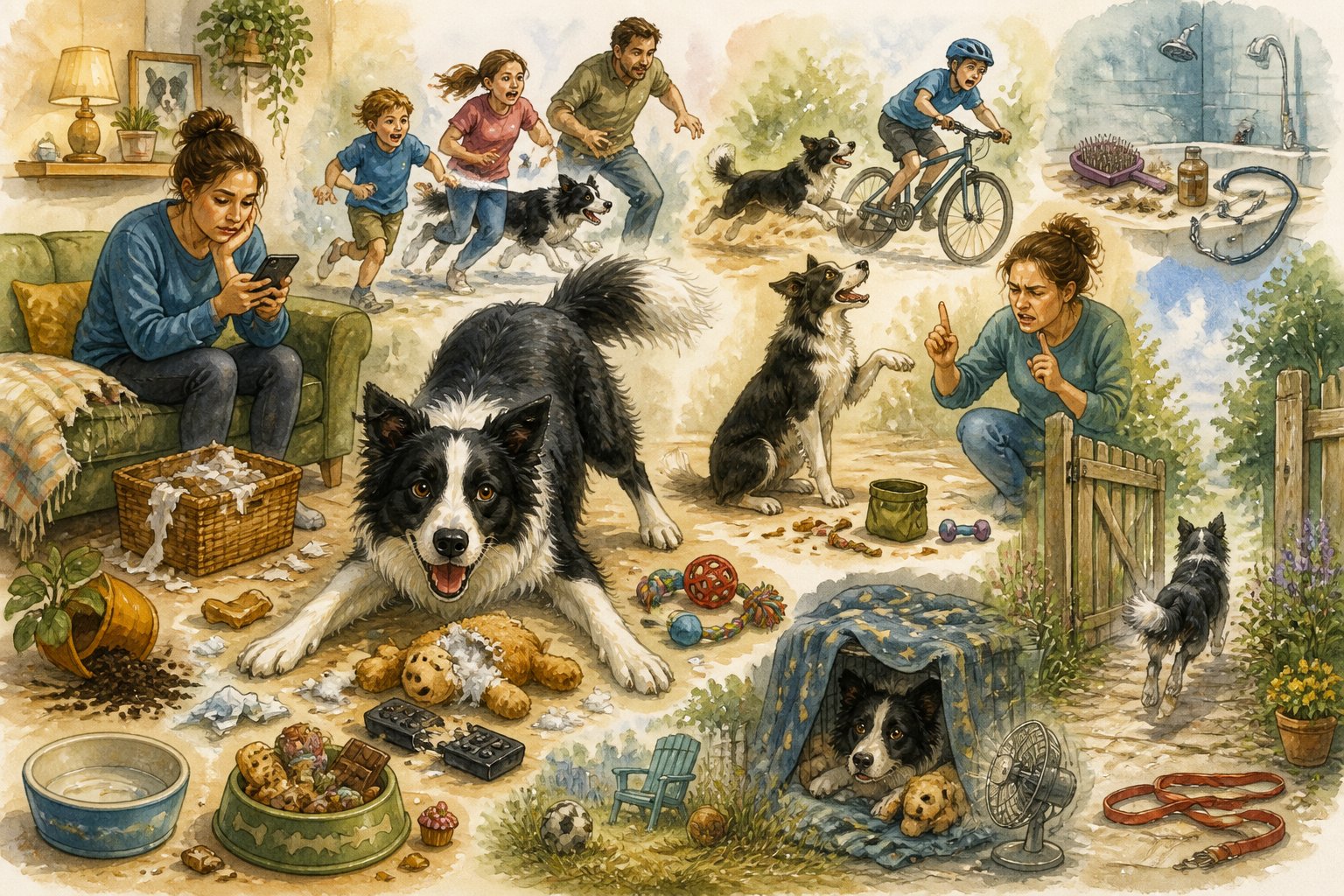
The best way to raise a stable Border Collie is to balance physical exercise, thoughtful training, mental enrichment, calm rest, and clear boundaries. Avoiding these 11 owner blunders helps you build focus without creating obsession, fear, or chronic overarousal.
1. Using Endless Fetch As The Main Exercise Plan
Endless ball throwing can create a Border Collie who scans constantly for the next launch. Repetitive chasing, sharp stops, tight turns, and slippery landings can also place unnecessary stress on growing joints and muscles.
Use fetch as one small part of play, not your entire exercise plan. Add sniff walks, controlled retrieving, tug with release cues, trick training, and calm exploration.
Teach your dog to wait, share the toy, and settle after play. Watch for ball staring, frantic barking, dropping the toy at your feet, or difficulty disengaging.
When those signs appear, pause the game and guide your dog toward a quieter activity.
2. Trying To Exhaust Your Dog With Physical Exercise Alone
Running farther is not always the answer to a busy Border Collie. If you respond to every restless moment with more exercise, you may build an athlete who needs even more activity to feel satisfied.
Include mental work that encourages patience and decision-making. Food puzzles, scent games, shaping exercises, simple obedience drills, and safe problem-solving can tire your dog without excessive impact.
A useful routine alternates activity with recovery. After a walk or training game, offer water, a quiet chew, and a defined rest period.
Puppies, senior dogs, and dogs with joint concerns need exercise matched to age, fitness, and veterinary guidance.
3. Skipping Off-Switch And Settle Training
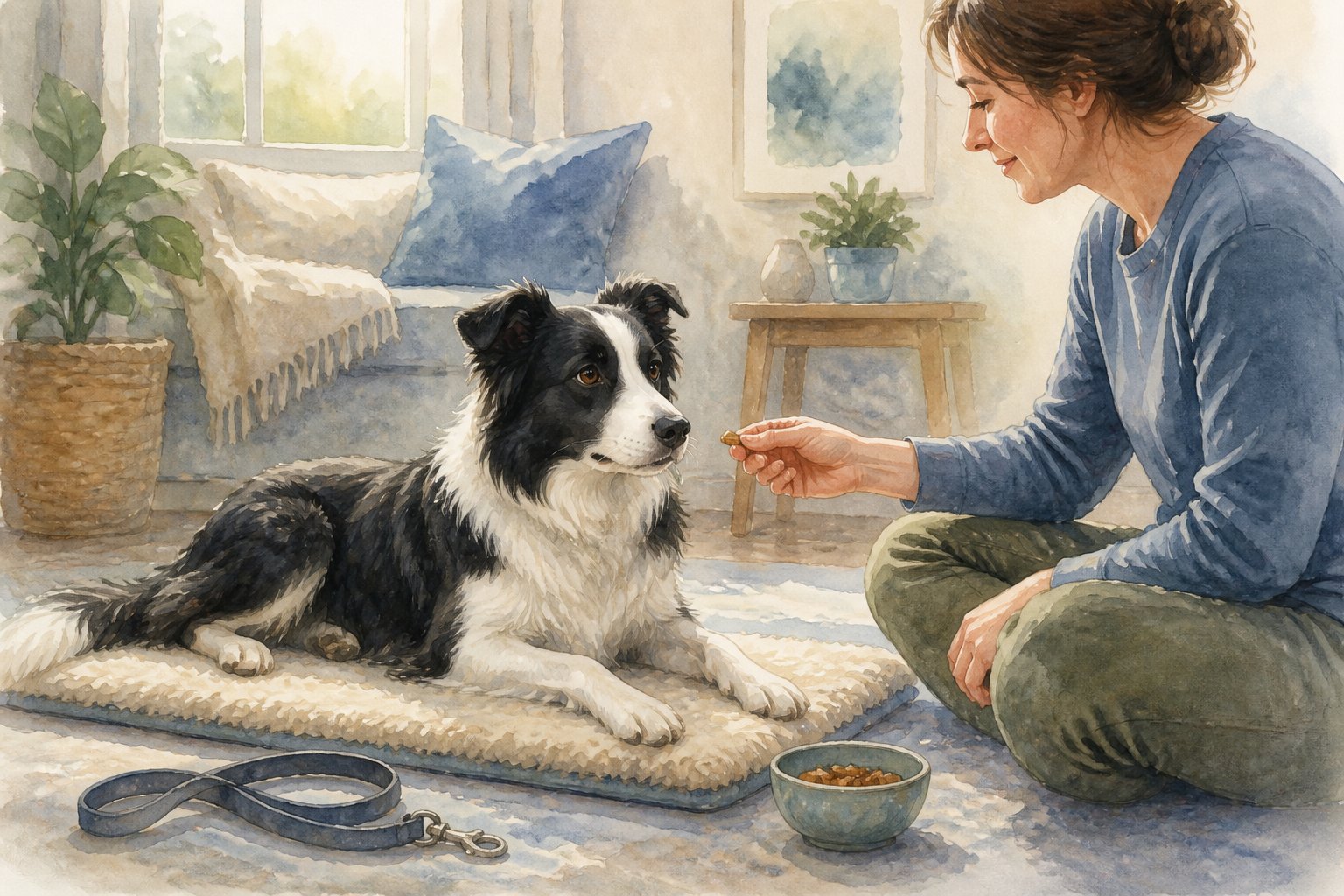
A Border Collie does not automatically know how to relax. Without settle training, your dog may follow you from room to room, demand activity, bark at small sounds, or become restless after a full day.
Teach a mat cue in a quiet area. Reward your dog for lying down, softening its body, looking away from distractions, and staying settled.
Begin with a few seconds, then build duration slowly. Keep your voice calm and avoid repeatedly exciting your dog during practice.
A predictable rest routine after meals, walks, and training helps your dog learn that calm behavior is valuable.
4. Over-Socializing A Sensitive Border Collie Puppy
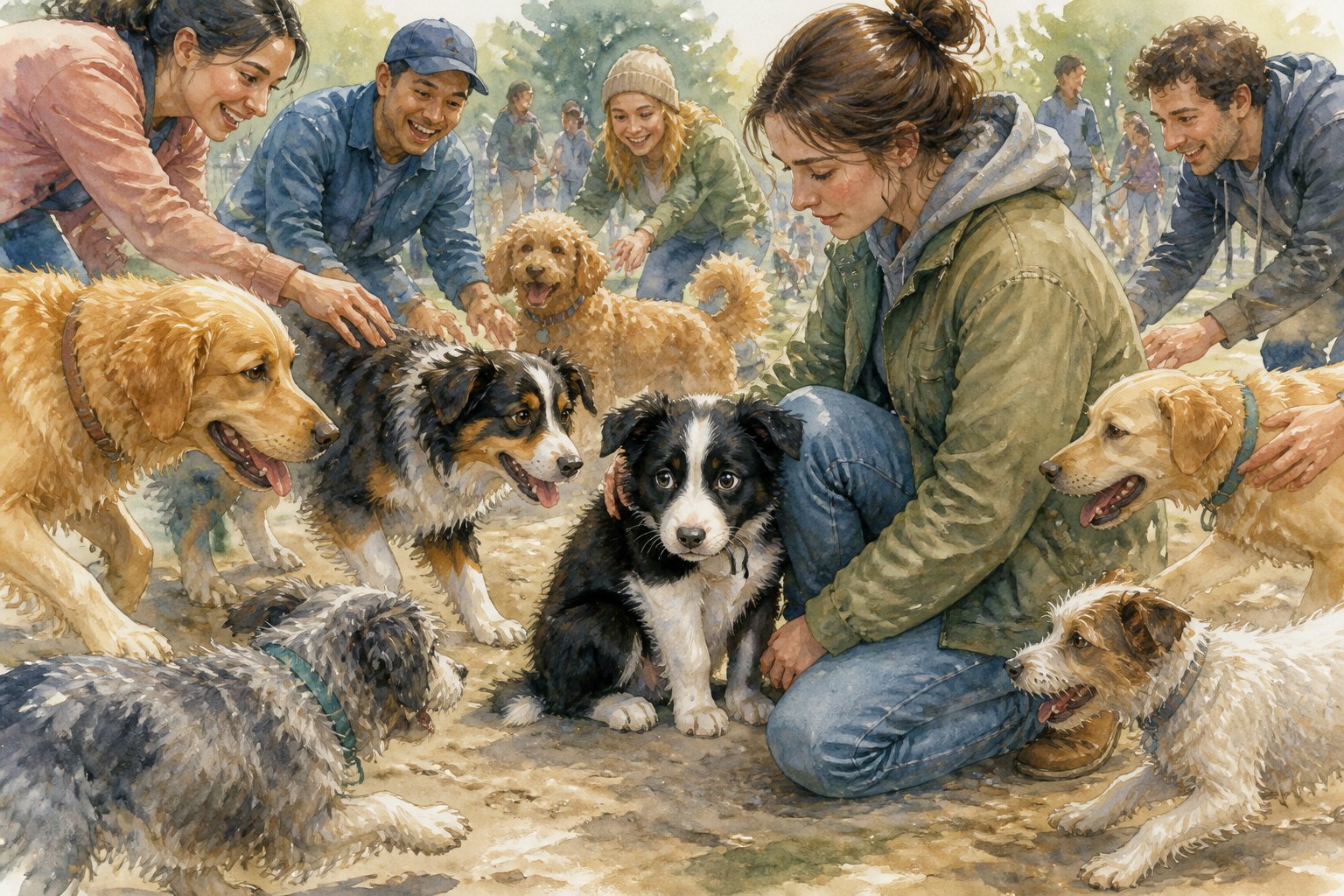
Socialization means teaching your puppy that new experiences are safe, not forcing greetings with every person and dog. Crowded dog parks, busy events, and nonstop handling can overwhelm a sensitive Border Collie.
Use short, controlled exposures. Let your puppy watch people, dogs, traffic, surfaces, and household activity from a comfortable distance.
Reward calm observation, provide breaks, and leave before your puppy becomes frightened or frantic. Pay attention to tucked tails, lip licking, turning away, freezing, hiding, and sudden overexcitement.
These signals mean you should increase distance or reduce the intensity. Confidence grows through choice and repeated positive experiences.
5. Letting Staring, Circling, And Heel-Nipping Become Habits
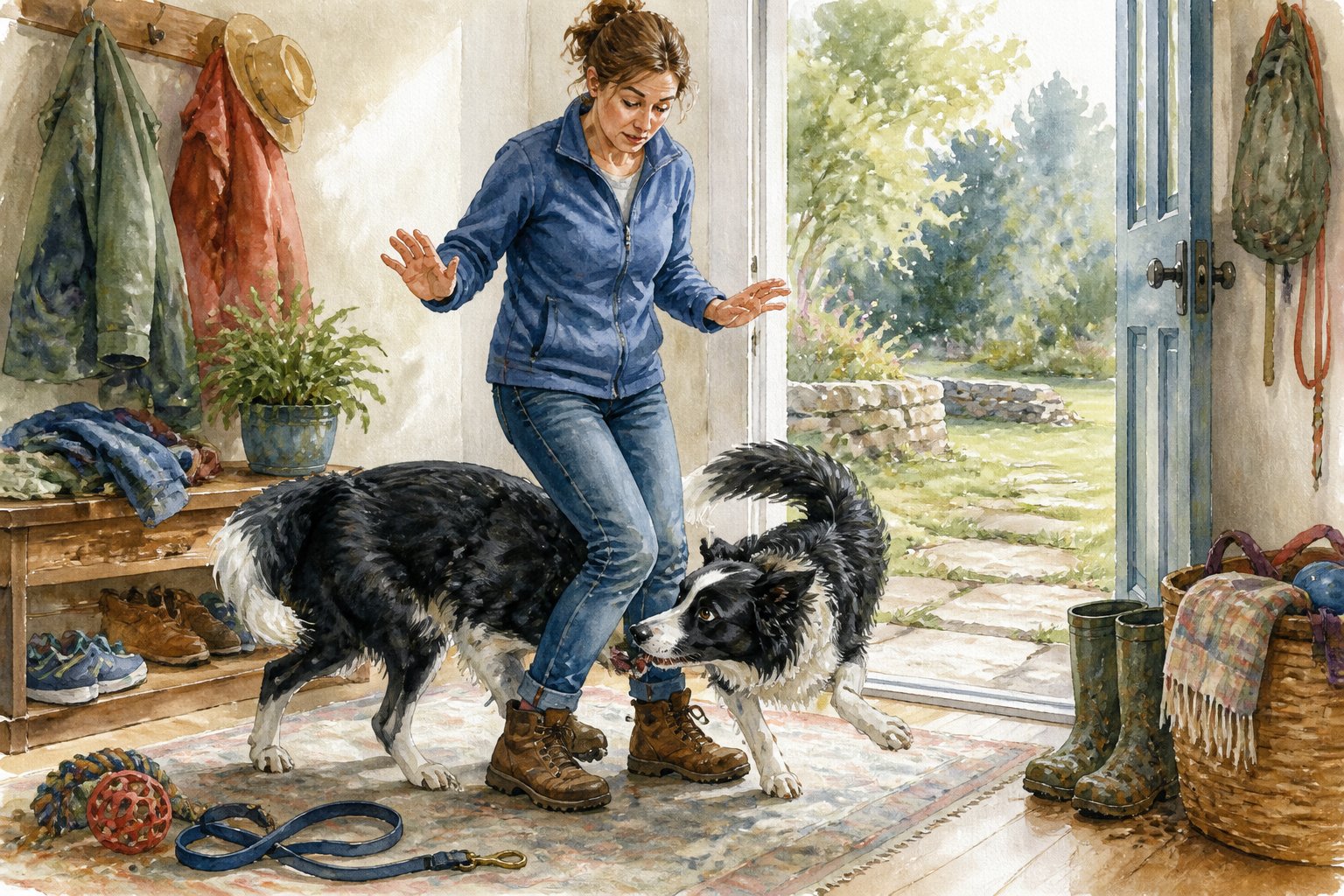
Staring, stalking, circling, and heel-nipping are natural herding patterns, yet allowing them to continue can make them harder to interrupt. Children, joggers, guests, and moving feet may become especially exciting targets.
Avoid chasing your dog or turning nipping into a game. Calmly stop movement, create space, and redirect your dog to a toy, hand target, mat, or simple cue.
Reward your dog for looking away and choosing a different behavior. Use gates, a leash, and planned greetings during high-energy moments.
If nipping breaks skin or your dog cannot disengage, seek help from a qualified force-free trainer.
6. Leaving Herding Behavior Unchecked Around Children And Pets

Never assume your Border Collie will naturally know how to behave around children, cats, poultry, or smaller dogs. Chasing and circling can frighten another animal or cause a child to run, which may intensify the behavior.
Supervise every interaction and use barriers when you cannot actively watch. Teach reliable recall, leave-it, hand targeting, and a calm station cue.
Reward your dog for observing movement without pursuing it. Give children simple rules: do not run at the dog, grab its collar, disturb its rest, or wave toys near its face.
Keep cats and small pets able to reach dog-free rooms and elevated escape areas.
7. Neglecting Daily Mental Enrichment And Problem-Solving
A Border Collie needs chances to use its brain, not just its legs. Without mental enrichment, your dog may invent work through barking, digging, shadow chasing, opening cabinets, or herding family members.
Rotate simple activities so they stay fresh. Hide kibble around a room, use a snuffle mat, practice scent searches, teach household tasks, or shape a new trick in short sessions.
Let your dog solve easy problems independently instead of showing every answer. Mental work should not create constant arousal.
Finish with a chew, mat time, or quiet rest. Choose safe puzzles that match your dog’s skill level, and supervise toys that can be chewed apart.
8. Using Harsh Corrections With A Sensitive, Fast-Learning Dog
Leash jerks, yelling, intimidation, and physical punishment can damage trust and make fear-based reactivity worse. A sensitive Border Collie often learns quickly, including the lesson that people, dogs, cars, or certain places predict pressure.
Use management and reward-based training instead. Prevent rehearsal, increase distance from triggers, and reinforce the behavior you want.
A marker word or clicker can help you communicate precise timing. Clear does not mean permissive.
You can calmly stop access to a game, guide your dog away, or remove a tempting item without frightening it. Your goal is a dog that thinks and responds, not one that obeys only to avoid punishment.
9. Changing Rules, Cues, And Household Boundaries
Inconsistent rules create confusion for a dog that notices small details. If jumping is allowed some days, door rushing goes unaddressed, or family members use different cues, your Border Collie may keep testing which response works.
Agree on simple household standards. Decide where your dog may rest, whether furniture is allowed, how greetings happen, and which words mean sit, wait, come, and leave it.
Reward compliance every day, especially around distractions. Keep training cues short and consistent.
When everyone responds in the same way, your dog can predict outcomes and make better choices.
10. Rewarding Demand Barking, Ball Staring, And Pushy Behavior
Giving food, throwing the ball, opening the door, or starting play while your dog barks teaches that noise and pressure work. Border Collies can become highly persistent once they discover a reliable way to control your attention.
Wait for a brief pause, then reward quiet behavior or ask for a simple cue. Keep your response calm and avoid arguing with barking.
If the behavior escalates, reduce triggers and provide structured access to exercise or enrichment later. Teach your dog to request politely through a sit, chin rest, touch, or mat behavior.
You should control the start and end of exciting activities, including fetch, tug, and greetings.
11. Overstimulating Your Dog With Constant Activity And Chaos
A packed schedule can leave your Border Collie wired rather than fulfilled. Frequent dog-park visits, daycare, crowded walks, nonstop visitors, and repeated high-intensity games may cause poor sleep, barking, scanning, or irritability.
Choose quality over quantity. Many Border Collies prefer a calm walk, focused training, and predictable home time over a chaotic group setting.
Watch body language during outings, and leave when your dog stops taking treats, avoids contact, or becomes frantic. Build decompression into the day.
Quiet sniffing, chewing, sleep, and familiar routines help your dog process stimulation and return to a lower level of arousal.
Building A Balanced Daily Routine
Physical Activity Matched To Age And Fitness
Match exercise to your dog’s life stage, body condition, health, and individual drive. Puppies need gentle exploration and training rather than forced running or repetitive jumping.
Adult dogs may enjoy hiking, herding activities, agility foundations, or structured games when conditioning is gradual.
Calm Time And Quality Sleep
Protect uninterrupted rest in a quiet area. Puppies and active adult dogs may become mouthy or frantic when overtired, so schedule naps instead of waiting for your dog to collapse.
Keep the home routine predictable around meals, walks, and bedtime.
Short Training And Enrichment Sessions
Several brief sessions usually work better than one long drill. Mix basic cues, scent games, food puzzles, cooperative care, and relaxation practice.
End while your dog is still engaged, then transition to calm time.
When To Get Professional Behavior Support
Signs Reactivity Or Anxiety Is Escalating
Seek help if your dog lunges, snaps, cannot recover after a trigger, panics when alone, chases traffic, guards resources, or stops eating around distractions. Sudden behavior changes also deserve prompt veterinary attention.
Choosing A Force-Free Trainer With Herding-Breed Experience
Look for a trainer who explains body language, uses rewards, offers management plans, and has experience with herding behavior. Ask how they handle reactivity, nipping, chasing, and fear before booking.
Avoid anyone who recommends pain, intimidation, or dominance-based punishment.
When To Speak With A Veterinarian Or Veterinary Behaviorist
A veterinarian can check for pain, illness, sensory changes, or other medical factors affecting behavior.
A veterinary behaviorist can assess complex anxiety, aggression, compulsive behavior, and medication needs while coordinating a behavior plan.