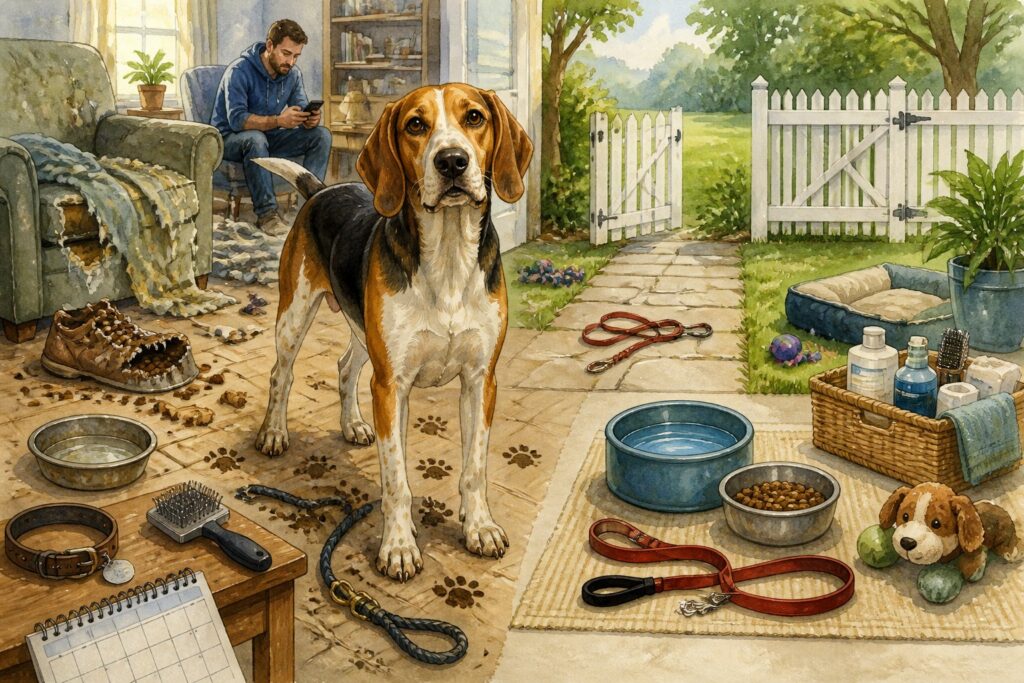
Your American Foxhound is athletic, independent, and guided by scent. Those traits make the breed a joyful running partner, yet they also create risks when you rely on ordinary pet-dog habits.
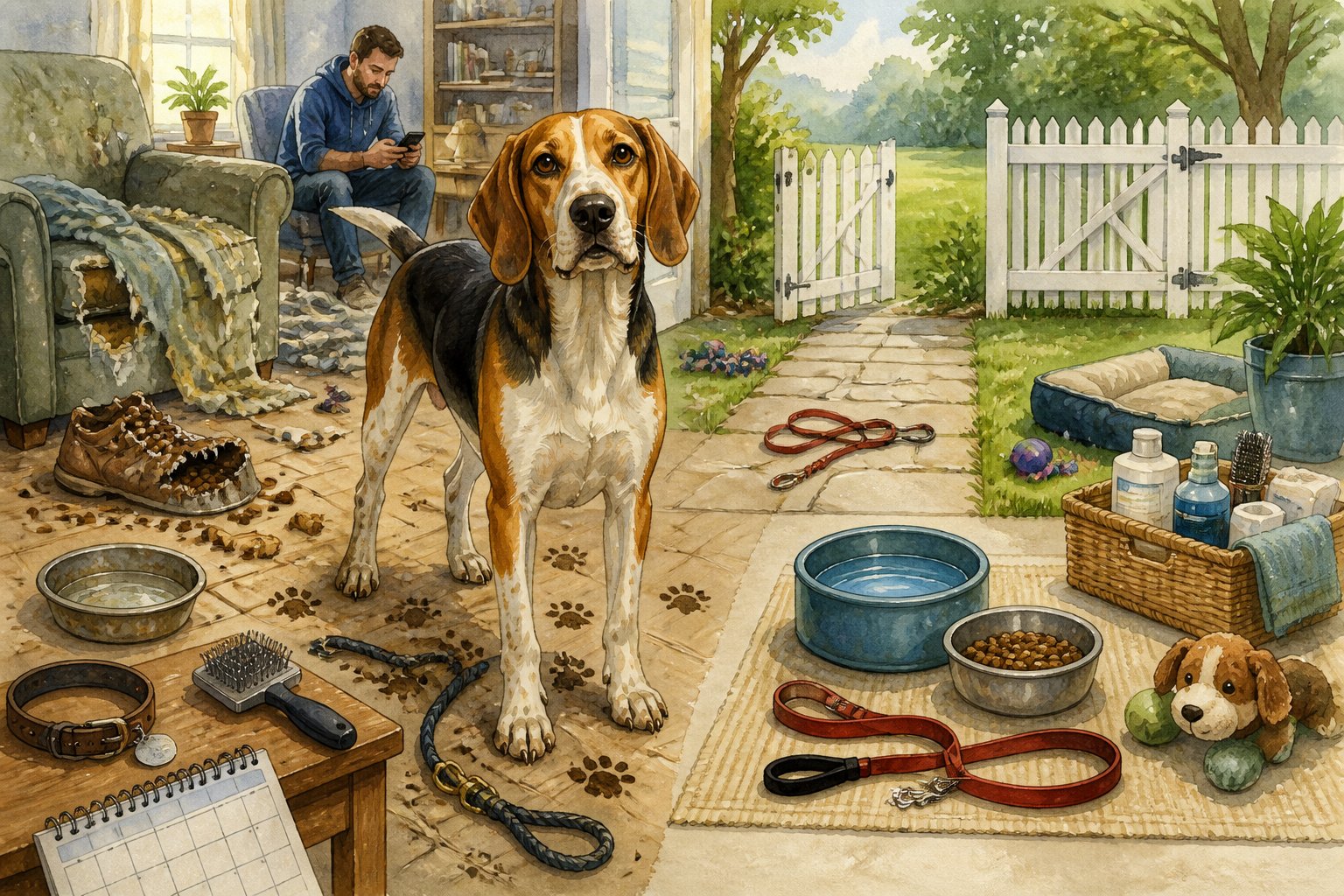
The worst American Foxhound owner mistakes involve unsafe off-leash freedom, too little activity, unclear training, weak containment, and poor planning for hound behavior. When you work with your dog’s instincts instead of fighting them, daily life becomes safer and more rewarding.
1. Trusting Off-Leash Recall Around Deer, Foxes, Or Fresh Scents
An American Foxhound may hear your call and still follow a powerful scent. Deer, foxes, rabbits, and fresh tracks can overpower your dog’s attention in seconds, especially in an unfenced area.
Treat recall as a trained safety skill, not a personality trait. Use a secure fence or a long line, begin in quiet places, and reward every return with something your dog values.
Never call only to end enjoyable freedom, since that can make returning feel unpleasant.
2. Underestimating The Need For 1–2 Hours Of Daily Vigorous Exercise
A short walk around the block rarely meets an adult Foxhound’s physical needs. Your dog may need one to two hours of vigorous activity each day, adjusted for age, health, weather, and fitness.
Long walks, jogging, hiking, fenced running, and structured games can help. Add rest and water breaks, especially during warm weather.
When exercise is too limited, you may see chewing, pacing, vocalizing, digging, or frantic attempts to escape.
3. Treating Independent Scent-Hound Behavior As Defiance Or Dominance
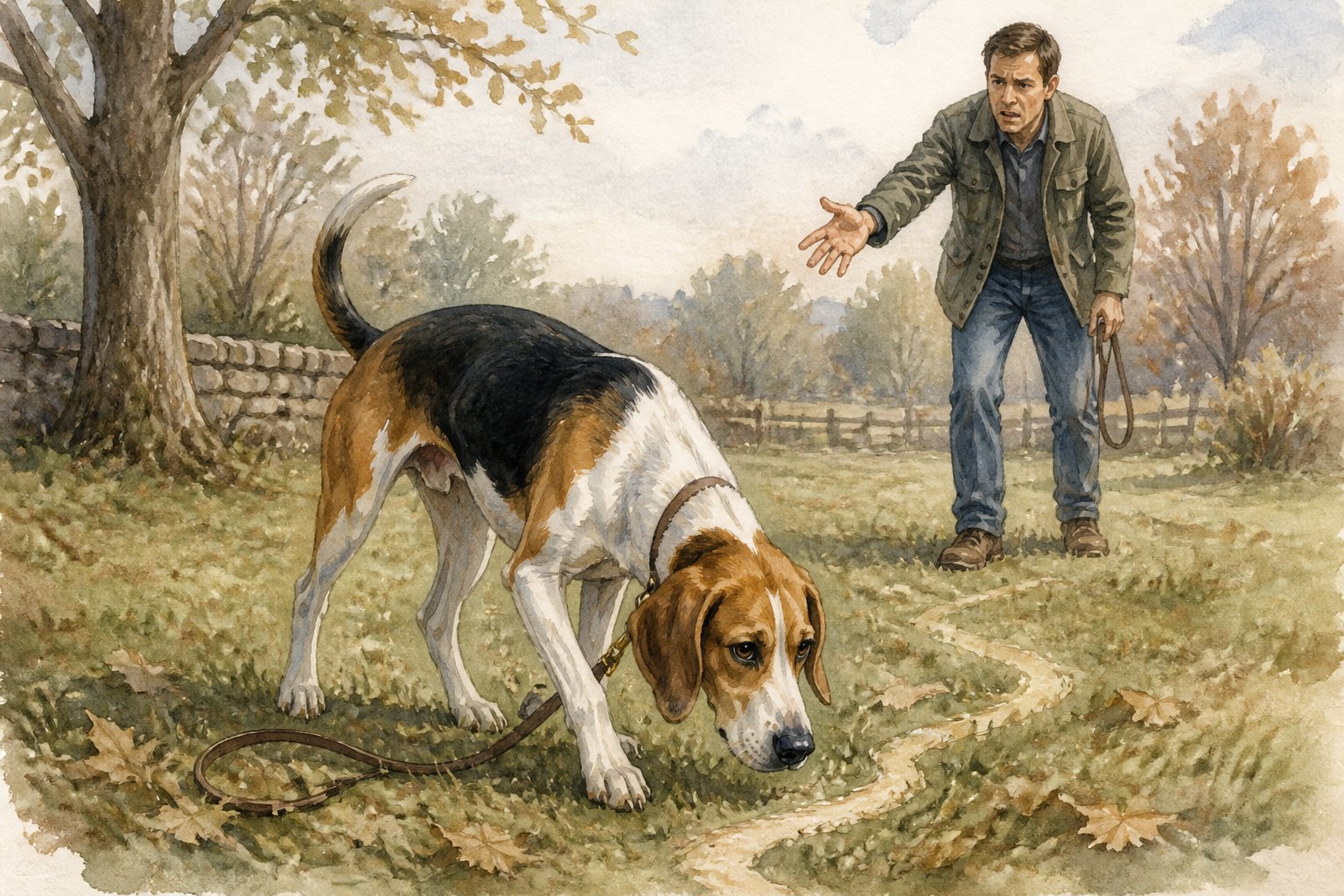
Your Foxhound was bred to follow a trail without constant direction. When your dog pauses, ignores a cue, or keeps sniffing, the behavior usually reflects instinct and competing motivation, not a plan to challenge you.
Use short training sessions and reward small choices, such as looking at you, turning away from a scent, or walking beside you for a few steps. Increase distractions gradually.
Forceful corrections often reduce trust and can make your dog less willing to respond.
4. Skipping Early Recall Training In A Securely Fenced Area
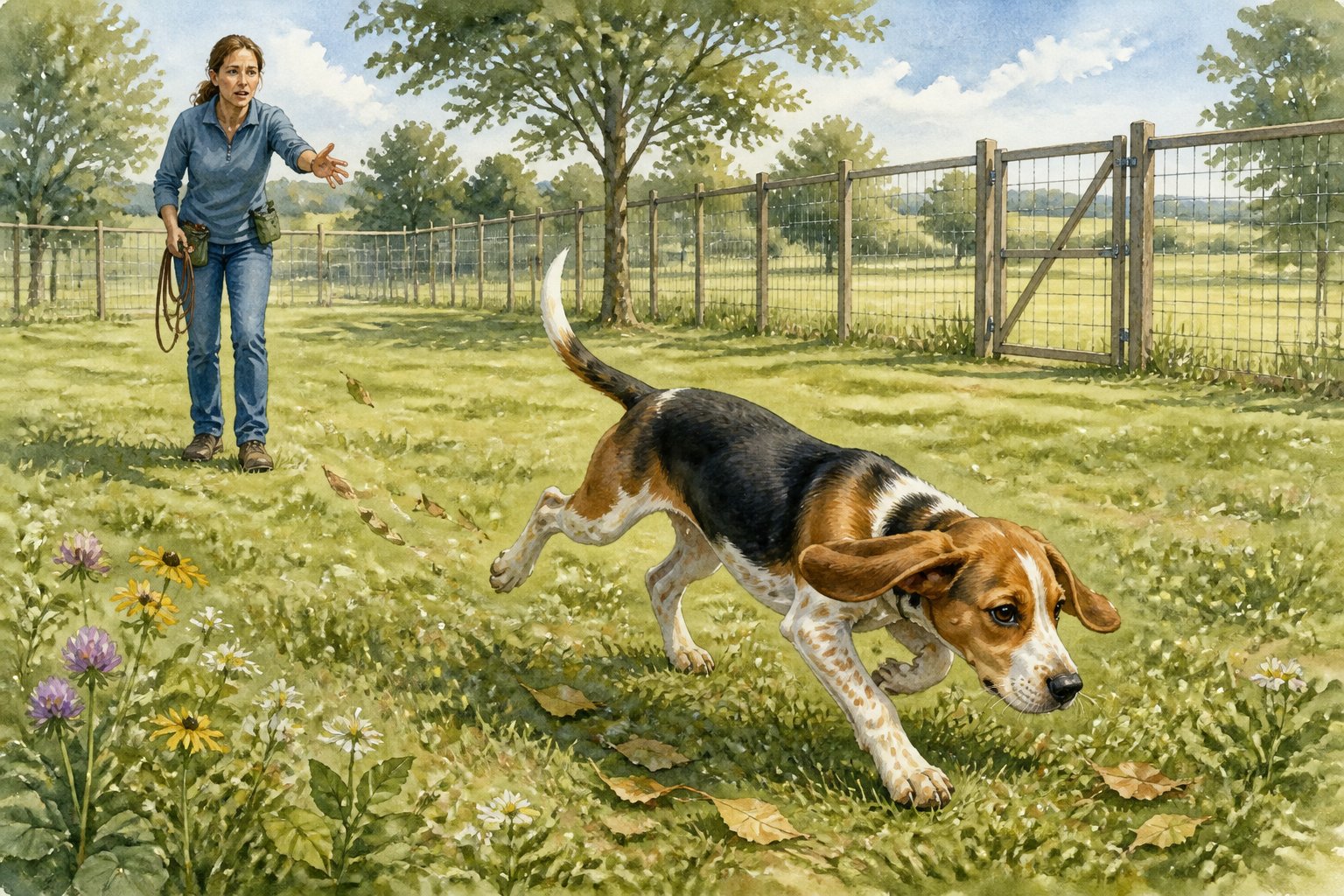
Waiting until your puppy is older to teach recall creates avoidable risk. Start indoors, move to a securely fenced yard, and practice when your puppy is already interested in you.
Say your recall cue once, move away cheerfully, and reward the instant your puppy reaches you. A long line can add control in larger spaces.
Do not test a young dog in an open field simply because the response worked in your living room.
5. Using Inconsistent Commands, Rules, And Reward Timing
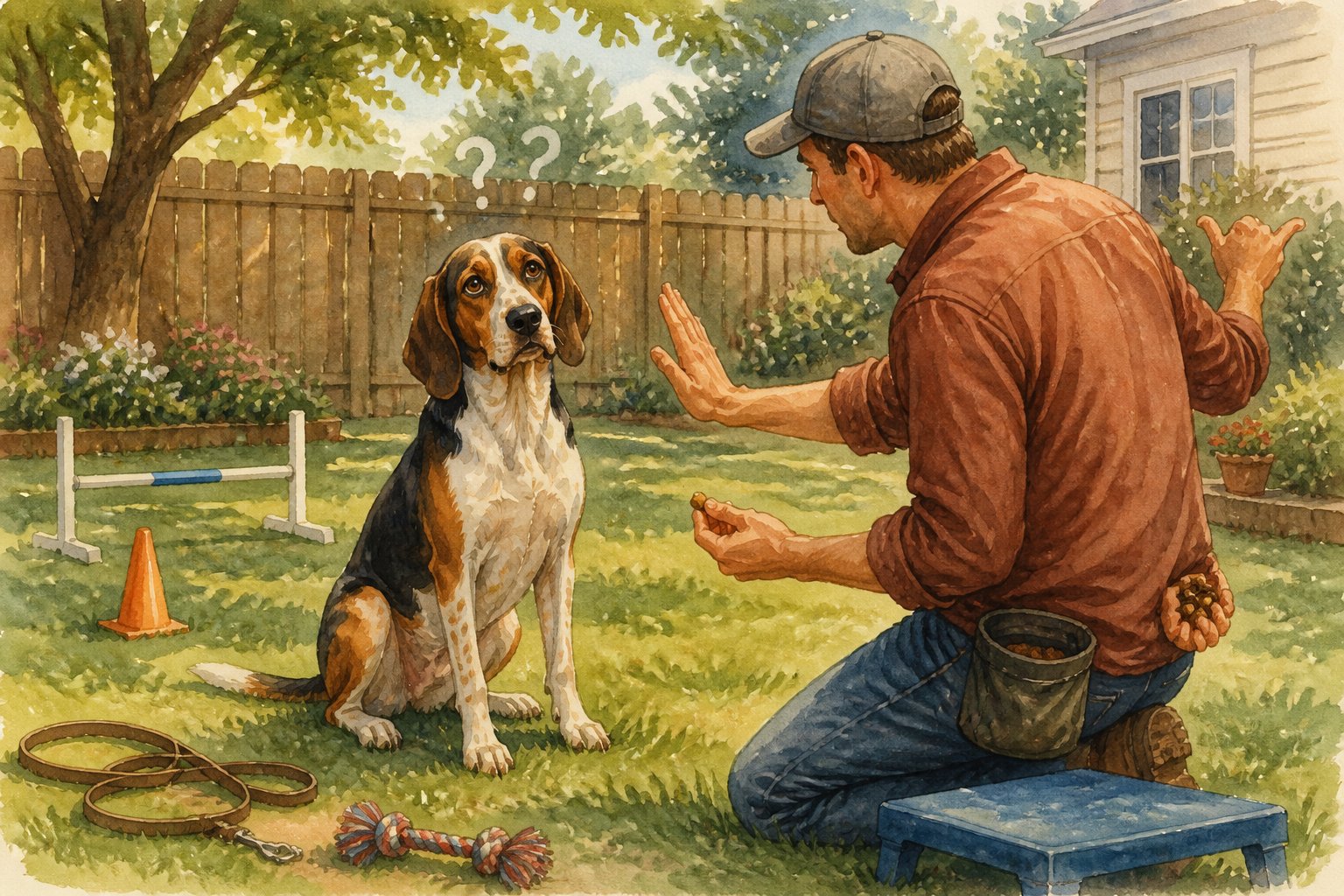
Your Foxhound learns faster when every person uses the same cue, rule, and reward plan. If “come” sometimes means treats and sometimes means an immediate end to play, your dog may hesitate.
Choose simple words and reward the behavior at once. Keep sessions brief, repeat successful patterns, and avoid giving a cue several times.
Consistency matters more than sounding stern, especially with an independent dog that decides whether a behavior is worth doing.
6. Leaving A Bored Foxhound Without Scent Work Or Enrichment
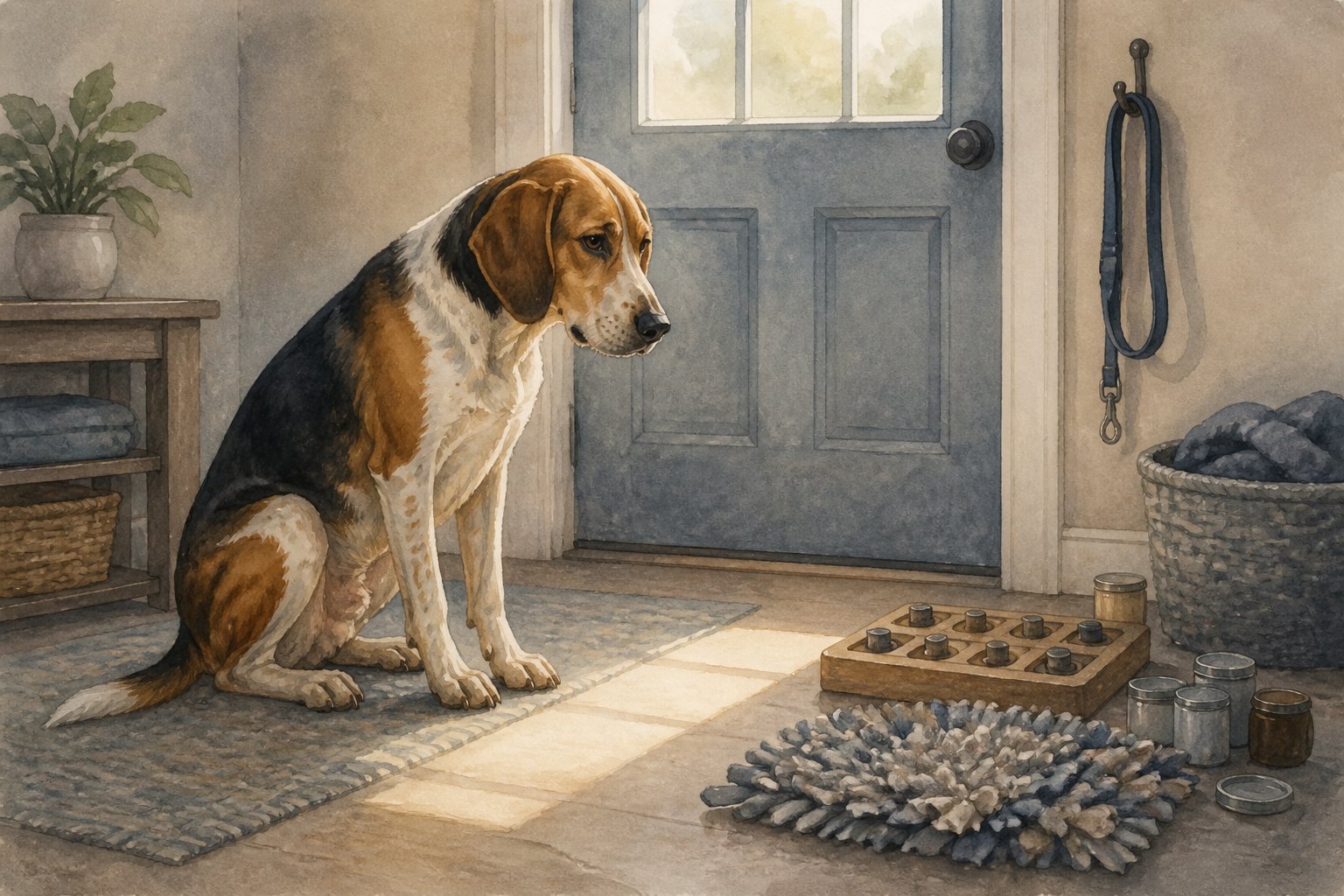
Physical exercise alone may not satisfy your Foxhound’s working brain. Without a safe outlet for sniffing, your dog may invent activities such as counter surfing, trash raids, barking, or tracking household smells.
Use scatter feeding, snuffle mats, food puzzles, scent trails, cardboard searches, and supervised “find it” games. Rotate items so they stay interesting.
Start easy, prevent frustration, and use part of your dog’s measured meals for enrichment rather than adding excess calories.
7. Ignoring Escape Risks From Digging, Climbing, And Following A Trail
An open gate or weak fence can become an escape route when your Foxhound catches an interesting scent. Check for loose boards, gaps under fencing, climbable objects, and gates that do not latch automatically.
Bury secure edging below vulnerable fence lines and keep furniture away from the perimeter. Supervise outdoor time, even in a familiar yard.
Identification tags, a registered microchip, and current contact details add protection if your dog gets out.
8. Punishing Baying, Howling, Or Other Normal Hound Vocalization
Baying is part of Foxhound communication. Punishment may increase anxiety without teaching your dog when quiet behavior is useful, and nearby residents may have little patience for repeated noise.
First identify the trigger, such as isolation, boredom, wildlife, excitement, or a learned demand. Increase exercise, block visual access to wildlife, reward brief quiet pauses, and teach a calm replacement behavior.
If vocalizing changes suddenly, ask your veterinarian about pain, illness, or distress.
9. Failing To Socialize A Puppy Beyond Treat-Based Training Sessions
Treats can support learning, yet socialization requires more than obedience drills. Your puppy needs calm, positive exposure to people, surfaces, sounds, handling, car rides, friendly dogs, and different settings.
Keep experiences brief and below your puppy’s fear limit. Let your dog choose distance, reward relaxed behavior, and avoid forcing greetings.
Well-run puppy classes can help, provided vaccination guidance is followed and the environment is controlled.
10. Adopting An American Foxhound Without Planning For Hunting-Breed Needs
Before adoption, plan for exercise, secure containment, vocalization, food management, scent-driven wandering, and time alone. A Foxhound may not fit a home that expects quiet, loose off-leash walks and minimal daily activity.
Ask the shelter or rescue about leash behavior, prey interest, noise, house training, and reactions to dogs, cats, and children. Build a transition plan with a routine, safe confinement, enrichment, veterinary care, and reward-based training from the first day.
When To Call A Qualified Dog Trainer Or Veterinary Behaviorist
Signs That Behavior Has Become A Safety Issue
Seek professional help when your Foxhound repeatedly escapes, cannot be safely walked, shows fear or aggression, guards food, injures itself, or vocalizes for long periods. Sudden behavior changes deserve a veterinary examination before training begins.
How To Find Force-Free, Hound-Savvy Help
Look for a reward-based professional with recognized education and experience with scent hounds. Ask how they handle recall, chasing, barking, and fear.
Avoid anyone who promises dominance, guarantees, intimidation, or instant results.
Questions To Ask Before Hiring A Trainer
Ask what tools and methods the trainer uses, how they measure progress, and whether they include home practice. Confirm that they will coordinate with your veterinarian when medical concerns may affect behavior.
American Foxhound Ownership Reality Check
Time, Space, And Secure Containment
You need daily time for vigorous exercise, sniffing, training, rest, and companionship. A securely fenced area helps, though a yard does not replace active interaction or supervision.
Noise Tolerance And Neighborhood Considerations
Baying can carry farther than you expect. Consider your neighbors, apartment rules, work schedule, and ability to manage noise triggers before bringing a Foxhound home.
Rescue Dog And Shelter-Labeling Considerations
Shelter labels may not capture your dog’s full breed mix or history.
Treat each dog as an individual and allow a settling-in period.
Assess behavior with guidance rather than relying on the label alone.