A Blue Heeler, also called an Australian Cattle Dog, is intelligent, athletic, and loyal. This compact dog is bred to work.
Those traits make the breed rewarding to own. However, they can create problems when exercise, boundaries, and social experiences do not match its needs.
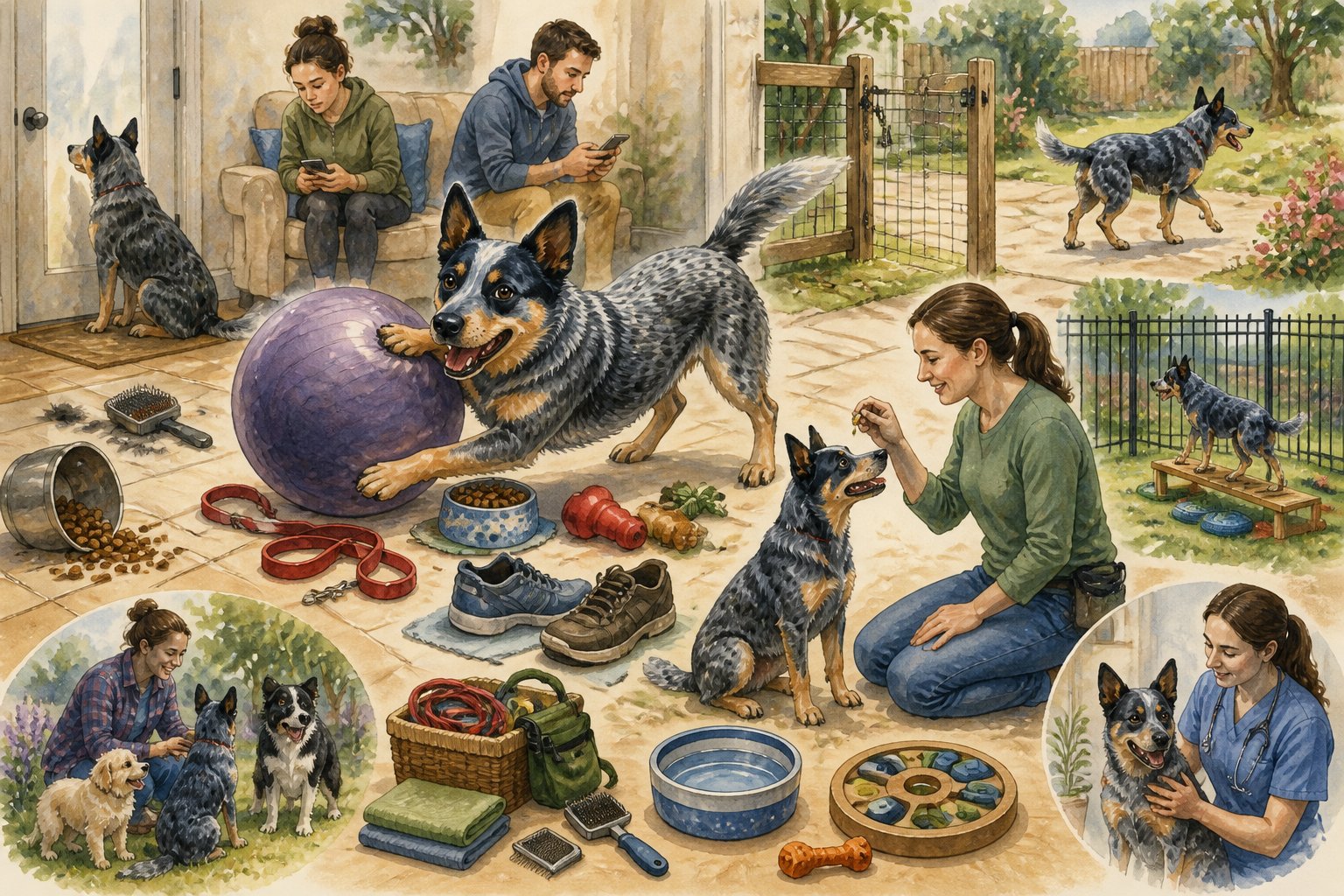
The biggest Blue Heeler owner slip-ups involve too little purposeful activity, forced social contact, unclear rules, and missed health or behavior warning signs. You can prevent many issues by giving your dog structured outlets, calm guidance, and realistic expectations from puppyhood through adulthood.
1. Skipping Daily High-Intensity Exercise
A Blue Heeler rarely thrives on a short bathroom walk alone. Without enough movement, you may see barking, chewing, digging, pacing, or attempts to control people and pets.
Aim for daily activity suited to your dog’s age and health. Brisk walks, hiking, fetch, flirt-pole games, agility foundations, and controlled herding-ball play can help.
Puppies need shorter sessions with rest. Adult dogs often benefit from two or more activity periods.
High intensity is not the same as constant impact. Build fitness gradually, use warmups, and avoid forcing repetitive jumping or running on a growing puppy.
Pair physical exercise with training so your dog learns to settle after work.
2. Treating Stranger Reserve As A Socialization Failure
Many Australian Cattle Dogs are selective with unfamiliar people. A dog that calmly watches, moves away, or ignores a stranger may be showing healthy caution rather than poor socialization.
Your goal is not to make your Blue Heeler greet everyone. Teach your dog to remain calm around visitors, pass people safely, and choose whether to approach.
Reward relaxed behavior at a comfortable distance. Let your dog retreat if needed.
Ask strangers to avoid staring, reaching over the head, or crowding your dog. A leash, baby gate, mat, and clear visitor instructions can prevent pressure from turning into growling or snapping.
3. Letting Heel-Nipping Become A Puppy Habit
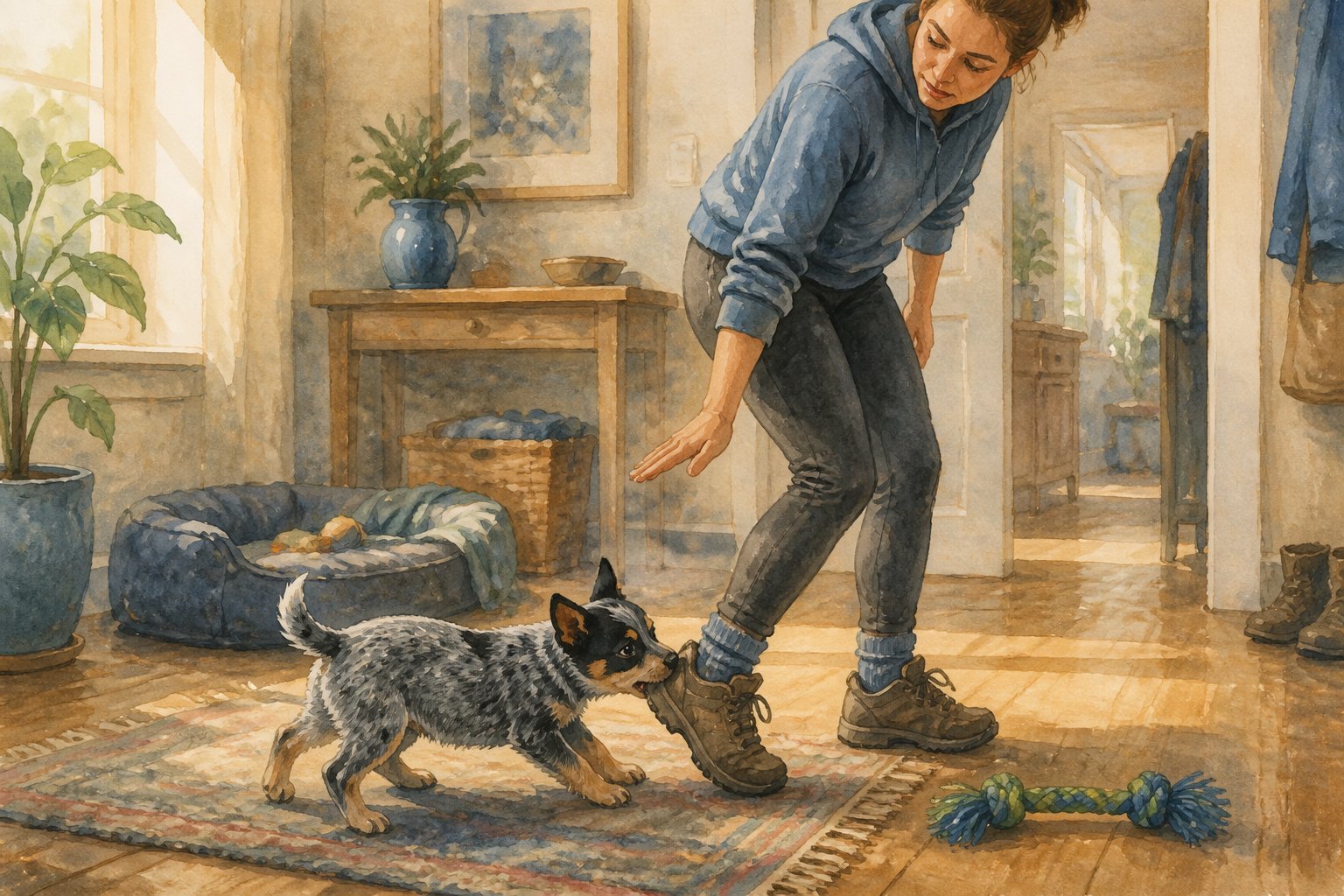
Heel-nipping reflects the breed’s cattle-driving history. It still needs polite limits in a home.
Chasing feet, ankles, children, or moving clothing can become dangerous when a puppy grows stronger. Stop movement, keep your voice calm, and redirect your puppy to a toy, chew, or short training game.
Reward four paws on the floor. Gates, pens, and lightweight house lines can help you manage sudden bursts without grabbing or wrestling.
Avoid encouraging ankle attacks as a game. If biting continues, calmly end interaction and provide a rest period.
Consistent responses from every household member usually work better than loud corrections.
4. Relying On Dog Parks For Socialization
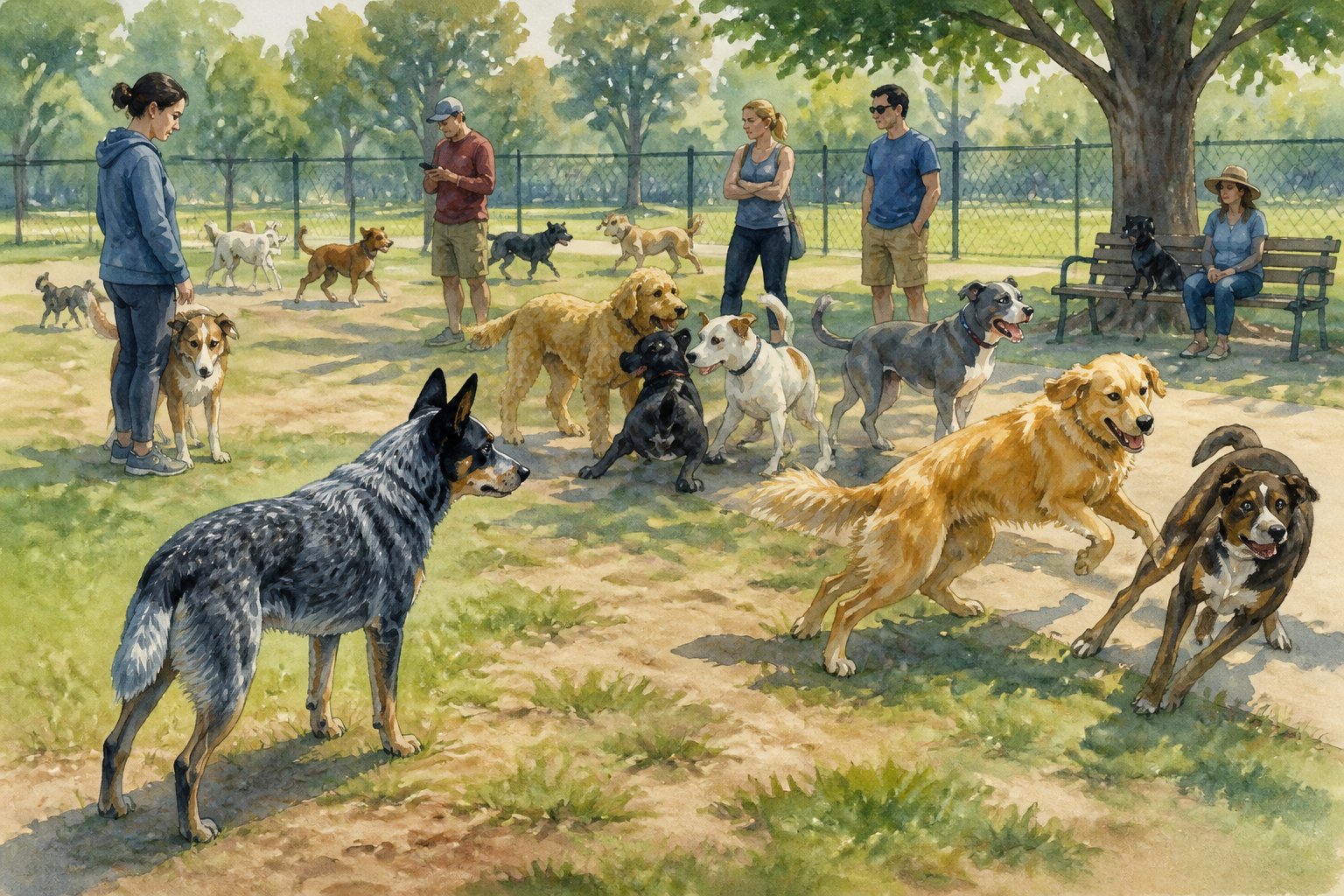
A dog park exposes your Blue Heeler to many unpredictable greetings, play styles, and escape routes. That setting may overwhelm a puppy or teach an adult dog that unfamiliar dogs are a threat.
Socialization means learning to stay composed around different sights, sounds, people, and animals. It does not require nonstop play.
Controlled walks, calm parallel walks, reward-based puppy classes, and carefully chosen dog friends offer more useful practice. Watch body language such as stiffness, tucked posture, hard staring, lip licking, hiding, or repeated attempts to leave.
If your dog cannot disengage, call it a day. A well-socialized Blue Heeler can notice another dog without needing to interact.
5. Forcing Greetings With Unfamiliar People Or Dogs
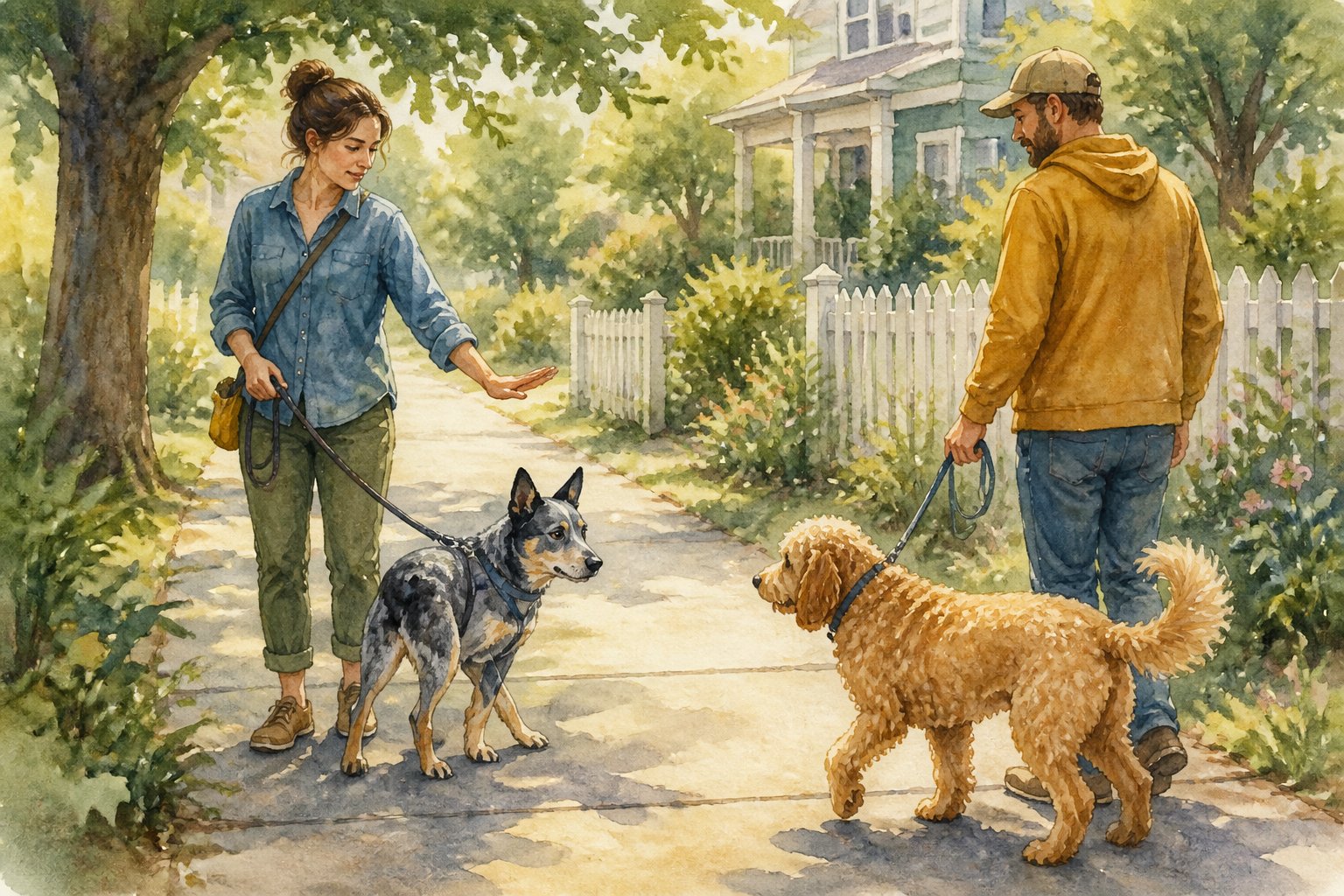
Forcing contact can make a cautious Blue Heeler feel trapped. Repeated pressure may turn avoidance into barking, lunging, or a quick warning bite.
Give your dog space on sidewalks, at veterinary visits, and during home introductions. Use a cheerful cue such as “let’s go,” reward eye contact, and cross the street when needed.
A yellow leash marker or direct verbal request can signal that your dog needs room. For dog meetings, choose neutral ground and use parallel walking before allowing brief sniffing.
Let your dog approach at its own pace. You are responsible for protecting its boundaries, not proving that it enjoys every greeting.
6. Underestimating Mental Work Like Scent Training
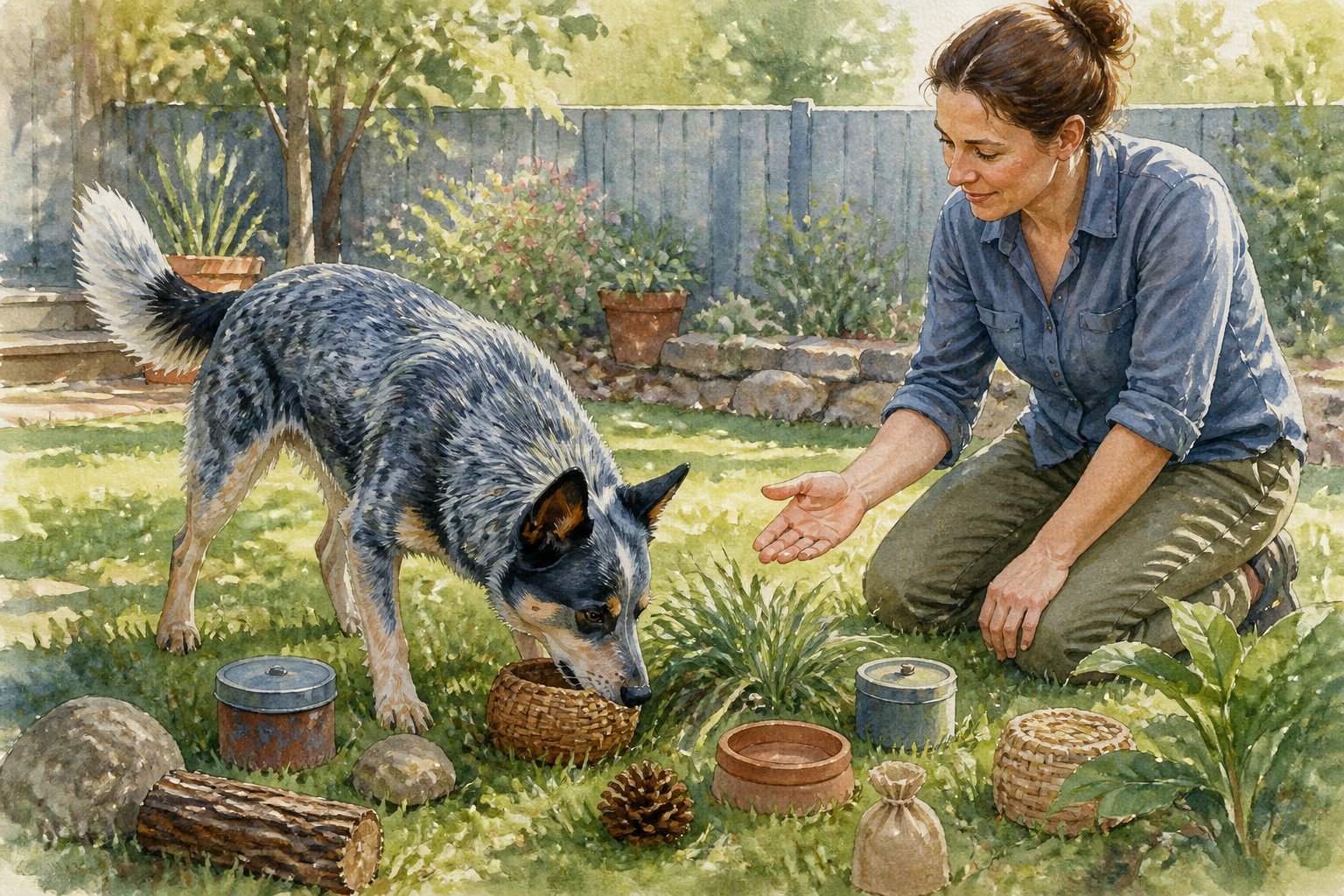
Physical exercise alone may leave a clever Blue Heeler searching for another job. Scent work gives your dog a safe way to investigate, problem-solve, and use its natural focus.
Start with simple food searches in a box, towel, or easy part of the yard. Progress to hidden treats, scent tins, puzzle feeders, shaping games, and short obedience drills.
Keep sessions brief and stop while your dog is still engaged. Mental work can reduce boredom without adding hard impact to growing joints.
It also improves communication because your dog learns to watch you, offer behaviors, and work through small challenges.
7. Using Inconsistent Rules Around Herding Behavior
A Blue Heeler cannot follow rules that change from person to person. If one household member laughs when the dog chases children while another punishes it, the behavior becomes confusing and rewarding.
Decide which actions are allowed before problems grow. Redirect staring, circling, blocking, chasing, and nipping into a mat settle, recall, hand target, or toy game.
Reward calm choices around running children, bicycles, and pets. Management matters.
Use gates, leashes, secure fencing, and supervision during busy moments. Never allow your dog to rehearse chasing cars or livestock.
Clear cues and predictable consequences help channel herding instinct without suppressing the dog’s natural drive.
8. Choosing A Blue Heeler For A Low-Activity Household
An Australian Cattle Dog may struggle in a home built around brief walks and long periods of inactivity. A yard helps, yet roaming outside is not a substitute for shared work, training, and exercise.
Before choosing this breed, consider your schedule, physical ability, climate, housing, and interest in daily activities. You do not need to compete in dog sports, though you do need a reliable routine.
If your lifestyle is quiet, plan structured enrichment such as scent games, trick training, obedience practice, and supervised outdoor exploration. An adult rescue with a known temperament may fit better than an intense working-line puppy.
9. Ignoring Early Signs Of Resource Guarding
Resource guarding can involve food, chews, toys, resting places, doorways, or even a favorite person. Early signs include freezing, turning away, stiffening, hovering, eating faster, growling, or showing teeth.
Do not punish a growl. A growl gives you useful warning, and punishment can remove that warning without changing the emotion underneath.
Prevent children and pets from approaching during meals or chew time. Trade for something better, use distance, and teach your dog that people approaching can predict good outcomes.
If guarding includes lunging, snapping, or bites, stop DIY exercises and contact a qualified, reward-based behavior professional.
10. Overfeeding A Compact, Athletic Australian Cattle Dog
A Blue Heeler’s strong frame can hide excess body fat beneath a thick coat. Extra weight increases stress on joints and can reduce stamina, heat tolerance, and willingness to work.
Measure meals instead of estimating portions. Adjust food for age, activity, treats, and sterilization status, and keep treats within a small share of daily calories.
Your veterinarian can help select an appropriate diet and feeding amount. Check body condition regularly.
You should be able to feel the ribs under a light covering, see a waist from above, and notice an abdominal tuck from the side. Growth diets for puppies should support steady development, not rapid size gain.
11. Assuming Every Blue Heeler Will Fit The Standard Size Chart
Breed averages are useful reference points, not a deadline. Adult size varies with sex, genetics, breeding, nutrition, and individual development.
Some healthy dogs fall above or below common height and weight ranges. Track growth with your veterinarian rather than changing food repeatedly because a puppy seems small.
A compact, muscular dog may weigh differently from a taller dog while maintaining excellent body condition. Focus on steady growth, energy, coat quality, digestion, and body condition.
Sudden plateaus, weakness, poor appetite, persistent diarrhea, or an unusual change in shape deserve veterinary attention. Parent size can offer clues, though it cannot guarantee your dog’s final measurements.
Building A Better Blue Heeler Routine
Exercise And Enrichment Balance
Build a weekly routine that combines brisk movement, sniffing, training, play, and quiet recovery. A typical adult may need several purposeful activity periods, while a puppy needs shorter sessions and plenty of sleep.
Use variety rather than trying to exhaust your dog every day. Rotate walks, scent searches, obedience, chewing, swimming, and low-impact games.
Teach a settle cue so your Blue Heeler learns that rest is part of the job.
Visitor And Dog-Encounter Management
Create distance before your dog becomes tense. Use a harness, high-value treats, gates, a mat, and a separate room when visitors or unfamiliar dogs create too much excitement.
Tell people not to approach without permission. Reward your dog for looking at a trigger and returning attention to you.
Calm exits are more valuable than forced greetings.
Age-Appropriate Training Expectations
Keep puppy lessons short and upbeat, with frequent naps and safe social exposure. Adolescents may test boundaries, become more intense, or show new sensitivity, so maintain structure without expecting adult self-control.
Use reward-based training and consistent cues. Build recall, leash skills, handling tolerance, impulse control, and cooperative grooming gradually.
Your dog’s working drive is easier to guide when training remains clear and fair.
When To Call A Veterinarian Or Qualified Trainer
Sudden Behavior Changes
A sudden increase in irritability, withdrawal, barking, guarding, or reactivity can signal pain, illness, fear, or a stressful change. Schedule a veterinary evaluation instead of labeling the behavior as stubbornness.
Pain, Growth, And Weight Concerns
Limping, reluctance to jump, slowing on walks, unusual thirst, poor appetite, digestive problems, or unexpected weight change need professional attention. Puppies with stalled growth or rapid weight gain also benefit from an examination and diet review.
Escalating Reactivity Or Biting
Seek help when lunging, chasing, guarding, or biting becomes more frequent, intense, or difficult to interrupt.
Choose a qualified trainer or veterinary behavior professional who uses humane, reward-based methods and can provide a safety plan.
Until you receive guidance, prevent rehearsal with distance, barriers, secure equipment, and careful supervision.
Do not test your dog’s tolerance or force another encounter.