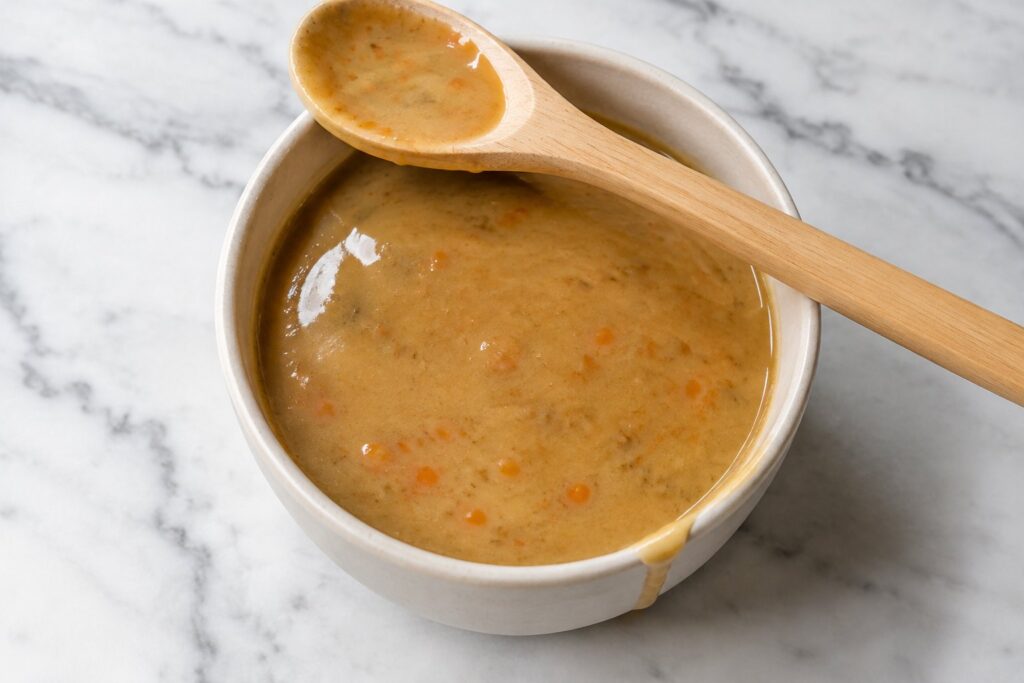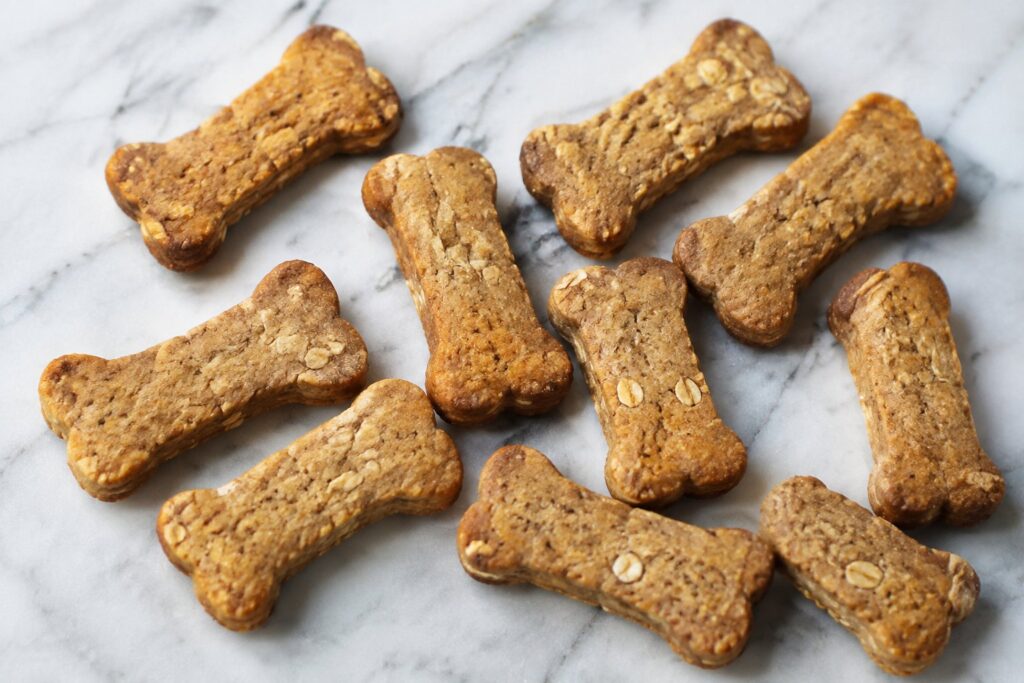
Peanut Butter Applesauce Dog Treats are easy baked biscuits you can make with unsweetened applesauce, dog-safe peanut butter, flour, oats, and an egg. The dough rolls cleanly, holds cookie-cutter shapes, and produces about 24 small treats.
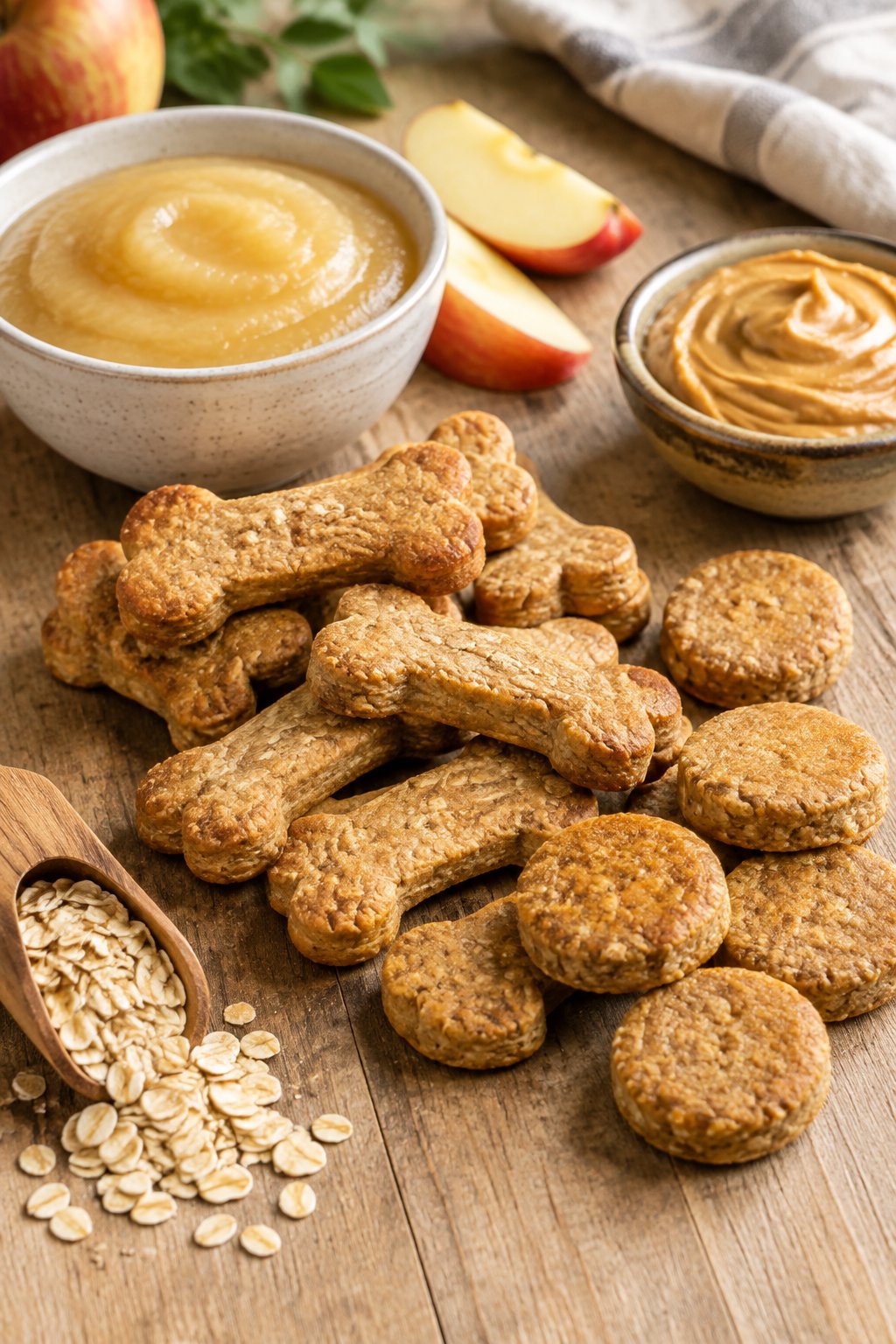
Making homemade dog treats gives you control over every ingredient and portion. This dog treat recipe also lets you adjust the baking time for a soft center or a dry, crunchy biscuit.
Your dog’s size, health, and food needs should guide ingredient choices and serving amounts. If your dog has allergies or follows a medical diet, ask your veterinarian whether this homemade dog treat recipe fits that plan.
The Reliable Baked Biscuit Recipe
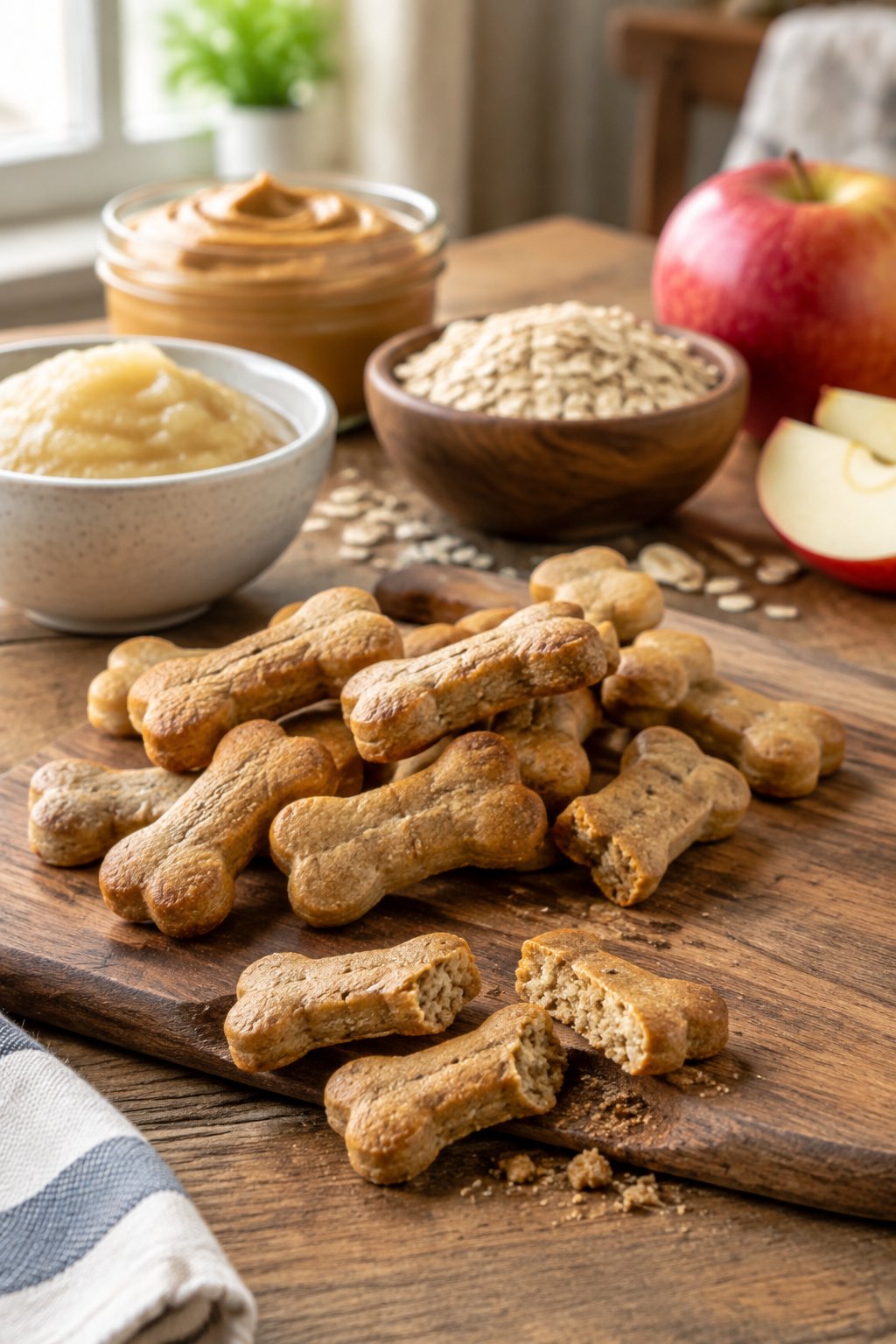
You can make dependable peanut butter and applesauce dog treats by mixing a firm dough, rolling it 1/4 inch thick, and baking it at 350°F. Your finished batch yields about 24 two-inch biscuits.
Yield: About 24 treats
Prep time: 15 minutes
Cook time: 18 to 22 minutes
Oven temperature: 350°F
Cooling time: 30 minutes
Ingredients and Why Each One Is Used
- 1 3/4 cups whole wheat flour, plus more for rolling
- 1/2 cup old-fashioned oats
- 1 teaspoon baking powder
- 1/2 cup unsweetened applesauce
- 1/4 cup natural peanut butter, verified xylitol-free
- 1 large egg
- 1 teaspoon olive oil
Whole wheat flour gives your biscuits structure, while oats add texture and help absorb moisture. Unsweetened applesauce binds the flour and adds mild apple flavor without added sugar.
Natural peanut butter supplies flavor and fat. The egg strengthens the dough, baking powder adds a small amount of lift, and olive oil helps keep the rolled dough from cracking.
If your dog has trouble with eggs, review how dairy and eggs fit into your dog’s diet before using substitutions.
Step-by-Step Instructions
1. Heat the oven and line the pan
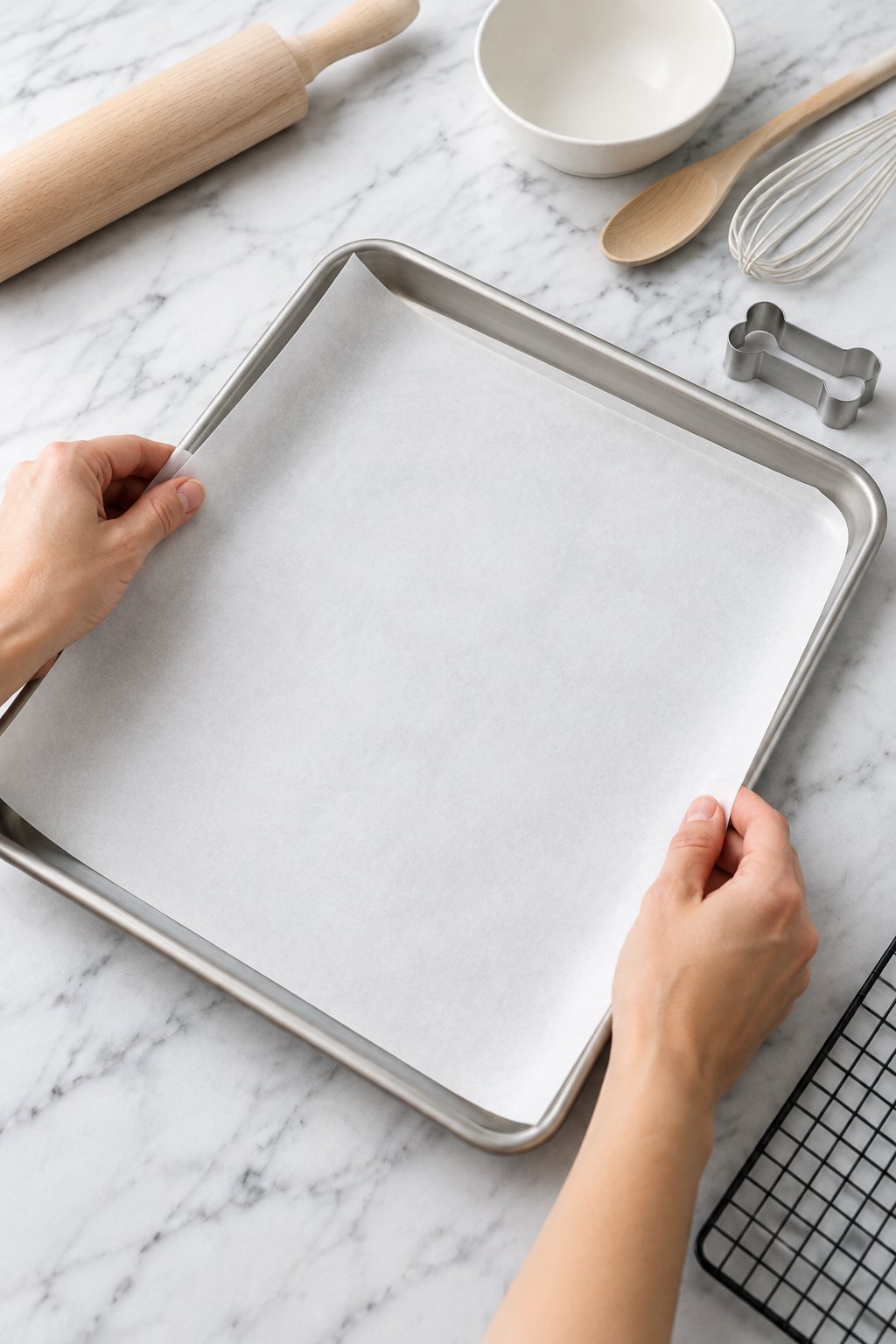
Heat your oven to 350°F. Line a large baking sheet with parchment paper.
2. Whisk the dry ingredients
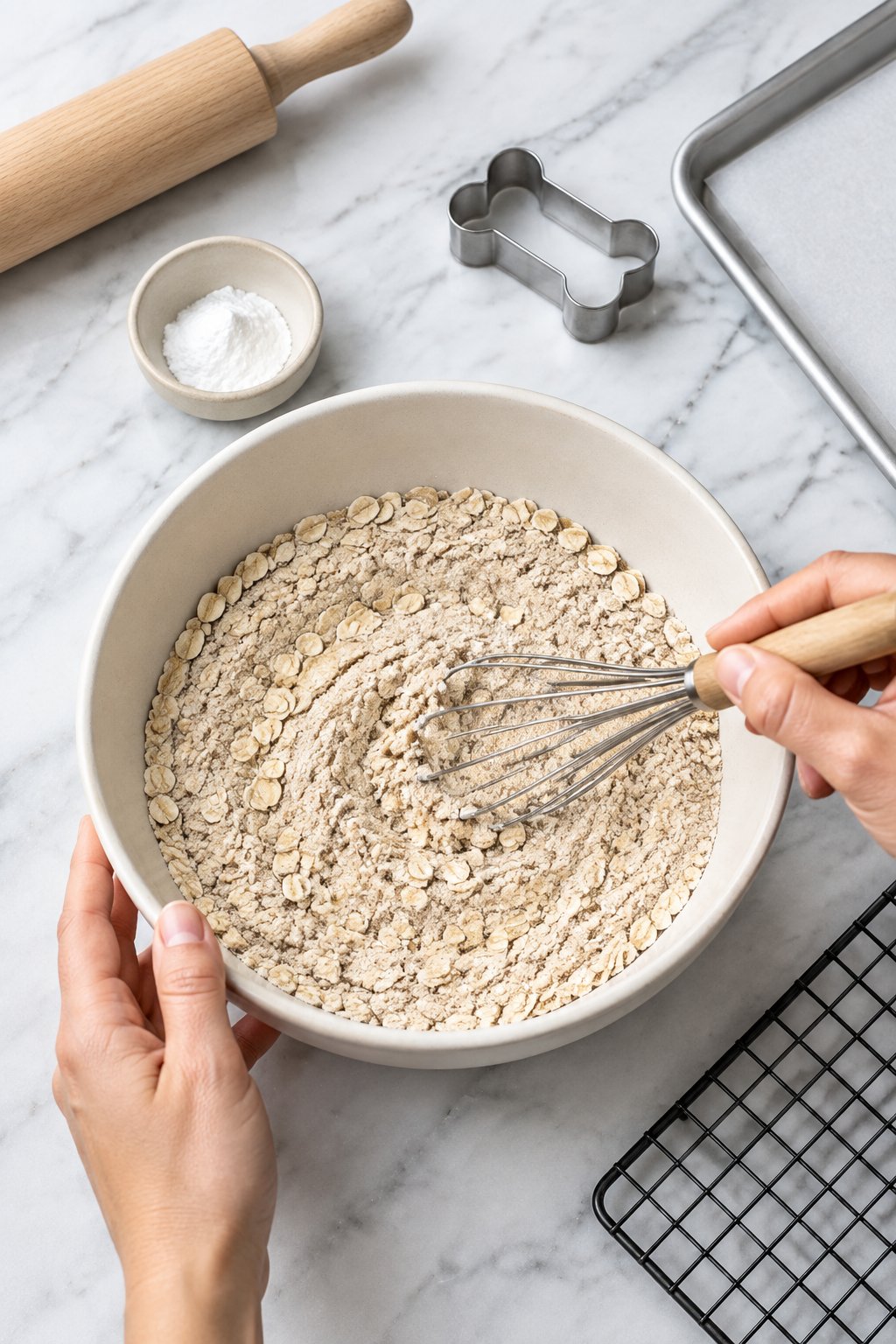
Whisk the whole wheat flour, oats, and baking powder in a large bowl. Visual cue: Your dry mixture should look even, with oats spread throughout the flour.
3. Stir the wet ingredients
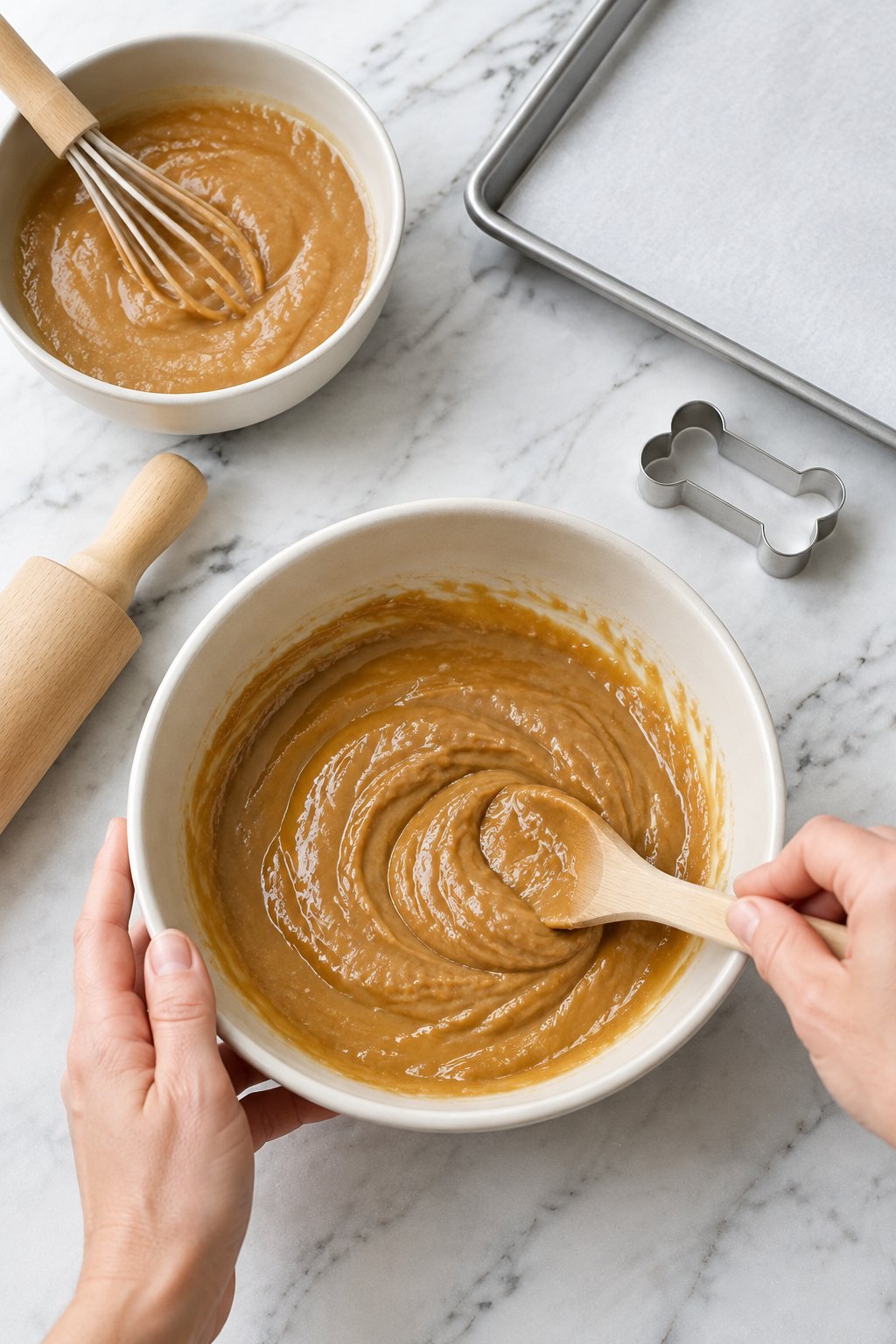
Stir the applesauce, peanut butter, egg, and olive oil in a second bowl until smooth. Visual cue: Your wet mixture should be thick, glossy, and light brown.
4. Combine and knead the dough
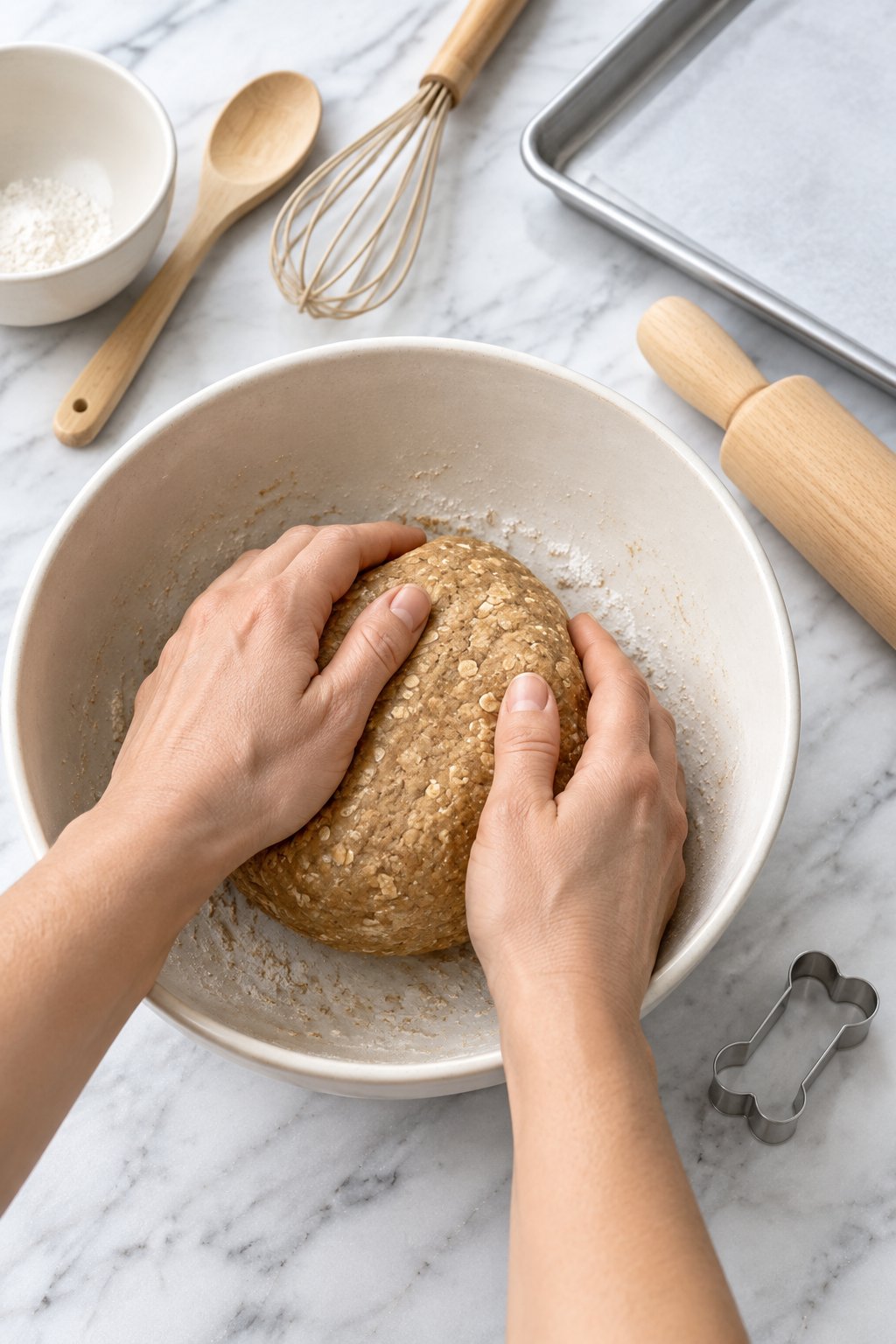
Add the wet mixture to the dry ingredients. Stir until rough clumps form, then knead the dough in the bowl for about one minute. Visual cue: Your mixture should gather into one firm ball with little loose flour.
5. Roll the dough out
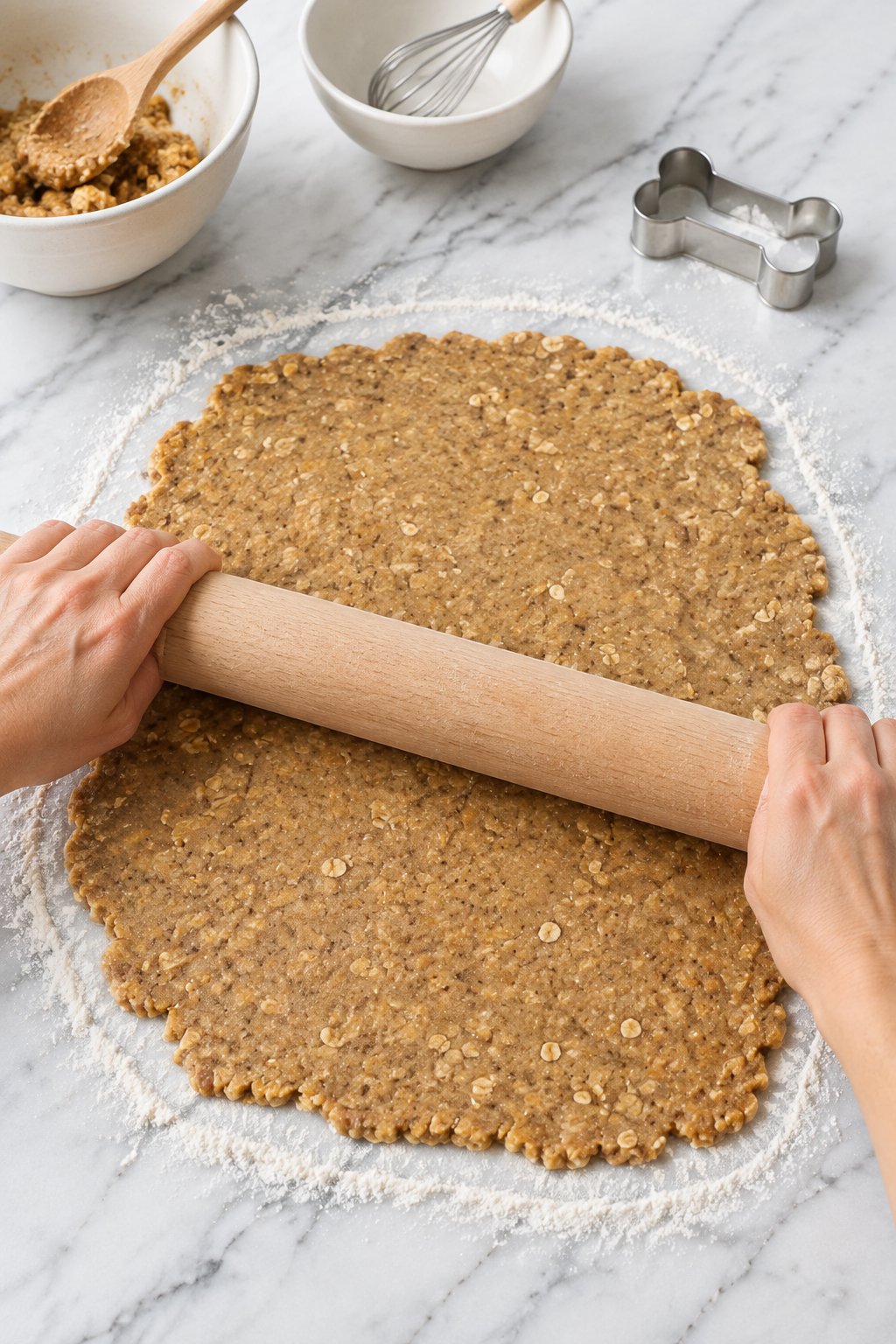
Place the dough on a lightly floured surface. Roll it to 1/4-inch thickness. Visual cue: Your dough should have an even surface with small oat flakes visible.
6. Cut bone shapes
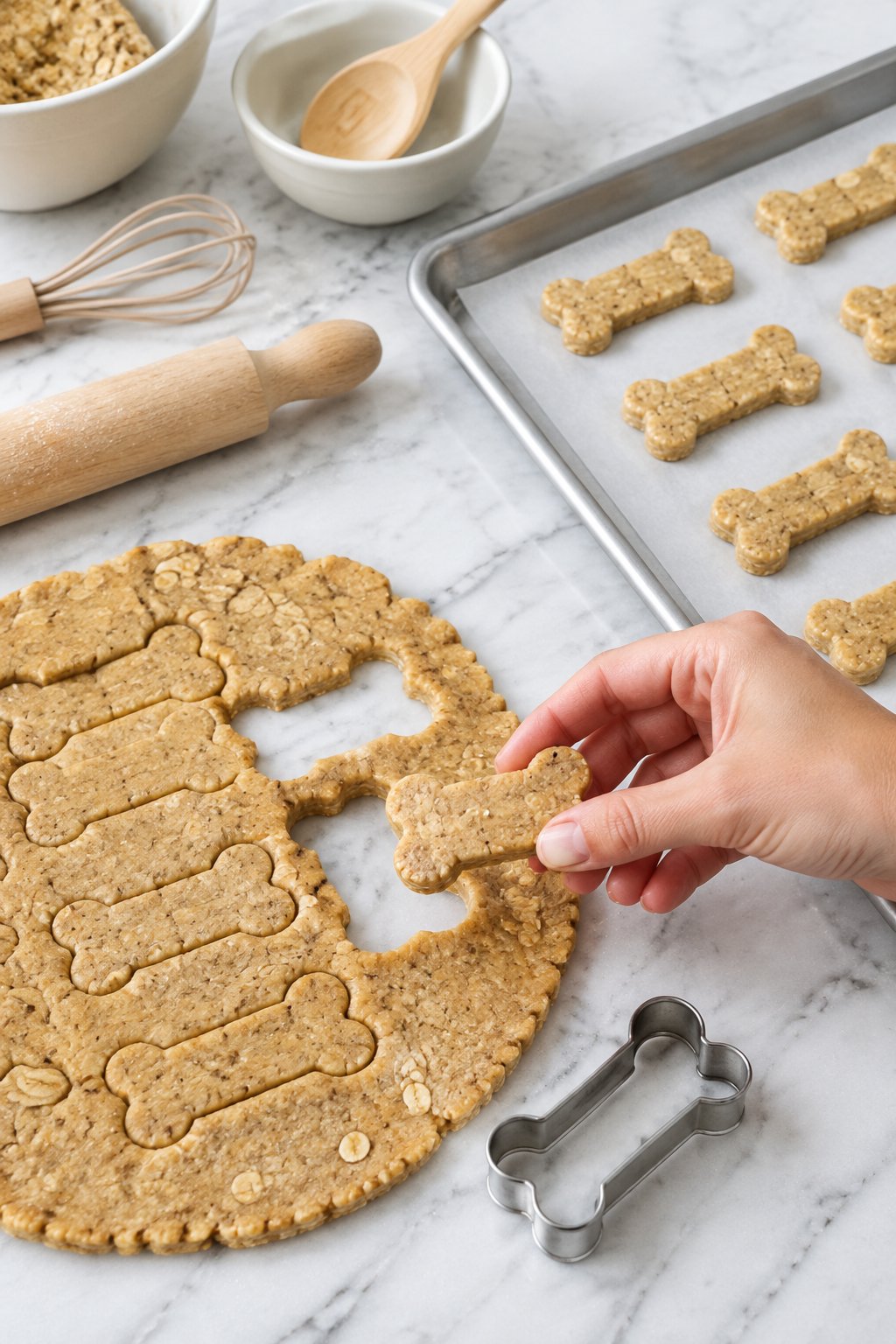
Cut the dough with a two-inch cookie cutter. Arrange the shapes about 1/2 inch apart on the prepared pan. Visual cue: Your unbaked treats should hold sharp edges when lifted.
7. Bake until firm and golden
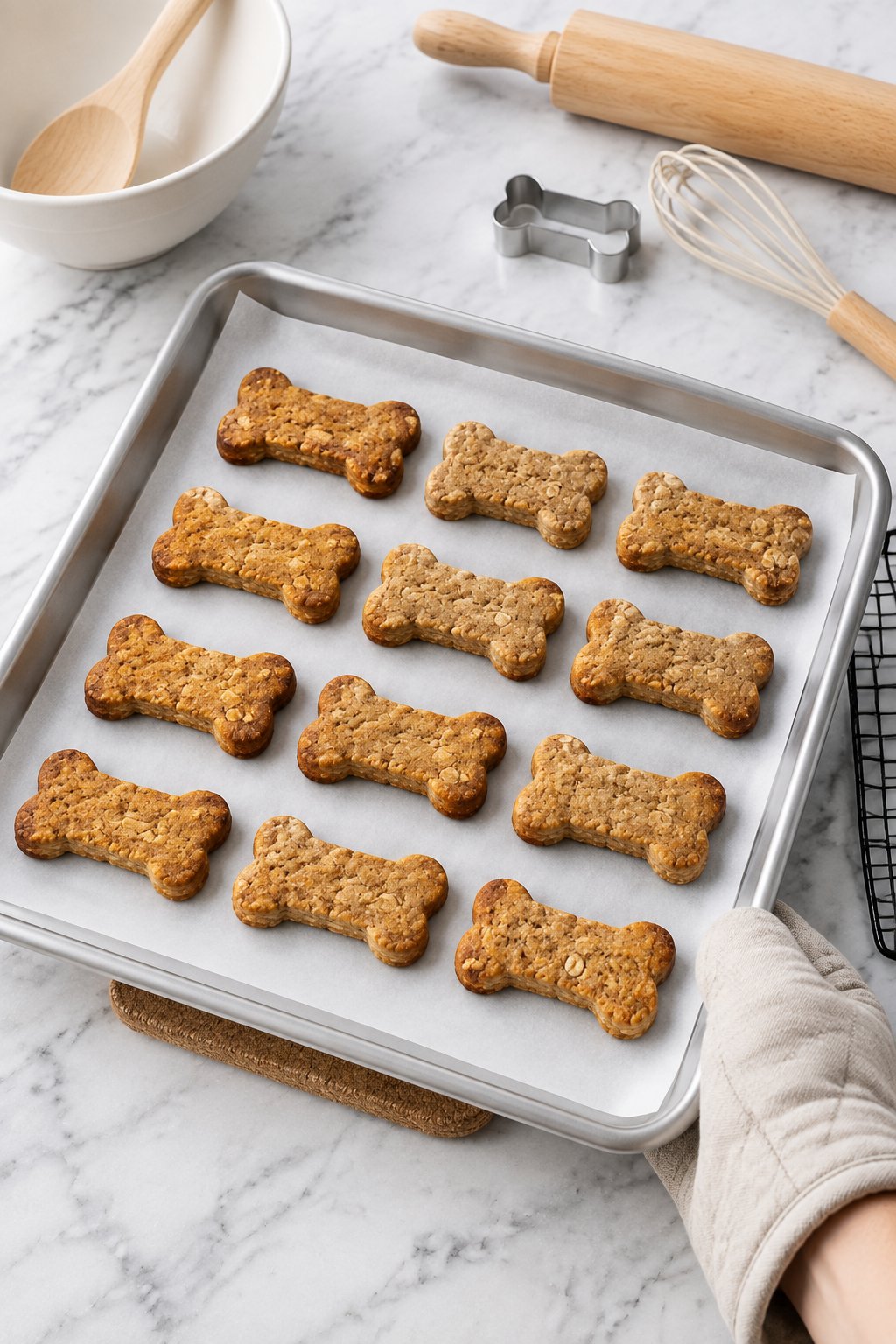
Bake for 18 to 22 minutes, until the edges feel firm and the bottoms are lightly browned. Visual cue: Your finished peanut butter dog treats should look dry on top and golden underneath.
8. Cool on a wire rack
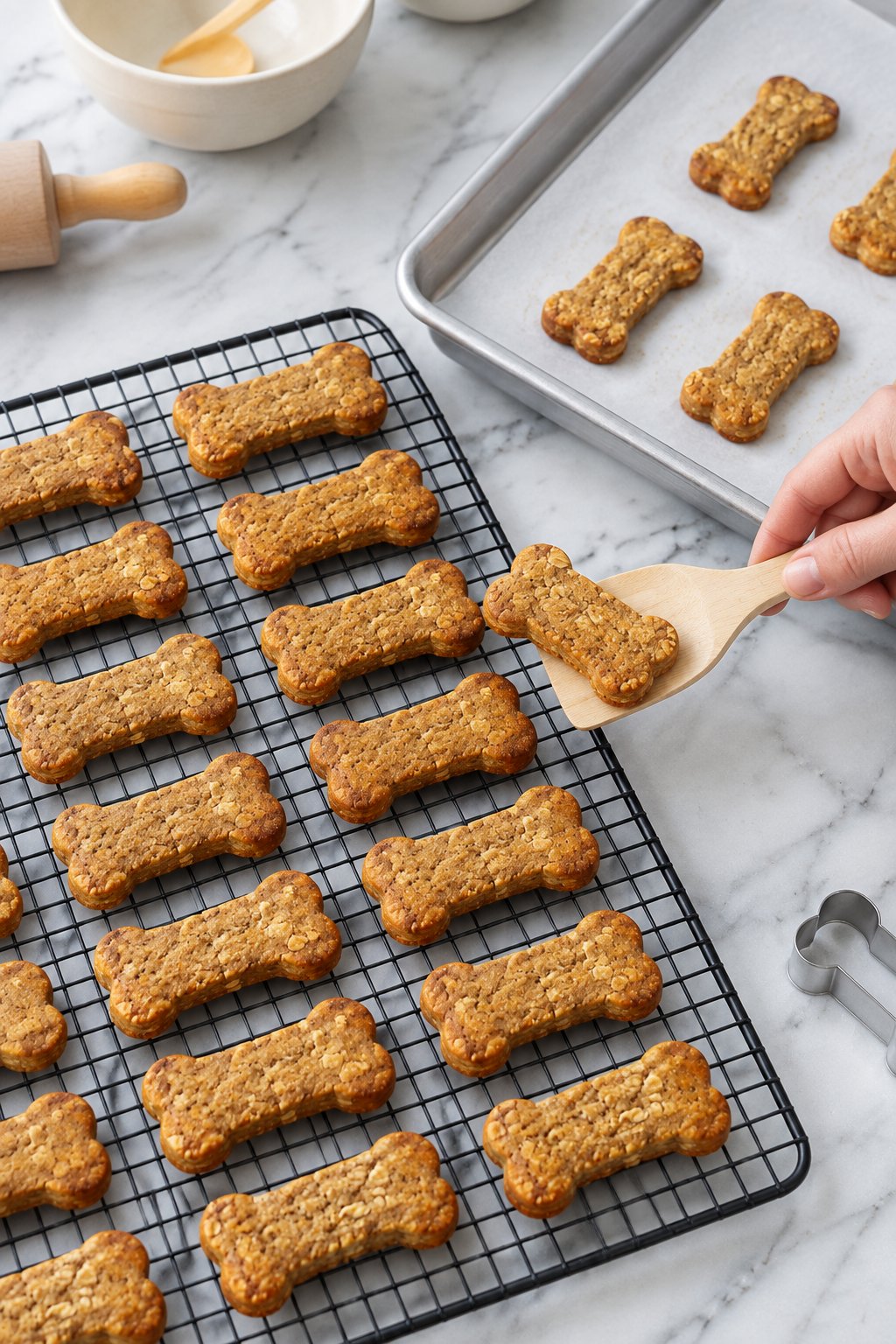
Transfer the biscuits to a wire rack. Let them cool fully for at least 30 minutes before serving.
What the Dough Should Look and Feel Like
Your dough should feel firm and smooth, much like modeling clay. It should release from your fingers while staying flexible enough to roll without splitting around the edges.
A faintly tacky surface is fine. Add flour one tablespoon at a time if the dough coats your hands, or knead in one teaspoon of applesauce if it breaks into dry pieces.
This balance helps homemade peanut butter applesauce dog treats keep clear shapes during baking.
How to Choose Dog-Safe Ingredients
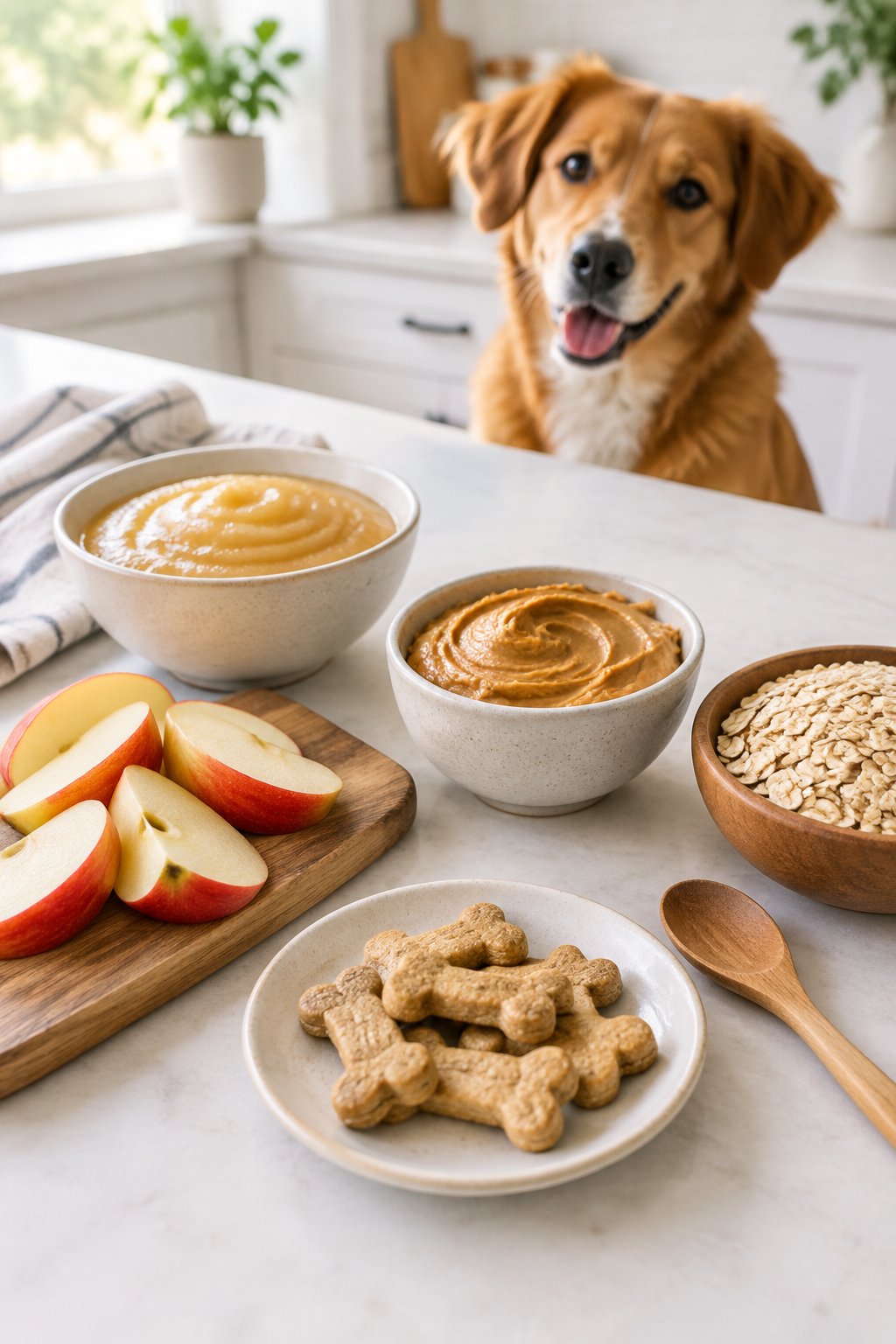
Your safest ingredients have short labels, no added sweeteners, and a history of fitting your dog’s regular diet. Check every package each time you bake because manufacturers sometimes change formulas.
Why Xylitol and Birch Sugar Are an Emergency
Xylitol is highly toxic to dogs, and birch sugar is another label name used for the same sweetener. Even a small exposure requires immediate professional help because xylitol can trigger a rapid, dangerous drop in your dog’s blood sugar and may damage the liver.
Read the full peanut butter label before measuring it. If your dog eats xylitol, contact your veterinarian or an animal poison control service immediately.
Do not wait for symptoms or try to cause vomiting unless a veterinary professional directs you. Peanut butter made only from peanuts works well, and salt-free varieties help you limit added sodium.
You can also review other foods that are toxic to dogs before adding pantry ingredients.
Which Flour Alternatives Work Best
Oat flour is your easiest whole wheat substitute. Process rolled oats in a blender until powdery, then replace the wheat flour by weight or begin with 1 1/2 cups and add more until the dough becomes firm.
Rice flour creates a crisp, slightly sandy biscuit. Coconut flour absorbs far more liquid, so direct cup-for-cup replacement produces dry dough.
If you use coconut flour, begin with 1/2 cup and allow the mixture to rest for five minutes before deciding whether it needs more. Introduce unfamiliar ingredients in small portions, especially if your dog has a history of food allergies.
Your veterinarian can help identify a suitable flour for a prescribed elimination diet.
Optional Add-Ins and Ingredients to Skip
You can add 2 tablespoons of finely grated carrots or one tablespoon of chopped oats. A small pinch of cinnamon, up to 1/8 teaspoon per batch, is enough for aroma.
Avoid nutmeg, chocolate, raisins, macadamia nuts, sugary applesauce, and heavily salted peanut butter. Choose plain ingredients without artificial sweeteners.
If you want a different fruit-and-vegetable combination, pumpkin applesauce dog treats offer a peanut-free variation when made with an appropriate recipe.
Texture, Shapes, and Frozen Treat Options
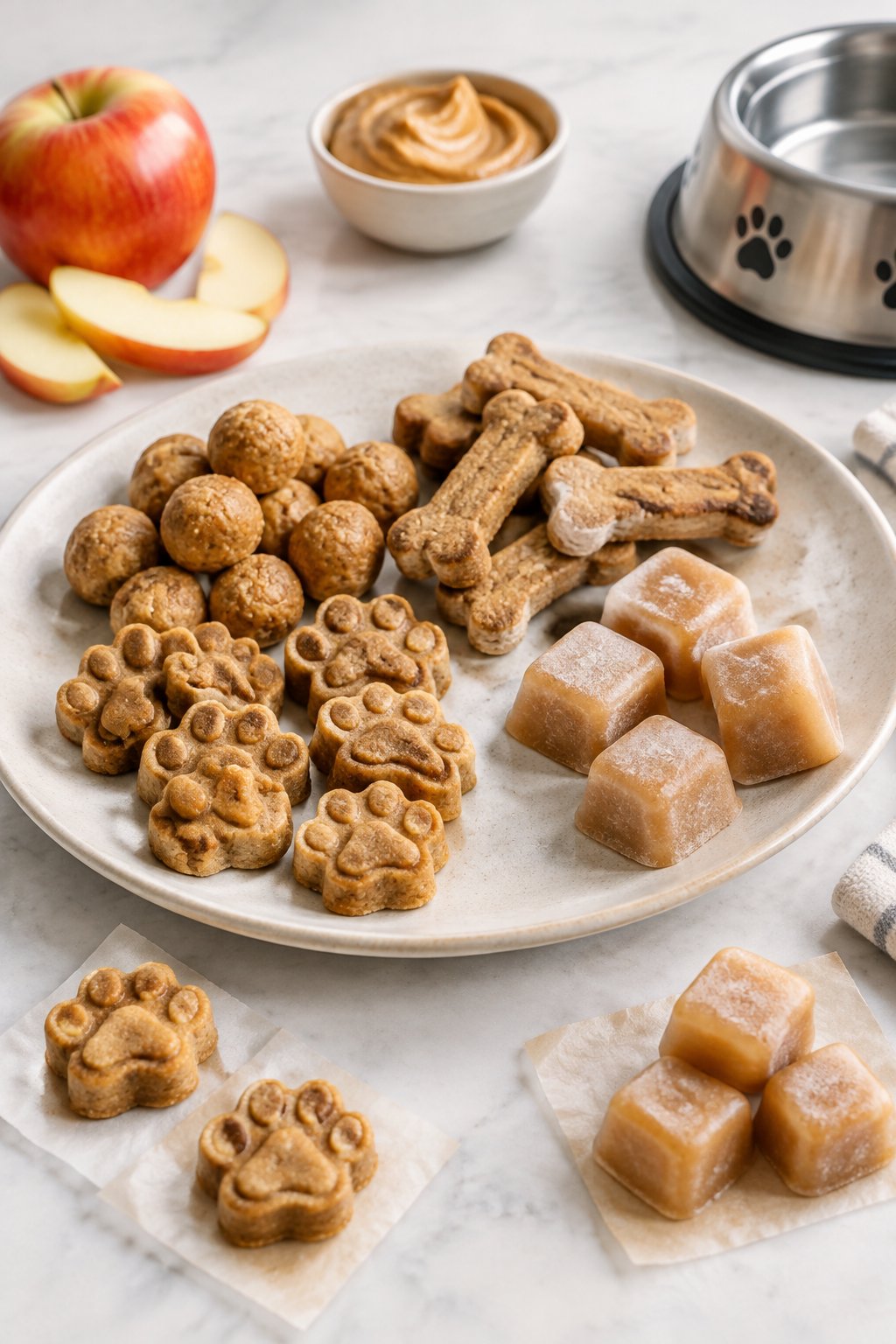
Baking time and dough thickness let you tailor these treats for puppies, training sessions, or senior dogs. Frozen portions provide another texture when your dog tolerates the ingredients.
How to Make Soft or Crunchy Biscuits
For softer biscuits, roll your dough 3/8 inch thick and bake it for 15 to 18 minutes. Remove the treats when their edges are set and their centers still yield slightly under gentle pressure.
For crunchy biscuits, roll the dough 1/4 inch thick and bake for 22 to 25 minutes. Turn off the oven, crack the door, and leave the biscuits inside for another 30 minutes so lingering moisture escapes.
Crunchy treats need complete cooling before storage. Soft treats suit dogs with tender gums or missing teeth. Break one open before serving to confirm the center has baked through and contains no wet dough.
How to Make Small Training Treats
Roll the dough into a 1/4-inch-thick rectangle. Use a pizza wheel to cut a grid of 1/2-inch squares, then separate the pieces slightly before baking.
Begin checking these small pieces after 10 minutes because they brown faster than larger shapes. Your finished training treats should be firm enough to carry in a pouch without crumbling.
Keep each reward tiny so repeated training does not add a large number of calories. For dogs that lose interest, the reasons behind a dog spitting out treats can include texture, stress, or low food value.
Three-Ingredient Frozen Treats
For a no-bake option, combine:
- 1/2 cup unsweetened applesauce
- 1/4 cup xylitol-free natural peanut butter
- 1/2 cup plain, unsweetened yogurt
Stir until smooth, then spoon the mixture into silicone molds or ice cube trays. Freeze for at least four hours and release each piece once solid.
Use small cavities because frozen treats melt as your dog eats them. If dairy causes loose stool or gas, use plain water in place of yogurt and reduce the applesauce to 1/3 cup for a firmer freeze.
Serving, Storage, and Common Fixes
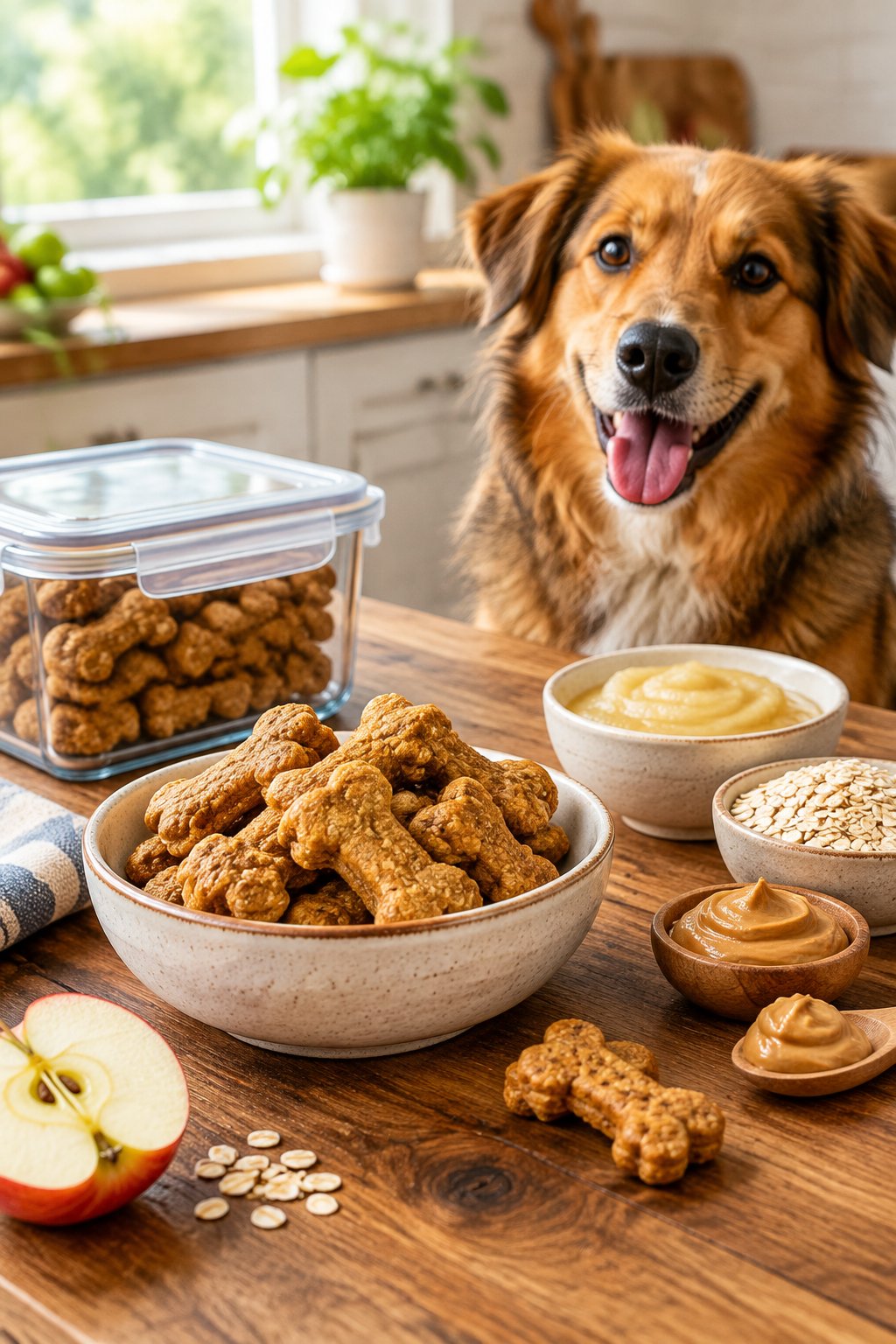
Serve these treats as a small part of your dog’s daily calories, then store the remaining batch away from heat and moisture. Careful cooling and minor dough adjustments prevent most problems.
How Many Treats Can Dogs Have?
Keep all treats to 10% or less of your dog’s daily calories. Your dog’s complete and balanced food should provide the remaining 90%.
Start with half of one small biscuit when your dog tries the recipe for the first time. Watch for vomiting, itching, facial swelling, diarrhea, or unusual tiredness.
Seek veterinary care promptly for swelling, breathing trouble, repeated vomiting, or severe weakness. Your serving count depends on the size of each biscuit and your dog’s calorie needs.
Break a two-inch treat into smaller pieces for puppies and small breeds, and include every piece in your daily total. Broader tips for keeping your dog healthy can help you place treats within a steady feeding routine.
How to Store and Freeze a Batch
Let every biscuit cool to room temperature before packing it. Trapped warmth creates condensation, which shortens storage life.
Keep soft applesauce dog treats in an airtight container in the refrigerator for up to seven days. Store fully dried, crunchy biscuits at room temperature for up to three days or refrigerate them for added protection.
Freeze baked treats in a sealed freezer bag for up to three months. Place parchment between layers and thaw only the amount you need in the refrigerator.
Keep frozen yogurt treats in the freezer and serve them straight from their molds. These biscuits are supplemental treats, not a complete homemade dog food recipe.
If you prepare homemade dog food, use a formulation created for your dog by a veterinary nutrition professional.
How to Fix Sticky, Dry, or Crumbly Dough
For sticky dough, knead in whole wheat flour or oat flour one tablespoon at a time. Chill the dough for 15 minutes if the peanut butter has made it warm and greasy.
For dry dough, add unsweetened applesauce one teaspoon at a time. Stop as soon as the dough bends without cracking.
For crumbly dough, knead it for another minute before adding liquid because the oats need time to hydrate. If it still falls apart, mix in one teaspoon of beaten egg or water, gather the dough into a ball, and roll it between two sheets of parchment.