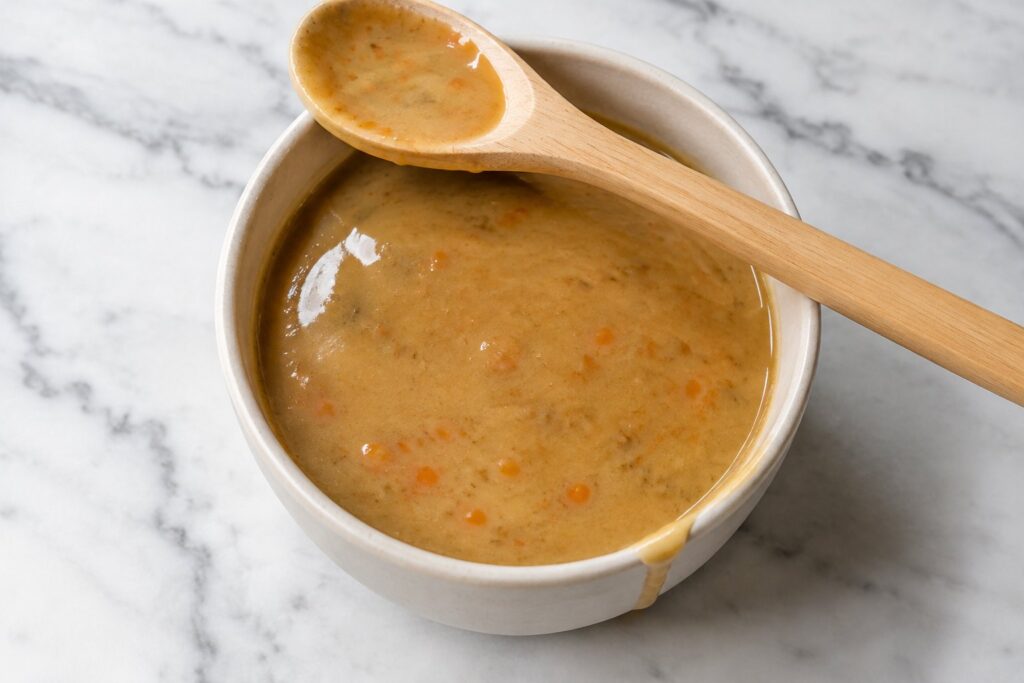
You can make Easy Homemade Dog Gravy for puppies, adult dogs, and senior dogs by simmering lean chicken with dog-safe vegetables and unseasoned broth, then thickening it into a pourable sauce.
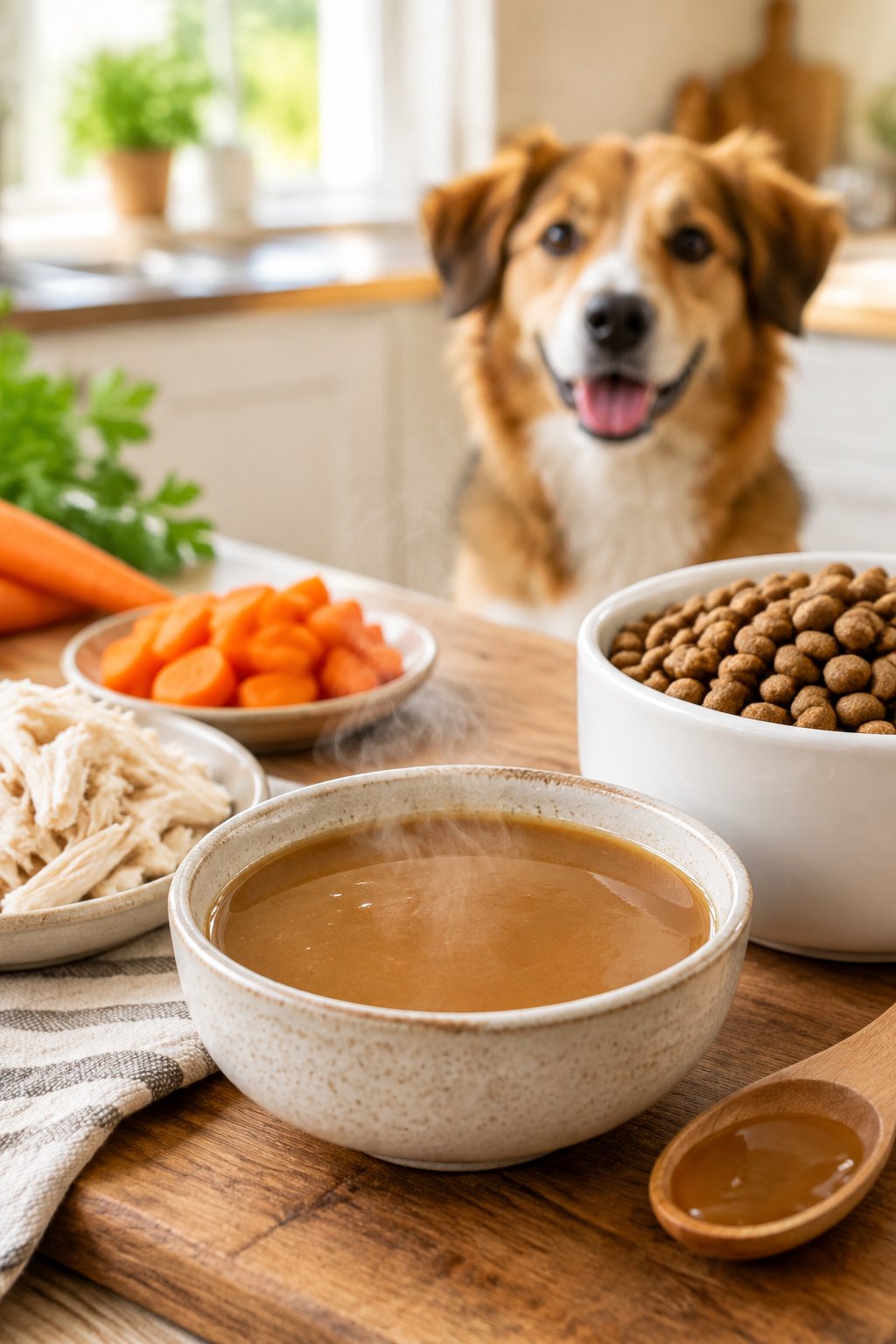
This homemade dog gravy adds moisture and a meaty aroma to dry kibble. Used as a dog food topper, it helps soften dry dog food for seniors and makes meals more appealing to picky eaters.
You also control every ingredient in your dog food gravy. Treat gravy for dogs as a dog food topping, with your dog’s complete and balanced food providing most daily nutrition. Puppies need extra care because their growth depends on the correct nutrient balance, while older dogs have changing dietary needs. Ask your veterinarian about toppers if your dog has a medical condition or prescribed diet.
The Simple Base Recipe
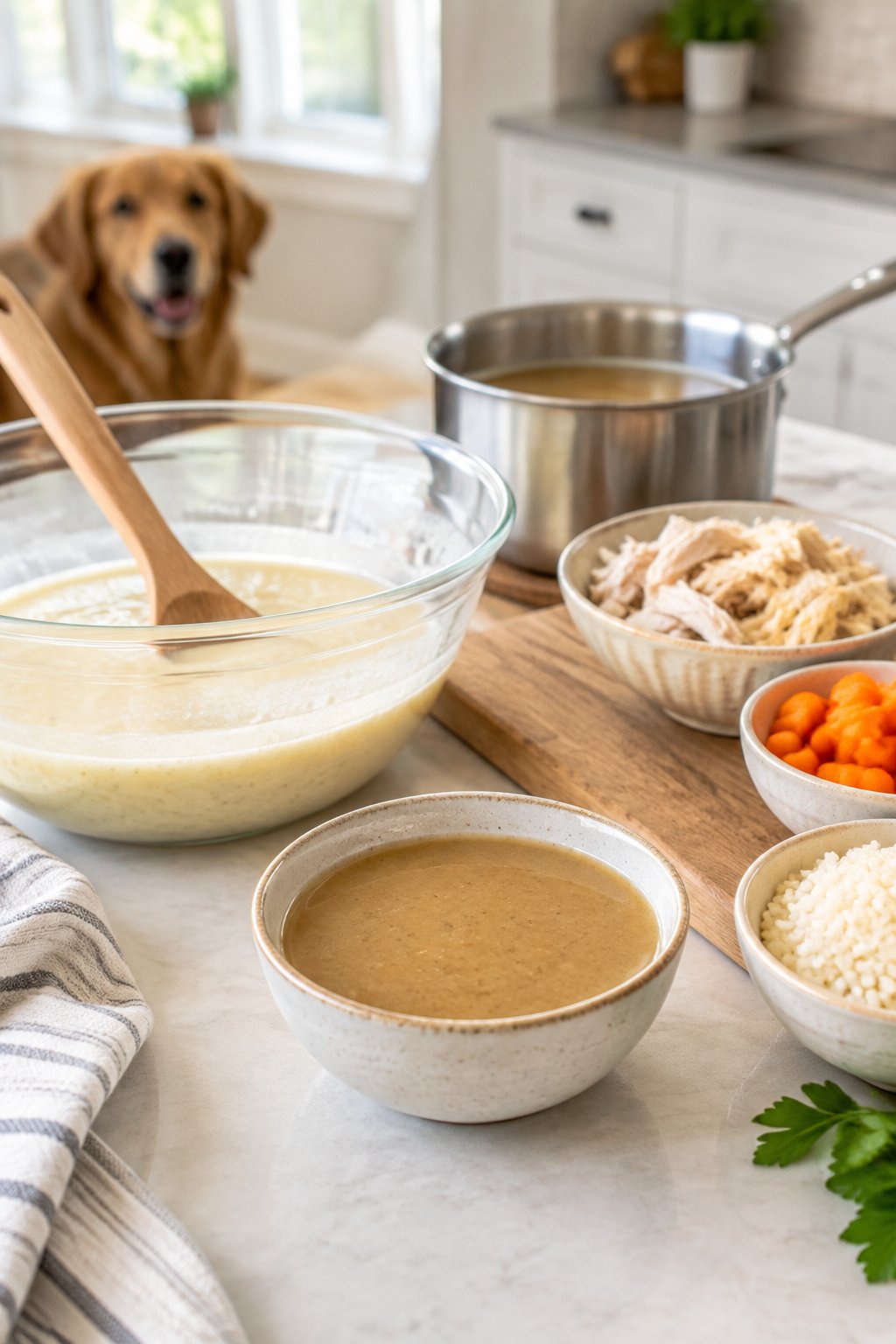
Your most reliable dog gravy recipe combines lean ground chicken, vegetables, low-sodium broth, and a small amount of starch. You get about 4 cups of smooth homemade dog food gravy.
Ingredients and Easy Swaps
Yield: About 4 cups, or 64 tablespoons
Prep time: 10 minutes
Cook time: 20 minutes
Cooking temperature: Medium stovetop heat; cook chicken to 165°F
- 1 teaspoon olive oil
- 1 pound lean ground chicken
- 1/2 cup finely diced carrots
- 1/2 cup frozen peas
- 2 cups low-sodium chicken broth or chicken stock, free from onion and garlic
- 2 tablespoons cornstarch
- 2 tablespoons cool water
You may replace olive oil with coconut oil. Arrowroot powder works in the same quantity as cornstarch. For cooked meat, use 3 cups of finely chopped cooked chicken and reduce the initial cooking time.
Step-by-Step Instructions
1. Brown the ground chicken
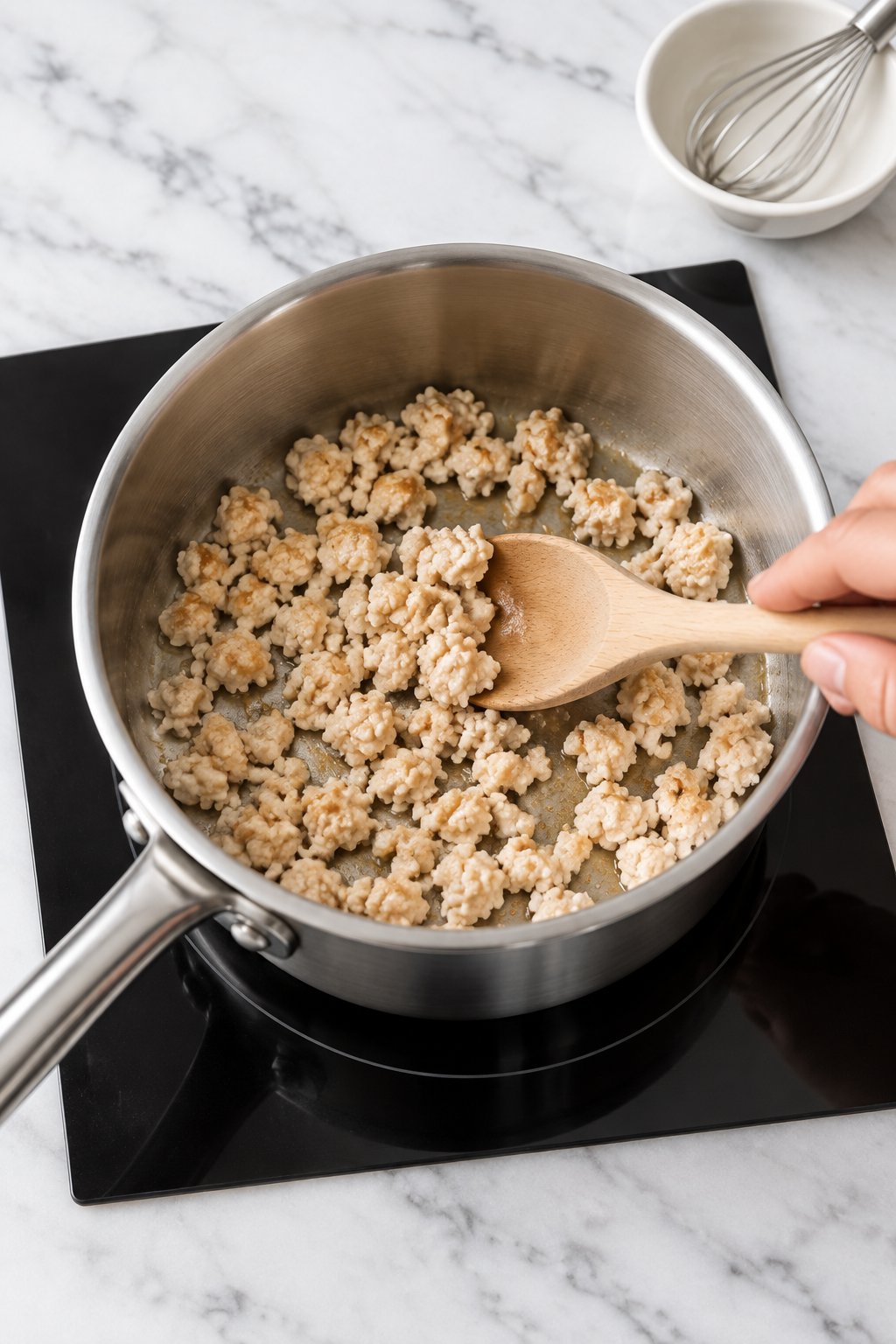
Heat your olive oil in a saucepan over medium heat. Add the ground chicken and break it into small crumbles. Cook for 7 to 9 minutes, until no pink remains and the center reaches 165°F.
2. Simmer with carrots, peas and broth
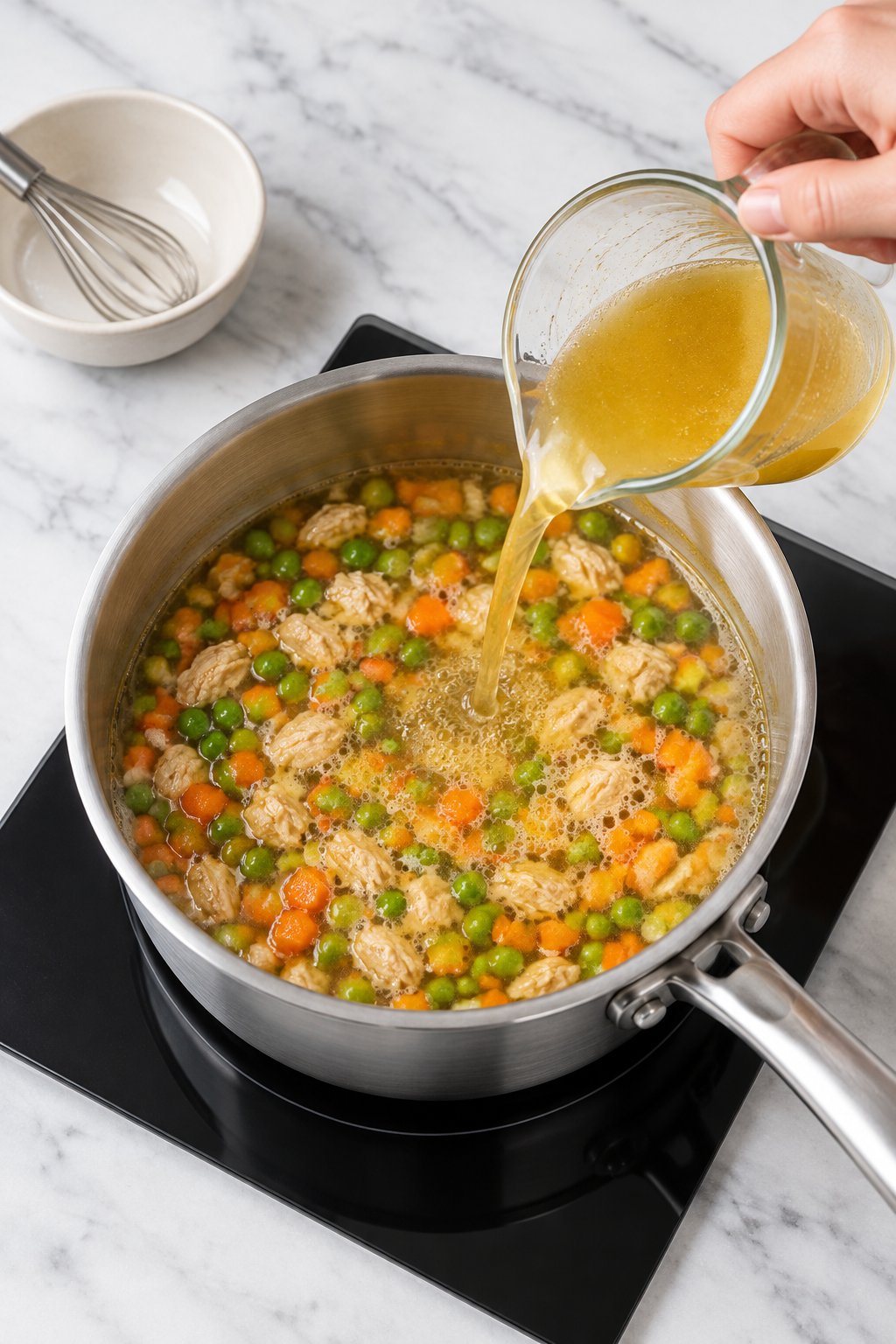
Add your carrots, green peas, and chicken stock. Simmer uncovered for 8 minutes. Your carrots should pierce easily with a fork.
3. Stir in the cornstarch slurry
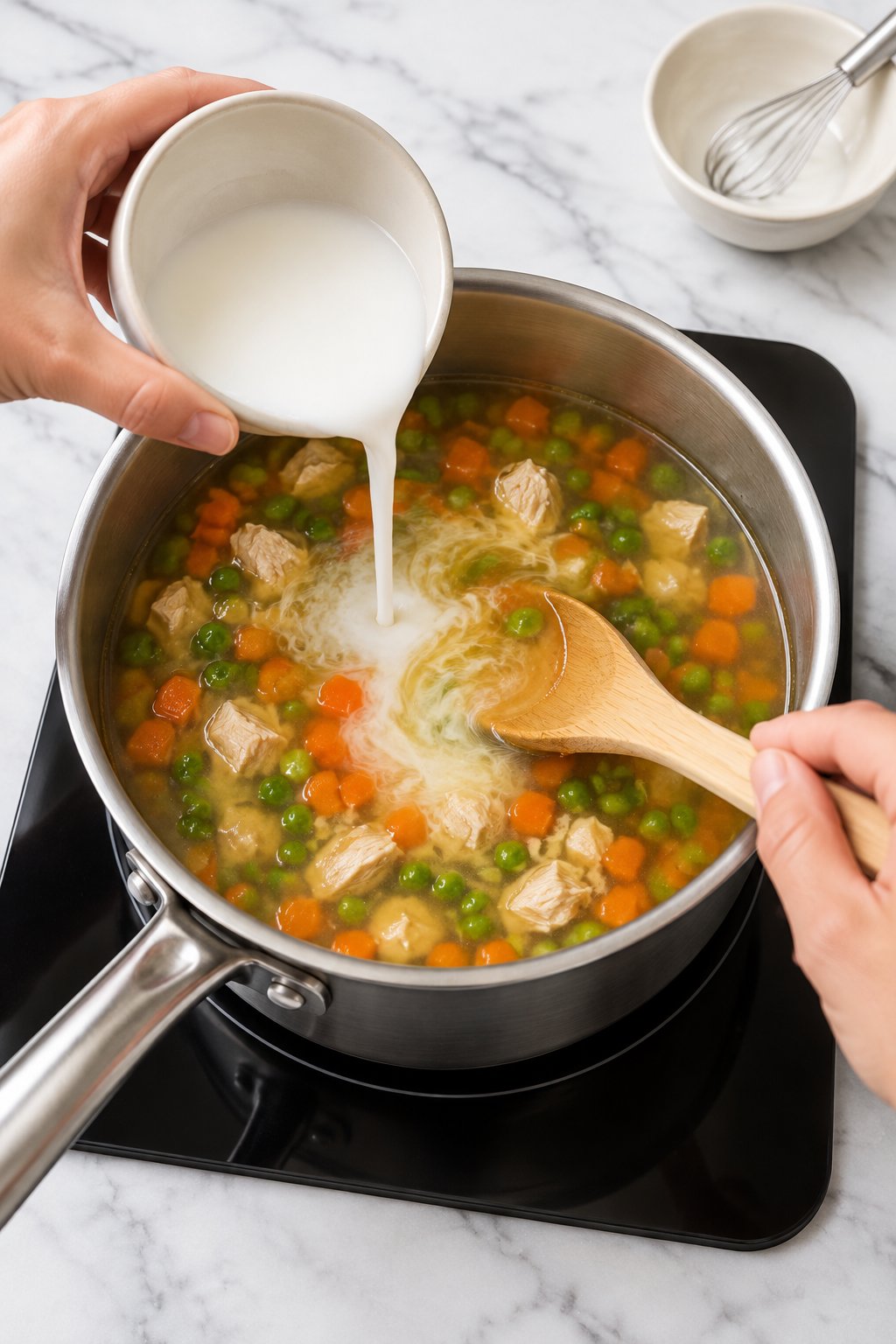
Whisk the cornstarch with cool water in a small bowl. Pour this slurry into the pan while stirring.
4. Simmer until glossy
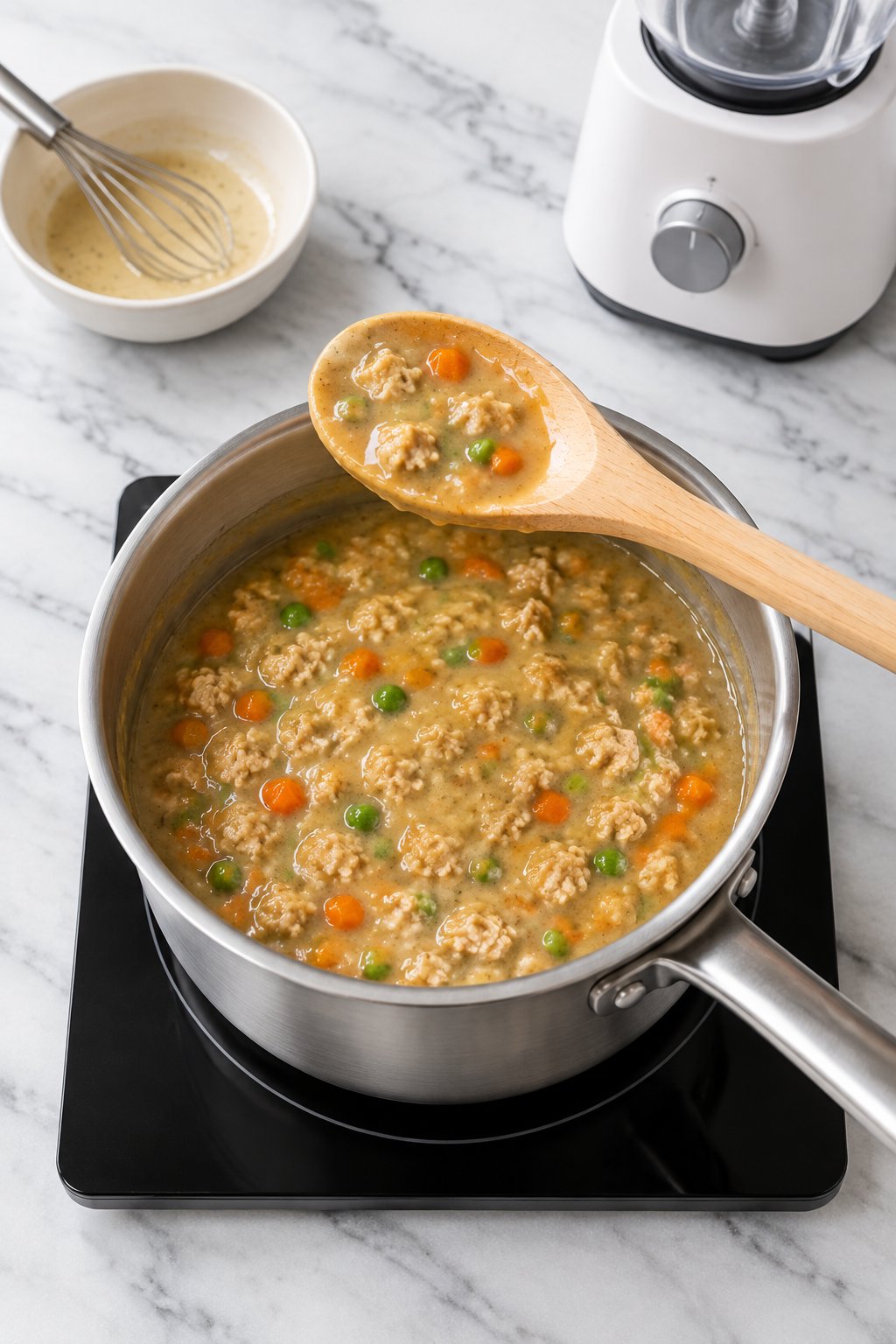
Simmer for 1 to 2 minutes. Your mixture should look glossy and lightly coat the spoon.
5. Cool, then transfer to a blender
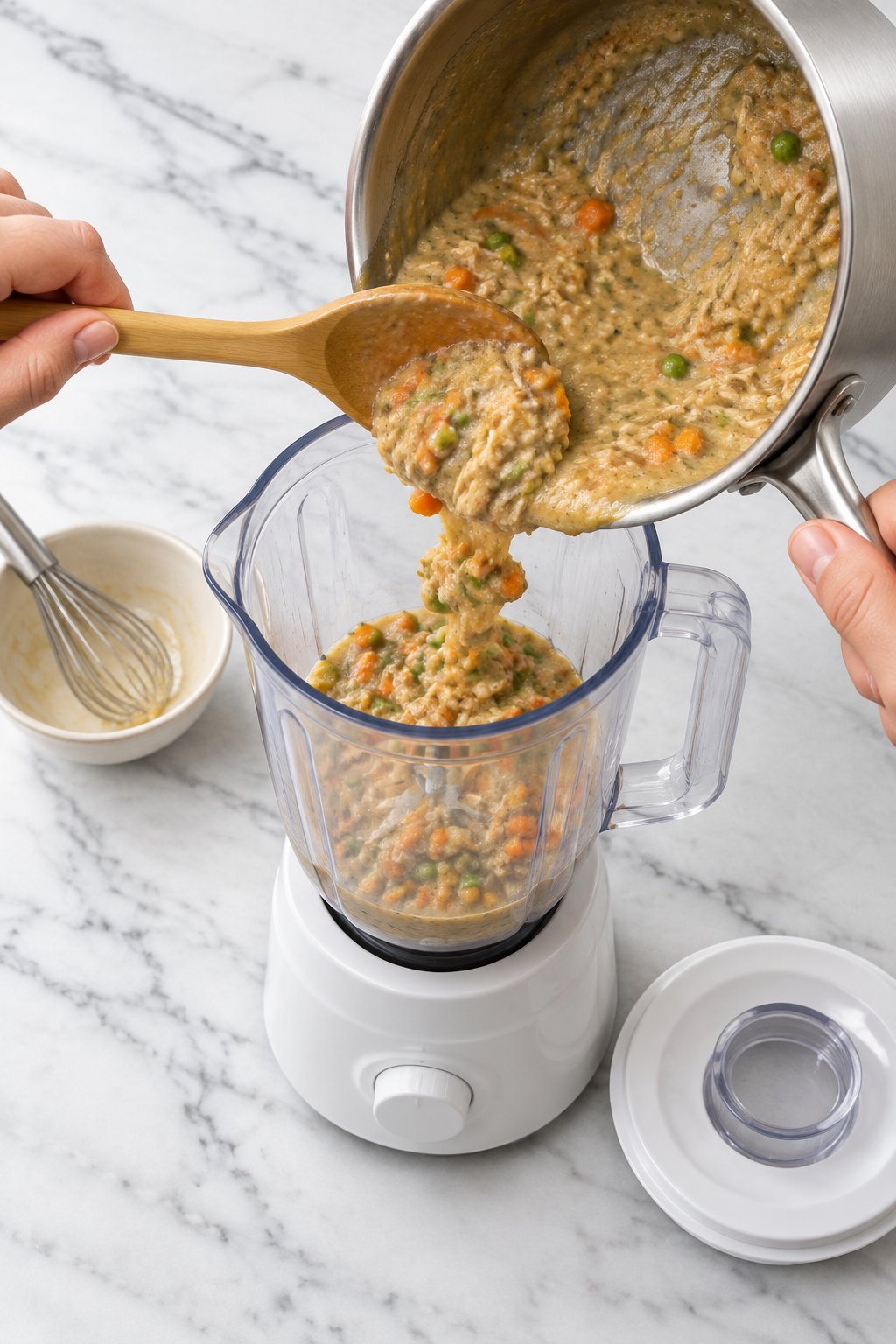
Remove the pan from the heat and let it cool for 10 minutes. Transfer it carefully to a blender or food processor, venting the lid for steam.
6. Blend to your preferred texture
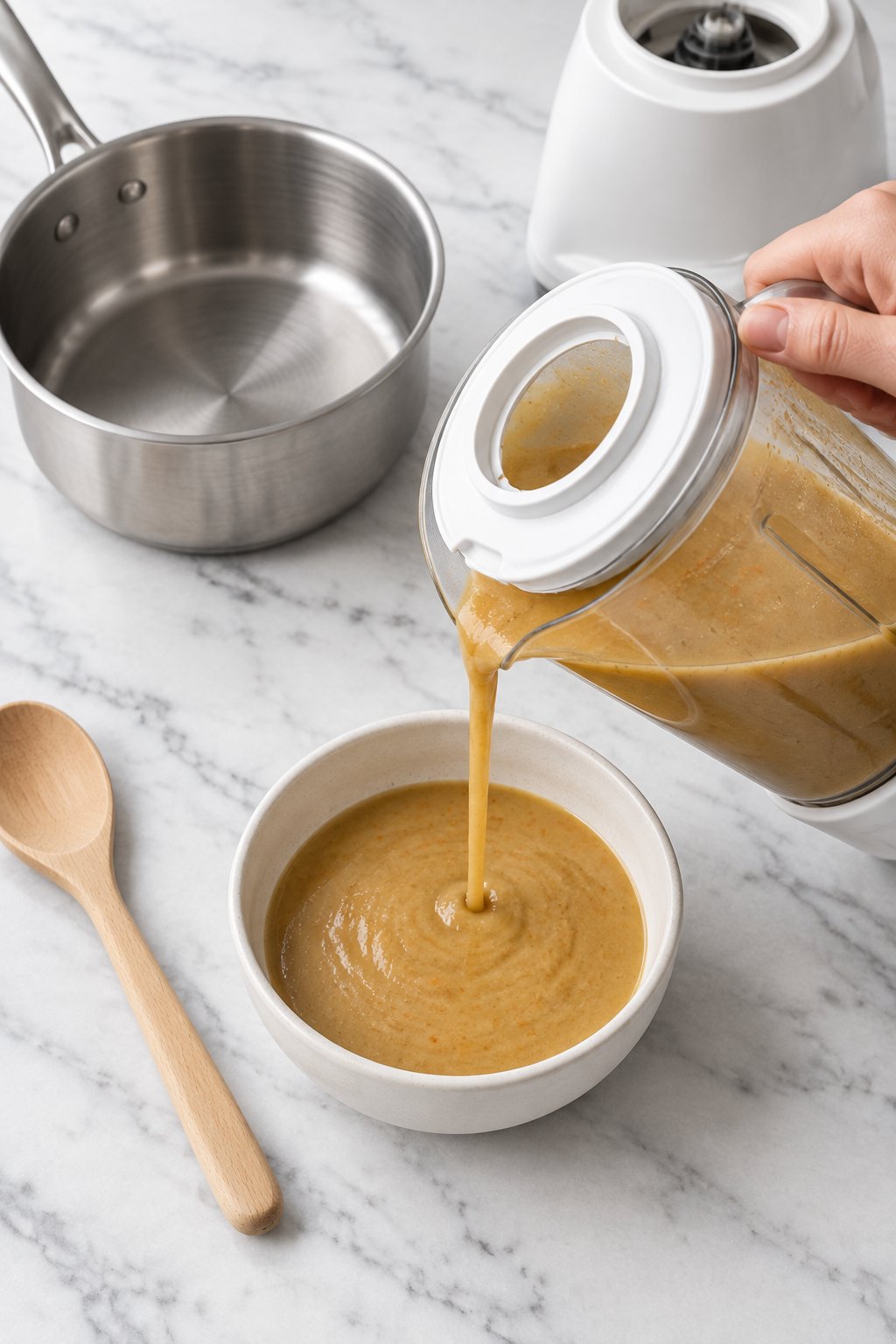
Blend until your preferred texture forms. Cool the gravy to room temperature before serving it over your dog’s meal.
How to Tell When the Texture Is Right
Your finished gravy should pour slowly and spread through dry kibble without forming a stiff paste. Add broth one tablespoon at a time if it becomes too thick. Simmer it for another minute if it looks watery.
For a chunky dog food gravy recipe, pulse briefly so small pieces of cooked chicken and carrots remain. A smooth blend works well when your dog has trouble chewing.
Which Ingredients Are Safe for Dogs?
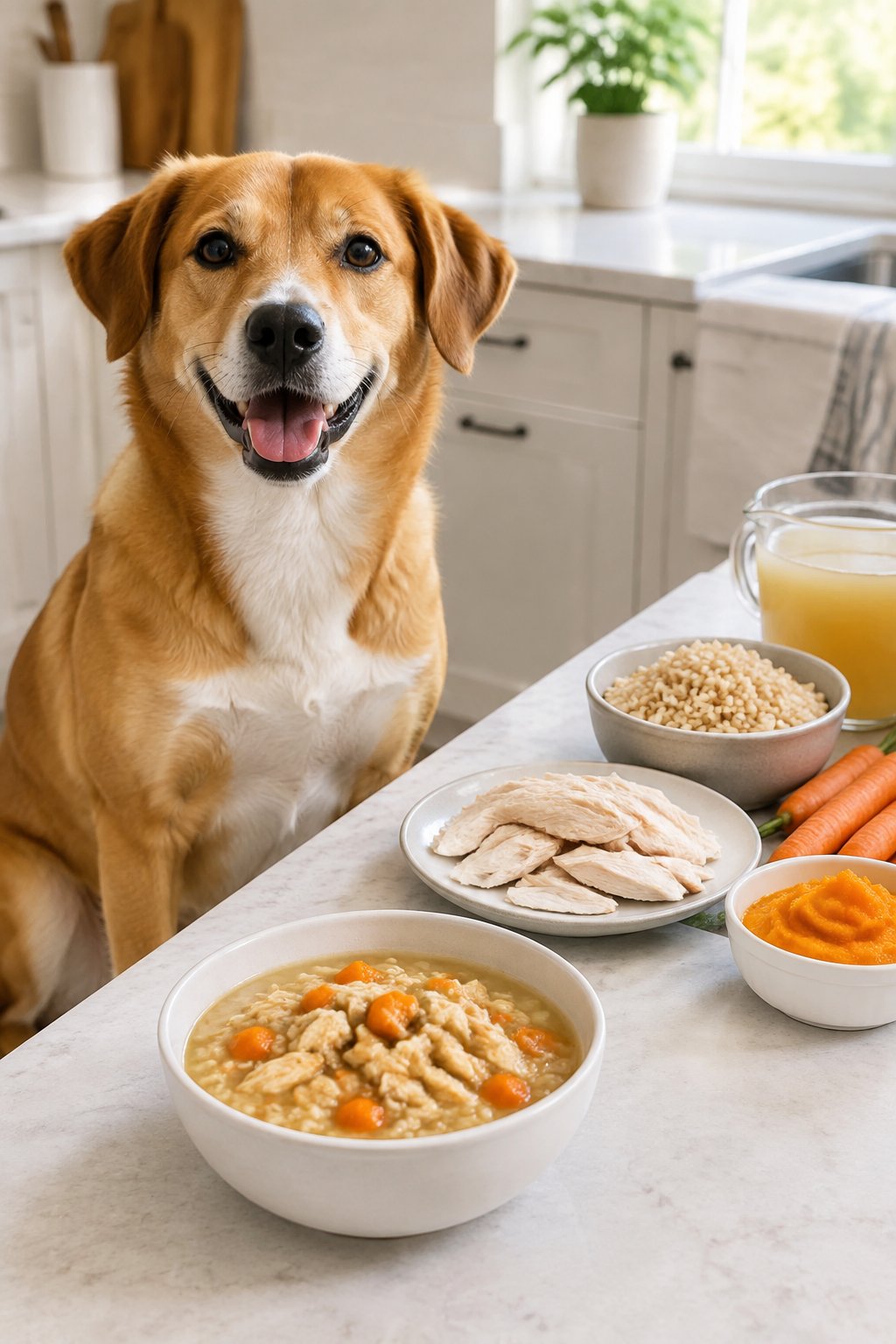
Your safest choices are plain meats, familiar vegetables, unseasoned broth, and modest amounts of starch. Always read packaged ingredient labels because seasonings vary between brands.
Choose Broth Without Hidden Seasonings
Choose low-sodium broth made without onion powder, garlic, or added flavor blends. Chicken broth, beef broth, turkey broth, beef stock, and bone broth all work when the label lists dog-safe ingredients.
Low-sodium products still contain some sodium, so avoid adding salt. Beef bone broth should also be free from cooked bone fragments and concentrated seasonings.
Safe Thickeners, Proteins, and Vegetables
Cornstarch, arrowroot, wheat flour, oat flour, and rice flour can thicken your gravy. If your dog has known food allergies, use a starch and protein already included in your dog’s normal diet.
Your protein options include ground turkey, ground beef, lean beef, cooked chicken, and a small amount of chicken liver. Guidance on meat and offal for dogs helps you keep rich organ meat portions modest.
Carrots, green beans, pumpkin, cooked sweet potato, green peas, spinach, and parsley are practical vegetable choices. Chop leafy ingredients finely before blending.
What Must Stay Out of the Pot
Keep onion, onion powder, garlic, and xylitol out of every batch. These ingredients appear on many lists of foods that are toxic to dogs, and powdered seasonings are easy to overlook.
Skip gravy packets, bouillon cubes, heavily salted drippings, and fatty pan grease. Review every broth label each time you shop because manufacturers can change their recipes.
How Should You Serve and Store It?
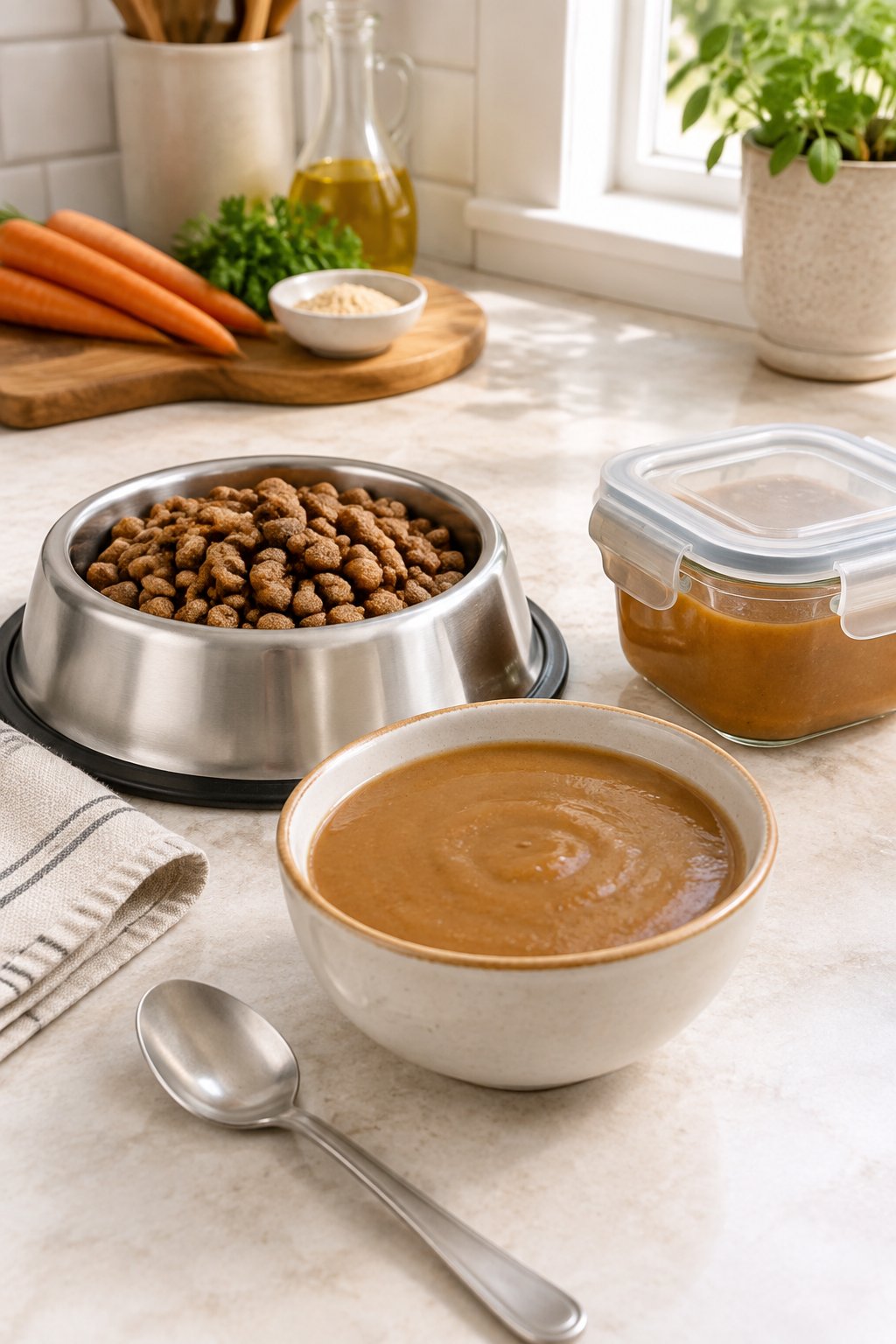
Serve your gravy cool or slightly warm, starting with a small portion mixed through the regular meal. Refrigerate the remaining batch promptly or freeze measured servings.
How Much Gravy Should Go on a Meal?
Start with 1 teaspoon for a small dog, 1 tablespoon for a medium dog, or 2 tablespoons for a large dog. The right serving fits within your dog’s daily calorie needs.
Dog food toppers and dog treats together should provide no more than about 10% of daily calories unless your veterinarian gives you another target. Treat this gravy as a topper; a complete diet or properly formulated homemade dog food supplies the essential nutrient balance.
Using Gravy for Picky Eaters and Sensitive Stomachs
For picky eaters, stir the gravy through the meal so its aroma coats each piece. If your dog does not eat all their food at once, discard the moistened leftovers after the normal mealtime window.
Dogs with sensitive stomachs should begin with one teaspoon made from familiar ingredients. Introduce only one new protein at a time. Vomiting, ongoing diarrhea, pain, or continued appetite loss needs veterinary attention; gravy is unsuitable as a treatment for digestive illness.
Refrigerating, Freezing, and Reheating Portions
Transfer your healthy dog gravy to an airtight container within two hours of cooking. Keep it refrigerated for up to four days.
Freeze tablespoon portions in an ice cube tray, then move the frozen cubes to a labeled freezer container for up to two months. Thaw portions in the refrigerator. When reheating, heat only the needed serving to 165°F, stir well, and let it cool before adding it to your dog’s bowl.
Easy Flavor Variations to Try
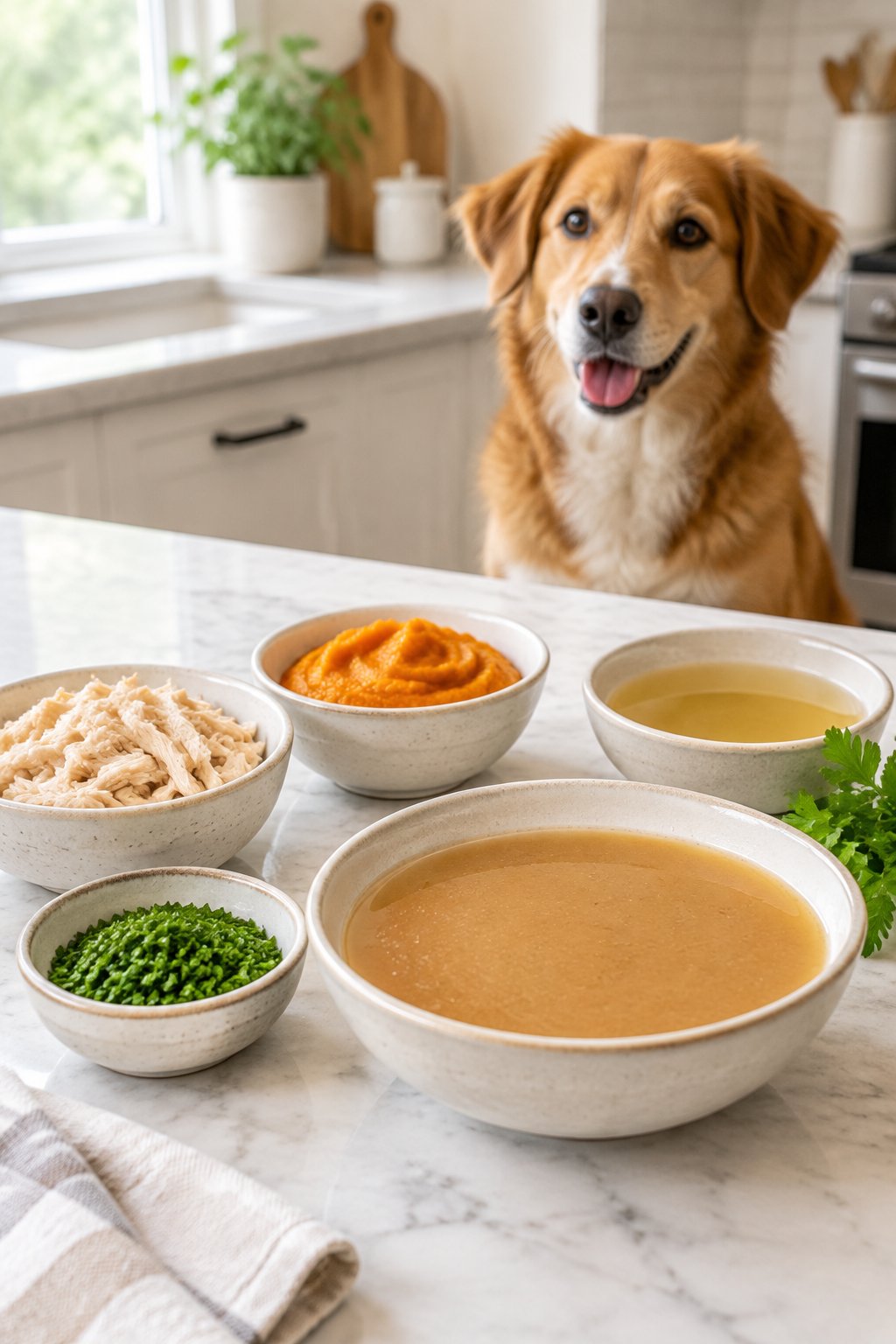
You can create several dog gravy recipes by changing the base protein, broth, or vegetables while keeping the same cooking method. Introduce each variation in a small serving so you can watch your dog’s response.
Chicken and Vegetable Gravy
For chicken gravy for dogs, prepare the base recipe with lean ground chicken, carrots, and green peas. You may replace half the carrots with chopped green beans or spinach.
A pinch of turmeric or ginger adds flavor, though claims about anti-inflammatory benefits in dogs depend on dose and health status. For joint health concerns, follow your veterinarian’s treatment plan and ask before adding concentrated spices or supplements.
Turkey, Pumpkin, and Sweet Potato Gravy
Replace the chicken with 1 pound of lean ground turkey. Use 1/2 cup plain pumpkin puree and 1/2 cup cooked, mashed sweet potato in place of the carrots and peas.
Pumpkin and sweet potatoes provide fiber and beta-carotene. You may add up to 1/8 teaspoon cinnamon to the full batch, provided your dog already tolerates it. Plain pumpkin contains no sugar, pie spices, or sweeteners.
Beef Bone Broth Gravy
Use 1 pound of lean ground beef with 2 cups of unseasoned beef bone broth. Drain excess fat from the cooked beef before adding your broth.
Lean beef provides protein and iron, while the broth creates a strong aroma. Keep the cornstarch and water quantities unchanged for a pourable beef bone broth gravy.
Salmon and Peanut Butter Options
For salmon gravy, blend 12 ounces of fully cooked, boneless salmon with 1 1/2 cups of unseasoned broth and the cooked vegetables from the base recipe. Salmon supplies omega-3 fatty acids, though its calories call for smaller portions.
For a peanut butter variation, whisk 1 tablespoon of natural peanut butter into the warm base gravy. Your peanut butter must be free from xylitol and chocolate. If your dog enjoys this flavor, baked pumpkin peanut butter dog treats use a similar pairing in a portioned treat.