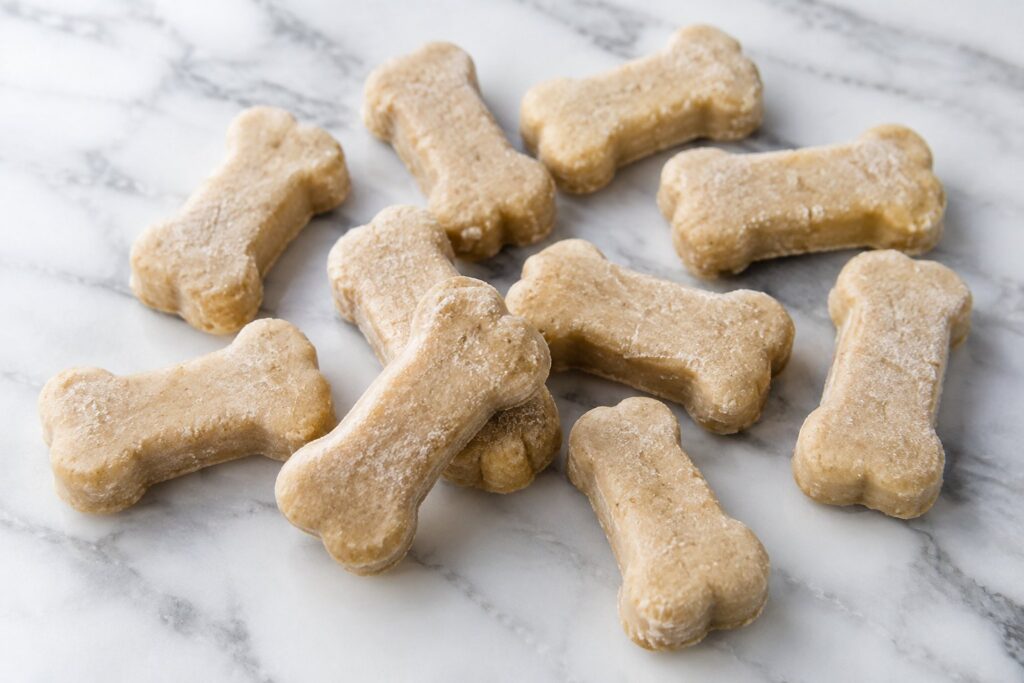
Frozen Peanut Butter Banana Dog Treats give you about 24 small, creamy bites made with bananas, peanut butter, and Greek yogurt. You need 10 minutes of prep before the freezer does the rest.
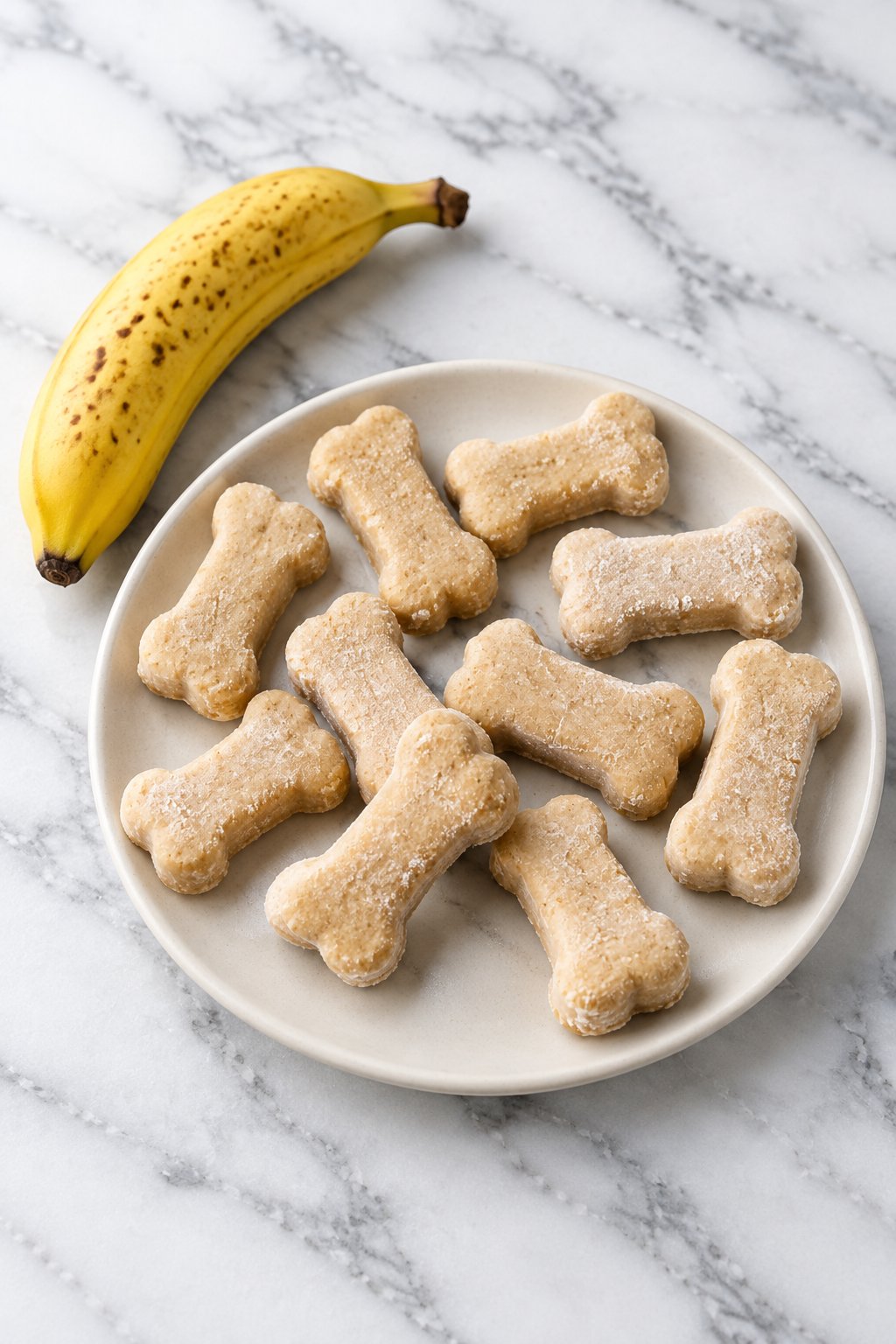
Ingredients
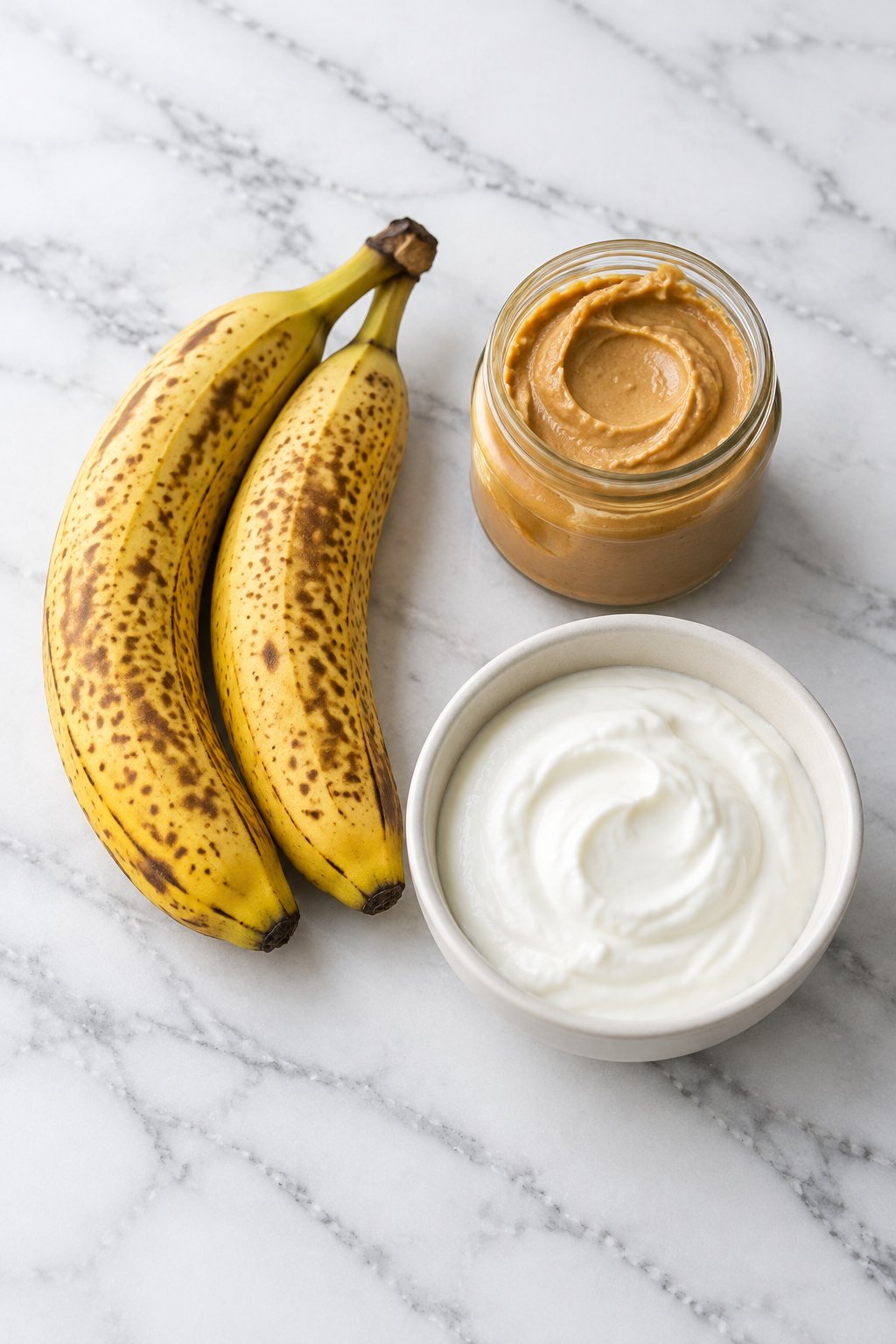
- 2 ripe bananas
- 1/2 cup natural xylitol-free peanut butter
- 1 cup plain unsweetened Greek yogurt
Yield: About 24 small treats. Prep: 10 minutes. Freeze: At least 4 hours.
Instructions
1. Mash the Bananas
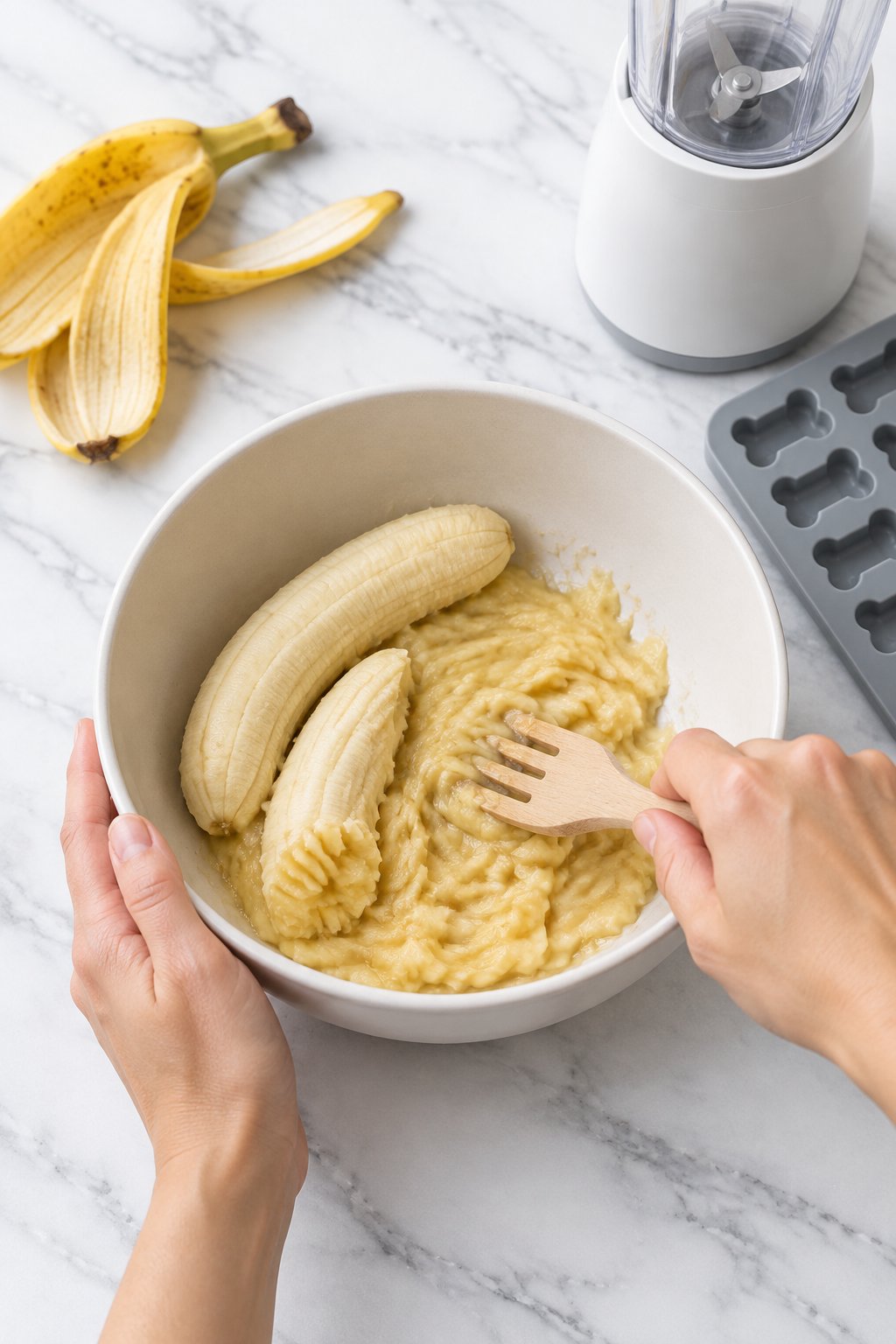
Peel 2 ripe bananas and place them in a mixing bowl. Press them with a fork until they form a soft mash. Keep working through any large pieces, scraping the sides of the bowl as you go. The bananas should look thick and mostly even, with only small bits remaining.
2. Add the Peanut Butter and Yogurt
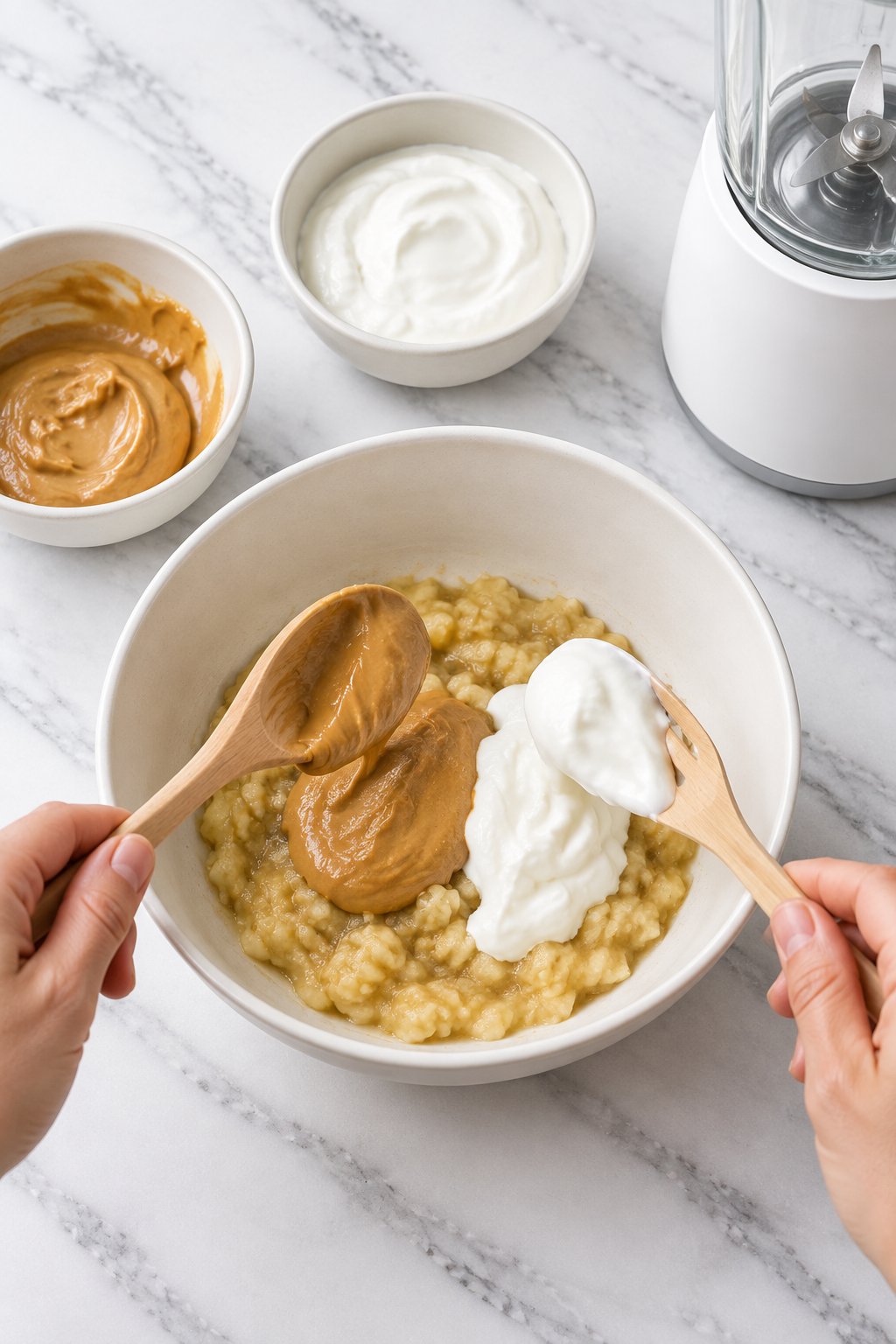
Add 1/2 cup natural xylitol-free peanut butter and 1 cup plain unsweetened Greek yogurt to the mashed bananas. Stir until the peanut butter starts to spread through the yogurt and banana mash. You will still see streaks at this stage, but the ingredients should be loose enough to blend.
3. Blend Until Smooth
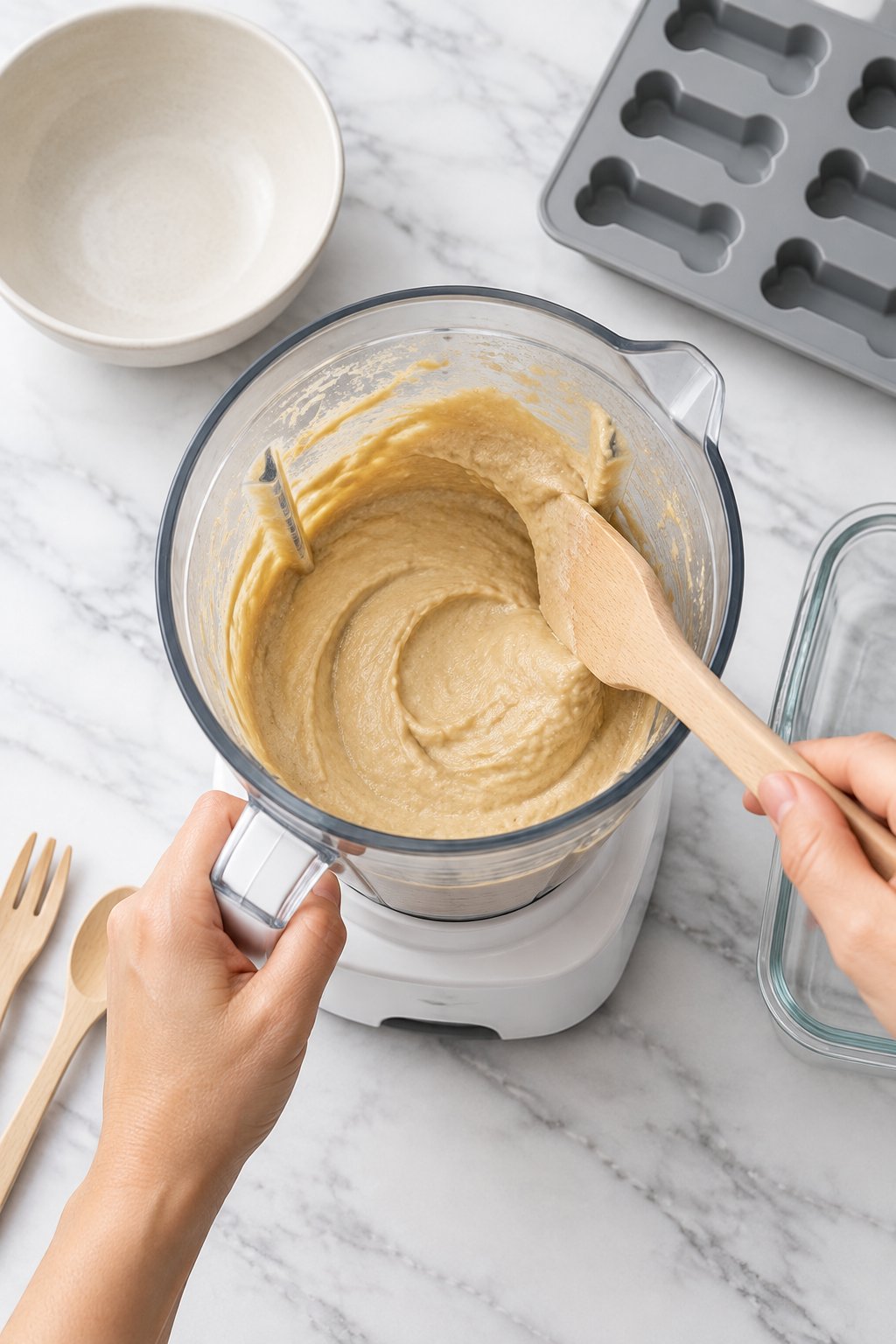
Blend the mixture until smooth. Stop to scrape down the sides of the bowl or blender, then blend again. The mixture is ready when it looks creamy and evenly pale, with no thick peanut butter streaks.
4. Fill the Silicone Molds
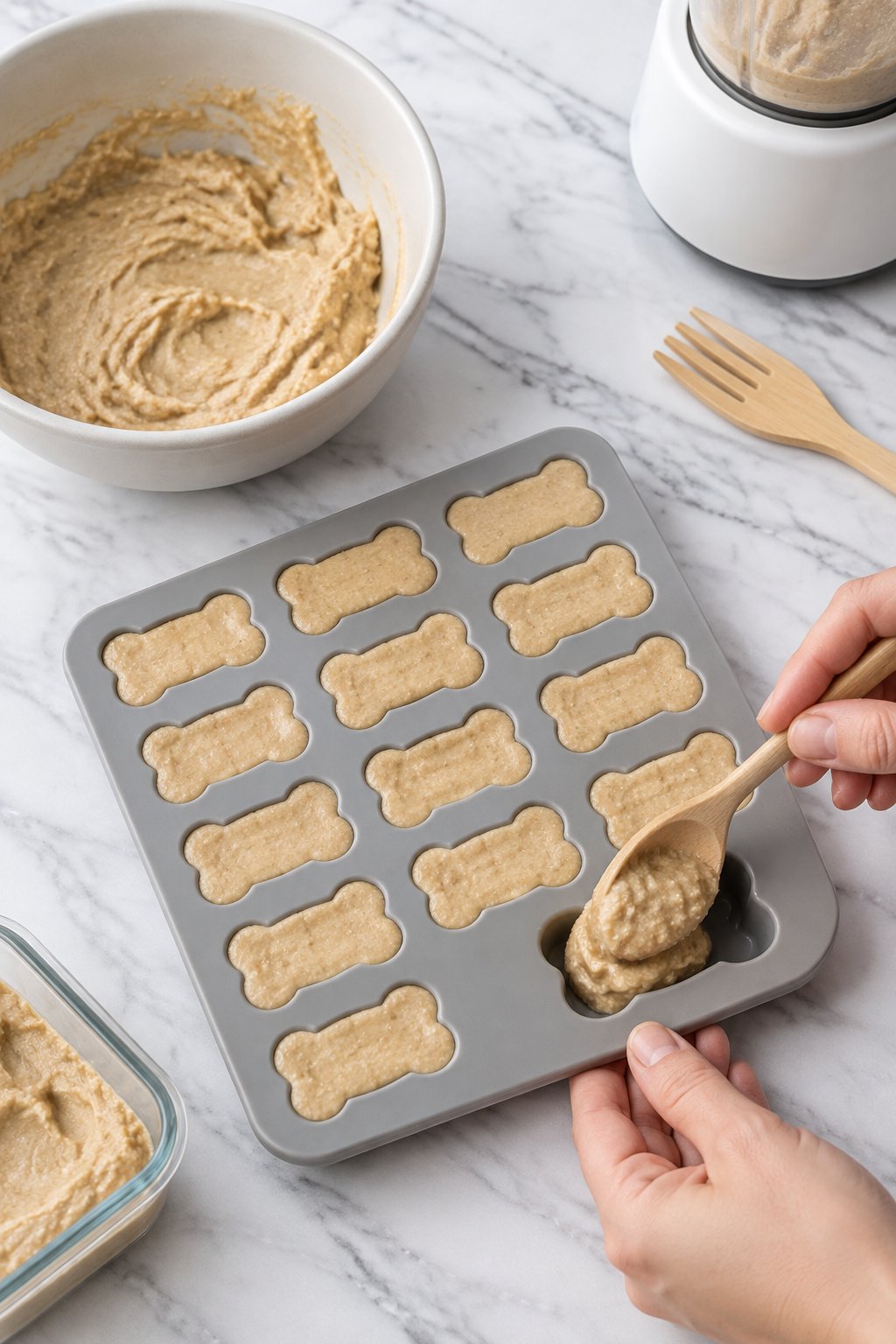
Spoon the blended mixture into small silicone mold cavities, dividing it to make about 24 small treats. Fill each cavity close to the top, then smooth the surface with the back of the spoon. The filled molds should look even, with the creamy mixture reaching the edges of each shape.
5. Tap Out the Air Bubbles
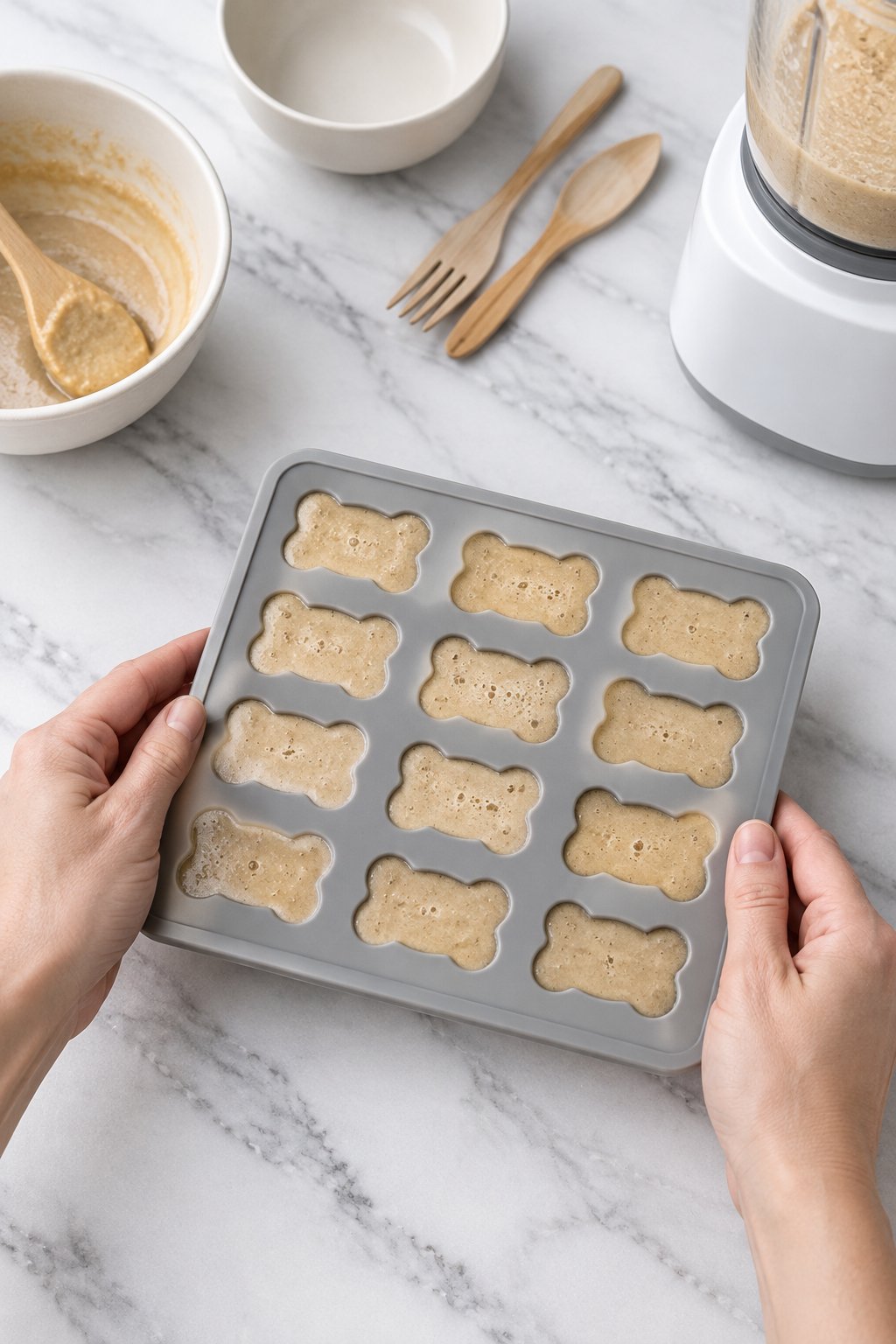
Within the 10-minute prep time, lift each filled silicone mold slightly and tap it against the counter. Watch for small air bubbles to rise through the mixture, then smooth any uneven tops with a spoon. The surface should settle into a level layer, and the mixture should fill the corners of each cavity.
6. Freeze for at Least 4 Hours
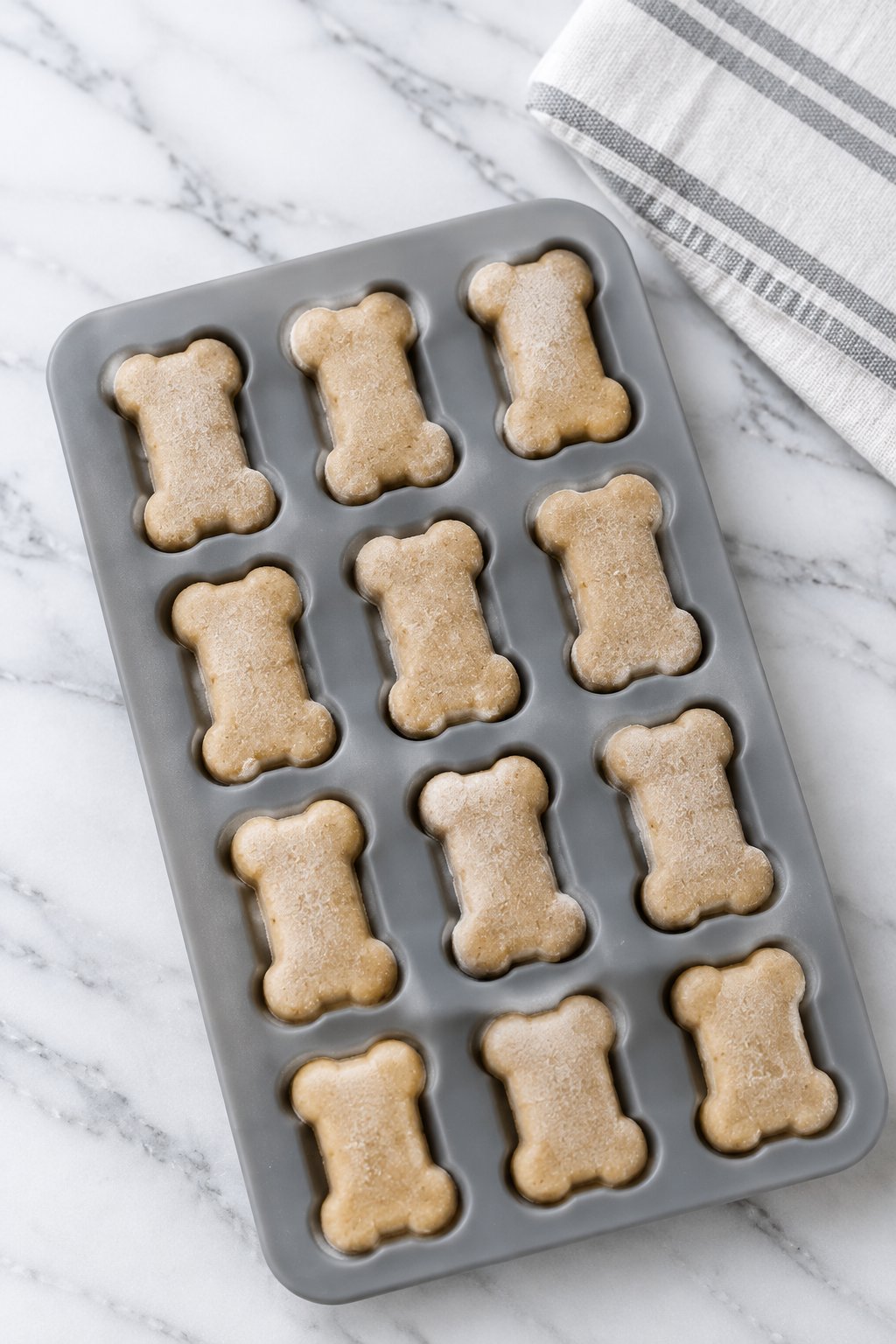
Place the filled molds on a flat surface in the freezer and leave them for at least 4 hours. Keep the molds level so the mixture stays inside each cavity. When the treats are ready, their surfaces should look firm, and the centers should feel solid when pressed through the silicone.
7. Unmold and Store
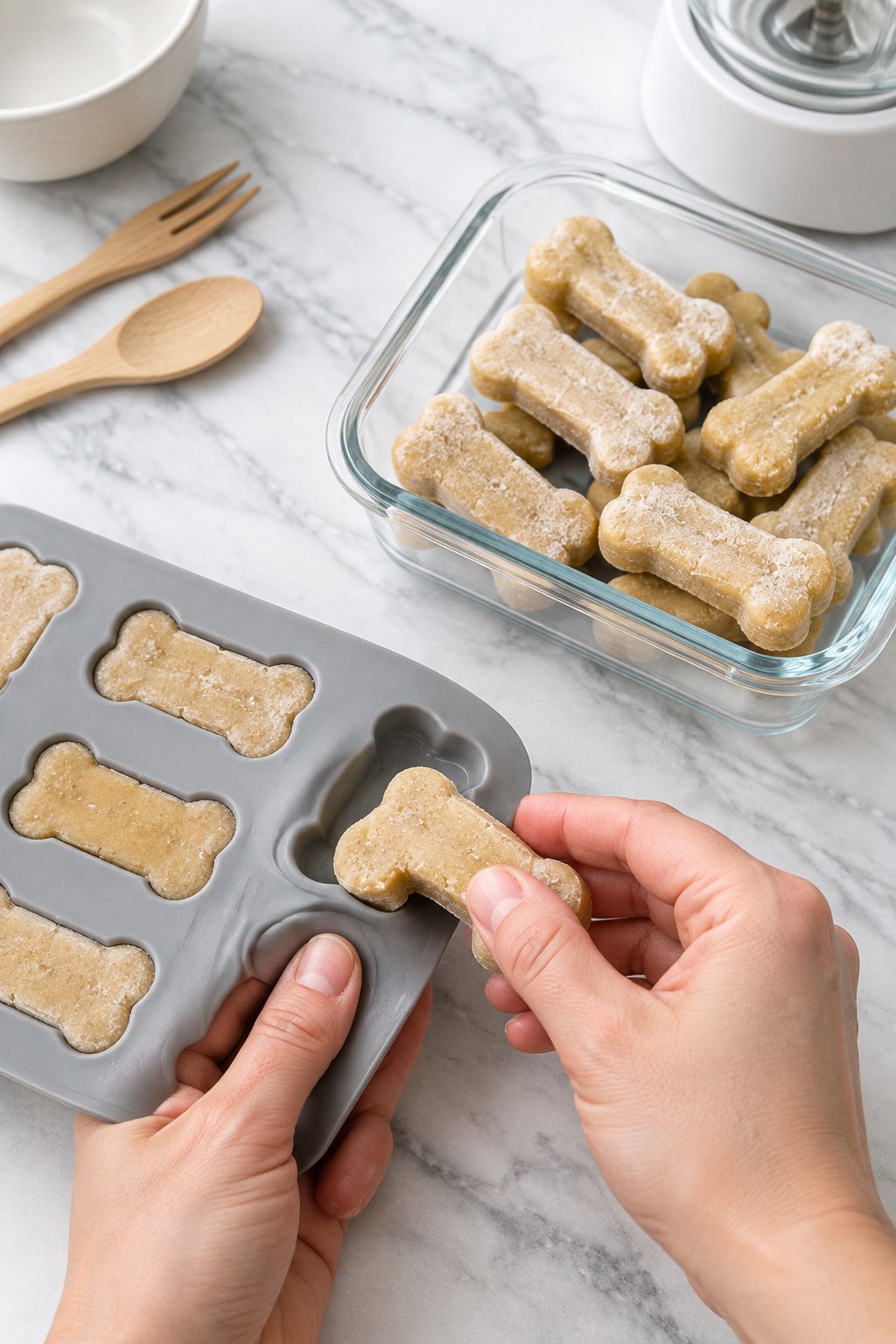
After at least 4 hours in the freezer, flex the silicone molds and push the treats out from underneath. Transfer the treats to an airtight freezer-safe container. Each treat should release in one piece and hold its molded shape, with a firm surface that stays smooth as you handle it.
Tips for Serving and Storing
Serve the treats straight from the freezer for a firm, cool bite. Keep the remaining treats in an airtight freezer-safe container, and place parchment between layers if they stick together.
For a different texture, banana peanut butter chew sticks for dogs are a chewy alternative to these frozen bites.
Substitutions and Safety
Use plain, unsweetened ingredients for any swap. If your dog avoids dairy, plain unsweetened dairy-free yogurt is an option, though the treats may freeze with a different texture.
Check every peanut butter label for xylitol, which may also be listed as birch sugar; it is toxic to dogs. If your dog has known food allergies or a sensitive stomach, check with your veterinarian before serving a new treat.