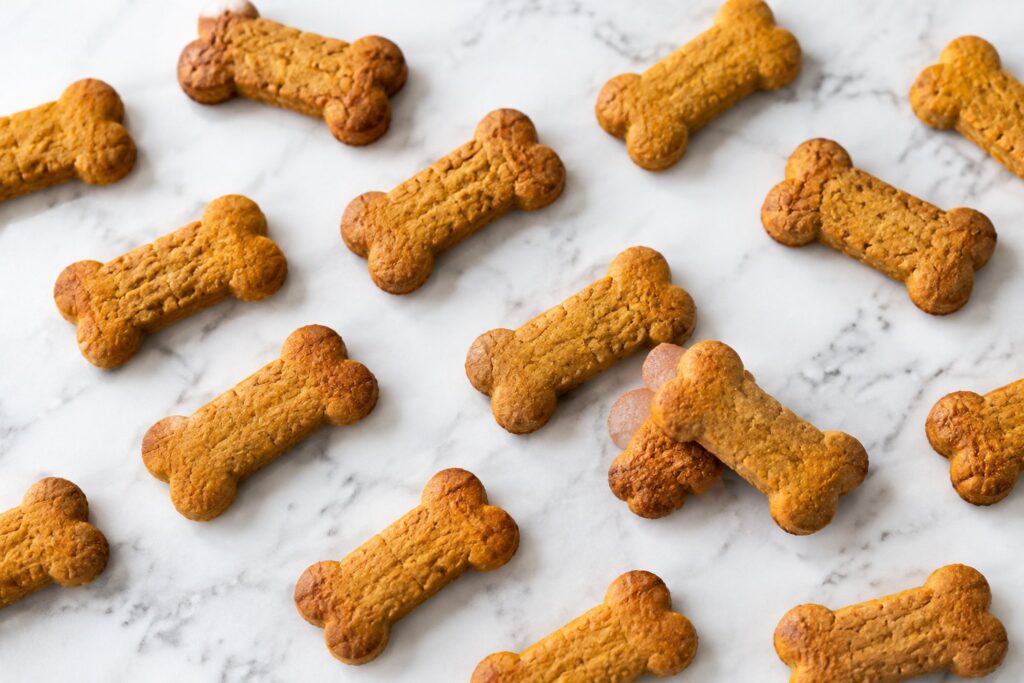
Baked Pumpkin Peanut Butter Dog Treats give you an easy, reliable biscuit made with pure pumpkin, dog-safe peanut butter, and oat flour. You can cut the dough into small training rewards or larger biscuits, then adjust the baking time for a softer or crunchier texture.
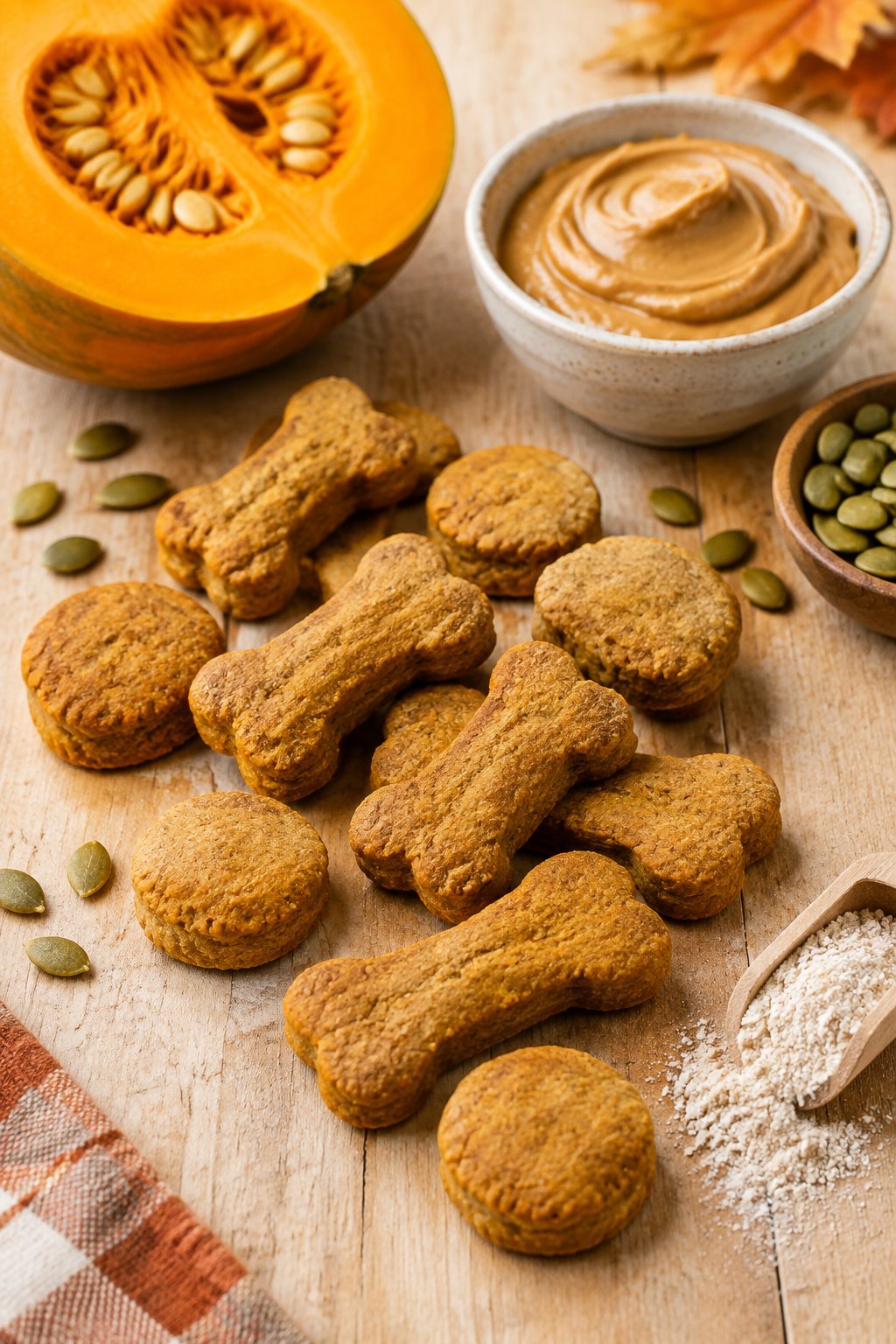
These homemade dog treats let you control every ingredient. Pumpkin adds moisture and fiber, while peanut butter supplies a rich smell that appeals to many dogs.
You also avoid the added colors and preservatives found in some packaged peanut butter dog treats. Your pumpkin dog treats still count toward your dog’s daily calories. Small portions help these biscuits fit into a balanced diet, especially for puppies, senior dogs, and dogs receiving frequent training rewards.
Ingredients and Safe Substitutions
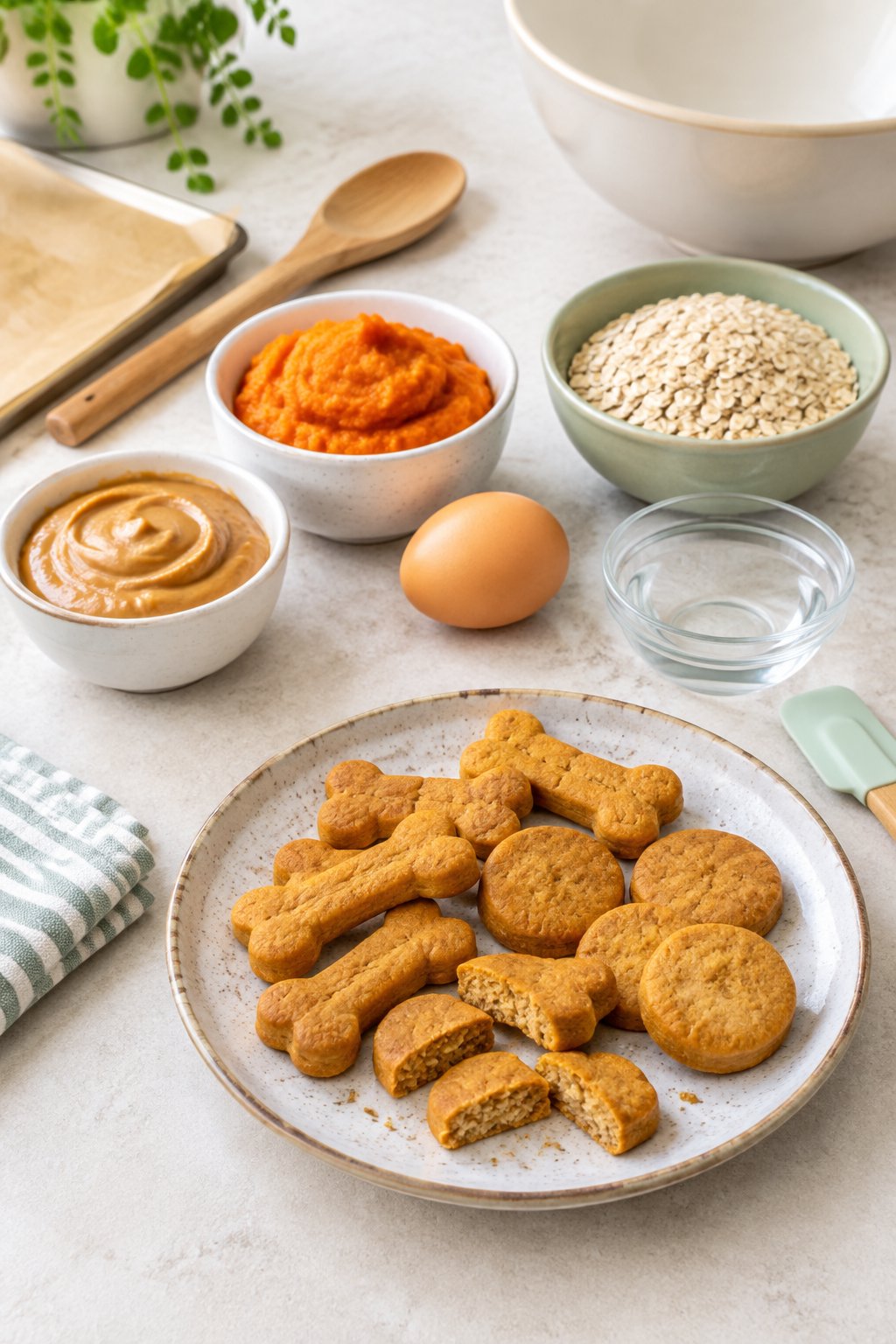
You need three dog-safe ingredients, with careful label checks for the pumpkin and peanut butter. This dog treat recipe yields about 30 small biscuits.
Yield: About 30 one-inch treats
Prep time: 15 minutes
Cook time: 30 to 35 minutes
Oven temperature: 350°F
- 1/2 cup 100% pure pumpkin puree
- 1/2 cup natural peanut butter
- 3/4 cup oat flour
- 1/4 cup additional oat flour for rolling and dough adjustments
Which Pumpkin and Peanut Butter Are Safe for Dogs?
Choose plain canned pumpkin labeled pure pumpkin or 100% pure pumpkin puree. Pumpkin pie filling contains added sugar and spices that have no place in your dog’s biscuits.
Use natural peanut butter made from peanuts, preferably without added salt or sugar. Check every jar for xylitol or birch sugar, which is highly toxic to dogs. Reviewing other foods that are toxic to dogs helps keep common baking hazards out of your kitchen.
Best Flour Options for Different Dietary Needs
Oat flour gives you an easy-to-roll dough and a crisp finish. You can make it by blending plain oats into a fine powder.
Whole wheat flour or regular wheat flour works in the same measured amount. Brown rice flour creates a slightly gritty biscuit, while almond flour produces a softer, higher-fat result.
Coconut flour absorbs far more moisture, so it is unsuitable as a one-for-one replacement. If your dog has known food allergies, use a flour approved by your veterinarian.
Optional Add-Ins and Ingredients to Skip
You can add one large egg for a firmer, protein-rich dough, then mix in extra flour one tablespoon at a time. Guidance on eggs for your dog can help when allergies or digestive issues are a concern.
Keep honey, ground cinnamon, baking powder, salt, and sweeteners out of the basic recipe. Added ingredients increase calories or introduce avoidable risks.
How to Make the Dough and Bake the Biscuits
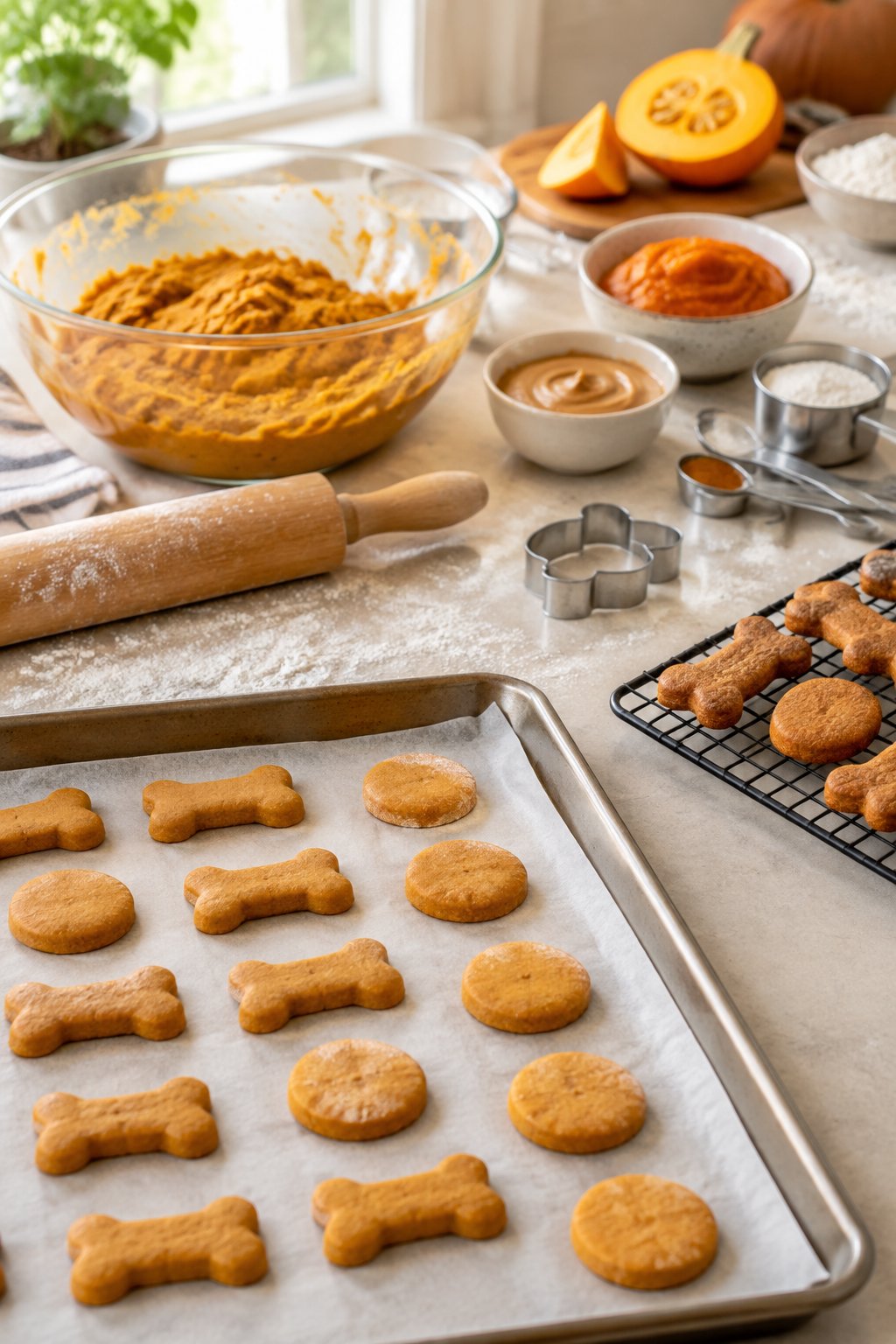
Mix, roll, cut, and bake your pumpkin peanut butter dog treats at 350°F until dry and lightly golden. The finished dough should resemble soft modeling clay and release cleanly from your fingers.
1. 350°F
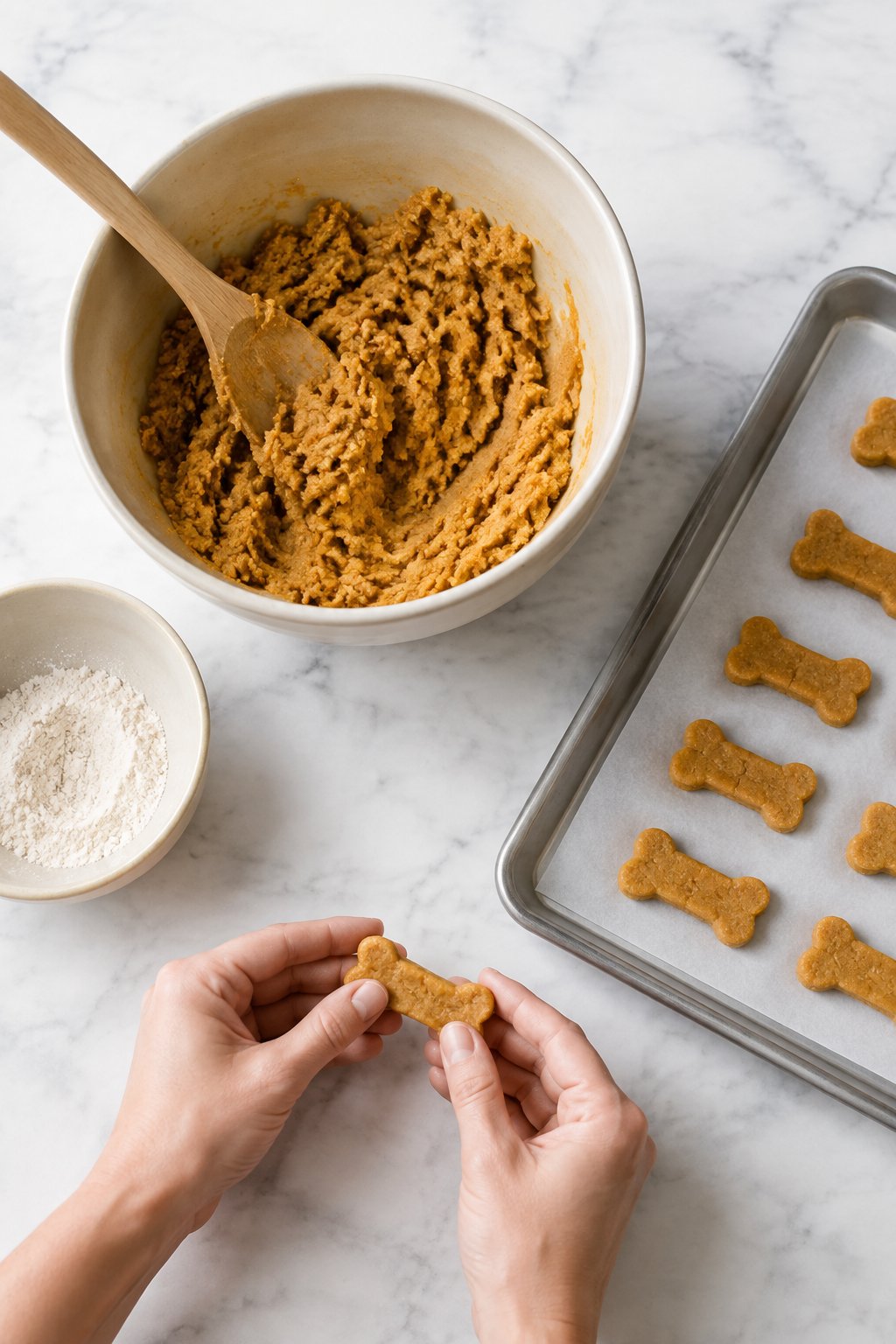
Heat your oven to Line two baking sheets with parchment paper; you should see smooth, uncovered paper with space ready for the cut biscuits.
2. Stir the pumpkin puree and peanut butter together in a medium bowl
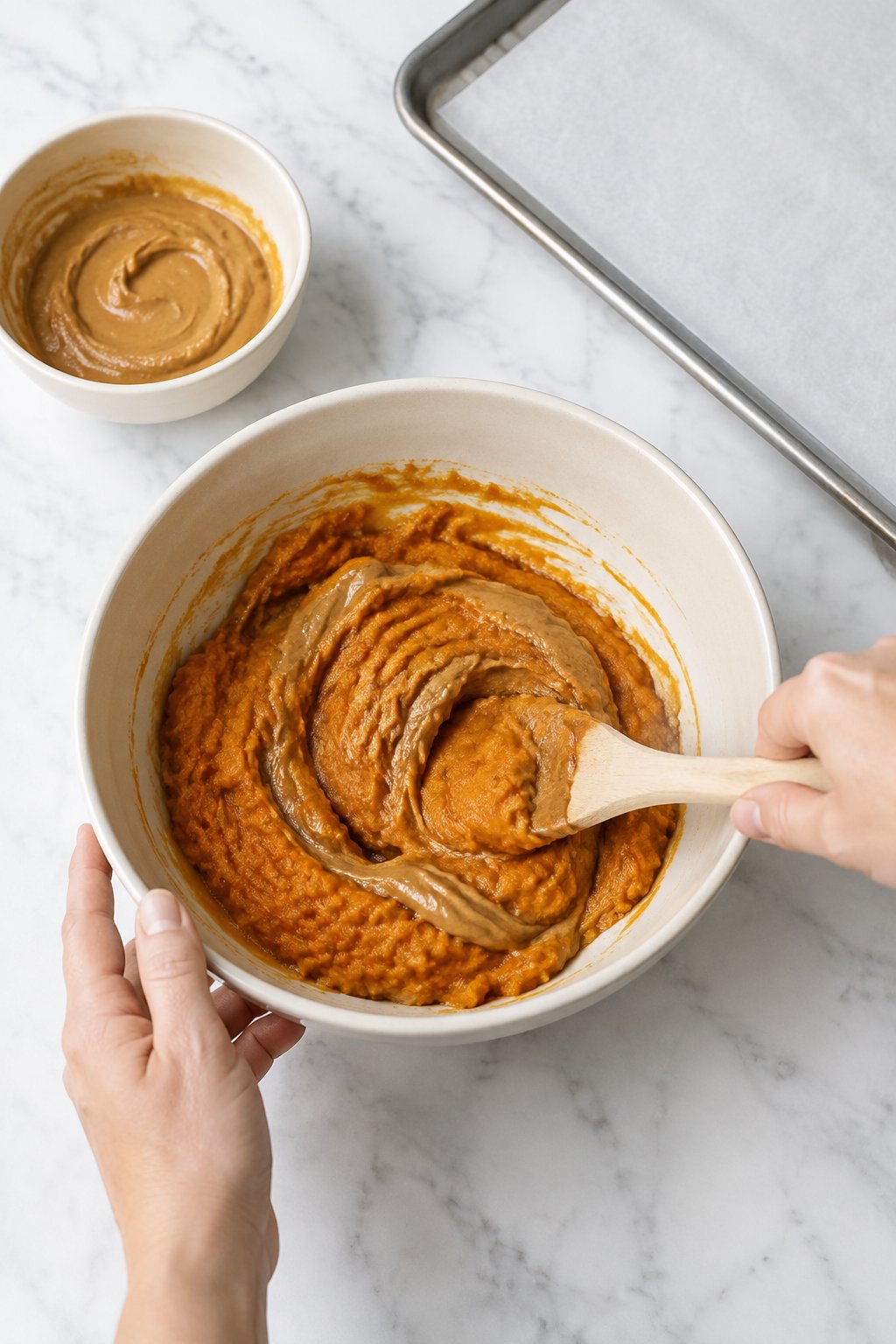
Stir the pumpkin puree and peanut butter together in a medium bowl. Your mixture should look evenly orange-brown, with no separate streaks.
3. Add 3/4 cup oat flour and stir, then knead briefly by hand
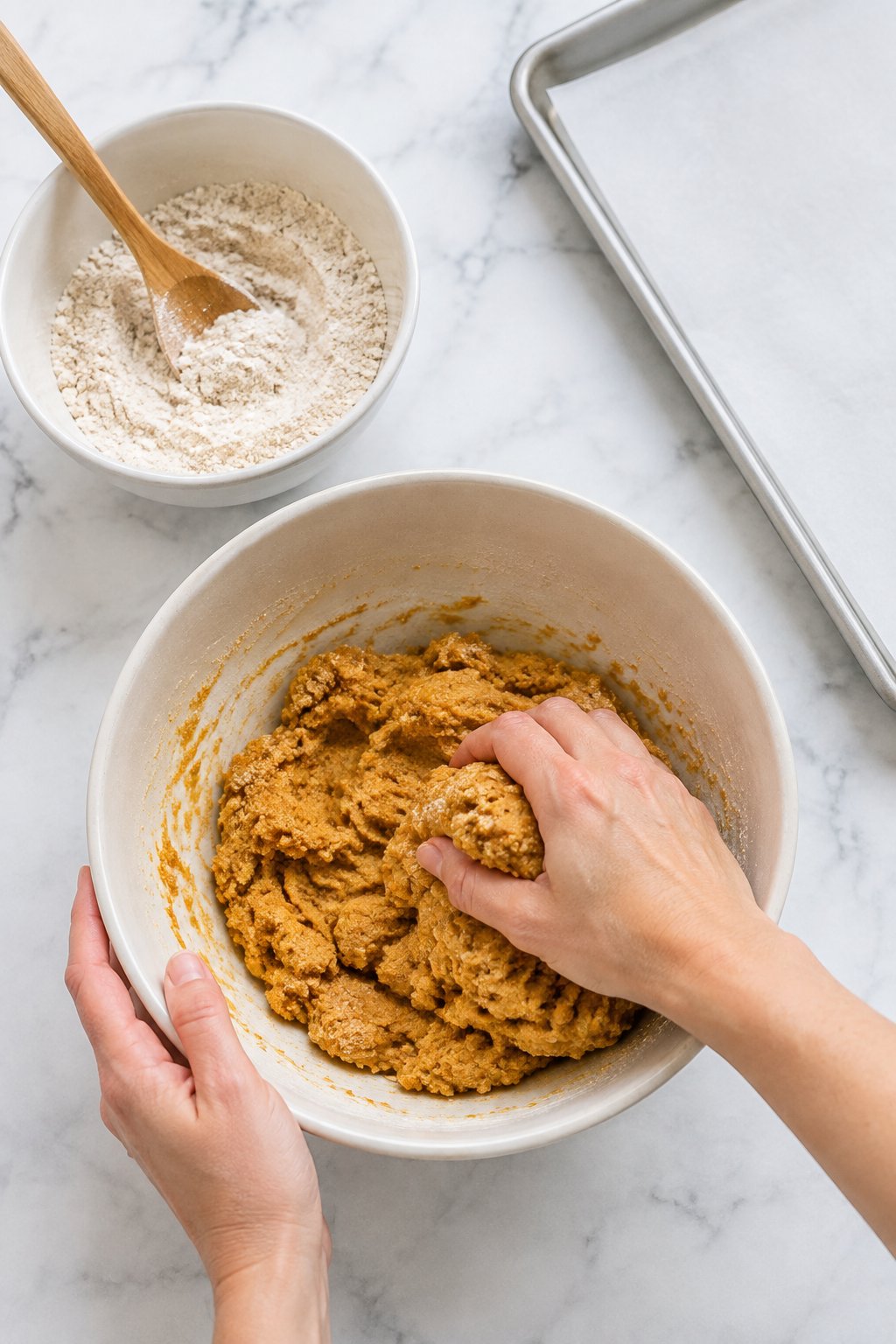
Add 3/4 cup oat flour and stir, then knead briefly by hand. Your finished dough should form one smooth disk that holds its shape.
4. Dust your counter and rolling pin with part of the reserved flour
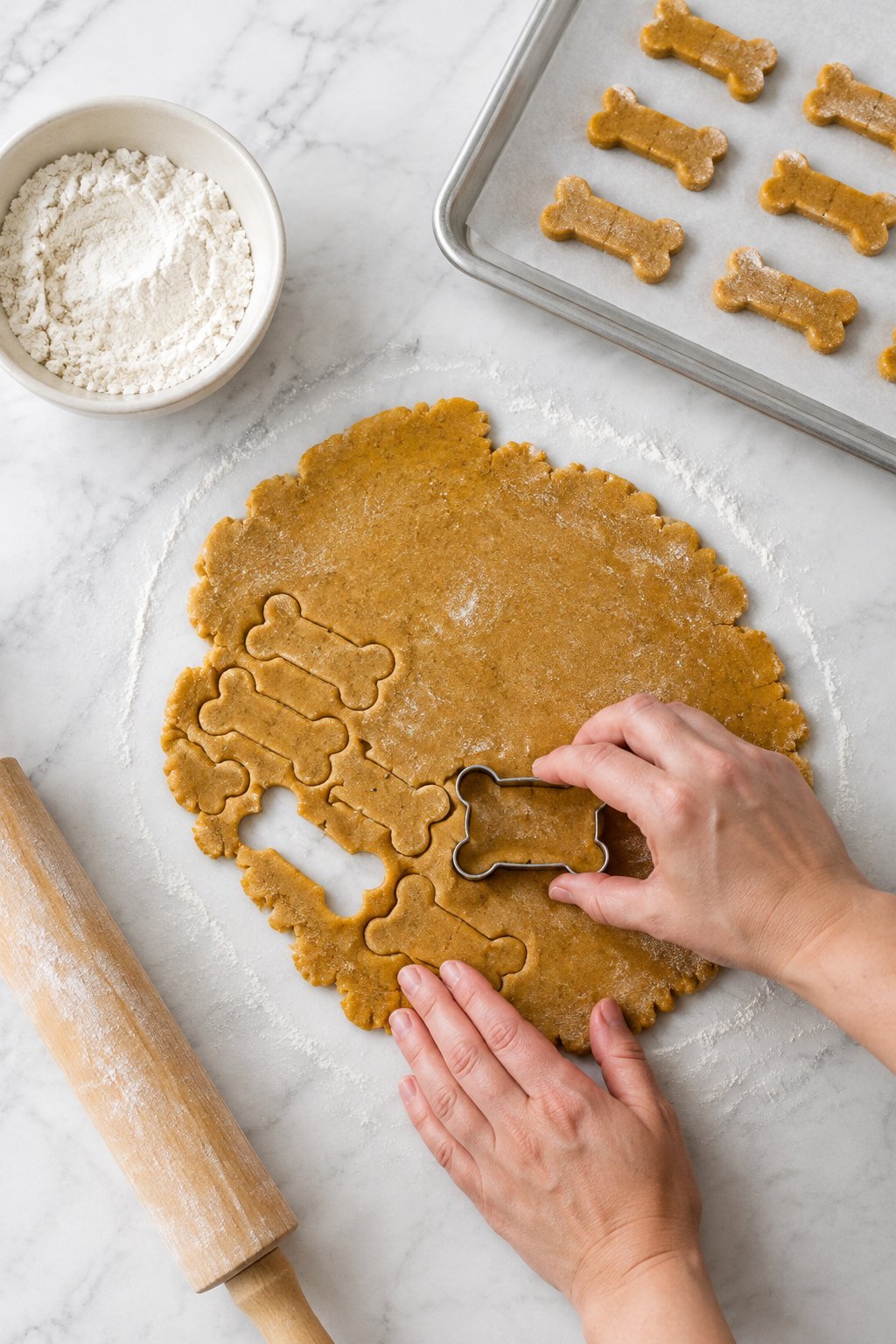
Dust your counter and rolling pin with part of the reserved flour. Roll the dough to 1/4 inch thick, creating an even sheet without wet patches.
5. Cut one-inch shapes with cookie cutters or bone cookie cutters
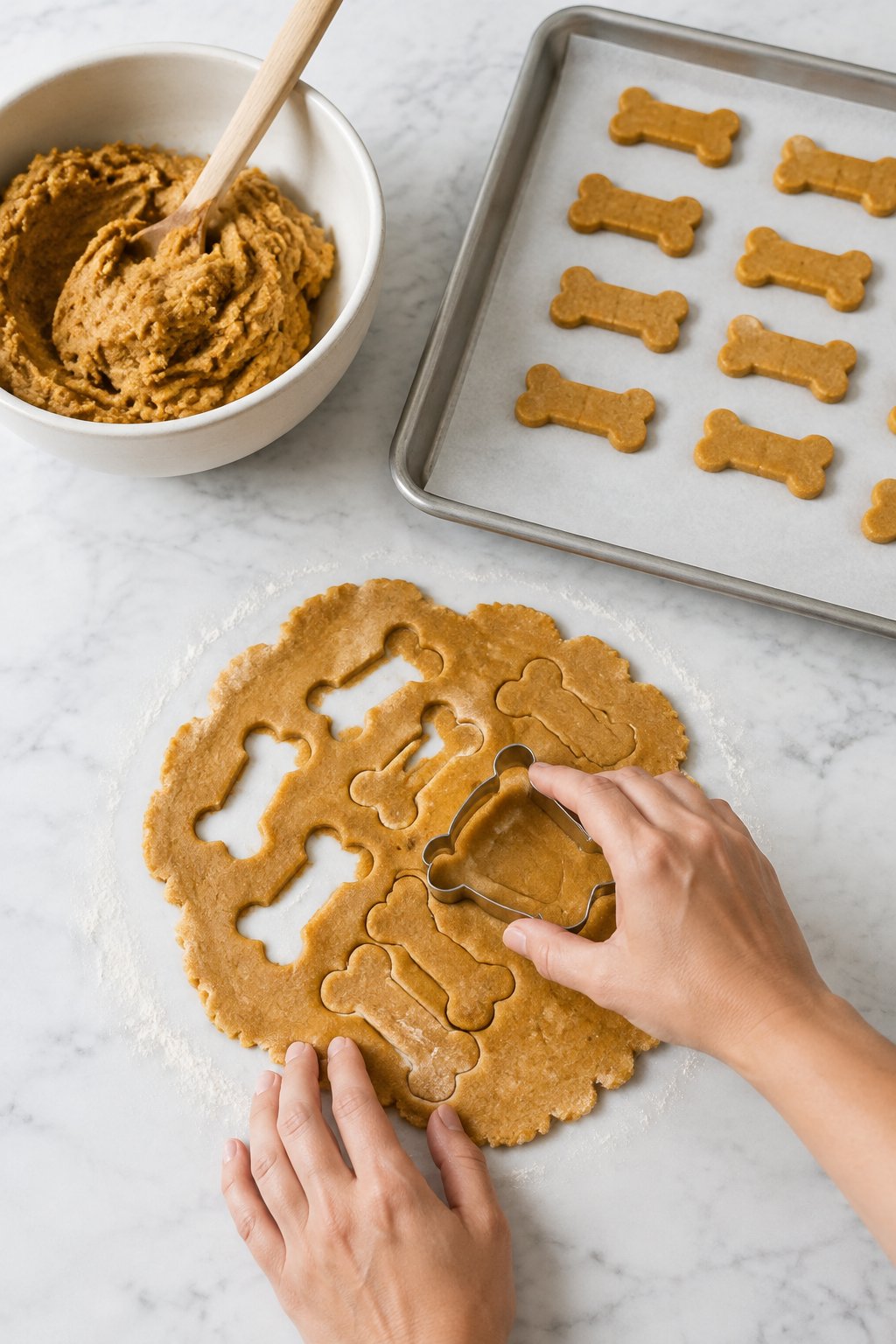
Cut one-inch shapes with cookie cutters or bone cookie cutters. Arrange your pumpkin dog biscuits about 1 inch apart; these dog cookies spread very little.
6. Bake for 30 to 35 minutes
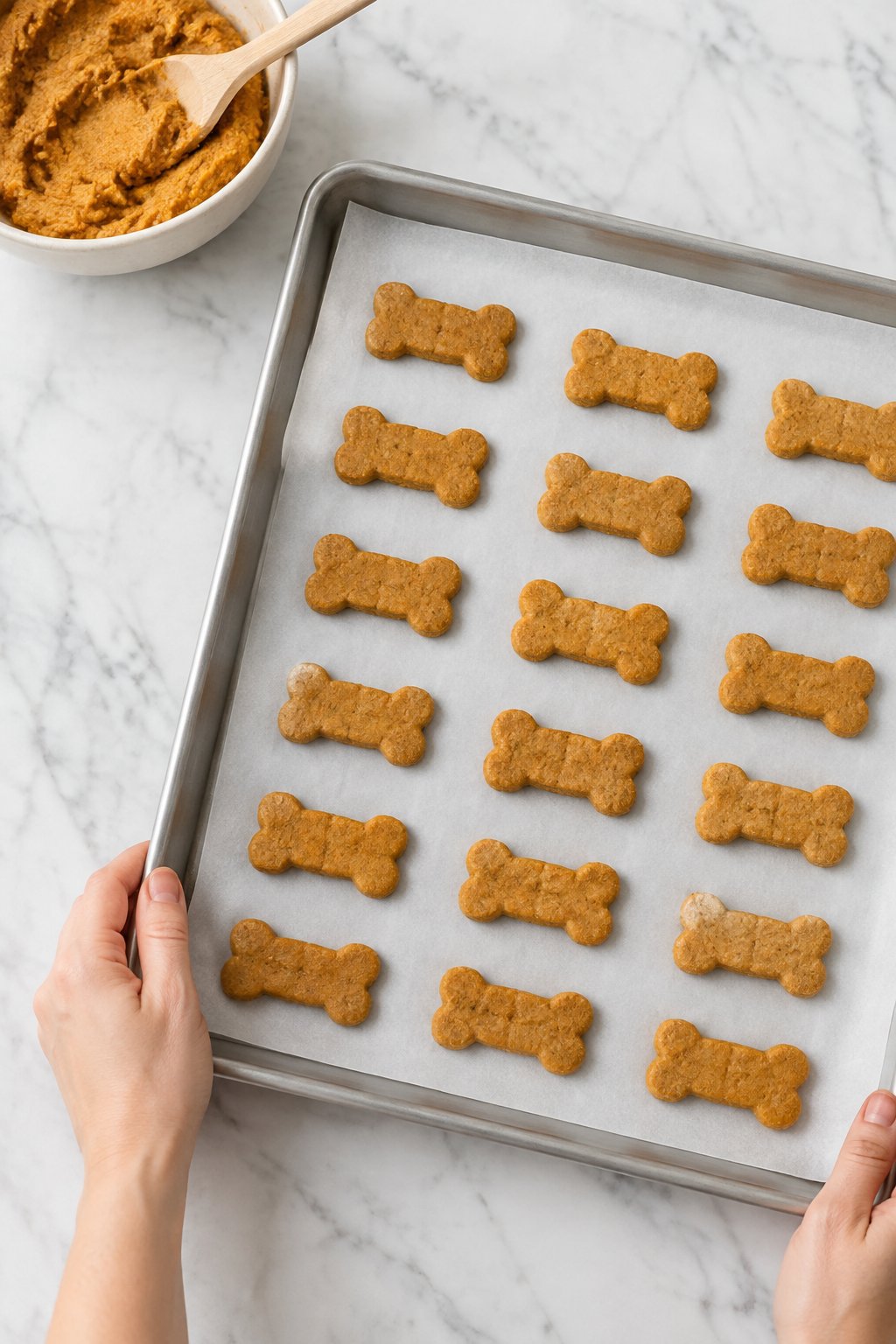
Bake for 30 to 35 minutes. Your peanut butter dog cookies should feel dry on top and show lightly browned edges.
7. Cool the biscuits on the pan for 5 minutes, then move them to a rack
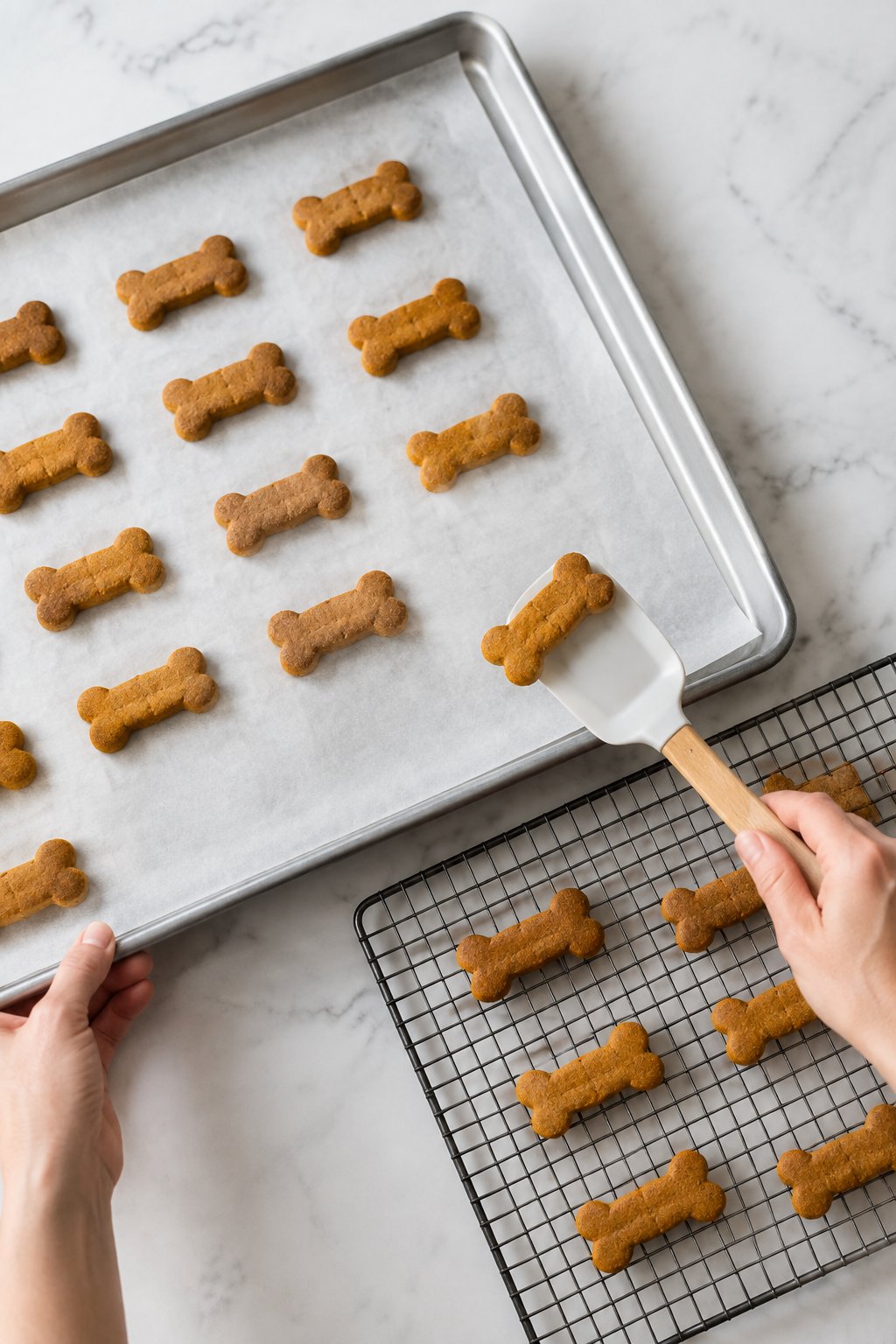
Cool the biscuits on the pan for 5 minutes, then move them to a rack. Wait until they reach room temperature before serving.
How Do You Fix Sticky or Crumbly Dough?
For sticky dough, knead in reserved oat flour one tablespoon at a time. Stop when the dough releases from your hands.
For crumbly dough, add pumpkin puree or water one teaspoon at a time. Too much liquid quickly returns the dough to a sticky texture.
How Thick Should You Roll the Dough?
Roll peanut butter pumpkin dog treats 1/4 inch thick for small, crisp rewards. A 1/2-inch sheet creates thicker peanut butter and pumpkin dog treats that need several extra minutes in the oven.
Keep every piece close to the same thickness so the batch bakes evenly.
How Can You Make Soft or Crunchy Treats?
For softer treats, roll the dough 1/2 inch thick and begin checking at 20 minutes. Refrigerate the cooled biscuits because added moisture shortens their shelf life.
For crunchier treats, use 1/4-inch dough and bake for the full 35 minutes. You can learn more about keeping dog treats from getting hard when preparing softer rewards for senior dogs.
Serving, Storage, and Treat Safety
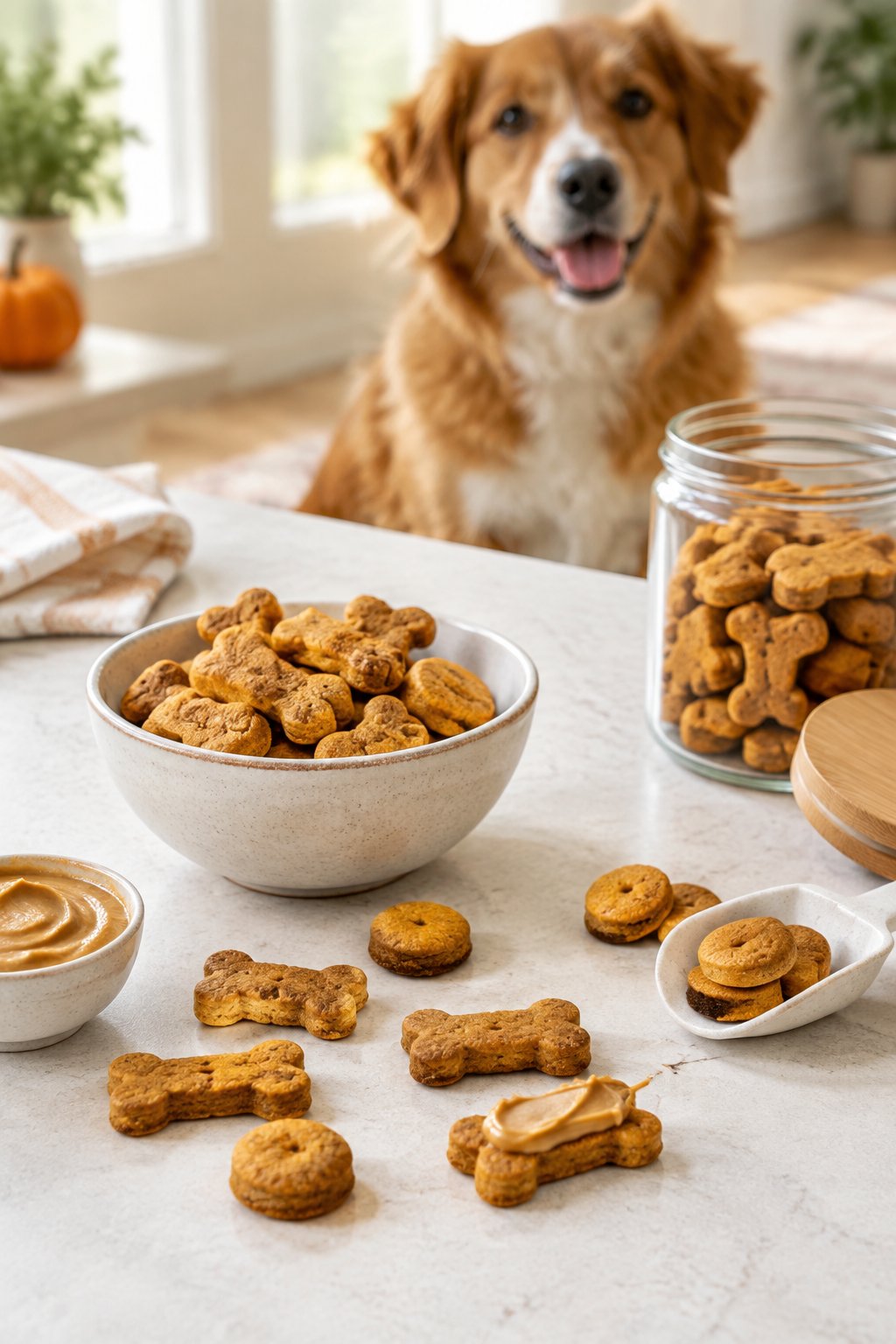
Serve these biscuits in small portions, cool them fully before storage, and ask your veterinarian about any medical or dietary concerns. Homemade treats supplement complete dog food; they do not provide balanced daily nutrition.
How Many Homemade Treats Can a Dog Have?
Keep treats within 10% of your dog’s daily calories. Give a small dog part of a biscuit, while a larger dog can receive one whole one-inch treat if it fits the daily calorie limit.
For frequent dog training, break each biscuit into pea-sized rewards. Introduce one small piece first and watch for vomiting, diarrhea, itching, or loss of appetite.
How Long Do the Treats Keep?
Let each biscuit cool completely before placing it in an airtight container. Store crisp treats at room temperature for up to five days, in the refrigerator for about two weeks, or frozen for up to three months.
Soft biscuits hold more moisture, so refrigerate them and use them within one week. Discard any treat with mold, an unusual smell, or a damp surface.
When Should You Ask Your Veterinarian First?
Ask your veterinarian before serving these treats if your dog has pancreatitis, diabetes, kidney disease, obesity, or a diagnosed food allergy. Peanut butter is high in fat and calories, which makes it unsuitable for some medical diets.
You also need veterinary guidance before changing puppy food, homemade dog food, or other homemade dog recipes. Discuss substitutions such as chickpea flour, almond flour, eggs, or another nut butter if your dog follows a limited-ingredient diet.
Suspected xylitol exposure requires immediate veterinary or pet poison-control help, even when your dog shows no symptoms.