Boxers are smart, athletic, and deeply people-focused. Their energy and slow maturity can make small care mistakes grow into daily behavior problems.
Jumping, pulling, chewing, barking, and poor recall often reflect patterns you have accidentally rewarded rather than a “stubborn” personality.

You can prevent most Boxer owner errors by starting training early, rewarding calm choices, keeping household rules consistent, meeting physical and mental needs, and taking health changes seriously. The goal is a confident companion who knows what earns attention and how to settle.
1. Delaying Training Until The Boxer Puppy “Calms Down”
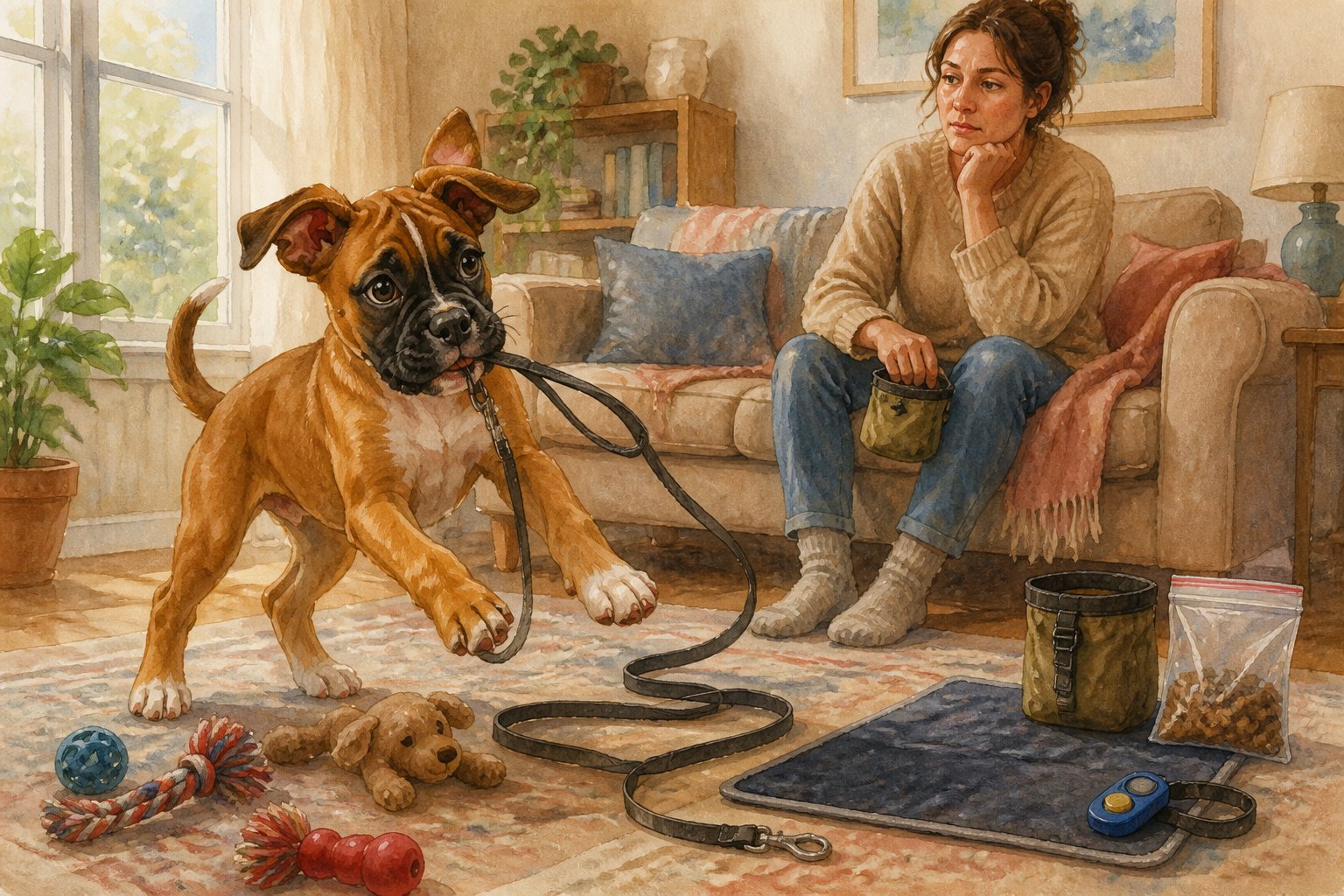
Waiting for your Boxer puppy to become calm before training reverses the process. Puppies learn through repetition, so jumping, nipping, rushing doors, and ignoring you can become practiced habits.
Start on the first day with short lessons on name recognition, hand targeting, sit, leave it, crate comfort, and leash skills. Reward attention before your puppy becomes overexcited.
Two- to five-minute sessions, repeated several times daily, usually work better than one long drill. Early socialization also matters.
Introduce your puppy gradually to friendly people, calm dogs, household sounds, different surfaces, grooming, and safe public places. Keep each experience positive and give your puppy space to pause.
Your Boxer does not need harsh correction. Clear cues, food rewards, play, and predictable routines build self-control while protecting trust.
2. Rewarding Jumping By Giving Attention At The Door

If your Boxer jumps and receives petting, eye contact, laughter, or excited words, jumping has worked. Even pushing the dog away can feel like attention and keep the behavior going.
Teach a door routine before guests arrive. Ask for four paws on the floor, a sit, or a mat stay.
Open the door only while your Boxer remains calm. If the dog jumps, quietly close the door or turn away, then reward the instant all paws return to the floor.
Practice with family members first, using brief repetitions. Keep a leash attached during early training if your Boxer is strong or easily overstimulated.
Tell visitors to ignore jumping and offer attention only after the dog settles. Consistency matters most.
One guest who rewards a leap can make the behavior more persistent.
3. Letting Leash Pulling Continue To Move The Walk Forward
When pulling makes the walk continue, your Boxer learns that pressure on the leash is an effective way to reach smells, dogs, and exciting places. Strength and enthusiasm can make this error especially difficult to control later.
Use a comfortable, well-fitted harness or flat collar, depending on your trainer’s guidance and your dog’s needs. Begin in a quiet area.
Reward your Boxer for checking in, walking beside you, and responding to a name cue. When the leash tightens, stop moving.
Wait for slack, or calmly turn and reward your dog when attention returns. Avoid jerking the leash, since pain and frustration can increase arousal.
Keep early walks short and successful. Sniffing can be a reward for several loose-leash steps, so your Boxer learns that calm walking leads to access rather than stopping all exploration.
4. Using A Harsh Voice For Recall After A Boxer Finally Returns

Scolding your Boxer after a slow return teaches the dog that coming to you ends badly. The next recall may take even longer, especially in a distracting park.
When your Boxer reaches you, use a calm, happy voice and offer a valuable reward. Gently touch the collar, praise the dog, then release it to play when safe.
This prevents recall from always predicting the end of freedom. Build the cue indoors first, then practice in a fenced area with a long line.
Call once, move away from your dog, and reward success generously. Never use recall to punish, force grooming, or startle your Boxer.
If the dog ignores you, avoid repeating the cue many times. Reduce distractions, increase distance gradually, and make returning more rewarding than competing smells or movement.
5. Calling A Boxer Only To End Playtime Or Leave The Dog Park
If every recall means the leash goes on and the fun stops, your Boxer has a reason to avoid you. This pattern can weaken even a well-trained recall.
During play, call your dog several times for rewards, brief collar touches, and quick games. Then send your Boxer back to play.
These “come and go” repetitions teach that returning does not always remove freedom. For the final recall, arrive prepared with high-value treats and a calm exit routine.
Clip the leash after rewarding, allow a short sniff, and leave without a struggle. You can also practice leaving the dog park without entering every time, so the location does not predict an unpleasant ending.
Use a long line in open areas until your Boxer responds reliably around distractions. Never rely on recall near traffic or unfenced hazards before it is dependable.
6. Treating Destructive Chewing As “Normal Boxer Energy”
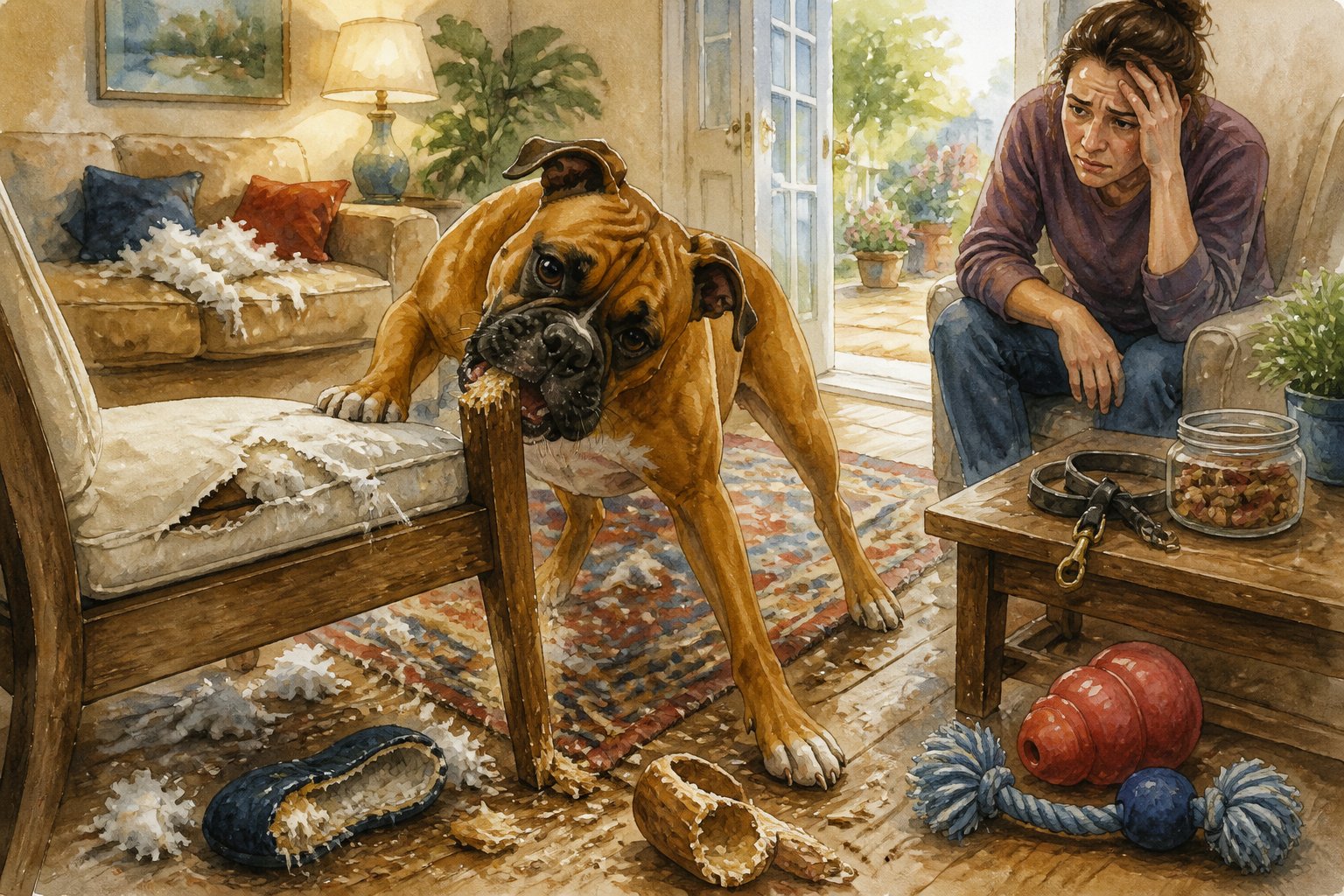
Chewing may be common in puppies and energetic dogs. Destroyed furniture is a management and enrichment problem you need to address.
Teething, boredom, anxiety, excess energy, and limited supervision can all play a role. Remove access to shoes, cords, furniture, and children’s toys.
Use baby gates, a safe pen, or a crate when you cannot supervise. Offer several durable, size-appropriate chew options, and rotate them so they stay interesting.
If you catch your Boxer chewing an unsafe item, calmly trade it for an approved chew. Praise the correct choice instead of chasing or punishing the dog.
Exercise helps, but it should not replace rest and mental work. Sudden chewing in an adult Boxer, especially with drooling, mouth pain, or appetite changes, deserves a veterinary check.
7. Relying On Long Walks Instead Of Mental Enrichment And Training
A long walk can leave your Boxer physically tired while leaving the brain ready for more activity. Repetitive exercise may also build stamina without improving impulse control.
Add short obedience games, scent searches, food puzzles, trick training, retrieve practice, and supervised play. Let your Boxer sniff during walks, since scent work provides useful mental stimulation.
Balance activity with quiet rest. Puppies and young dogs can become nippy, frantic, or destructive when overtired.
Avoid forced running and strenuous jumping while your Boxer is growing, and ask your veterinarian about safe exercise for age and health. A practical day might include a sniffing walk, a food puzzle, a five-minute training session, interactive play, and a planned nap.
Variety helps prevent boredom while training teaches your dog how to settle.
8. Changing House Rules Between Family Members
Your Boxer cannot follow a rule that changes from person to person. If one family member rewards jumping while another corrects it, persistence is likely because the dog keeps trying the behavior that sometimes succeeds.
Agree on house rules for furniture, door greetings, feeding, barking, crate use, and leash behavior. Use the same cue words and reward the same responses.
For example, everyone should decide whether “off,” “down,” or “place” means moving away from a couch. Post a simple training plan where everyone can see it.
Teach children to ask for adult help rather than grabbing collars, toys, or food. Guests should follow the same greeting routine.
Predictable boundaries reduce confusion and make your Boxer easier to manage. Consistency does not require perfection, though it does require that everyone returns to the plan after a mistake.
9. Accidentally Reinforcing Whining, Barking, Or Demand Behavior
Your Boxer may bark, paw, stare, or whine because those actions have earned food, play, a door opening, or attention. Speaking loudly can also reward the behavior by providing interaction.
Identify what your dog wants, then teach a quieter way to request it. Reward silence, eye contact, a sit, or going to a mat before giving access to the desired item.
Start with very short pauses and build gradually. Do not reward demand barking with a treat or an immediate game.
Check basic needs first, including bathroom access, exercise, hunger, discomfort, and fear. Avoid shouting, which can raise excitement.
If barking is sudden, intense, or linked to separation, pain, or unusual events, seek professional guidance rather than treating it as simple disobedience.
10. Skipping Early Socialization With Calm Dogs, People, And Environments
Socialization means teaching your Boxer that new experiences can be safe, not forcing the dog into every interaction. A crowded dog park is not a substitute for careful exposure.
Introduce your puppy to calm, healthy dogs, friendly adults, children who can follow instructions, traffic sounds, elevators, surfaces, grooming tools, car rides, and veterinary handling. Pair each experience with treats and allow your dog to observe from a comfortable distance.
Watch for stiff posture, tucked tails, hiding, frantic pulling, freezing, or repeated barking. Increase distance when you see stress, then try again more slowly.
Do not punish fear or force greetings. Continue socialization through adolescence.
A well-socialized Boxer still needs personal space, respectful handling, and gradual introductions as confidence and behavior change with age.
11. Assuming Fainting, Lumps, Or Bloat Symptoms Are Behavior Problems
A Boxer that suddenly becomes weak, collapses, pants heavily, acts restless, or avoids normal activity may be ill, not disobedient. The breed can face heart conditions, including arrhythmogenic right ventricular cardiomyopathy, as well as other serious problems.
New lumps should receive veterinary attention, especially because Boxers are prone to mast cell tumors. Do not squeeze, delay, or assume a lump is harmless based on appearance.
Treat a swollen or painful abdomen, repeated unproductive retching, pale or gray gums, breathing difficulty, collapse, seizures, severe weakness, or sudden fainting as urgent warning signs. Contact an emergency veterinary hospital immediately.
Keep records of episodes, exercise, appetite, breathing, bowel changes, and medications. Clear notes and videos can help your veterinarian identify patterns.
Behavior training cannot correct pain, heart disease, gastrointestinal emergencies, or other medical causes.
When To Call A Trainer Or Veterinarian
Signs A Qualified Positive-Reinforcement Trainer Is Needed
Seek a qualified trainer or veterinary behavior professional when your Boxer shows repeated lunging, snapping, resource guarding, severe separation distress, bite risk, or behavior that worsens despite consistent practice. Choose someone who uses reward-based methods and can explain a clear safety plan.
A trainer should observe your dog in context, identify triggers, and teach practical replacement behaviors. Avoid professionals who rely on intimidation, dominance claims, leash corrections, or promises of instant results.
Urgent Boxer Health Warning Signs
Call a veterinarian promptly for sudden behavior changes, collapse, fainting, breathing trouble, persistent vomiting, a swollen abdomen, pale gums, seizures, severe pain, or unusual weakness.
Emergency signs require immediate care rather than a training session.
Routine exams also matter.
Discuss heart screening, skin lumps, weight, exercise tolerance, dental care, and age-appropriate prevention with your veterinary team.
Questions To Ask Before Choosing Professional Help
Ask about credentials, training methods, experience with Boxers, handling of aggression, and how progress will be measured.
Confirm whether the professional works with your veterinarian when medical causes may affect behavior.
Ask what equipment is required, what happens during the first visit, and what you should do if your dog becomes stressed.
A good professional welcomes questions and prioritizes safety, welfare, and realistic progress.
Building A Reliable Daily Boxer Routine
Exercise, Enrichment, And Rest Balance
Plan a mix of sniffing walks, active play, training, food puzzles, chewing, and quiet rest.
Your Boxer needs both physical outlets and mental challenges, while puppies and adolescents need frequent sleep to avoid overtired behavior.
Adjust activity for age, weather, fitness, and veterinary advice.
Heat deserves special care because Boxers can struggle in hot conditions.
Offer water, avoid peak heat, and watch for excessive panting or weakness.
Short Training Sessions That Fit Real Life
Use daily moments instead of waiting for a perfect training block.
Ask for a sit before meals, reward calm behavior at doors, practice leash attention on the way outside, and reinforce settling while you work.
Keep sessions brief and end while your Boxer is still engaged.
High-value treats, toys, praise, and access to sniffing can all reinforce useful behavior.
Tracking Progress Without Expecting Perfection
Record triggers, successful responses, sleep, exercise, and setbacks.
Look for trends across weeks rather than judging one difficult walk or noisy evening.
Raise difficulty gradually by adding distance, duration, or distractions, not all three at once.
If progress stalls, reduce the challenge and review health, rest, rewards, and household consistency before blaming your Boxer.