
An American Akita can be loyal, calm, and deeply devoted. Your choices during puppyhood and adulthood shape how safely that strength fits into daily life.
The breed’s independence, size, guarding instinct, and possible dog intolerance require thoughtful management rather than casual expectations.
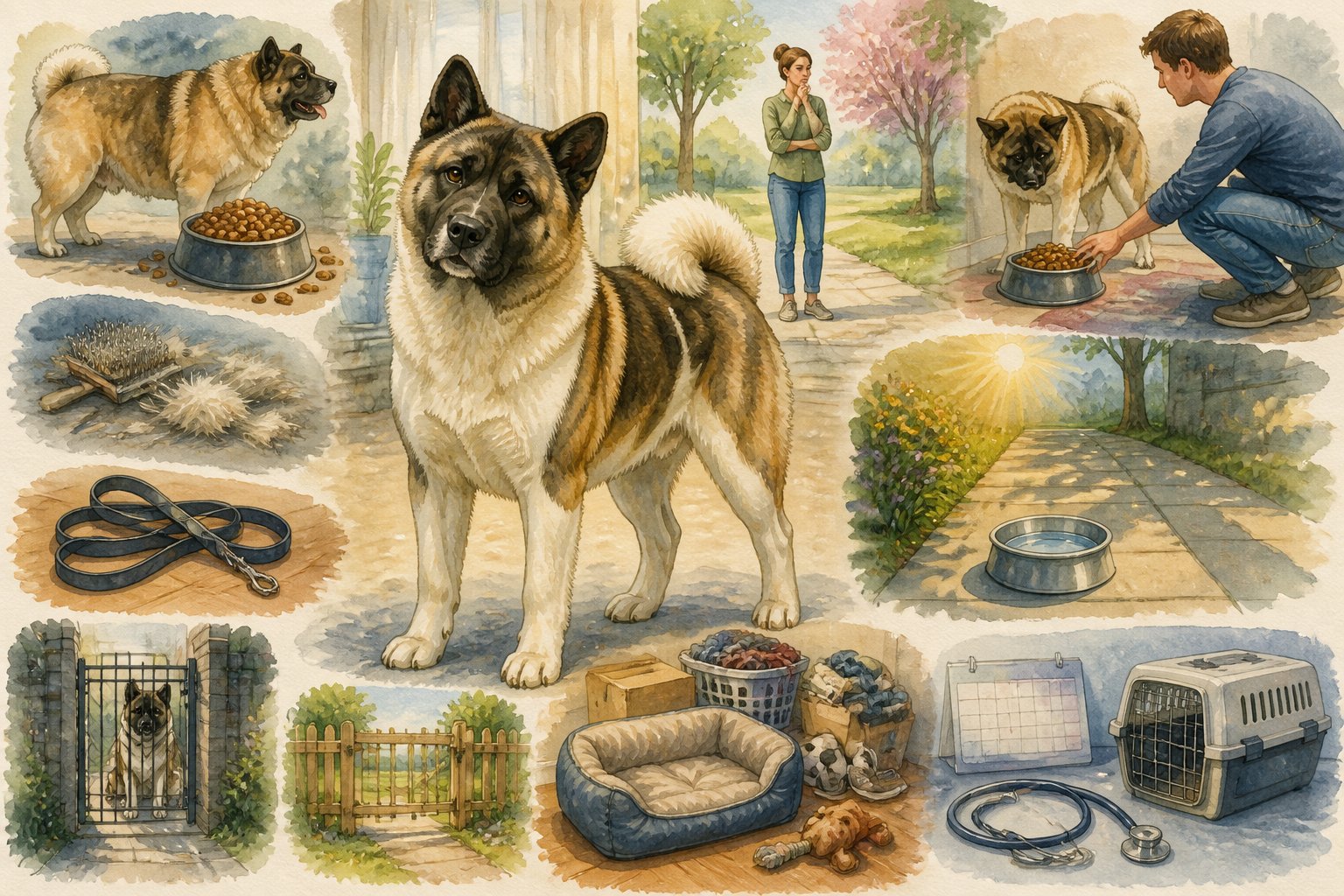
The safest approach combines early, controlled exposure, reward-based training, secure management, routine veterinary care, and realistic respect for your Akita’s limits. Avoiding these nine major American Akita owner missteps helps you prevent problems before they become dangerous habits.
1. Skipping Controlled Socialization Before 16 Weeks
Your puppy needs safe exposure to people, surfaces, sounds, vehicles, handling, and calm dogs during early development. This does not mean forcing constant greetings or visiting crowded dog areas.
It means creating brief experiences at a distance where your puppy can notice something new, eat treats, and leave before becoming overwhelmed. Use clean, low-risk settings and follow your veterinarian’s vaccination guidance.
Invite calm visitors, practice gentle ear and paw handling, and take short car rides. Watch for freezing, hiding, hard staring, tucked posture, or refusal of food.
Those signs mean you should add distance or end the session. You are teaching your Akita that unfamiliar situations are manageable and that you will make safe decisions.
Continue gradual exposure after 16 weeks, since social learning does not stop at puppyhood.
2. Treating Same-Sex Dog Aggression As A Phase
You should not assume same-sex conflict will disappear with age. Some American Akitas become selective or openly intolerant of dogs of the same sex, especially as they mature.
A friendly puppy may change during adolescence, so you need a plan before the first serious incident. Walk your dog with space from unfamiliar dogs.
Use a sturdy leash, practice turning away, and reward calm attention before your Akita reaches the point of staring, stiffening, or lunging. Do not arrange forced face-to-face greetings to “test” progress.
Separate dogs during meals, high-value chewing, and exciting household events. If you have repeated fights, seek professional help instead of relying on punishment.
A realistic goal may be calm passing, safe separation, or carefully managed coexistence, not friendship with every dog.
3. Allowing Unsupervised Access To Cats, Rabbits, Or Small Dogs
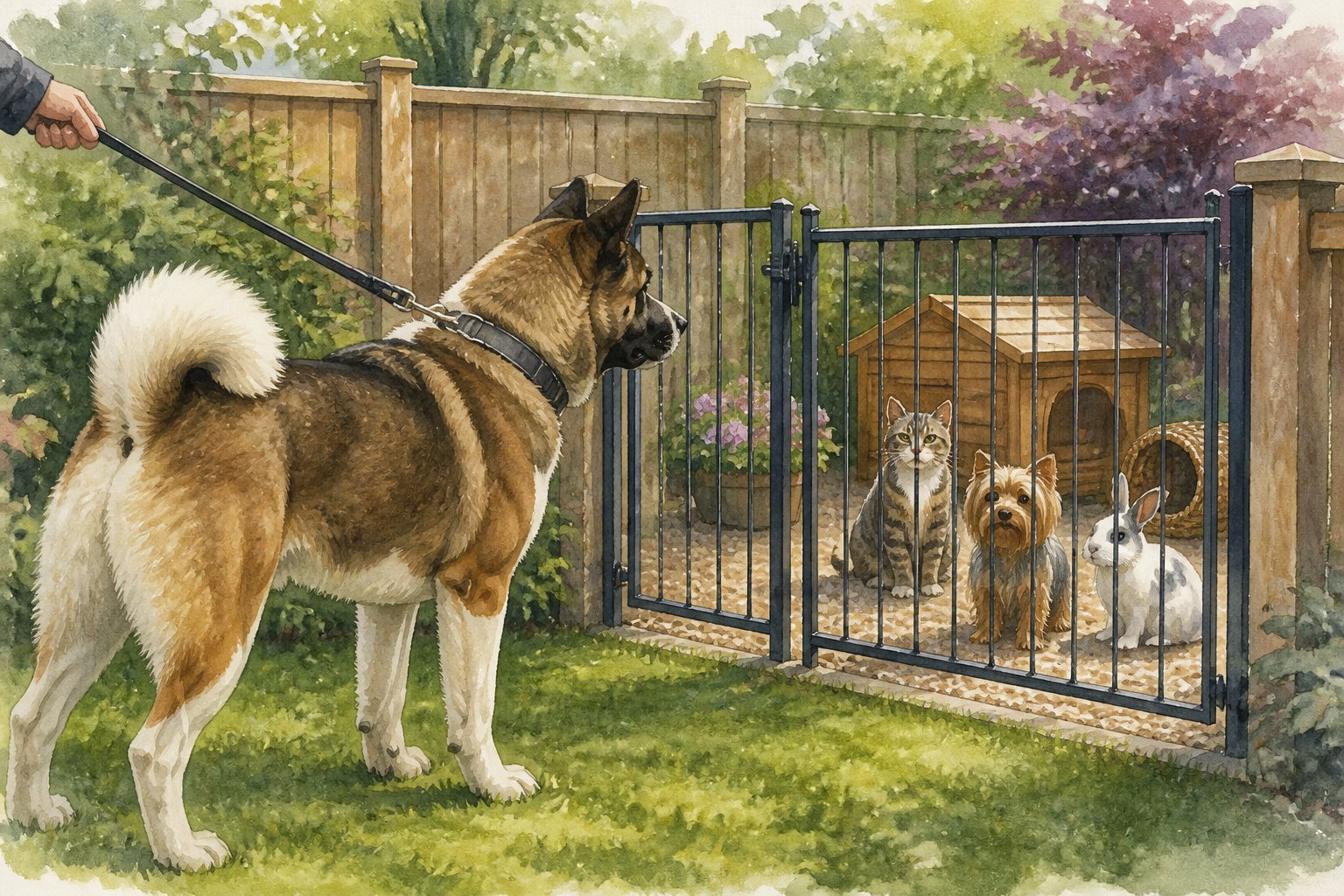
Your Akita may live peacefully with another animal, yet peaceful home behavior does not guarantee safety around every small pet. Chase instincts, sudden movement, poor past experiences, or a fast interaction can create a serious risk within seconds.
Use baby gates, closed doors, crates, secure exercise pens, and separate feeding areas. Give cats vertical escape routes and keep rabbits or other small pets behind strong barriers.
Supervise every shared-room interaction, even after months of calm behavior. Teach your Akita to look at you, move away, and settle on a mat.
Reward soft body language and relaxed attention. Never allow chasing as a game.
If your dog fixates, stalks, trembles with excitement, or ignores your voice, increase distance immediately and maintain permanent management until a qualified professional evaluates the situation.
4. Using Harsh Corrections Instead Of Reward-Based Training

Your Akita’s size and confidence can make harsh tools seem tempting, especially after pulling or barking. Choke chains, shock collars, hitting, and intimidation can increase fear, conflict, or defensive responses.
They may suppress a warning without changing the emotion behind it. Use food, praise, toys, and access to valued activities to reinforce behavior you want.
Keep lessons short and clear. Reward your dog for checking in, walking beside you, releasing an object, settling, and moving away from triggers.
When a problem occurs, first ask what caused it. Add distance, remove the trigger, and prevent another rehearsal.
If your Akita is too aroused to learn, stop correcting and reset the environment. A skilled trainer can show you humane ways to handle strength, guarding, and reactivity without damaging trust.
5. Waiting Until Adolescence To Establish Household Rules

Your puppy may look harmless when it jumps, steals socks, pushes through doors, or chews furniture. A large Akita repeating those behaviors months later can knock someone down or create a major safety issue.
Start teaching boundaries from the first day home. Choose simple rules for furniture, doorways, food areas, greetings, and rest spaces.
Make sure every household member follows them. Reward four paws on the floor, waiting at thresholds, dropping objects, and settling quietly.
Management matters as much as training. Use gates, closed doors, leashes, and safe chew items so your puppy cannot practice unwanted behavior.
Avoid harsh reactions after mistakes. Calmly interrupt, guide your dog to a better choice, and reward that choice.
Consistency builds reliable habits before adolescent independence becomes stronger.
6. Forcing Greetings With Strangers Or Visitors

Your Akita does not need to greet every person who reaches toward its head. Forced contact can turn normal caution into fear or defensive behavior, especially in a tight entryway or crowded room.
Ask visitors to ignore your dog at first. Keep your Akita behind a gate or on a leash, then reward calm observation.
Let your dog choose whether to approach. A visitor can toss treats away from their body instead of leaning over or offering a hand.
Tell children not to hug, climb on, corner, or disturb your Akita while it eats or rests. Watch for stiff posture, closed mouth, whale eye, lip licking, growling, or retreating.
Respect those signals and create space. A quiet dog is not automatically comfortable, so you must supervise every interaction.
7. Ignoring Pain, Thyroid, Or Dental Problems Behind Sudden Reactivity
A sudden change in your Akita’s behavior deserves a health check, especially if your previously tolerant dog begins growling, snapping, hiding, or resisting touch. Pain from joints, ears, skin, teeth, or the spine can make handling and nearby movement feel threatening.
Thyroid disease and other medical problems may also affect energy, mood, coat, weight, or behavior. Record when the change began, what triggers it, and whether appetite, sleep, movement, or bathroom habits changed.
Share those details with your veterinarian. Do not punish a new warning.
Prevent close contact, use barriers, and avoid forcing examinations at home. Ask your veterinarian about a safe handling plan and appropriate testing.
Medical care may not solve every behavior concern, yet it can remove a major source of distress and make training more effective.
8. Relying On Dog Parks For Exercise And Socialization
A dog park combines unfamiliar dogs, tight spaces, toys, running, and unpredictable greetings. That setting can overwhelm an American Akita and may encourage chasing, guarding, or conflict.
It also does not provide the careful exposure your dog needs to learn calm behavior. Choose structured alternatives.
Walk during quiet hours, practice passing dogs from a safe distance, and use a secure yard for movement. Add scent games, food puzzles, short obedience sessions, and controlled play with a compatible dog if your Akita genuinely enjoys it.
Exercise should leave your dog satisfied, not frantic. Watch body language throughout the activity.
If your Akita repeatedly avoids dogs, stiffens, guards resources, or cannot respond to you, skip the park and build a more predictable routine.
9. Underestimating Double-Coat Shedding And Grooming Needs
Your American Akita’s dense double coat can release a surprising amount of hair, especially during seasonal coat blows. A quick weekly brush may not be enough during those periods.
Loose undercoat can collect in your home, mats can form in friction areas, and neglected nails can affect movement. Use a suitable undercoat rake or slicker brush as recommended by a professional groomer.
Work in short sessions and reward cooperation. Check ears, paws, nails, skin, and the area beneath the collar regularly.
Do not shave the double coat unless your veterinarian recommends it for a medical reason. The coat helps protect your dog from weather and sunlight.
Bathe when needed, dry the coat fully, and arrange professional help if your Akita becomes stressed or difficult to handle.
Building A Safer American Akita Routine
Early Socialization With Distance And Choice
Expose your Akita to new people, places, sounds, and surfaces in small, positive steps. Keep enough distance for your dog to eat treats and respond to you.
You do not need to create direct contact for socialization to work. Let your dog retreat.
A choice-based approach builds confidence and gives you useful information about comfort levels. Repeat easy experiences before increasing difficulty.
Management Tools: Leashes, Gates, And Secure Fencing
Use equipment that matches your dog’s strength. A well-fitted harness or sturdy collar, a strong leash, locked gates, and secure fencing help prevent escapes and unwanted contact.
Check hardware often for wear. Use barriers before guests arrive, during feeding, and whenever you cannot supervise.
Management is not a failure of training. It is how you prevent dangerous practice while skills develop.
Exercise, Enrichment, And Predictable Daily Rules
Give your Akita daily walks, sniffing time, training, chewing, and food-based enrichment. Rotate activities so your dog has ways to use both body and mind.
Keep meals, rest, toilet breaks, and quiet periods reasonably predictable. Clear rules reduce conflict, while enough sleep and downtime help prevent irritability.
Adjust exercise for age, weather, health, and joint comfort.
When To Call A Qualified Professional
Signs That Warrant A Veterinary Examination
Arrange a veterinary visit for sudden reactivity, new aggression, reluctance to move, touch sensitivity, appetite or weight changes, excessive thirst, sleep changes, or unusual withdrawal. Do not wait for a bite before investigating a behavior shift.
Bring a written timeline and safe video if possible. Tell the clinic about triggers before arrival so staff can reduce stress and plan handling.
Finding A Credentialed Behavior Professional
Look for a veterinarian with behavior training or a credentialed behavior consultant who uses reward-based methods. Ask what tools they use, how they handle aggression, and whether they coordinate with your veterinarian.
Avoid anyone promising dominance, instant results, or guaranteed friendliness. Your first meeting should include management advice, trigger assessment, and a realistic safety plan.
Creating A Bite-Prevention And Visitor Plan
Write down where your Akita stays when visitors arrive. Note which barriers you use, who handles the leash, and what signals mean the dog needs more space.
Keep children and visitors away from unsupervised contact.
If your dog has bitten or nearly bitten, treat the situation as urgent. Use secure separation, disclose the history honestly, and follow professional guidance for veterinary care, behavior work, and local safety requirements.