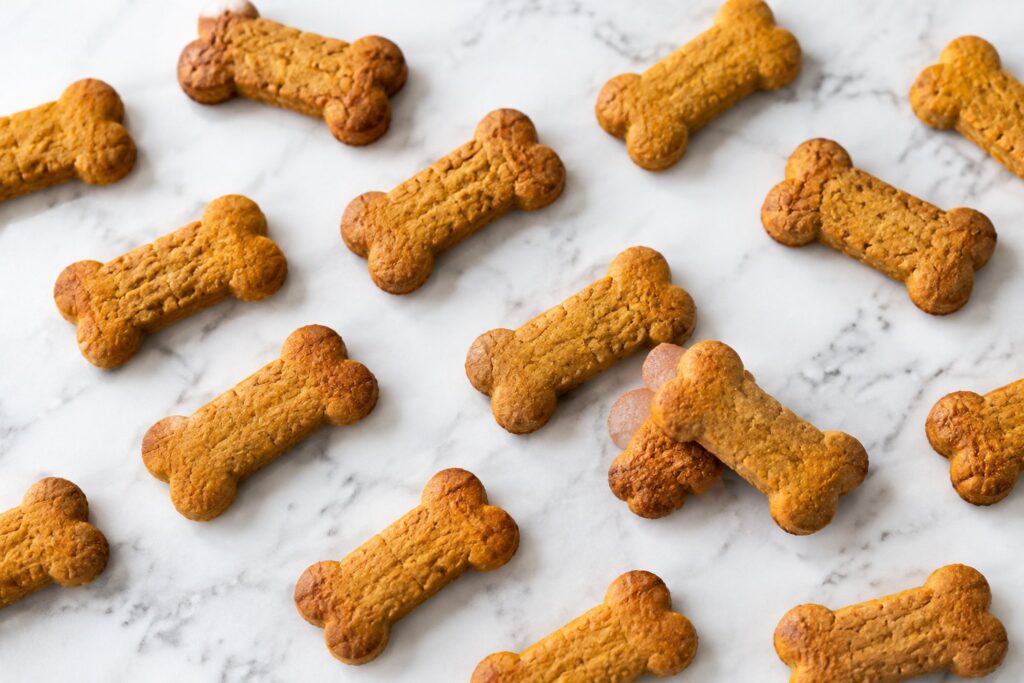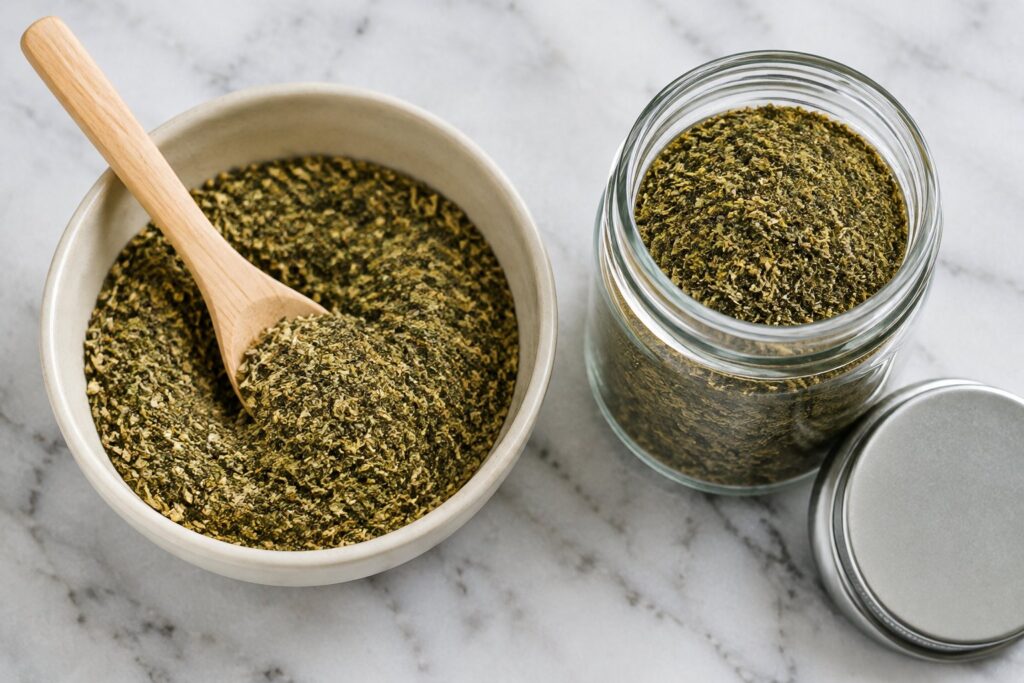
Homemade Dog Food Seasoning is a salt-free blend of dried parsley, basil, dill, thyme, rosemary, and oregano that you can sprinkle lightly over your dog’s regular food. It works as a dog food enhancer for kibble or fresh meals, while keeping the ingredients familiar and easy to control.
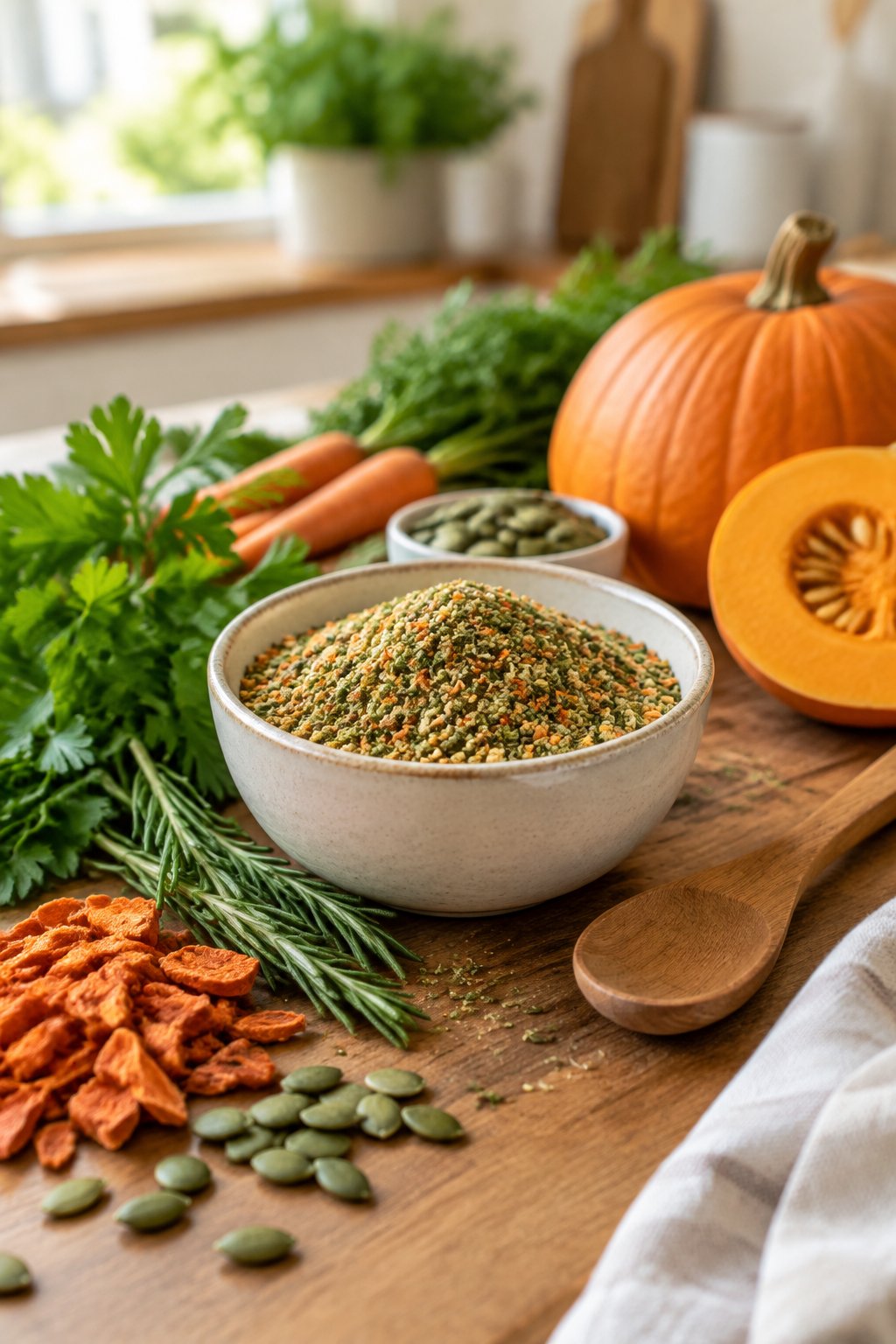
The right seasoning for dogs uses plain culinary herbs in small amounts. Your blend should contain no onion, garlic, added salt, essential oils, or sweeteners. A concentrated aroma is enough to make food more interesting, so you only need a pinch at first.
This dog food seasoning adds flavor, but it does not make an incomplete diet balanced. If you prepare every meal at home, your dog still needs a properly formulated recipe with suitable protein, fat, calcium, vitamins, and minerals. A veterinarian or veterinary nutritionist can help you choose among the best foods for dogs.
How to Make the Herb Blend
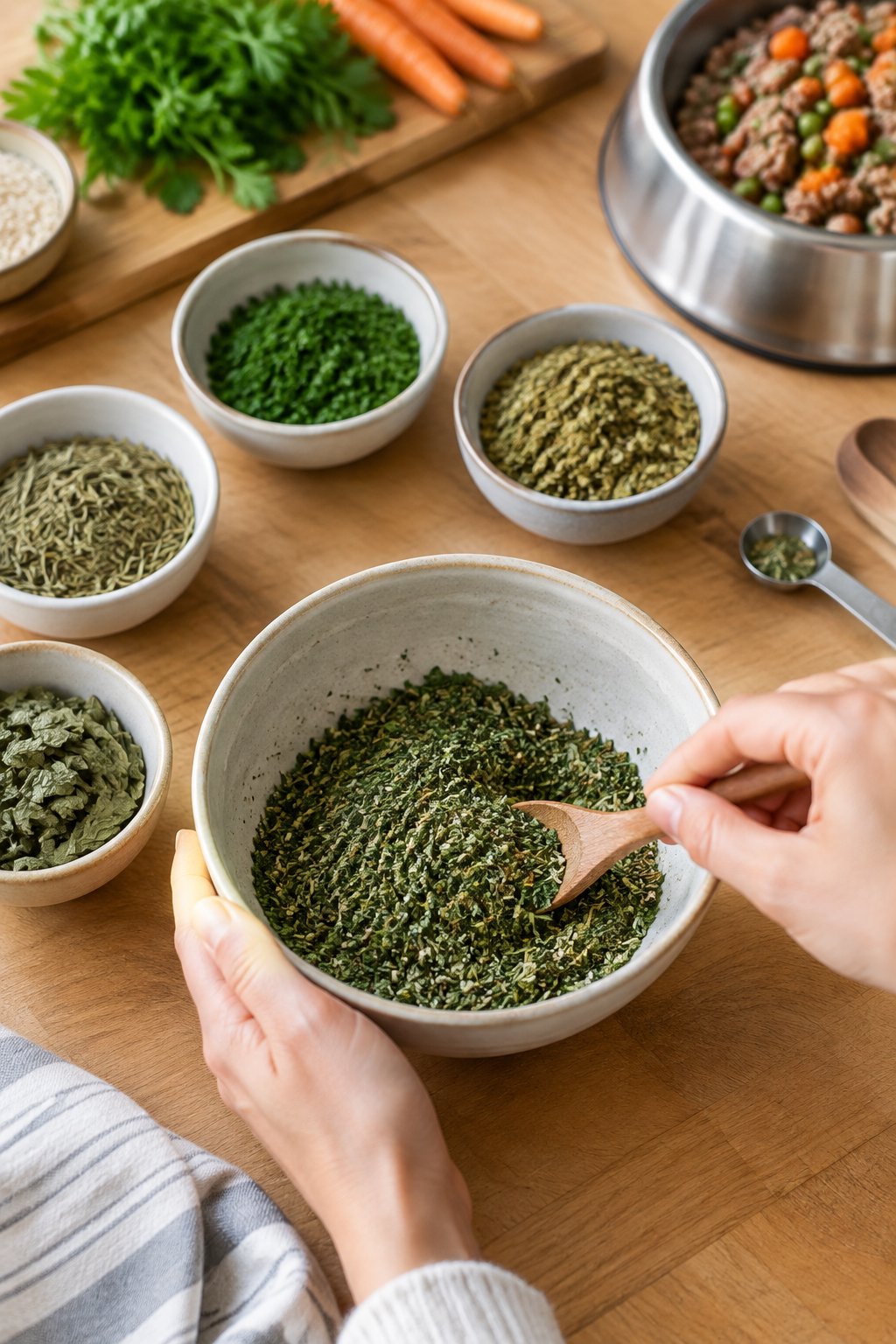
You can make this herb blend in about five minutes by grinding equal amounts of six dried herbs. The fine texture spreads evenly through homemade dog food and prevents your dog from picking around large rosemary or thyme pieces.
Simple Dog Food Seasoning Recipe
Yield: 6 tablespoons
Prep time: 5 minutes
Cook time: 0 minutes
Cooking temperature: None, this is a no-cook recipe
Ingredients
- 1 tablespoon dried parsley
- 1 tablespoon dried basil
- 1 tablespoon dried dill
- 1 tablespoon dried thyme
- 1 tablespoon dried rosemary
- 1 tablespoon dried oregano
Use plain herbs with no salt, onion powder, garlic powder, flavoring, or anti-caking seasoning blends. Fresh basil and rosemary contain moisture, so dried herbs are the right choice for a shelf-stable dog food seasoning recipe.
Step-by-Step Instructions
1. Check and measure the herbs
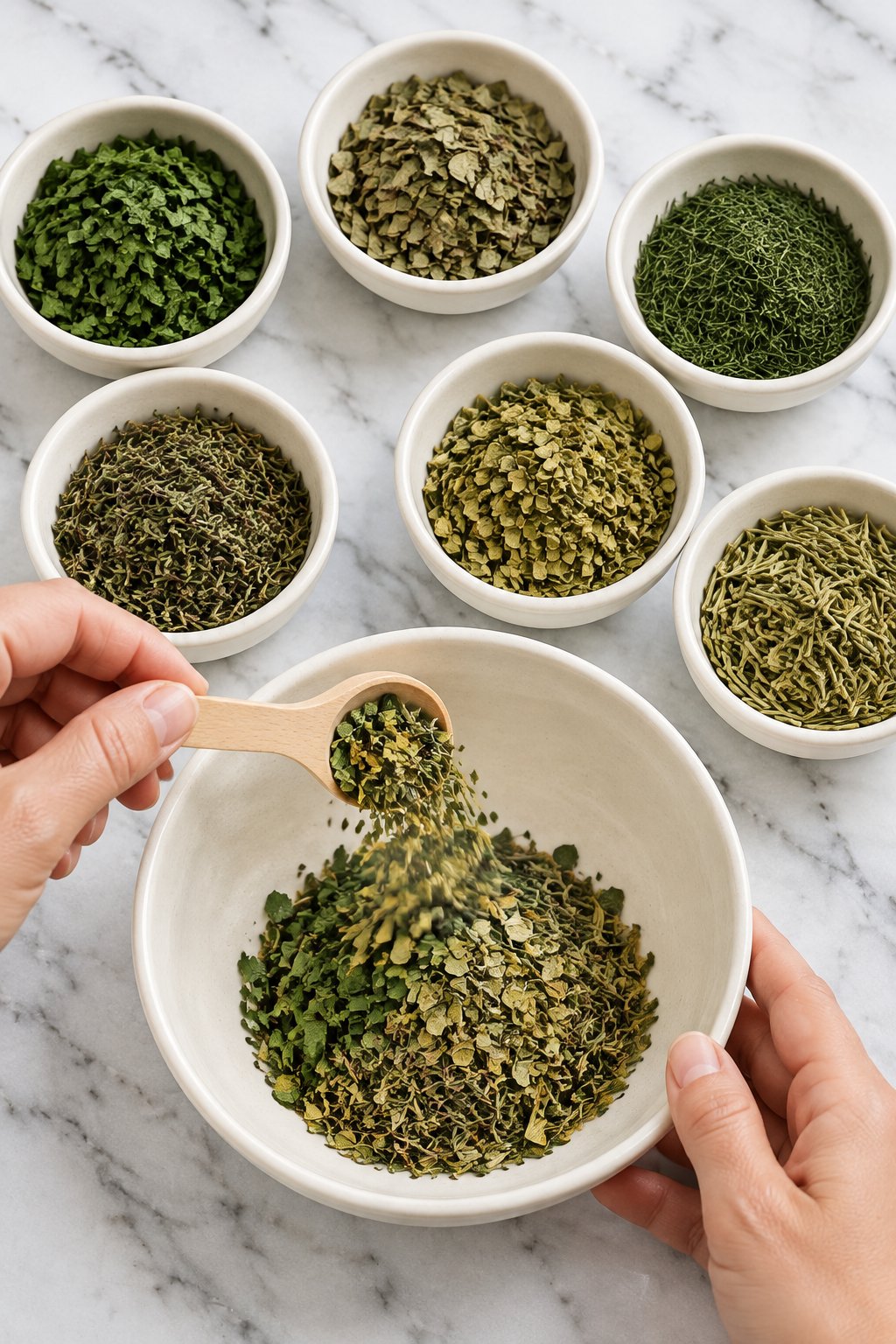
Check each herb for stems, moisture, or signs of mold. Measure the dried herbs into a clean bowl.
2. Grind until fine and even
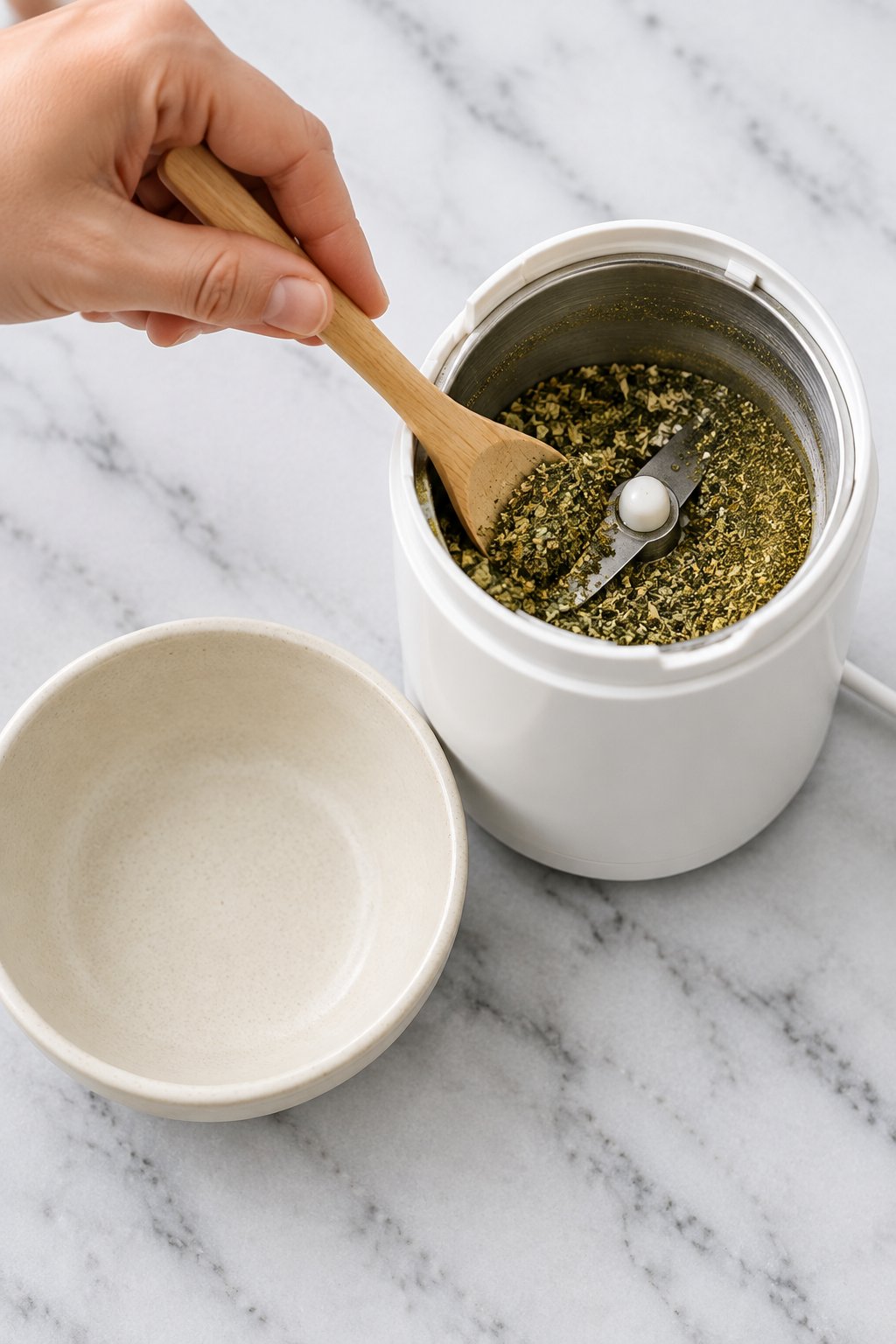
Transfer them to a spice grinder or small food processor. Pulse for 10 seconds, scrape the sides, and pulse for another 10 to 15 seconds until you have a fine, even mixture.
3. Or use a mortar and pestle
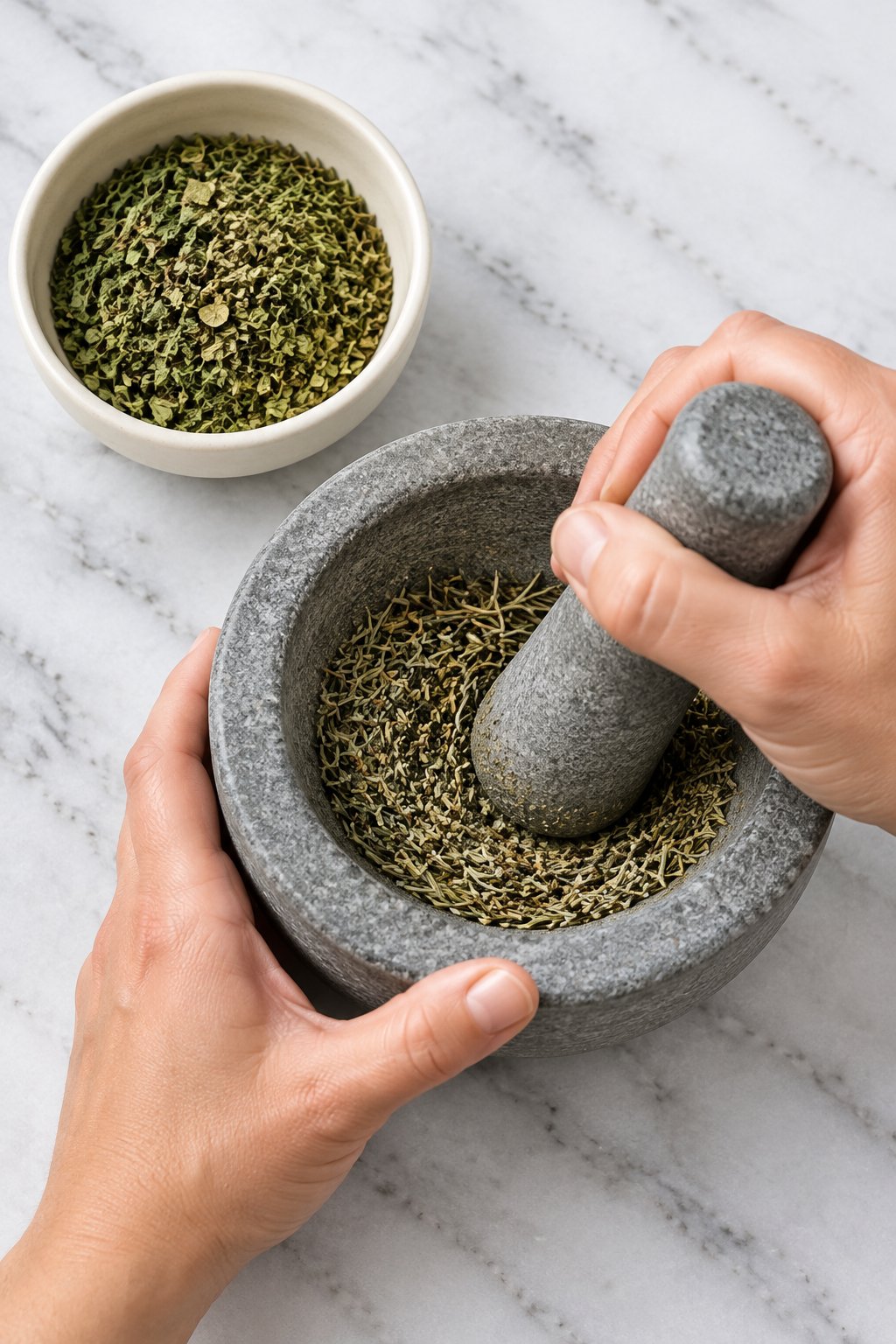
If you use a mortar and pestle, grind the dried rosemary and thyme first. Add the softer herbs and continue until the pieces are similar in size.
4. Jar, seal and date the blend
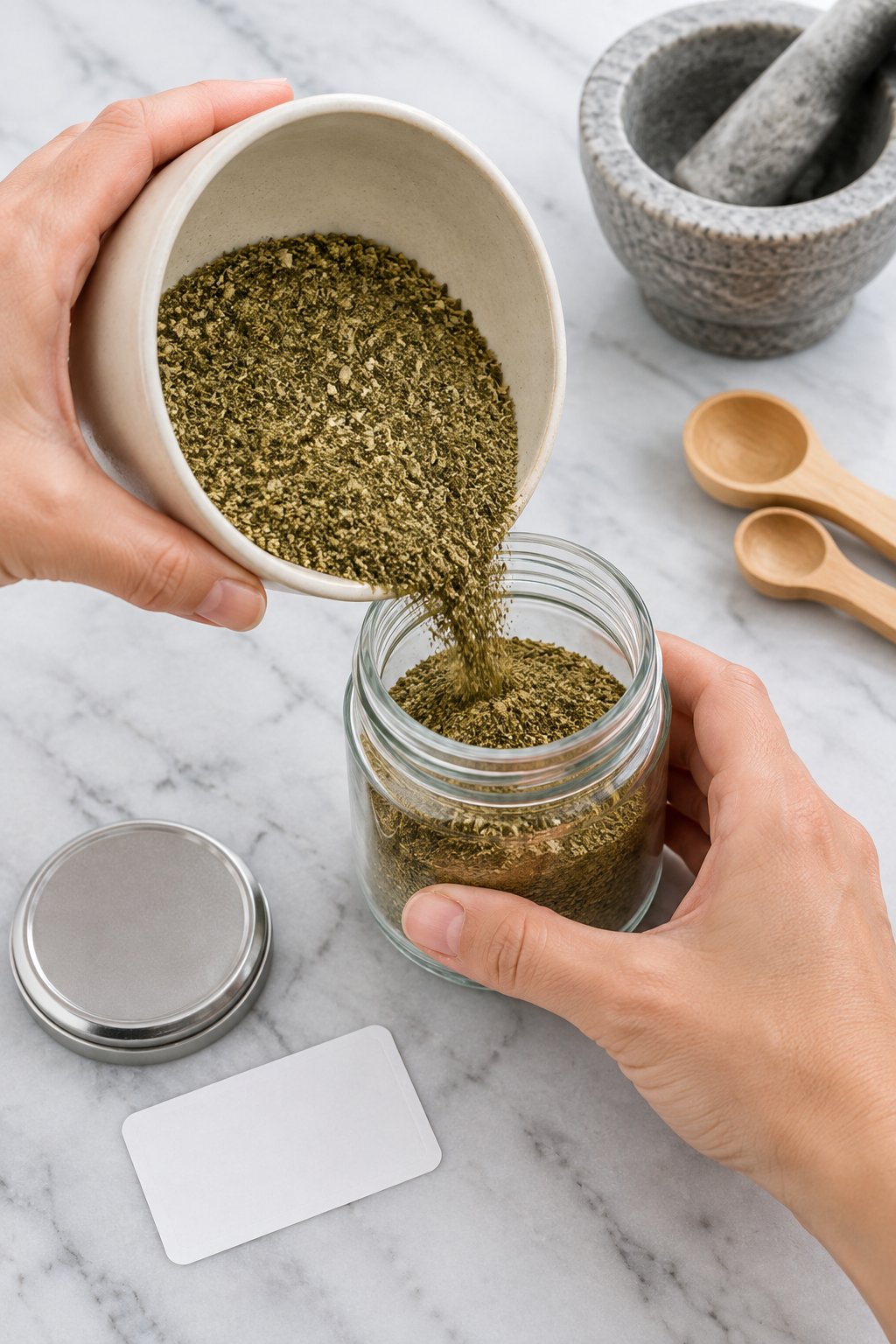
Pour the mixture into a dry jar, seal it, and label it with the preparation date.
A dedicated or well-cleaned grinder prevents traces of coffee, garlic, or other seasonings from entering your dog food seasoning recipe.
How to Use It on Kibble or Fresh Meals
Measure the blend and stir it through the entire meal. For dry kibble, add a teaspoon of warm water after sprinkling so the herbs cling to the pieces.
Let cooked food cool before adding the seasoning. Your dog gets a stronger aroma when you mix the herbs into a slightly warm meal, while the small serving keeps the flavor gentle.
Which Ingredients Are Safe for Dogs?
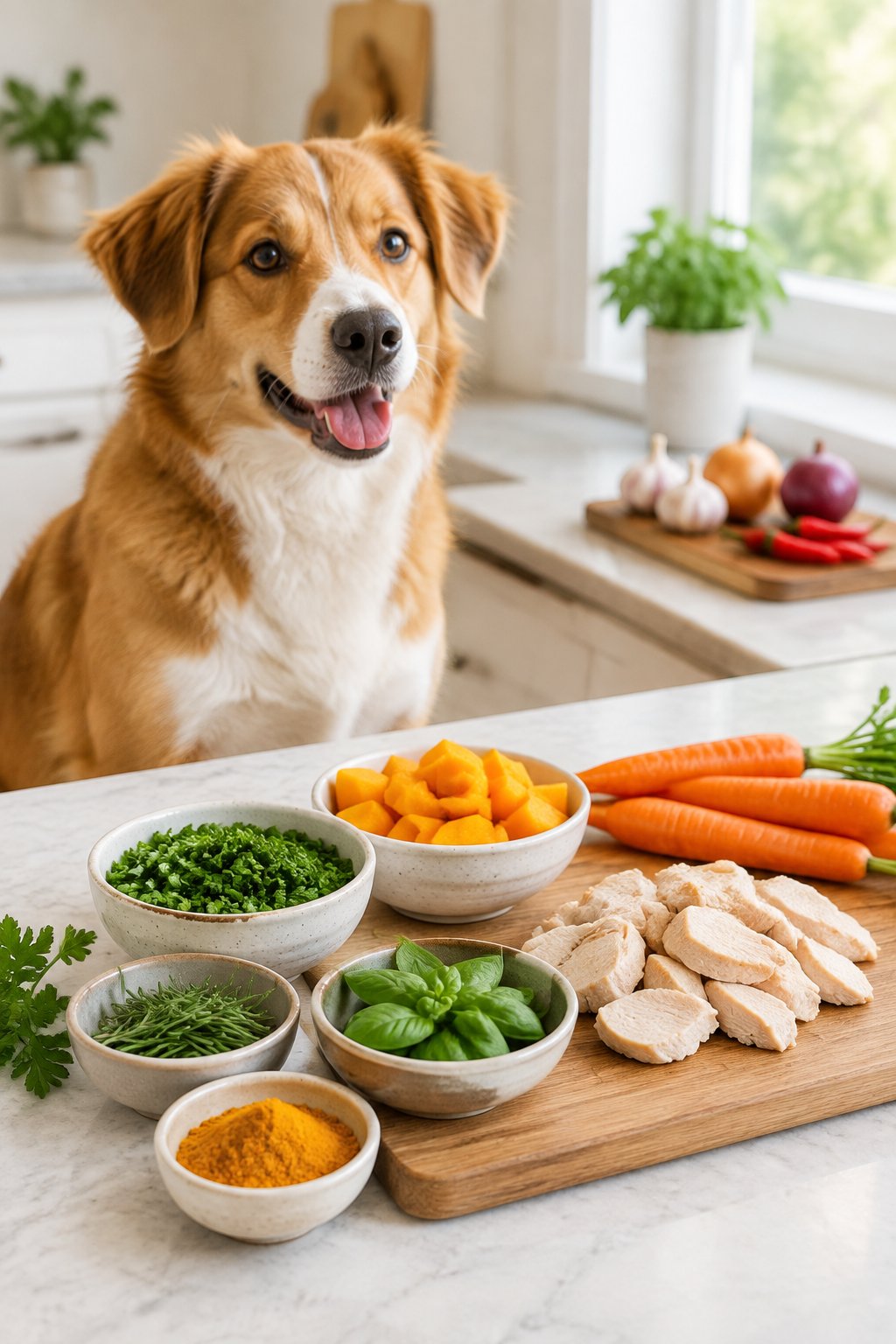
Plain dog-safe herbs are suitable in small culinary amounts, while concentrated oils and toxic seasonings should stay out of your dog’s bowl. Your dog’s health history also affects which optional ingredients fit the diet.
Benefits of Dog-Safe Herbs
Parsley, basil, dill, thyme, rosemary, and oregano add scent and small amounts of plant compounds. The blend’s main benefit is improved flavor, especially when your dog has lost interest in plain kibble.
Herbs cannot treat disease or correct an unbalanced diet. Culinary amounts also do not work as a natural preservative, so freshness still depends on dry ingredients and proper storage.
Optional Flaxseed for Skin and Coat Support
You may add 1 tablespoon of freshly ground flaxseed to the finished six-tablespoon batch if your veterinarian approves it. Ground flaxseed provides fiber and alpha-linolenic acid, a plant form of omega-3 fatty acids associated with skin and coat health.
Whole seeds may pass through your dog’s digestive tract intact. Ground flaxseed is easier to use, though larger servings can loosen stools or upset a sensitive stomach. Store a flaxseed blend in the refrigerator and use it within one month.
Ingredients to Leave Out of the Bowl
Keep these ingredients out of your blend:
- Onion, onion powder, and chives
- Garlic and garlic powder
- Nutmeg
- Cocoa or chocolate powder
- Xylitol or sweetened spice mixes
- Added salt
- Chili powder and hot pepper
- Concentrated essential oils
Onion, garlic, chives, xylitol, and chocolate appear among common foods that are toxic to dogs. Seasoning packets also contain several ingredients, so use single-ingredient herb containers.
How Much Seasoning Should You Add?
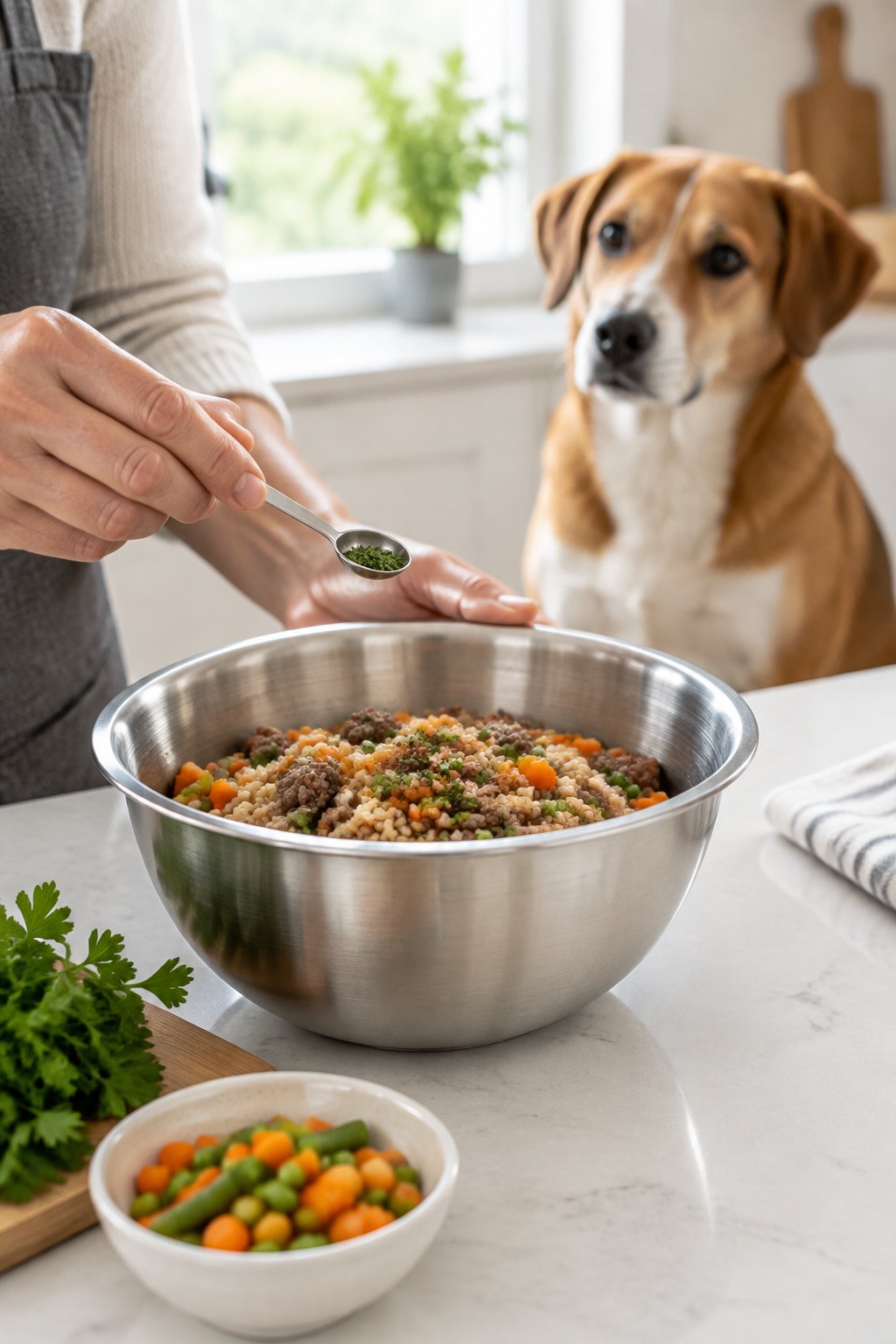
Begin with one small serving per day based on your dog’s weight, then watch appetite and stool quality for several days. This seasoning for dogs is concentrated, so a light dusting provides enough aroma.
Starting Amounts by Dog Size
Use these conservative starting amounts once daily:
| Your dog’s weight | Starting amount |
|---|---|
| Under 20 pounds | A pinch, about 1/16 teaspoon |
| 20 to 50 pounds | 1/8 teaspoon |
| 51 to 90 pounds | 1/4 teaspoon |
| Over 90 pounds | 1/2 teaspoon |
Treat these amounts as topper guidelines, not nutritional doses. Your veterinarian may recommend a different amount based on your dog’s diet, medications, or health.
Introducing a New Topper Slowly
For the first three days, serve half the starting amount mixed thoroughly into familiar food. Move to the full amount if your dog’s appetite, stool, and behavior remain normal.
Stop using the dog food enhancer if you see vomiting, diarrhea, itching, facial swelling, or unusual tiredness. Food reactions can involve more than herbs, so keep the base meal unchanged while testing the topper. Dogs with known food allergies benefit from introducing one herb at a time.
When to Ask Your Veterinarian First
Get veterinary guidance before serving the blend to a puppy, pregnant dog, senior with chronic illness, or dog taking medication. You should also ask first if your dog has kidney disease, liver disease, pancreatitis, seizures, or a sensitive stomach.
A sudden refusal to eat needs attention beyond seasoning. Contact your veterinarian when poor appetite lasts more than a day or comes with pain, vomiting, diarrhea, bloating, or weakness.
Storage, Freshness, and Serving Tips
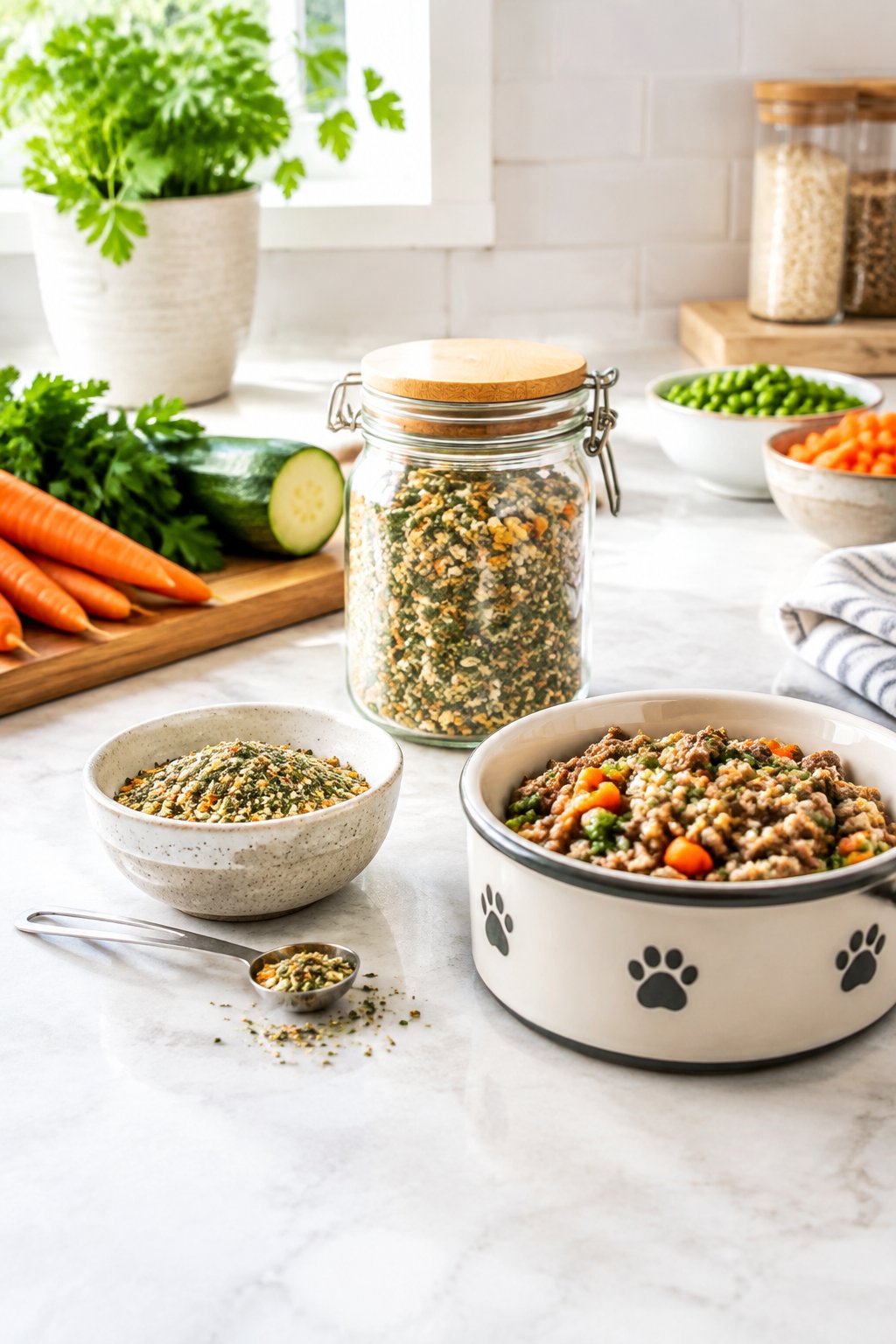
Keep the plain herb blend in a sealed jar in a cool, dark cabinet, and use it within three months for the best aroma. Moisture, heat, and direct sunlight shorten its useful life.
How to Store the Blend
Transfer the ground herbs to a clean, completely dry airtight container. A small glass spice jar works well because you can see the contents and check for moisture.
Label the container with its ingredients and preparation date. Use a dry measuring spoon each time, since steam or food residue can introduce moisture and bacteria.
How Long Does Homemade Seasoning Last?
The plain dried blend keeps its best quality for about three months in a pantry away from the stove. Discard it sooner if you notice moisture, clumping, mold, insects, or an unpleasant odor.
A blend containing ground flaxseed belongs in the refrigerator and should be used within one month. Store the seasoning separately from homemade dog food, which contains moisture and requires refrigeration. Most cooked meals should be portioned into sealed containers and used within three to four days.
Ways to Make Meals More Appealing
Mix the measured herbs with a spoonful of warm water before stirring them into kibble. The moisture releases their aroma and helps the fine pieces coat the food.
You can also blend the seasoning into a veterinarian-approved fresh meal or a small spoonful of plain pumpkin. If your dog does not eat all of the food at once, remove moist leftovers within two hours and wash the bowl before the next feeding.