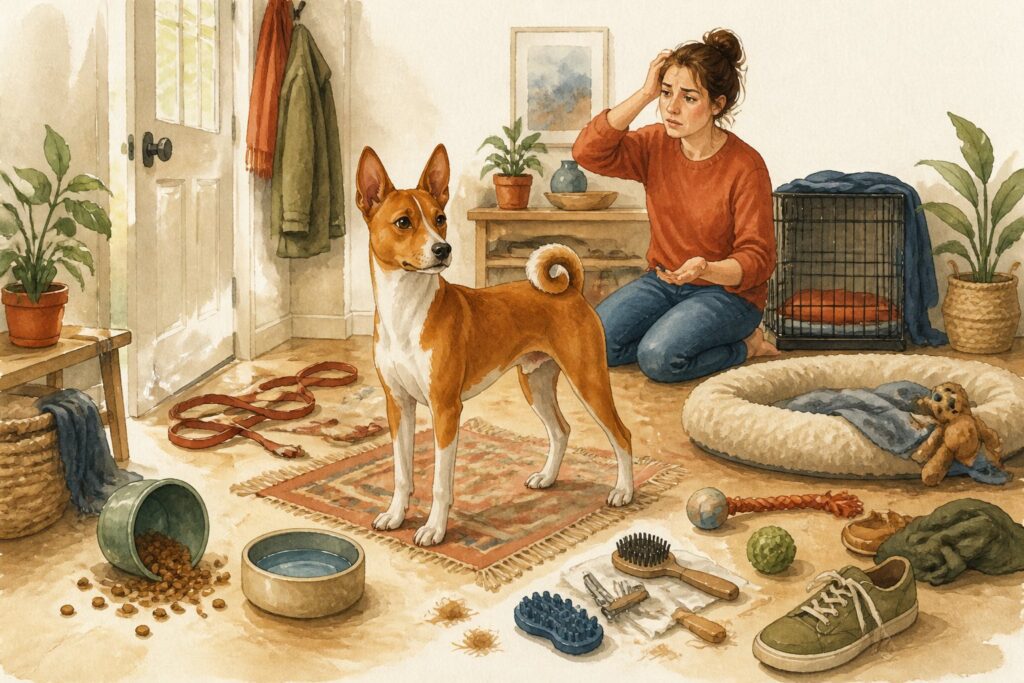
Basenjis are clever, energetic, and independent, so everyday mistakes can quickly become habits. Chewing, pulling, bolting, and demand behavior often reflect unmet needs or unclear boundaries rather than stubbornness alone.
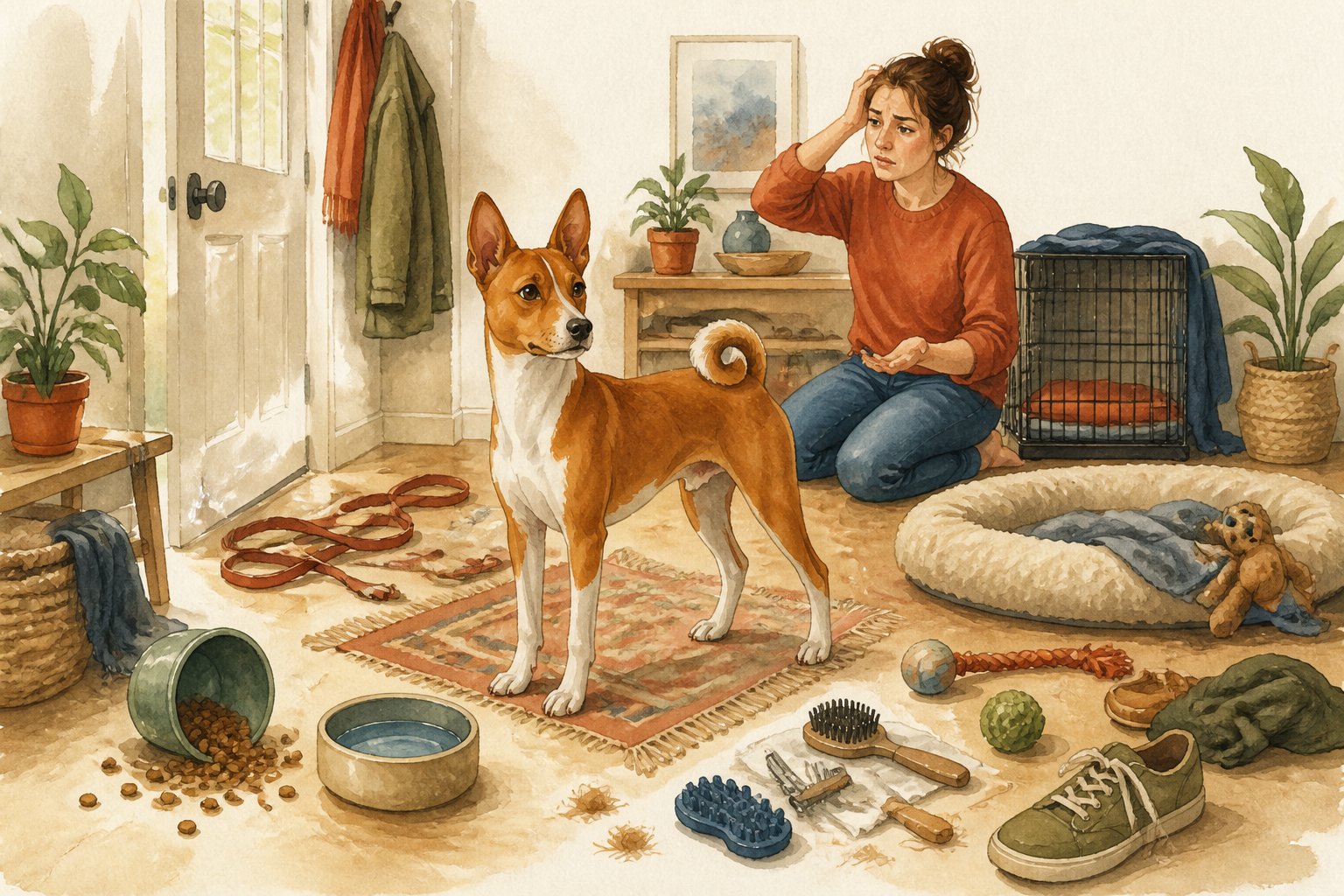
You can prevent most Basenji owner pitfalls by combining short reward-based training sessions with daily enrichment, careful management, and consistent household rules. The fixes below help you work with your dog’s instincts instead of fighting them.
1. Assuming Your Basenji Will Outgrow Destructive Habits
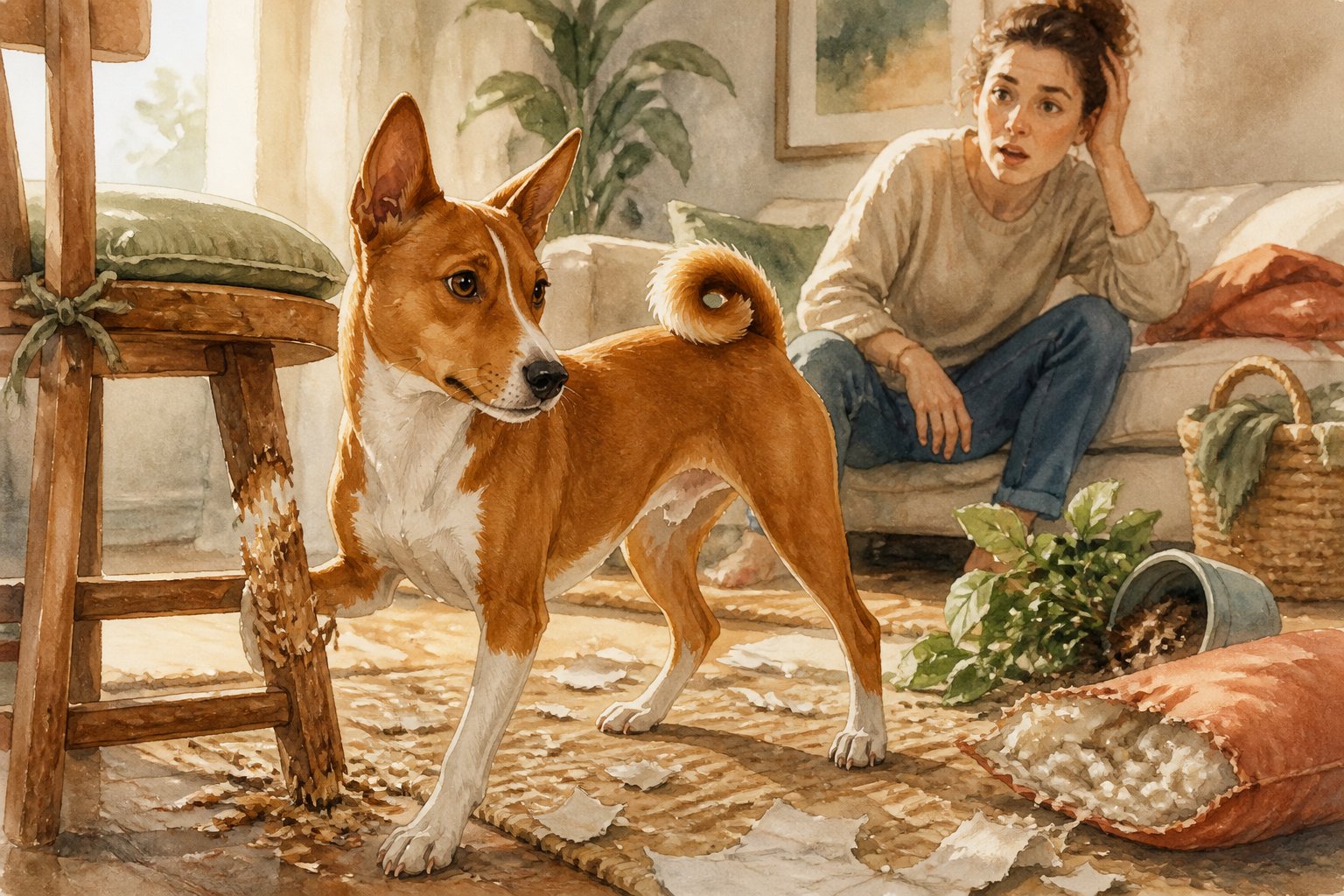
Chewing, digging, shredding paper, and opening cabinets rarely disappear without guidance. A bored Basenji may repeat these behaviors because they provide rewarding mental stimulation.
Start by limiting access to tempting items. Use gates, closed doors, secure bins, and a crate or pen when you cannot supervise.
Then offer legal outlets such as food puzzles, durable chew toys, scent games, and supervised shredding activities. When you catch your dog choosing an appropriate toy, reward that choice immediately.
Redirect calmly if your Basenji grabs furniture or clothing. Avoid chasing, since that can turn theft into an exciting game.
Daily exercise matters, yet physical activity alone may not solve the problem. Add short training games and rotating enrichment so your dog has reasons to use both body and brain.
2. Letting Leash Pulling Continue Because The Walk Is Moving
If pulling keeps moving your Basenji toward smells, squirrels, or interesting people, pulling becomes self-rewarding. Your dog learns that tension works.
Practice in a quiet area before expecting polite walking on a busy route. The instant the leash loosens, mark the behavior with praise and offer a small, high-value treat.
You can also change direction before your dog reaches the end of the leash. Keep walks manageable.
A few minutes of successful loose-leash practice can teach more than a long outing filled with pulling. Use a comfortable, well-fitted harness or collar, and never rely on equipment to replace training.
Allow sniff breaks as rewards. When your Basenji walks beside you, release with a cue such as “go sniff,” then let your dog explore safely.
3. Using Punishment Instead Of High-Value Rewards
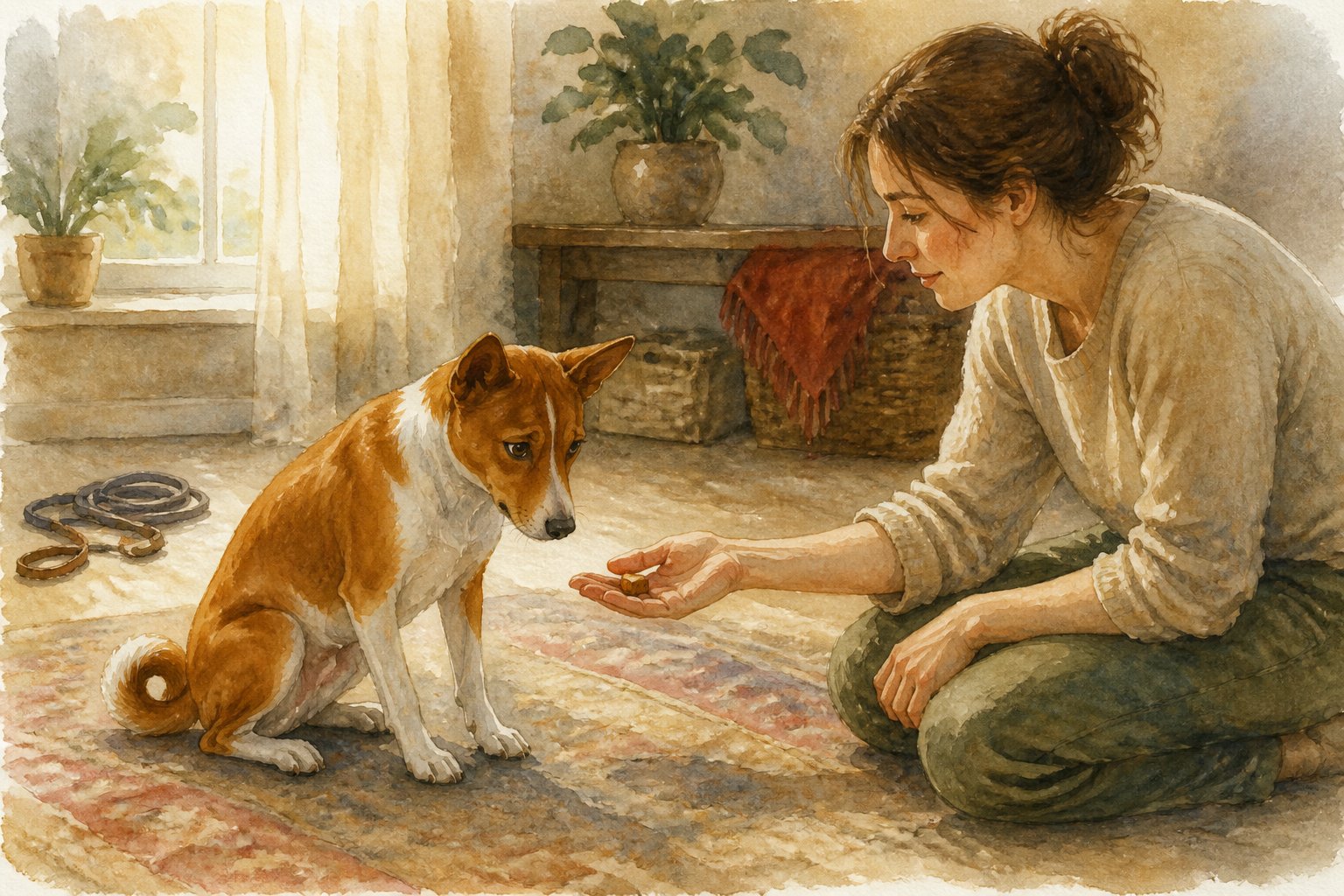
Harsh corrections may stop a behavior for a moment, yet they can create fear, avoidance, or resistance. Basenjis often disengage when training feels threatening or pointless.
Use rewards your dog truly values, such as tiny pieces of chicken, cheese, freeze-dried meat, or a favorite toy. Deliver the reward immediately after the desired action so the connection stays clear.
Teach an alternative instead of only saying “no.” Ask for a hand target, sit, eye contact, or a mat settle, then reward compliance.
If your Basenji ignores a cue, reduce distractions or make the reward more appealing rather than repeating the command louder. Keep your voice calm and your expectations consistent.
Reward-based training builds cooperation and gives your dog a clear reason to choose the behavior you want.
4. Skipping Early Socialization With Strangers, Dogs, And New Places
A Basenji that sees few people, dogs, surfaces, sounds, or vehicles may become wary later. Socialization does not mean forcing greetings.
It means creating safe, positive exposure at a pace your dog can handle. Let your puppy observe new experiences from a comfortable distance.
Pair each sight or sound with treats, then leave before your dog becomes tense. Watch for freezing, hiding, tucked posture, lip licking, or repeated barking.
Offer variety without overwhelming your dog. Visit quiet stores that allow dogs, walk near different surfaces, and invite calm visitors who can ignore your Basenji at first.
Arrange carefully managed dog interactions with suitable, steady dogs. Continue exposure throughout adolescence and adulthood.
If fear appears, increase distance and seek reward-based guidance rather than pushing your dog into contact.
5. Trusting An Off-Leash Basenji Around Squirrels Or Small Pets
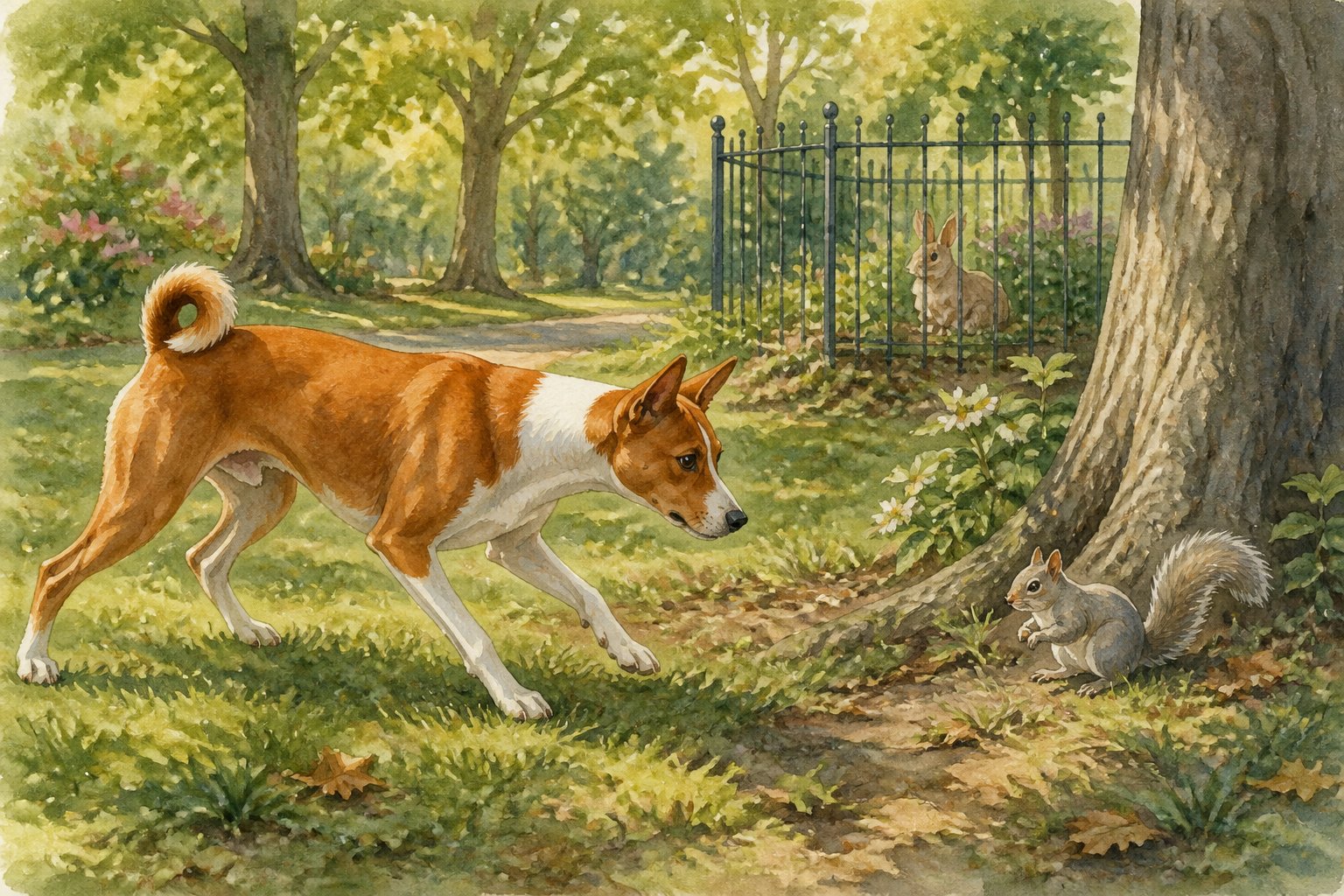
A strong prey drive can override recall when your Basenji spots a squirrel, rabbit, cat, or small pet. Even a dog that returns reliably at home may bolt in an exciting outdoor moment.
Use a secure leash or long line in unfenced areas. Practice recall in low-distraction settings, then slowly add distance and mild distractions.
Reward every return with something valuable, and occasionally release your dog back to sniff or play. Choose a fully enclosed area for off-leash running.
Check gates, gaps, and fence height because athletic, curious Basenjis can find escape routes quickly. Keep small pets separated with secure barriers and never assume friendship will remove hunting instincts.
A recall cue helps, yet management remains essential when the environment contains fast-moving animals.
6. Running Long, Repetitive Training Sessions
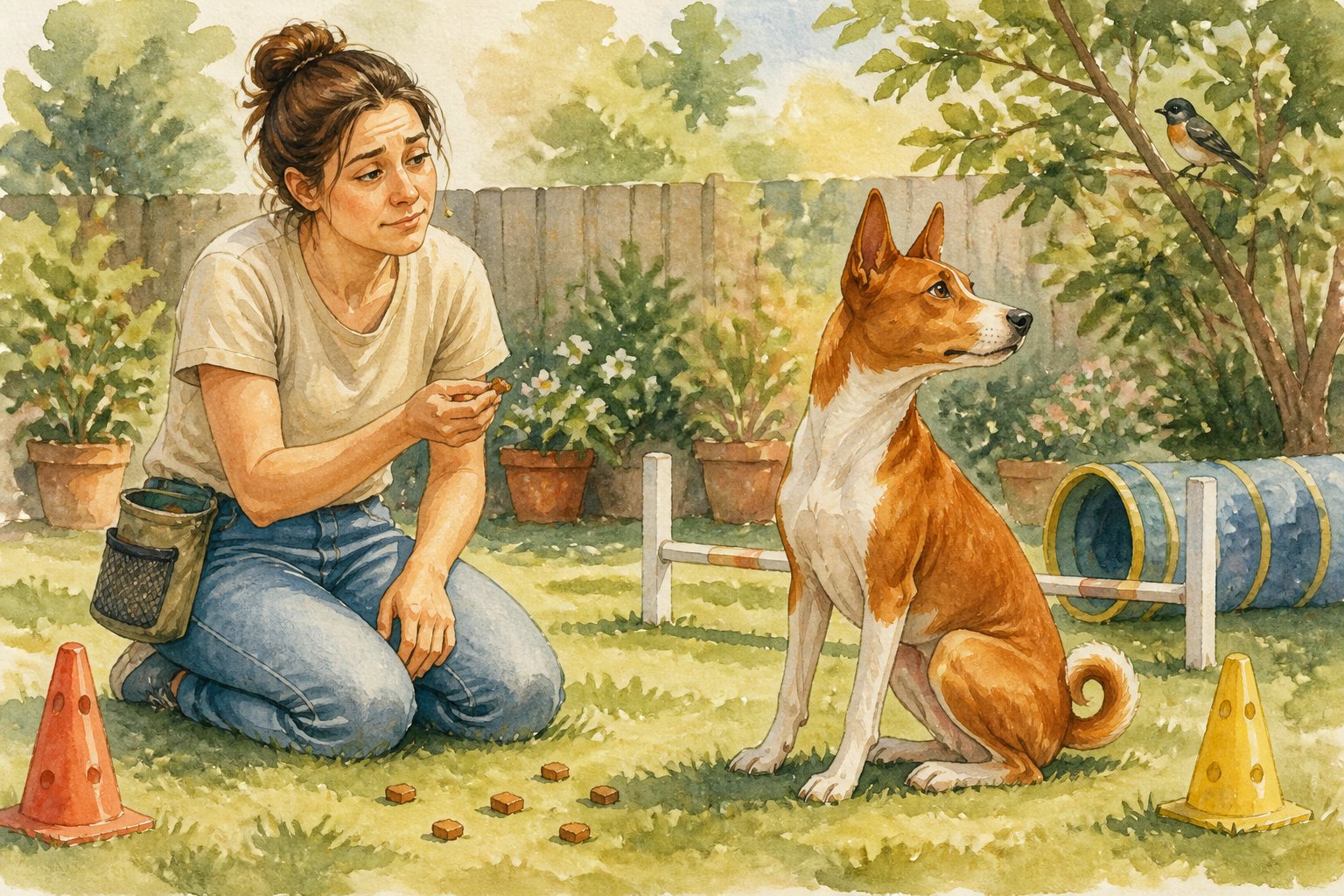
Long drills often lose your Basenji’s attention. Once your dog becomes bored or frustrated, mistakes increase and the session can end with both of you feeling stuck.
Train in bursts of two to five minutes. Stop while your dog still wants more, and repeat several brief sessions throughout the day.
Mix easy behaviors with new skills so success stays frequent. Use movement, play, scent work, and food searches to keep learning fresh.
For example, practice a recall, toss a treat for your dog to find, then finish with a simple hand target. If your Basenji starts sniffing aimlessly, turning away, or ignoring familiar rewards, lower the difficulty or take a break.
Short, successful practice usually produces better progress than endurance training.
7. Accidentally Rewarding Whining, Jumping, Or Demand Behavior
Giving attention while your Basenji whines, paws, jumps, or nudges can teach your dog to repeat those actions. Even eye contact or verbal scolding may feel rewarding when attention is the goal.
Decide what your dog should do instead. Ask for four paws on the floor, a sit, quiet eye contact, or a settle on a mat.
Reward that behavior quickly, then provide the requested walk, petting, toy, or meal. Everyone in your home must follow the same rule.
If one person responds to whining while another waits for calm, your Basenji may persist longer because the behavior sometimes pays. Meet legitimate needs before asking for patience.
Offer exercise, bathroom breaks, food, and companionship on a dependable schedule. For sudden or intense vocal behavior, consider pain, anxiety, or another health concern.
Building A Basenji-Proof Daily Routine
Exercise And Enrichment Needs
Give your Basenji daily physical activity plus mental work. Combine brisk walks, safe running, scent games, food puzzles, chew items, and brief training.
Rotate activities so familiar toys do not lose their appeal.
Management Before Training Is Reliable
Prevent rehearsal of unwanted behavior while skills develop. Use gates, locked bins, closed windows, secure fencing, a long line, and supervised access to small pets.
Management is not a failure, it protects your progress.
Setting Consistent Household Rules
Write down simple rules for jumping, furniture access, doorways, feeding, and greetings. Use the same cues and reward timing across your household.
A predictable routine helps your Basenji make better choices.
When To Get Professional Behavioral Help
Signs A Problem Needs Prompt Support
Seek help promptly for biting, repeated aggression, escape attempts, severe separation distress, panic, or sudden behavior changes. Contact a veterinarian for abrupt changes, house-soiling, pain signs, appetite changes, or unusual irritability.
Choosing A Reward-Based Trainer
Look for a qualified trainer or behavior professional who explains methods clearly and uses rewards, management, and gradual exposure. Avoid anyone who relies on intimidation, pain, or promises of instant results.
Ruling Out Health Causes
Behavior can change when a dog feels unwell. A veterinary exam can check for pain, sensory changes, endocrine problems, or other medical issues that affect mood and learning.
Share videos and a behavior log to help your veterinarian spot patterns.