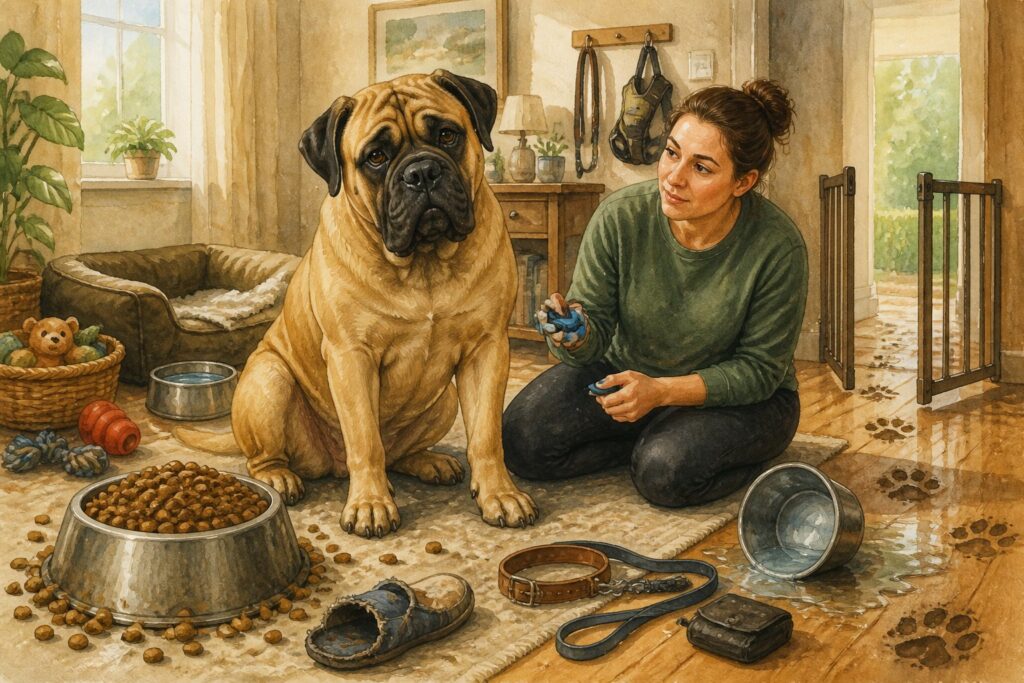
Bullmastiffs are loyal, powerful guardians that can become calm, dependable companions with the right structure. Their size, strength, and protective instincts also make small training mistakes harder to manage as they mature.
The best way to prevent the 8 common Bullmastiff owner mistakes is to start early and use consistent rules. Reward calm behavior and seek skilled help before unsafe habits become routine.
You can build better manners through short daily sessions, controlled exposure, safe handling, and mental enrichment.
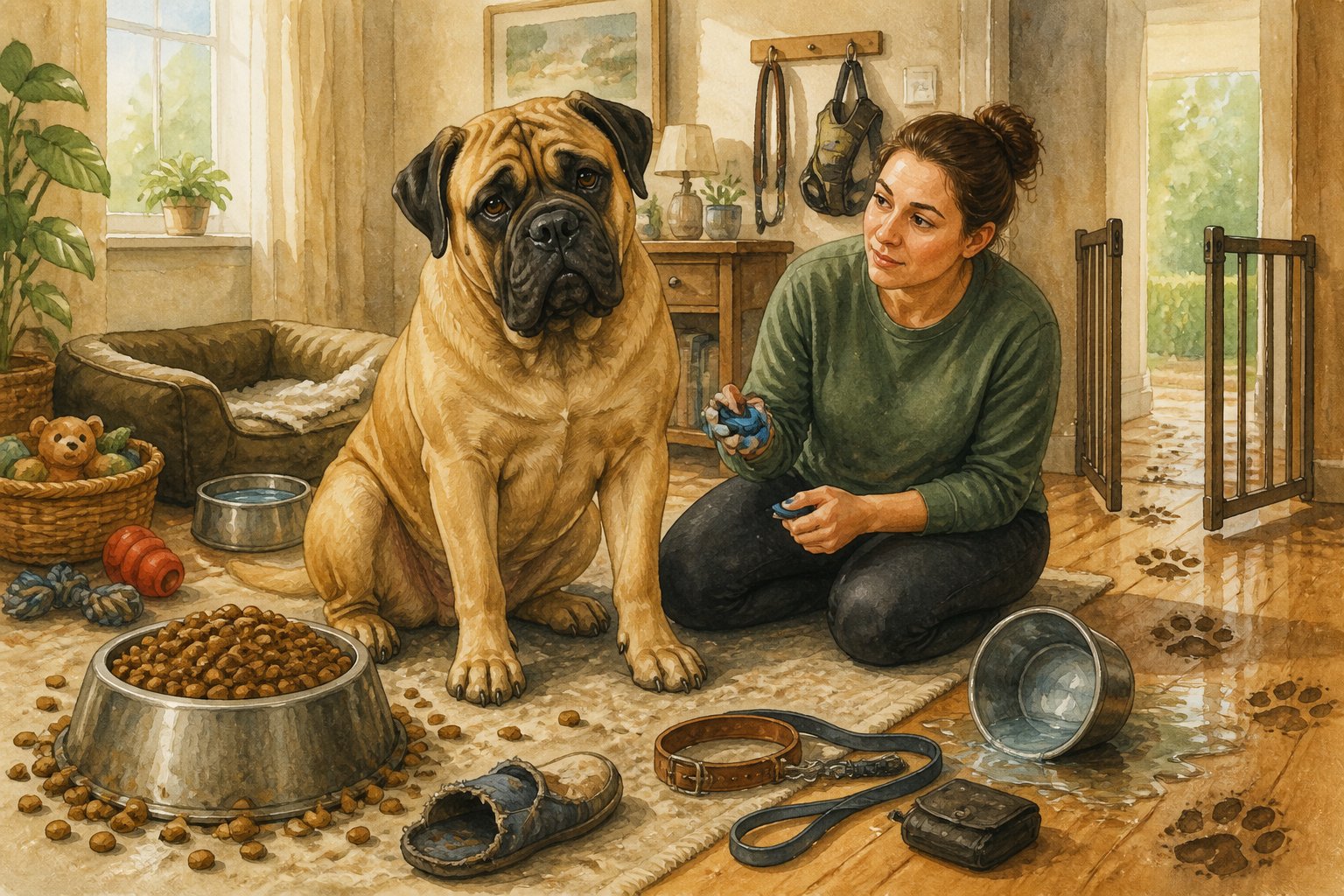
1. Skipping Early, Controlled Socialization
Socialization means teaching your Bullmastiff that new people, dogs, sounds, surfaces, and places can be safe. It does not mean forcing greetings or taking a young puppy into chaotic settings.
Start with brief, positive experiences. Let your puppy watch traffic from a safe distance or walk across different surfaces.
Expose your puppy to household noises, car rides, and calm, vaccinated dogs. Reward relaxed body language with treats and praise.
Watch for freezing, hiding, tucked posture, hard staring, or frantic pulling. Those signs mean you need more distance or a shorter session.
Controlled exposure repeated over time builds confidence without overwhelming your dog.
2. Letting Guarding Instincts Go Unmanaged
Bullmastiffs were developed to guard estates, so watching doors, yards, and family members can feel natural to your dog. Allowing barking, blocking, or intense staring to continue unchecked can turn normal alertness into a serious behavior problem.
Teach a clear “place” cue and reward your dog for moving away from the door. Ask visitors to ignore your Bullmastiff until the dog settles.
Use gates, leashes, and distance when needed, especially around children or unfamiliar guests. Do not encourage your dog to act threatening or punish warning signals harshly.
Calmly interrupt the behavior, create space, and teach a safer response. If your dog has lunged, snapped, or bitten, contact a qualified behavior professional promptly.
3. Allowing Pulling on a Standard Six-Foot Leash
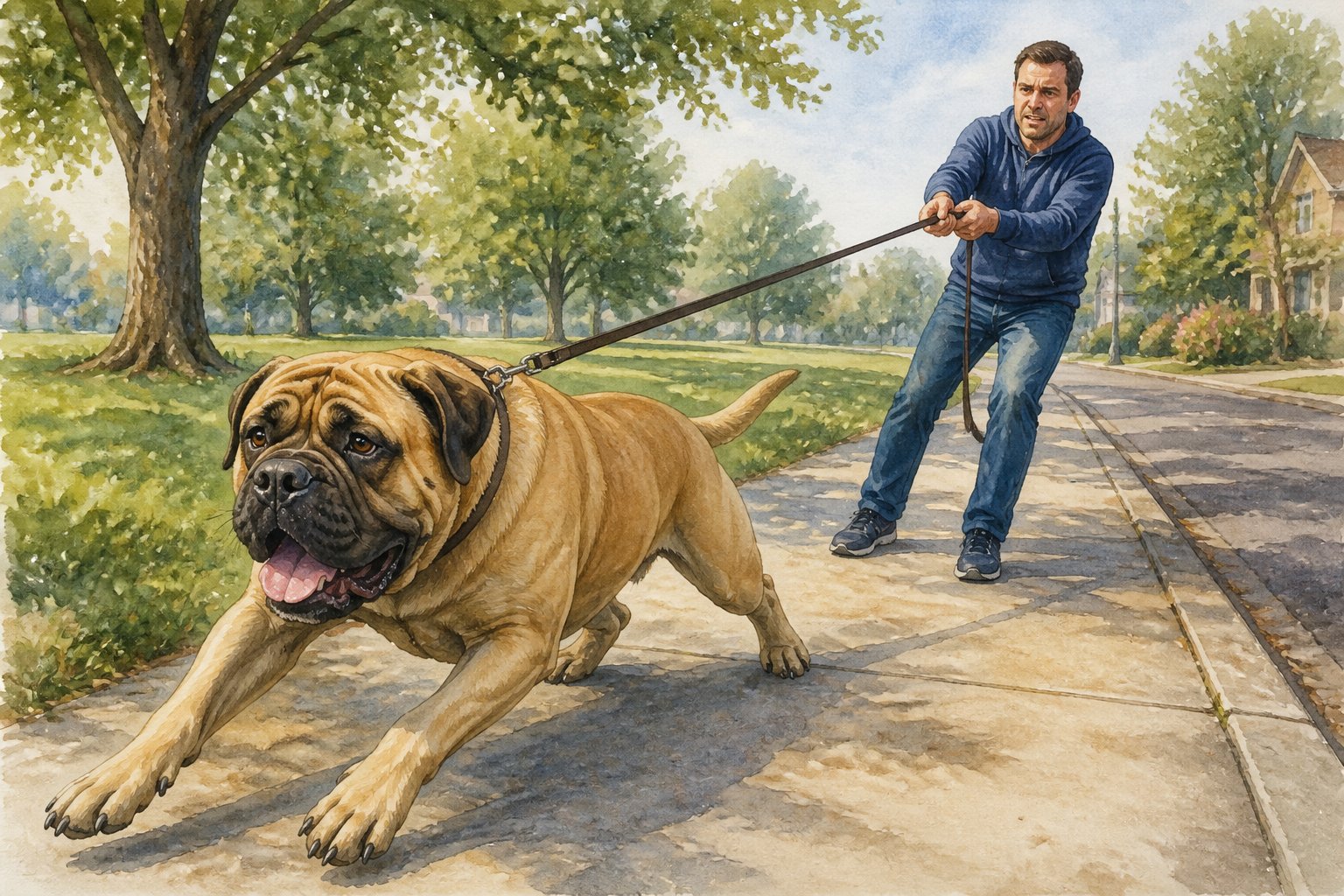
A Bullmastiff that pulls can move you before you can react. Waiting until your dog reaches adult size makes leash training harder and increases risks near traffic, children, cyclists, and other dogs.
Begin indoors or in a quiet area. Reward your dog whenever the leash stays slack and your dog chooses to check in with you.
If pulling starts, stop or calmly change direction instead of allowing forward progress to reward the behavior. Use properly fitted equipment that gives you control without causing pain.
A front-clip harness may help during training, though you should still teach loose-leash walking. Practice short sessions frequently and increase distractions gradually.
4. Using Inconsistent Household Rules
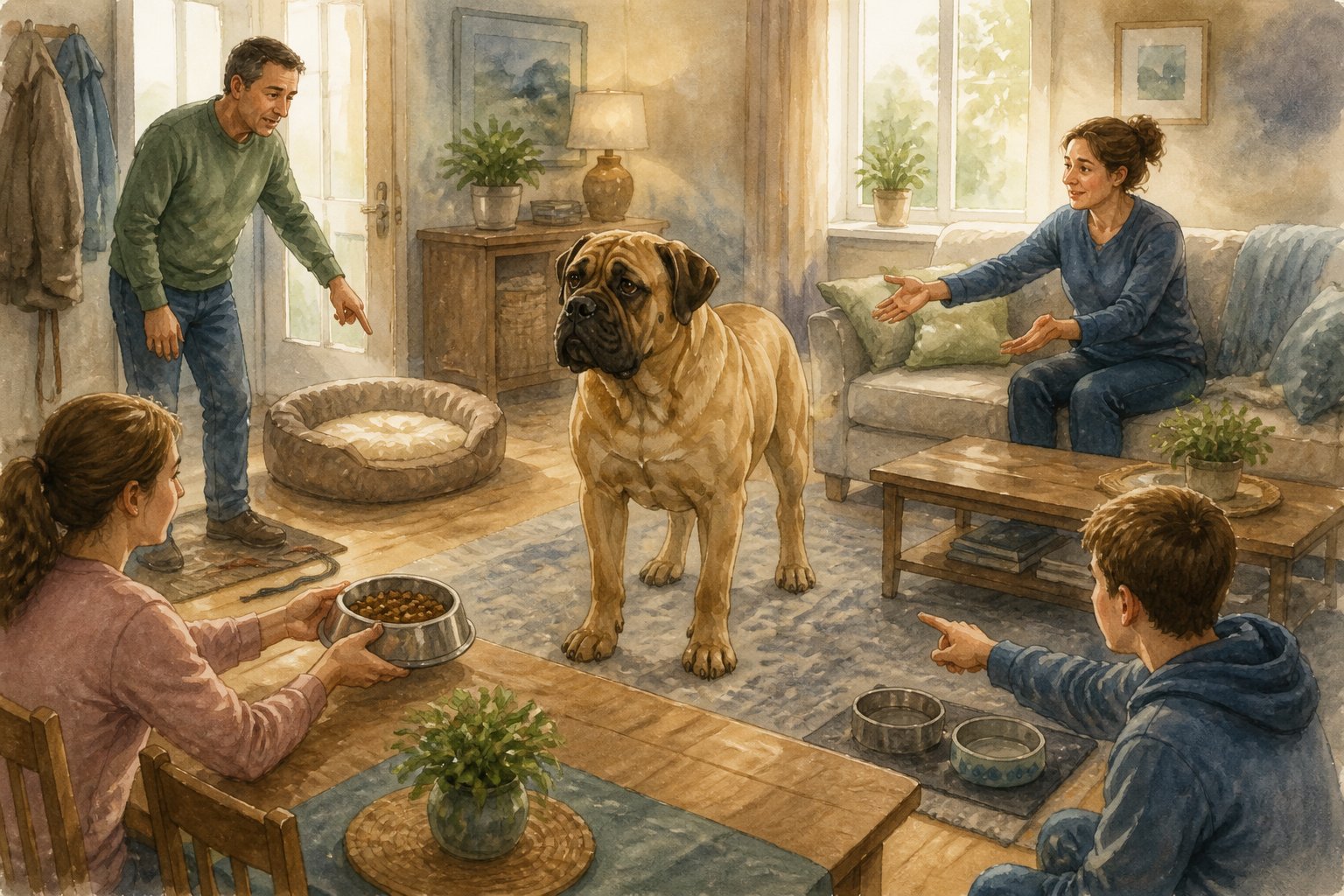
Bullmastiffs notice patterns quickly. If you allow couch access on some days, permit jumping on certain guests, or use different words for the same behavior, your dog receives confusing feedback.
Create a simple family plan. Decide whether your dog may use furniture, where meals happen, how guests should enter, and which cues everyone will use.
“Off,” “place,” and “leave it” should have the same meaning for every person. Reward the behavior you want before correcting mistakes.
Consistency helps your Bullmastiff predict what earns access, attention, food, or play. Predictable rules often reduce testing, excitement, and conflict at home.
5. Waiting Too Long to Address Resource Guarding
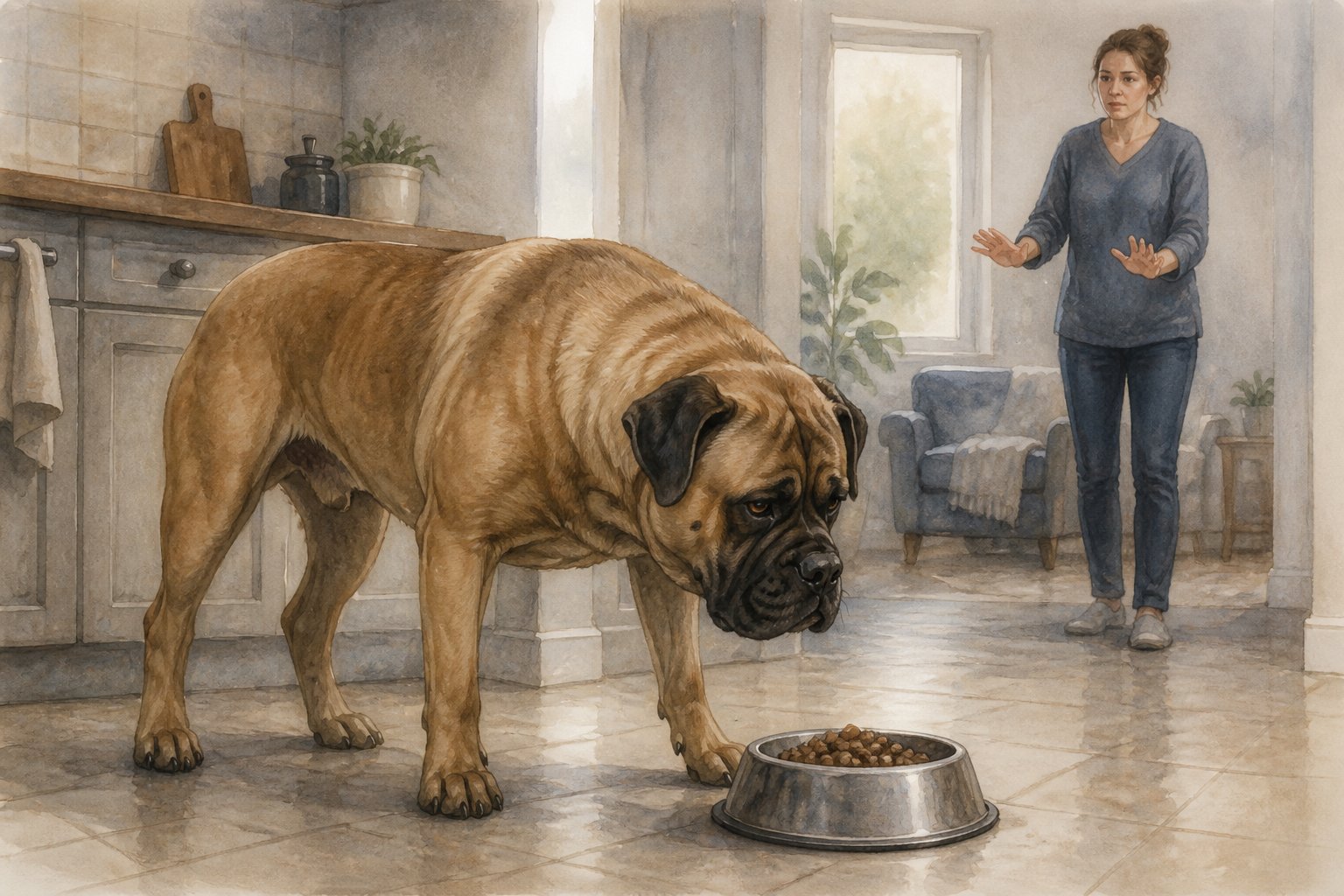
Resource guarding may involve food, toys, beds, stolen objects, or a favorite person. Early signs include freezing, eating faster, turning away, showing the whites of the eyes, growling, or snapping when someone approaches.
Do not grab the bowl, tease your dog, or repeatedly test the behavior. Those actions can increase fear and make guarding stronger.
Give your dog privacy during meals and keep children away from food and high-value items. For mild signs, a qualified professional can guide safe counterconditioning, such as adding something valuable from a distance.
If your dog has snapped or bitten, avoid home experiments and seek behavior support. Management prevents rehearsal while training changes the emotional response.
6. Mistaking Stubbornness for a Lack of Training Ability
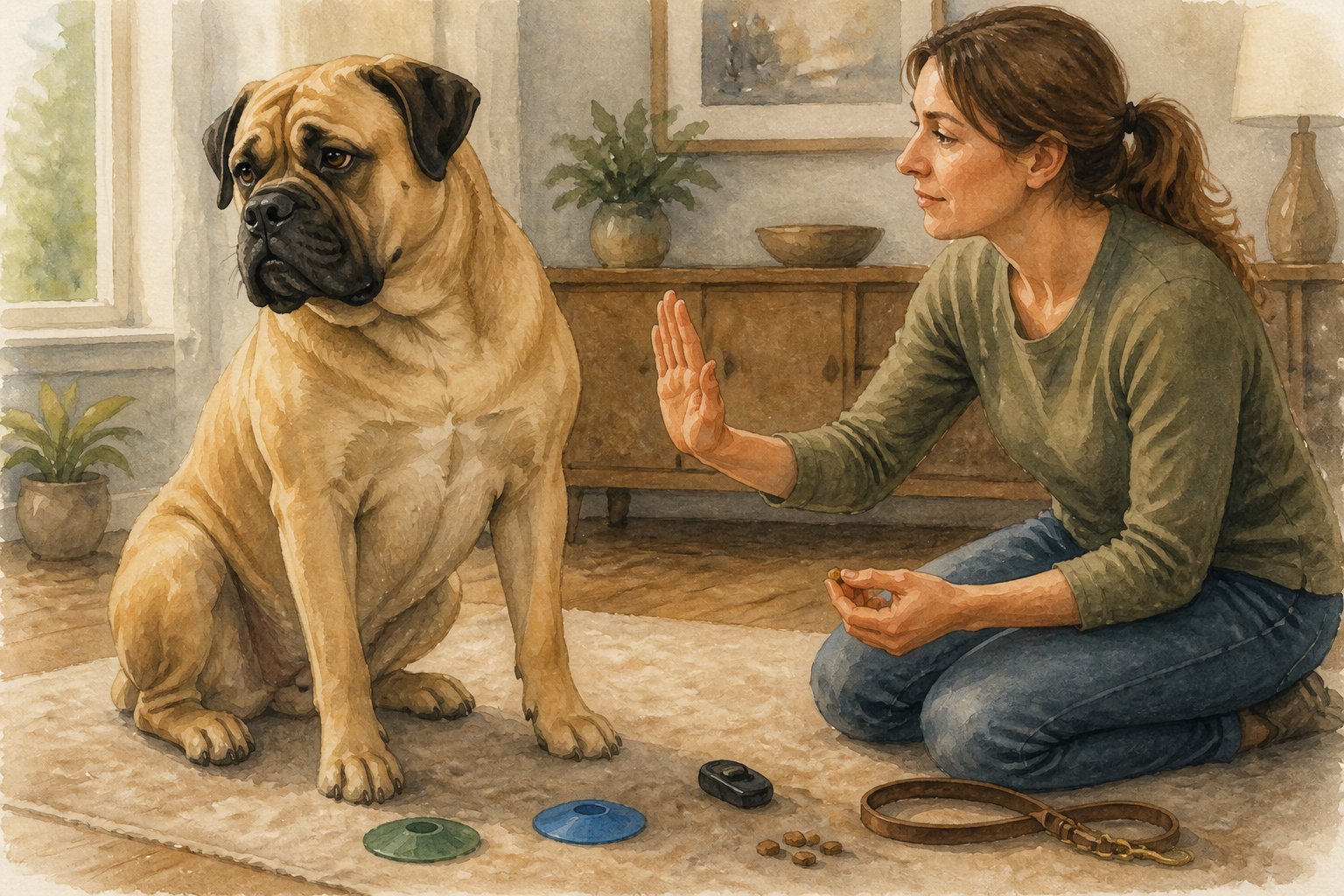
Bullmastiffs can seem stubborn when they are tired, distracted, uncomfortable, or unconvinced that a behavior is worthwhile. Repeating a command louder rarely improves cooperation and may make training feel tense.
Keep sessions short, often three to five minutes. Use valuable rewards, clear cues, and a calm tone.
Teach one small step at a time, then practice in different rooms, yards, and quiet outdoor areas. Your timing matters.
Mark the instant your dog makes the correct choice, then reward it. If your Bullmastiff stops responding, lower the distraction level or end the session with an easy success.
Patience and clear reinforcement usually produce better results than repeated corrections.
7. Underestimating Separation Anxiety and Alone-Time Training
Bullmastiffs often form close bonds with their families. Without gradual alone-time practice, your dog may panic when you leave, leading to barking, destruction, pacing, drooling, or escape attempts.
Start with departures that remain below your dog’s stress limit. Step out briefly, return calmly, and increase the time in small increments.
Practice independence while you are home by rewarding your dog for relaxing on a bed behind a gate. Watch departure cues such as keys, shoes, bags, or opening the garage door.
Pair these signals with calm activities without leaving every time. A crate can help some dogs, though it should never be used as forced confinement during panic.
Severe separation anxiety needs a behavior plan from a veterinarian and qualified behavior professional. Medication may be appropriate alongside gradual desensitization.
8. Relying on Exercise Alone Instead of Mental Enrichment
A long walk may tire your Bullmastiff briefly, yet physical exercise alone does not teach self-control or provide enough mental work. Excessive impact exercise can also strain growing joints, especially in puppies.
Add structured activities such as scent searches, food puzzles, shaping games, obedience practice, and supervised chewing. Ask for a sit before meals, a wait at doors, or a calm check-in during walks.
Choose low-impact movement suited to your dog’s age, health, and body condition. Several short activities often work better than one exhausting outing.
Mental enrichment should challenge your dog without creating frustration or frantic arousal. If your Bullmastiff remains restless, look at sleep, routine, pain, diet, and stress as well as exercise.
A veterinary check can help rule out health issues that affect behavior.
When to Seek Help From a Qualified Behavior Professional
Warning Signs That Need Prompt Support
Seek help if your Bullmastiff has bitten, snapped, lunged, guarded people or objects, escaped confinement, or shown escalating fear. Prompt support is also wise when you cannot safely walk, handle, groom, or separate your dog.
Do not wait for a serious incident to prove that help is necessary. Management tools such as barriers, leashes, and basket muzzle training can reduce risk while a plan develops.
Questions to Ask a Trainer or Behaviorist
Ask about credentials and experience with giant breeds. Inquire about methods for aggression or anxiety and how you will participate in training.
Request clear safety steps, progress measures, and realistic time frames. A good professional explains behavior in plain language and observes your dog before prescribing a plan.
You should feel comfortable asking what happens if your dog becomes stressed or stops responding.
Why Force-Free, Individualized Plans Matter
Reward-based behavior modification teaches your dog what to do while protecting trust and emotional safety. Punishment, intimidation, or harsh equipment can suppress warning signals without changing fear, guarding, or anxiety.
Your Bullmastiff needs a plan based on age, health, temperament, learning history, triggers, and home setting. Individual coaching also helps you use timing, distance, rewards, and management correctly.
Building a Practical Bullmastiff Training Routine
Setting Non-Negotiable Household Boundaries
Choose a few rules that protect safety and daily harmony. Examples include four paws on the floor, waiting at doors, leaving food alone, resting on a designated mat, and walking without pulling.
Write the rules down and teach the replacement behavior. Every household member should use the same cues and reward the same choices.
Tracking Triggers, Progress, and Setbacks
Keep brief notes about what happened before a behavior, what your dog did, the distance from the trigger, and what helped. This record can reveal patterns involving visitors, food, fatigue, weather, or crowded places.
Measure progress by calmer recovery, improved focus, and safer choices, not just perfect obedience. Setbacks are useful information, so reduce difficulty and rebuild success instead of forcing another attempt.
Keeping Training Realistic for a Giant Breed
Plan for your dog’s strength, heat tolerance, joint health, and slow physical maturity.
Use secure equipment, shaded training areas, short sessions, and low-impact enrichment.
Practice skills in the places where you need them, including hallways, entryways, sidewalks, yards, and around visitors.
A practical routine can include two short training sessions, a sniffing walk, enrichment, and scheduled rest.