A Brussels Griffon can stay active and comfortable for 12 to 15 years. Small mistakes can place extra strain on its breathing, eyes, joints, teeth, and nervous system.
The breed’s short muzzle, large eyes, compact frame, and crowded mouth call for thoughtful daily care.
The safest approach is to treat unusual breathing, eye changes, pain, limping, and sudden behavior changes as health signals rather than quirks. The following owner slip-ups are common, preventable, and worth correcting early.
1. Treating Loud Breathing As Normal for a Flat-Faced Dog
Brussels Griffons are brachycephalic, so snoring and noisy breathing can occur. That does not make difficult breathing harmless.
Loud breathing while resting, repeated gagging, coughing after mild activity, heavy panting in cool conditions, or blue-tinged gums can signal obstructed airways.
Watch your Griff closely during sleep, walks, and excitement. Record unusual sounds for your veterinarian, and ask whether a breathing assessment is needed.
Some dogs benefit from treatment or airway surgery. Never force exercise when your dog is struggling to breathe.
Keep the dog lean, avoid smoke and poor ventilation, and seek emergency care for collapse, severe distress, or blue gums.
2. Walking a Brussels Griffon in Hot or Humid Weather

Heat and humidity make breathing harder for a short-nosed dog. A walk that seems mild to you can become exhausting for a Brussels Griffon, especially on sunny pavement or during high humidity.
Schedule outdoor time near sunrise or sunset. Choose shaded routes, carry water and a collapsible bowl, and test pavement with your hand before walking.
Short sniff walks, indoor play, and training games can replace long outings during heat waves. Stop immediately if your dog pants intensely, slows down, drools heavily, acts weak, vomits, becomes confused, or collapses.
Move the dog to a cool area and contact an emergency veterinarian. Do not rely on a fan alone or use ice water without professional guidance.
3. Using a Neck Collar Instead of a Well-Fitted Harness
A neck collar can press on the throat when your Griff pulls, coughs, or suddenly reaches the end of the leash. That pressure may worsen airway irritation and make walks less comfortable.
A properly fitted harness spreads force across the chest. Look for a lightweight design that leaves room behind the elbows, does not rub the armpits, and allows normal shoulder movement.
You should be able to slide two fingers beneath the straps without the harness shifting loosely. Introduce the harness indoors with treats, then practice short sessions.
Use a standard leash and reward a loose-leash pace. Avoid leash corrections, retractable leashes near traffic, and any equipment that causes coughing or choking.
4. Ignoring a Squinting, Red, or Watery Eye
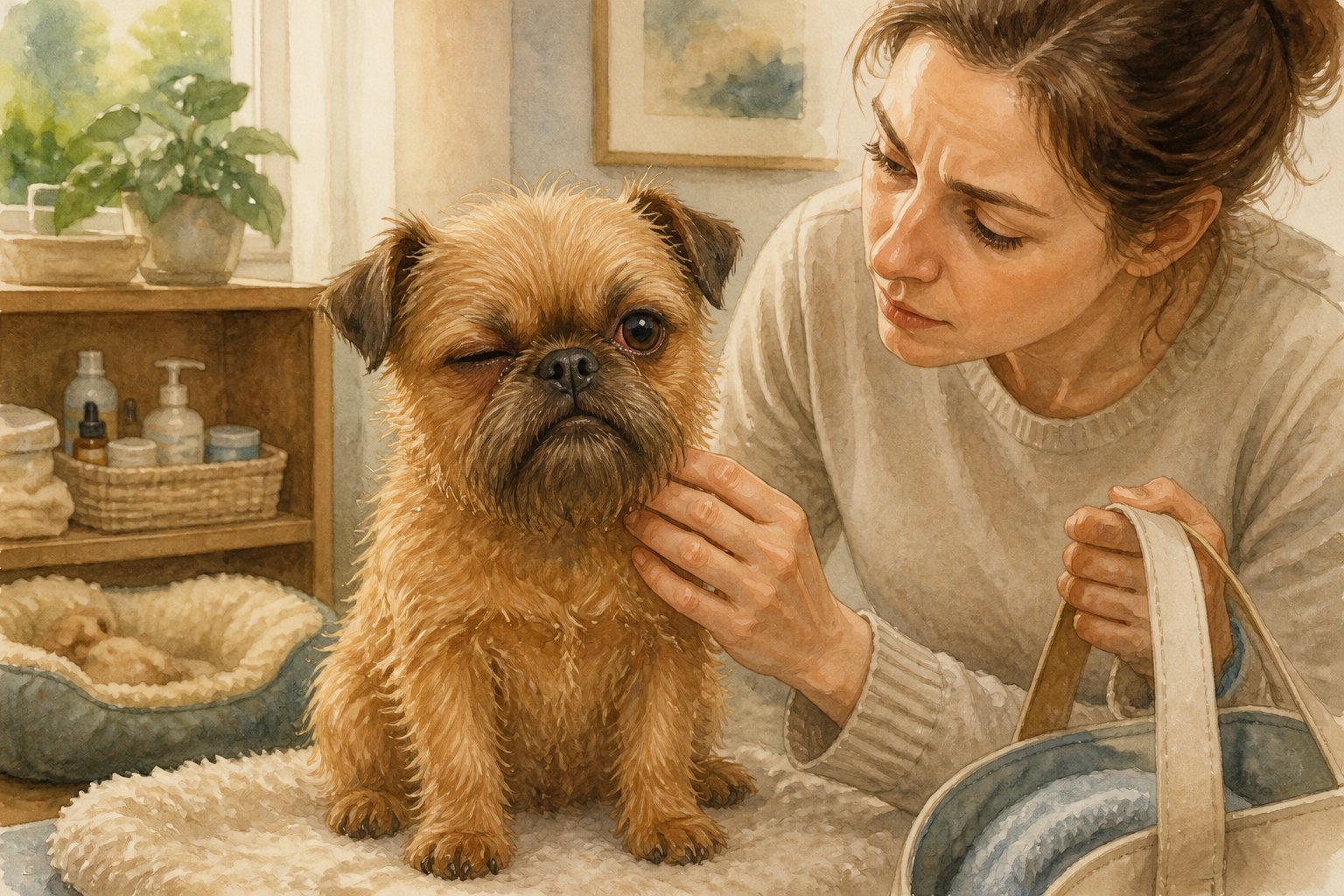
Brussels Griffon eyes sit prominently on the face, which increases the risk of scratches, surface injuries, dryness, and other eye disorders. Squinting is often a sign of pain, not a minor irritation.
Contact your veterinarian promptly for redness, cloudiness, discharge, pawing, swelling, unequal pupils, or sudden vision changes. Same-day care is especially important after contact with a branch, thorn, rough play, or chemical.
Do not use human eye drops or leftover medication. Keep your dog away from thorny brush, trim hair that touches the eye when advised, and arrange routine eye checks.
Genetic screening for progressive retinal atrophy can also help when choosing a puppy.
5. Letting Jumping Off Sofas Strain the Kneecaps
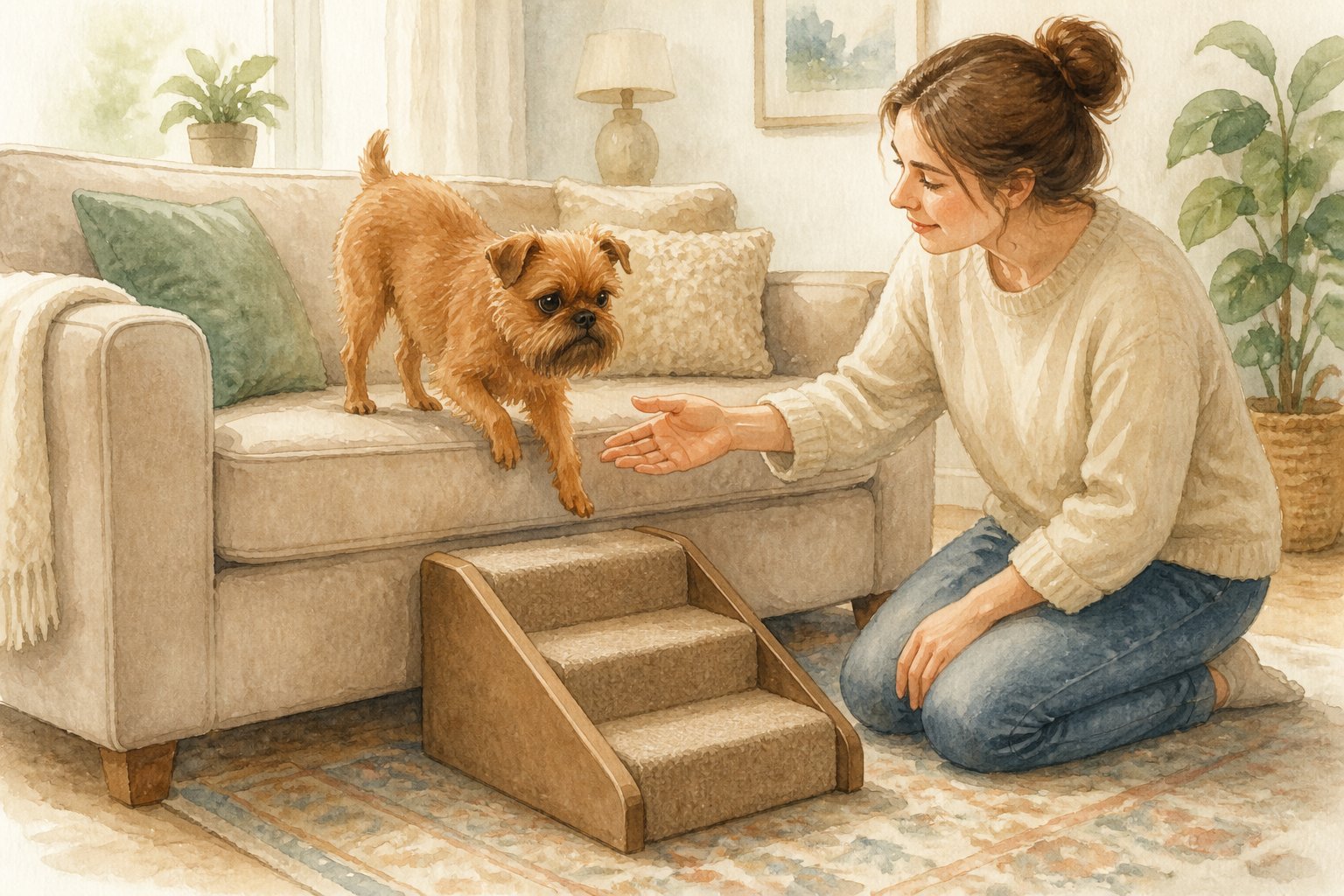
Repeated jumps from sofas, beds, and stairs can stress a Brussels Griffon’s small joints. Patellar luxation, or a slipping kneecap, may appear as a skipped step, brief limp, or bunny-hop gait.
Hip problems and back pain can also limit movement. Place a ramp or pet steps beside favorite furniture, and use rugs on slippery floors.
Lift your dog with one hand supporting the chest and the other supporting the hindquarters. Keep play controlled rather than allowing sharp turns on slick surfaces.
Schedule an examination for persistent limping, swelling, reluctance to climb, or a sudden change in gait. Keeping your Griff lean reduces pressure on vulnerable knees and hips.
6. Waiting for Bad Breath Before Starting Dental Care

Bad breath often means dental disease is already present. Brussels Griffons have crowded mouths, so plaque and food can collect around teeth quickly.
Gum redness, brown tartar, drooling, chewing on one side, or dropping food also deserve attention. Brush your dog’s teeth daily with pet-safe toothpaste and a small brush.
Begin with brief sessions, touching the lips first and rewarding calm behavior. Never use human toothpaste, which may contain unsafe ingredients.
Ask your veterinarian to examine the mouth during routine visits and recommend professional cleaning when needed. Dental chews and water additives can support brushing, but they do not replace it.
Painful teeth may affect appetite, sleep, and behavior long before your dog stops eating.
7. Allowing Small Weight Gains to Become a Health Burden
Extra weight is hard on a small dog. Even modest gains can worsen breathing problems, patellar luxation, heart strain, heat intolerance, and back pain.
Measure each meal instead of filling the bowl by guesswork. Count treats as part of daily calories, and use tiny training rewards.
Your veterinarian can assess body condition by checking the ribs, waist, and abdominal tuck, since scale numbers alone do not tell the full story. Choose regular, gentle exercise that matches your dog’s breathing and joint comfort.
Weigh your Griff monthly and adjust portions gradually if the waist disappears or the ribs become difficult to feel. A lean body supports easier movement and safer activity.
8. Dismissing Neck Scratching or Pain as a Behavioral Quirk
Repeated scratching at the air near the neck, sudden yelping, sensitivity when lifted, weakness, wobbliness, or a new irritable mood can signal pain. Chiari-like malformation and syringomyelia are neurologic conditions associated with pressure around the skull and spinal cord.
Do not punish phantom scratching or assume your dog is being dramatic. Note when the behavior happens, whether touch triggers it, and whether walking or balance has changed.
A veterinarian may recommend an exam, pain control, or referral to a veterinary neurologist. Lift your Griff gently, supporting the chest and hindquarters, and avoid tight collars.
Seek urgent care for severe pain, collapse, seizures, sudden weakness, or trouble walking.
When to Contact a Veterinarian
Prompt veterinary advice can prevent a minor problem from becoming a crisis. Call your regular veterinarian for new symptoms, persistent changes, or anything that does not improve quickly.
Breathing Distress and Heatstroke Red Flags
Seek emergency care for blue, gray, or very pale gums; struggling to breathe; collapse; confusion; repeated vomiting; or severe panting that does not ease in a cool, quiet space. Do not make your dog walk to the car.
Eye Injuries That Need Same-Day Care
A closed or squinting eye, visible damage, sudden cloudiness, bleeding, unequal pupils, chemical exposure, or a protruding eye requires same-day evaluation. Prevent rubbing with an appropriate protective collar if available.
Lameness, Pain, and Neurological Warning Signs
Contact a veterinarian for sudden lameness, repeated bunny hopping, neck pain, phantom scratching, weakness, wobbling, seizures, or a major behavior change. Emergency care is appropriate when symptoms appear suddenly, worsen fast, or prevent standing.
Preventive Care Checklist for Brussels Griffons
Small, consistent habits help you catch health problems before they interfere with daily life. Keep a simple record of weight, breathing changes, dental care, eye symptoms, and veterinary visits.
Routine Veterinary and Dental Visits
Schedule at least annual physical examinations, with more frequent visits for senior dogs or dogs with heart, airway, joint, eye, or neurologic concerns. Keep vaccinations, parasite prevention, heartworm testing, and dental evaluations current.
Ask whether your Griff needs eye, cardiac, orthopedic, or airway screening. Daily tooth brushing and professional dental care should be part of the plan.
Weight, Exercise, and Home-Safety Habits
Measure food, limit treats, and maintain a lean body condition. Use a harness, provide gentle exercise during cool weather, and add ramps, rugs, and secure barriers around stairs and furniture.
Check eyes, gums, paws, and gait during normal handling. Keep toxic foods, medications, chemicals, and small chewable objects out of reach.
Questions to Ask a Breeder or Rescue
Ask about health records, breathing history, eye examinations, patellar evaluations, heart checks, and known neurologic problems.
For puppies, ask whether parents received relevant genetic testing, including testing associated with progressive retinal atrophy.
Request details about diet, previous dental care, medications, behavior changes, and any episodes of limping or breathing trouble.