A Brittany can be an affectionate, brilliant companion. Its hunting background creates needs that surprise many first-time owners.
High energy, quick learning, sensitivity, and strong bird interest can turn small training gaps into daily struggles.
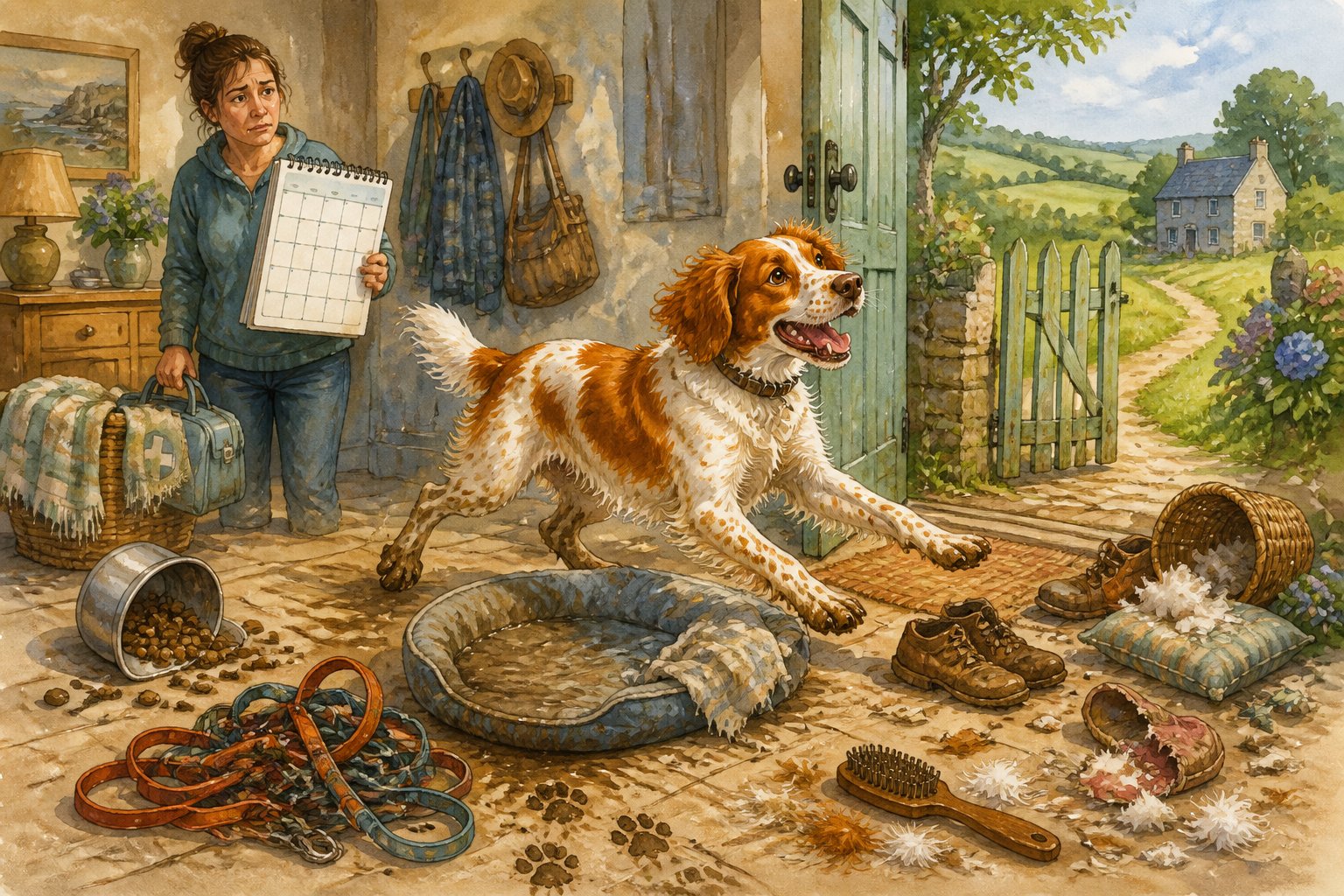
You can prevent most Brittany owner pitfalls by meeting your dog’s exercise needs, rewarding calm behavior, training with patience, and treating safety and health checks as routine care. The goal is not to suppress your Brittany’s instincts.
You need to give those instincts safe, useful outlets while building reliable habits.
1. Underestimating A Brittany’s Daily Exercise And Enrichment Needs
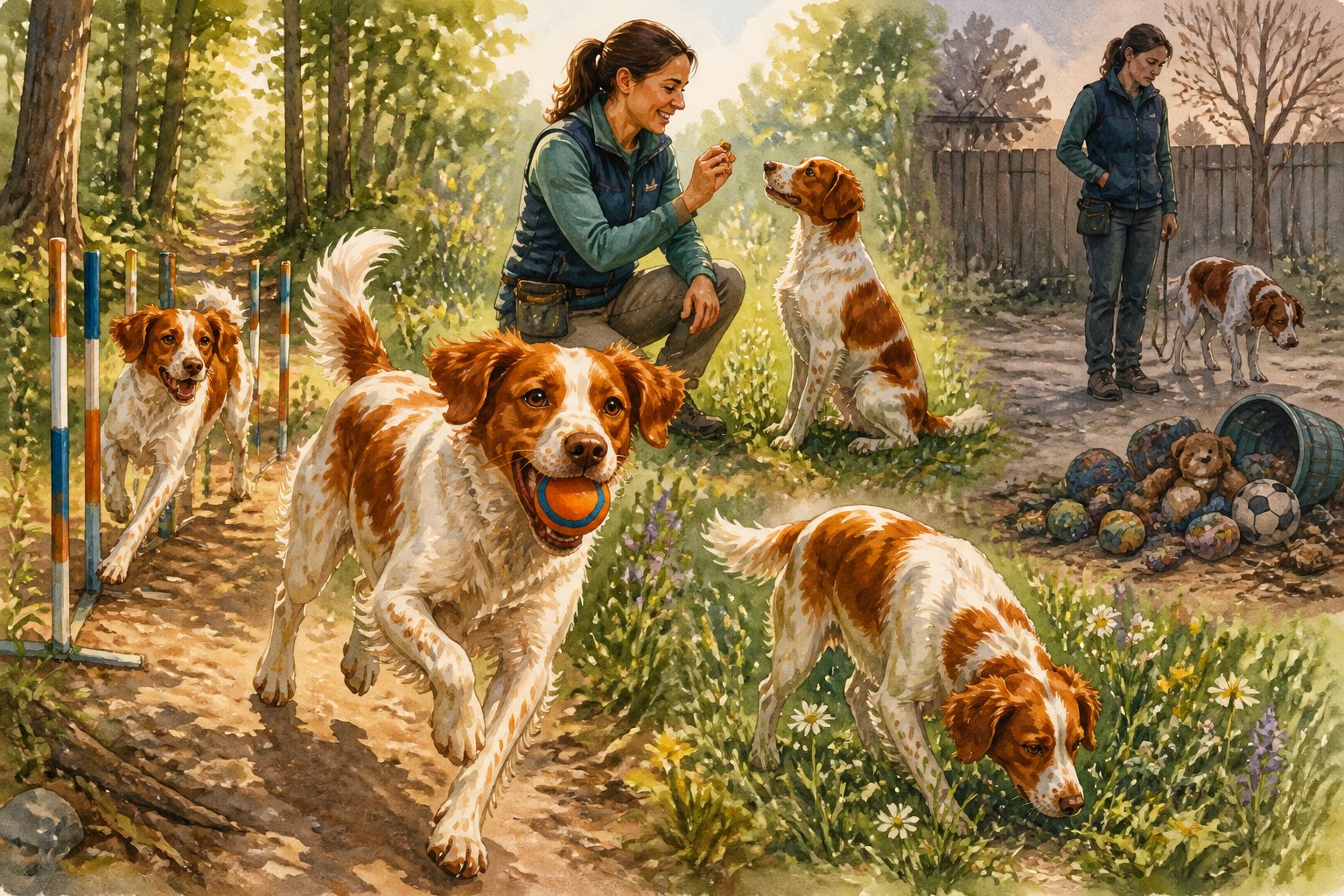
A Brittany usually needs more than a short walk around the block. This athletic bird dog was developed to search, move, and work closely with a person.
Without enough activity, you may see pacing, barking, chewing, digging, or frantic indoor behavior. Plan for daily aerobic exercise suited to your dog’s age and health, such as brisk walking, hiking, jogging, swimming, or supervised retrieving.
Add mental work through scent games, food puzzles, short obedience sessions, and safe agility exercises. You do not need to exhaust your dog every hour.
You do need a repeatable routine that combines movement, problem-solving, and rest. Puppies and young dogs need gradual conditioning, while senior Brittanys may benefit from shorter, lower-impact activities.
2. Waiting For Adolescent Pulling, Barking, Or Chewing To “Pass”
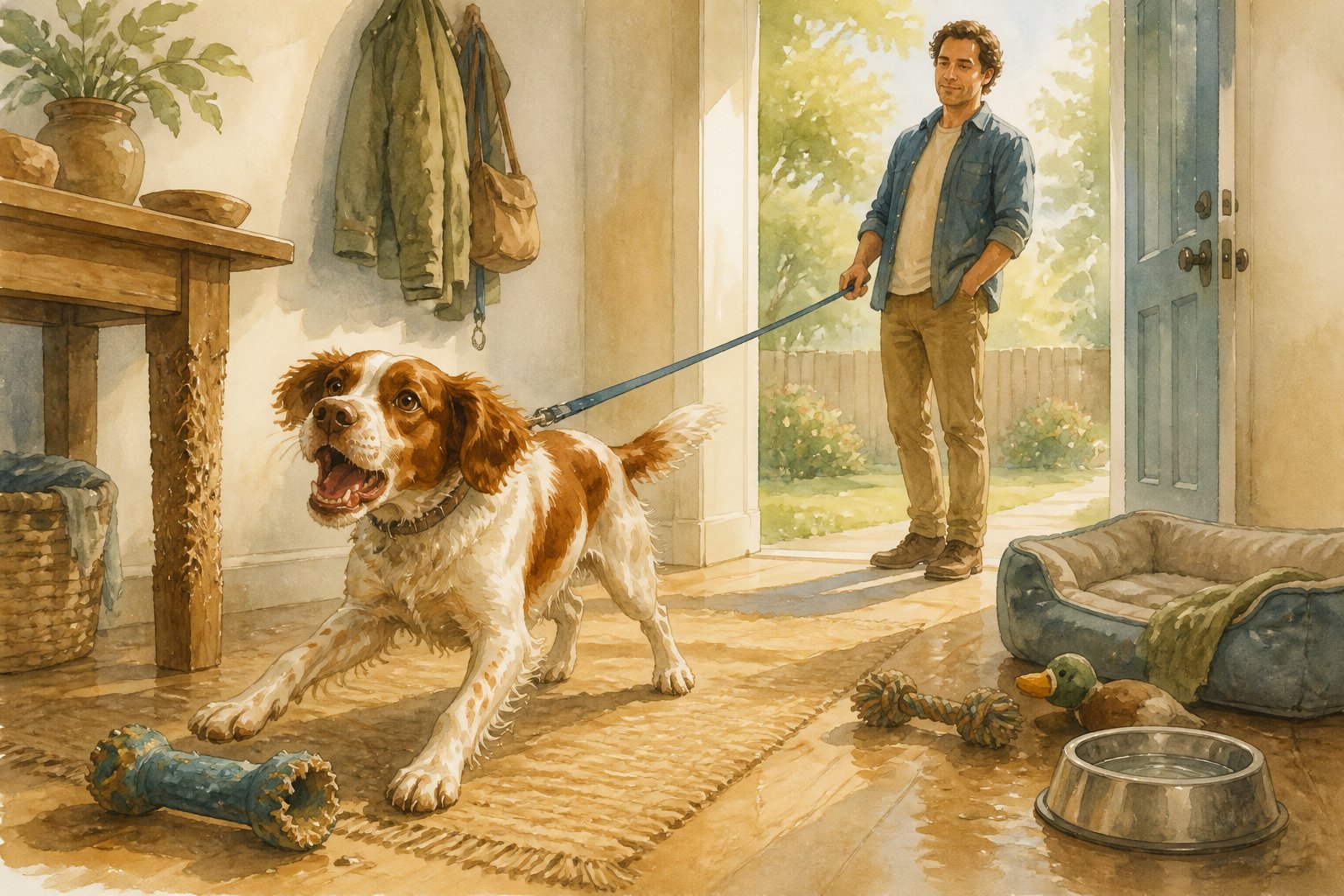
Adolescence can bring stronger impulses, selective listening, leash pulling, barking, and destructive chewing. Waiting for these habits to disappear gives your Brittany daily practice at repeating them.
Behaviors that work for your dog often become more reliable with time. Start early with management and short training sessions.
Use gates, a crate, safe chew items, and a long line to limit rehearsals of unwanted behavior. Reward calm choices before your dog becomes overexcited.
If pulling starts, stop forward movement and wait for a loose leash. If chewing appears, calmly trade the forbidden item for an approved chew.
You need steady repetition, not harshness or constant correction. A qualified trainer can help you adjust the plan when progress stalls.
3. Accidentally Rewarding Jumping, Whining, And Leash Pulling
Your Brittany may learn from consequences you never intended to provide. Touching a jumping dog, opening the door while it whines, or continuing forward while it pulls can make those behaviors more persistent.
Choose the response you want to repeat. For jumping, turn away and reward four paws on the floor.
For whining, wait for a brief quiet moment before giving attention, while checking first for pain, fear, or a real need. During walks, pause when the leash tightens and resume movement when it loosens.
Everyone in your household must follow the same rules. Mixed responses create confusion and make training slower.
Reward calm behavior quickly, using treats, praise, play, or access to something your Brittany wants.
4. Using Harsh Corrections With A Sensitive Brittany
A Brittany’s enthusiasm can make you feel pressured to use stronger corrections. Leash jerks, yelling, intimidation, and shock-based methods may stop a behavior briefly, yet they can increase fear, avoidance, defensive reactions, or loss of trust.
Use clear cues, reward-based training, and management instead. Mark the behavior you want, then reinforce it immediately.
If your dog is barking at a trigger, create more distance, redirect attention, and reward calm observation before the reaction grows. Sensitive does not mean incapable of learning boundaries.
It means your timing and communication matter. When a behavior feels difficult, lower the distraction level and teach a smaller step.
A force-free trainer can help you build control without damaging your relationship.
5. Allowing Off-Leash Freedom Before Recall Is Proofed
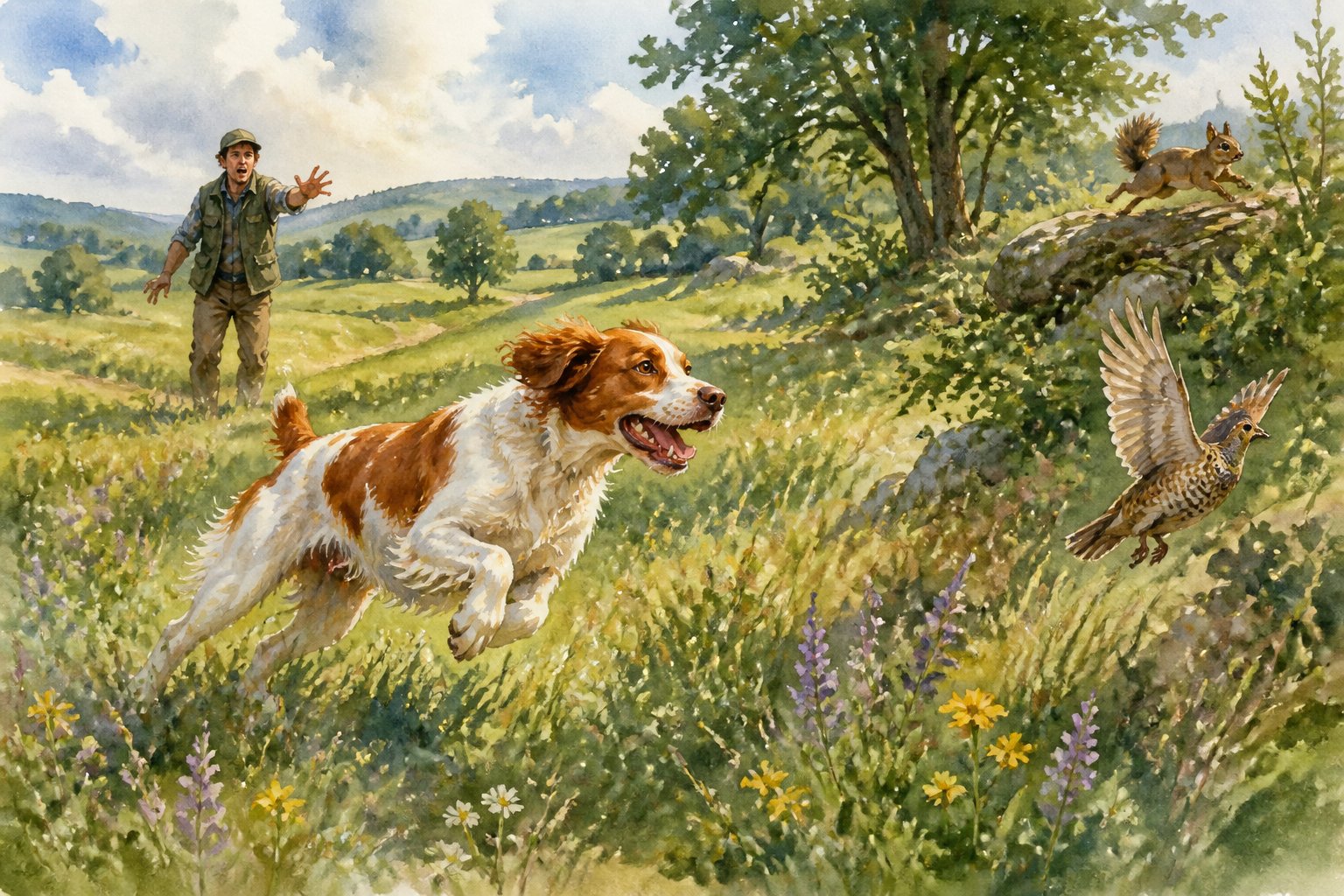
A Brittany may appear attentive in your yard and still ignore you when it spots a bird, rabbit, scent trail, or running animal. Open fields can expose weaknesses that do not appear during indoor practice.
Build recall in stages. Begin in a quiet room, then move to a fenced area and use a long line outdoors.
Call once in a cheerful voice, reward generously when your dog returns, and avoid calling your Brittany for punishment or an unpleasant end to every outing. Use secure fencing or a properly handled long line until recall works around realistic distractions.
Check local leash laws, identification tags, and microchip details before outdoor adventures. Reliable recall is developed through repeated success, not assumed because your dog knows the word “come.”
6. Treating Bird-Dog Prey Drive As A Minor Training Issue
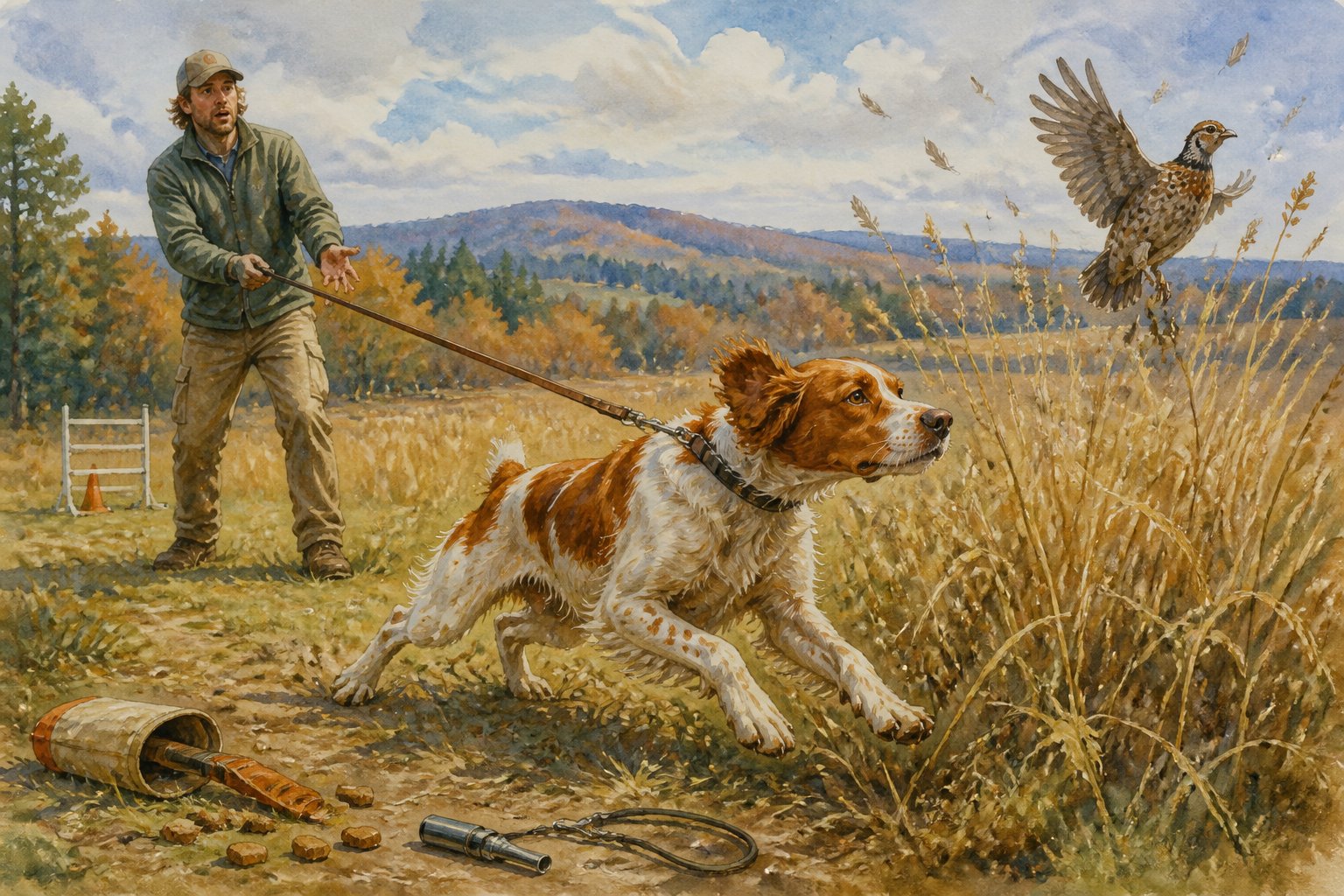
Bird interest is part of what makes a Brittany an effective hunting companion. Your dog may freeze, stalk, flush, chase, or lose focus when birds appear.
Calling louder usually does not solve the problem once prey drive has taken over. Teach attention, “leave it,” emergency U-turns, and recall away from mild distractions before practicing near wildlife.
Reward your Brittany for noticing a bird and then looking back at you. Increase distance whenever your dog becomes rigid, vocal, or unable to respond.
Do not allow repeated uncontrolled chases. Each chase can strengthen the pattern and create risks near roads, livestock, or other animals.
Scent work, retrieving, field training, and controlled bird-dog activities can provide safer outlets when guided by an experienced professional.
7. Skipping Weight Checks And Breed-Relevant Health Screening
A lean, active Brittany still needs regular body-condition checks. Feel for ribs beneath a light fat covering, look for a visible waist, and track weight during growth, adulthood, and senior years.
Extra weight can strain joints and reduce stamina. Schedule routine veterinary examinations and discuss breed-relevant concerns, including hip and elbow health, eye disease, epilepsy or seizure disorders, thyroid problems, and other conditions seen in individual family lines.
Responsible breeders can provide health history and recommended screening records, though no test removes every risk. Watch for changes in gait, appetite, thirst, sleep, exercise tolerance, skin, stool, or behavior.
Record unusual episodes with dates and videos when safe. Do not assume reduced energy is normal aging without a veterinary assessment.
Building A Sustainable Brittany Care Routine
Daily Physical Exercise
Give your Brittany planned movement every day, adjusted for age, weather, conditioning, and medical needs. Combine walks with running, retrieving, swimming, hiking, or supervised play rather than relying on one exhausting session.
Mental Work And Scent Games
Use treat searches, scent trails, puzzle feeders, shaping exercises, and short obedience drills. Five focused minutes can be more useful than a long session that leaves your dog frustrated.
Consistent Household Rules
Decide where your dog may rest, which items are chewable, and how greetings work. Every person should use the same cues and consequences.
Positive Reinforcement Training
Reward the behavior you want with food, play, praise, or access to an activity. Keep sessions brief, end while your Brittany is successful, and increase distractions gradually.
When To Contact A Veterinarian Or Qualified Trainer
Sudden Changes In Mobility Or Energy
Contact your veterinarian when your Brittany develops limping, stiffness, reluctance to exercise, unusual fatigue, or a sudden drop in performance. Prompt evaluation can identify pain or illness before it worsens.
Seizure-Like Episodes
Record the timing, duration, movements, recovery period, and possible triggers if safe. Contact your veterinarian promptly, and seek urgent care for a prolonged episode, repeated seizures, breathing trouble, injury, or failure to recover normally.
Escalating Reactivity Or Anxiety
New growling, lunging, hiding, separation distress, or sensitivity may reflect fear, pain, or another medical issue. Arrange a veterinary check and work with a reward-based behavior professional.
Persistent Recall Or Leash-Safety Problems
If your Brittany cannot disengage from birds, traffic, dogs, or other hazards, stop off-leash practice and use secure management.
A qualified trainer can assess the triggers and improve handling. They can also create a safe progression.