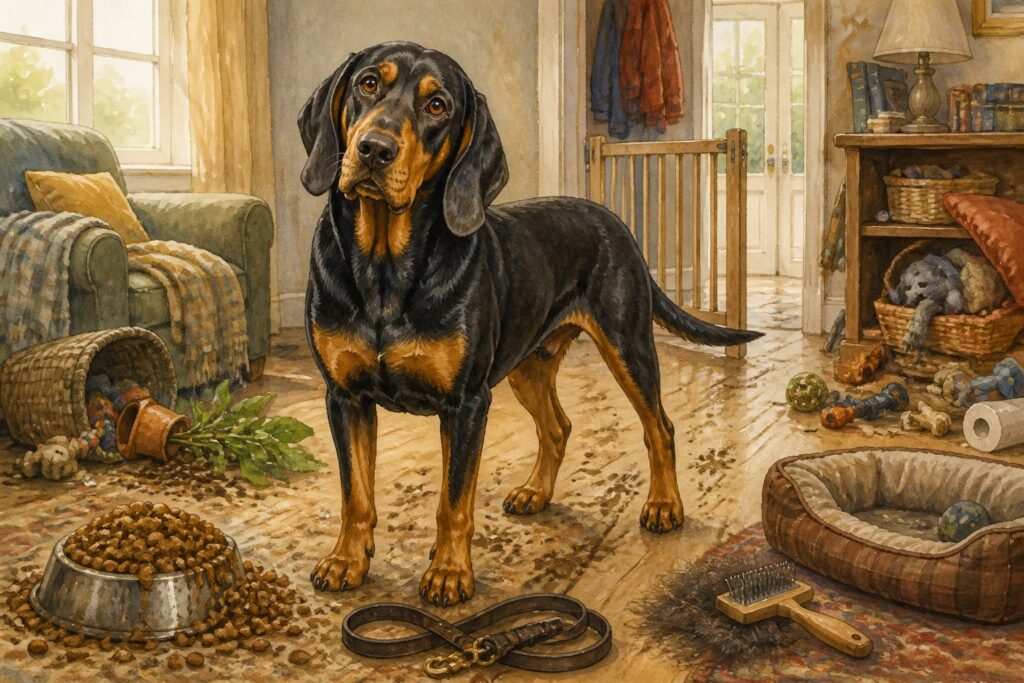
Black And Tan Coonhounds are gentle, affectionate dogs with powerful noses, strong hunting instincts, and a voice that carries. Those traits make them rewarding companions, yet they also create predictable challenges when daily care, training, and safety rules are too casual.
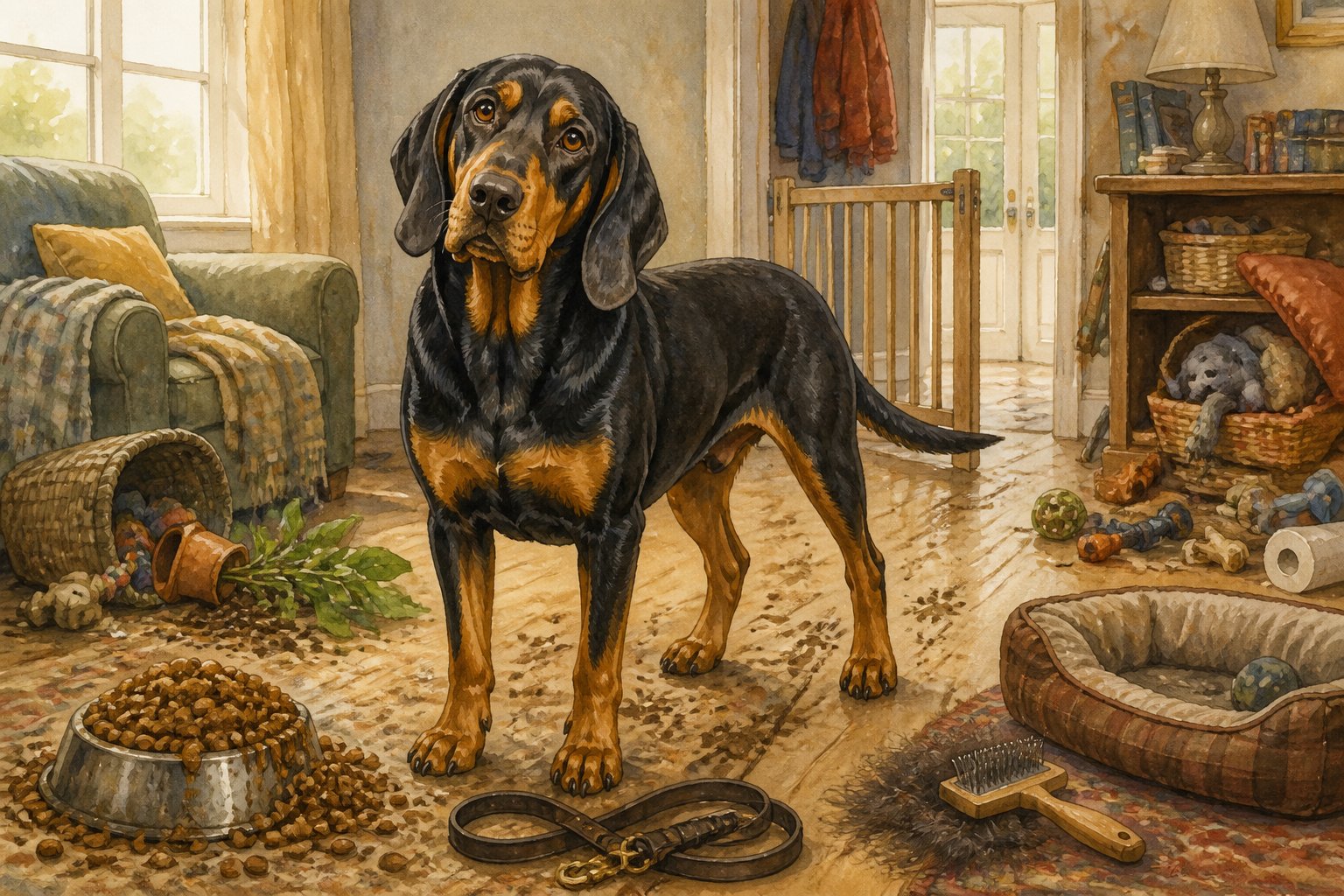
The biggest owner mistakes involve noise, roaming, scent-driven behavior, ear care, food intake, and poor planning for a 10-to-12-year commitment. When you work with the breed’s instincts instead of fighting them, you can prevent many frustrating problems.
1. Underestimating Their Baying And Neighborhood Noise
A Black And Tan Coonhound does not simply bark. Its deep bay is designed to travel through woods, alert hunters, and announce excitement.
You may hear it when your dog spots wildlife, smells something interesting, feels lonely, or wants attention. Treating the noise as a surprise often leads to conflict with neighbors and rushed punishment.
Instead, identify triggers and teach a quiet cue with rewards. Provide exercise, scent games, and indoor rest before predictable noisy periods.
Close windows when outdoor activity causes repeated baying. Avoid leaving your hound outside alone for long stretches.
Never expect complete silence from a breed selected for vocal tracking. Set realistic household and neighborhood goals, then reinforce calm behavior consistently.
2. Letting A Black And Tan Coonhound Roam Off-Leash
A scent can override your dog’s attention in seconds. Once your Black And Tan Coonhound lowers its head and follows a trail, shouting may not compete with the smell.
Roads, wildlife, livestock, and unfamiliar terrain make an unsupervised chase dangerous. Use a sturdy leash or a long line in open areas that lack secure fencing.
Practice recall first in a quiet room, then in a fenced yard, and later around mild distractions. Reward your dog with valuable treats, praise, or a favorite game every time it turns back.
A reliable recall is useful, yet it is not a guarantee against a fresh trail. Keep identification tags current, consider a registered microchip, and check gates before releasing your hound outdoors.
3. Treating A Scent Hound Like An Automatically Obedient Dog
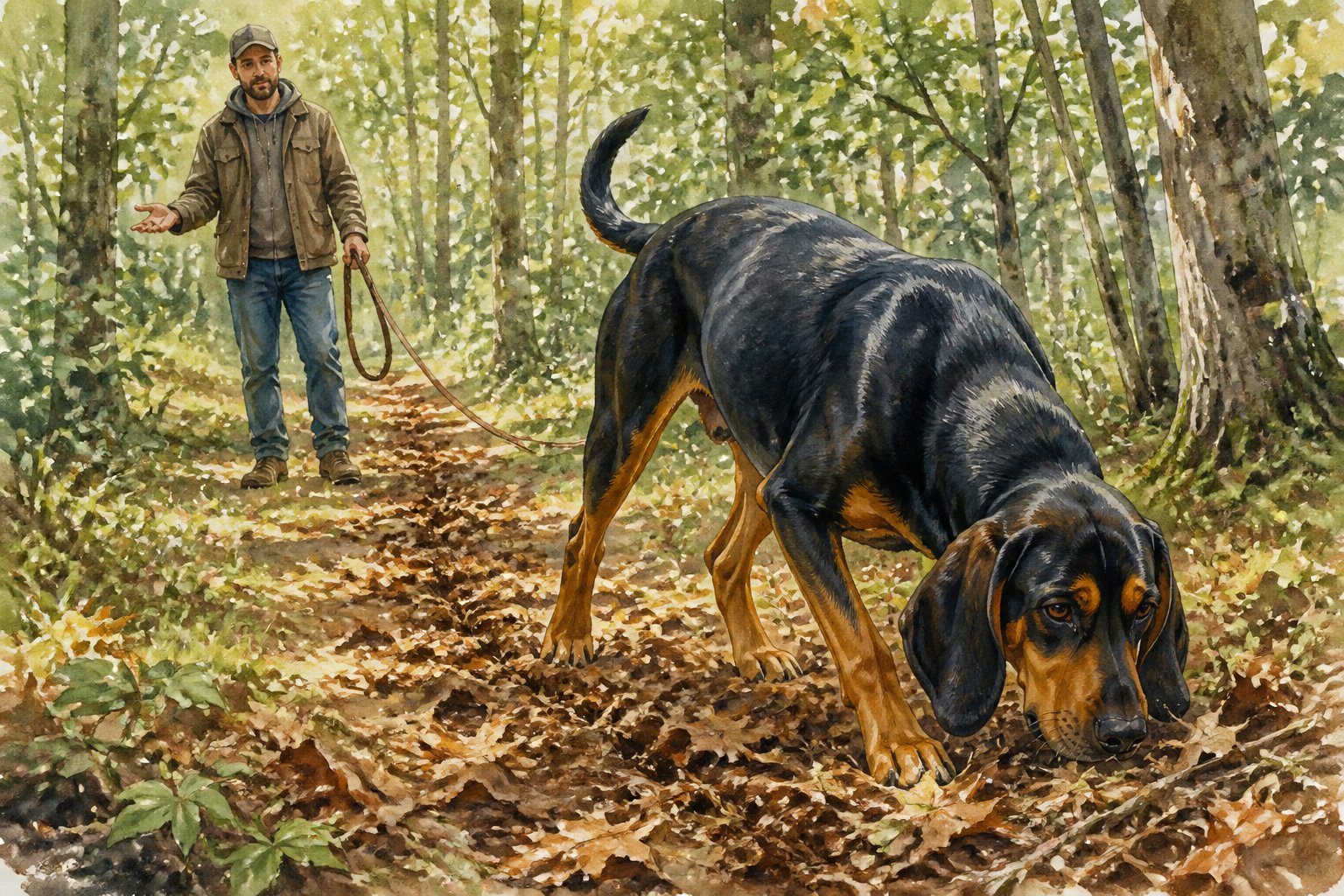
Black And Tan Coonhounds are intelligent, though their intelligence is not the same as eager obedience. Your dog may know a cue perfectly in the kitchen and ignore it when a strong scent appears outside.
That choice reflects breeding and motivation, not simple stubbornness. Keep training sessions short, upbeat, and rewarding.
Use clear cues such as “come,” “leave it,” “wait,” and “drop,” then practice them in many locations. A food reward or access to a sniffing area can be more effective than repeating a command.
Avoid harsh corrections. They can make your hound less willing to engage and may damage trust.
Give your dog time to investigate appropriate smells, then teach a clear transition back to you.
4. Skipping Secure Fencing And Reliable Recall Training
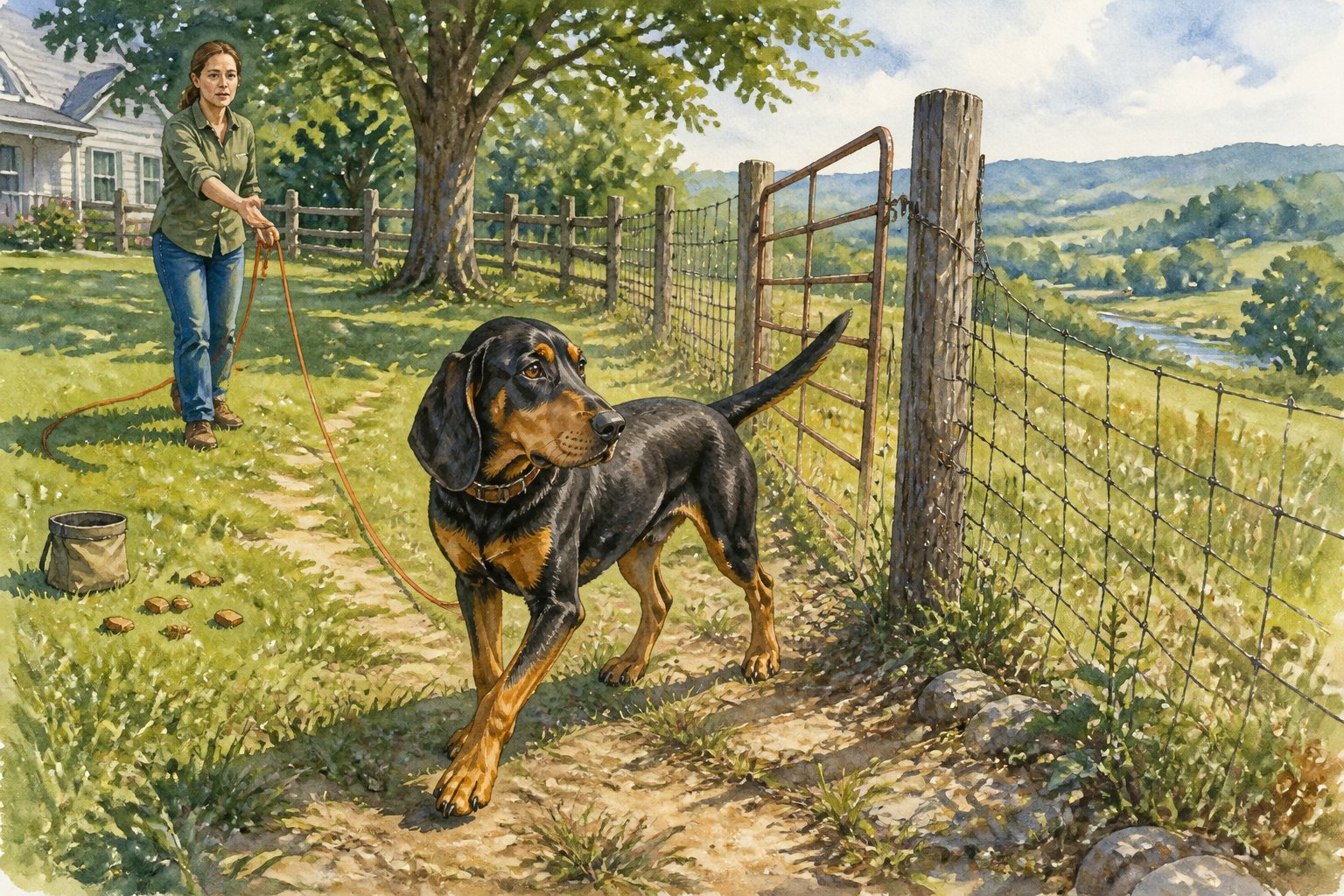
A low fence, loose gate, or gap under a barrier can become an escape route. Your hound may follow a raccoon, deer, neighborhood scent, or food trail before you notice it has left the property.
Inspect fencing regularly, especially after storms or landscaping work. Use self-closing gates and keep door routines controlled when visitors arrive.
Do not rely on an electronic boundary as your only protection, since a determined dog may cross it when chasing something. Recall training works best when you build it gradually.
Start with a long line, reward fast responses, and never call your dog only for unpleasant events such as nail trims or ending every enjoyable activity. Release your hound again after many recalls so returning does not always mean the fun stops.
5. Buying Plush Squeaky Toys Without Managing Resource Guarding
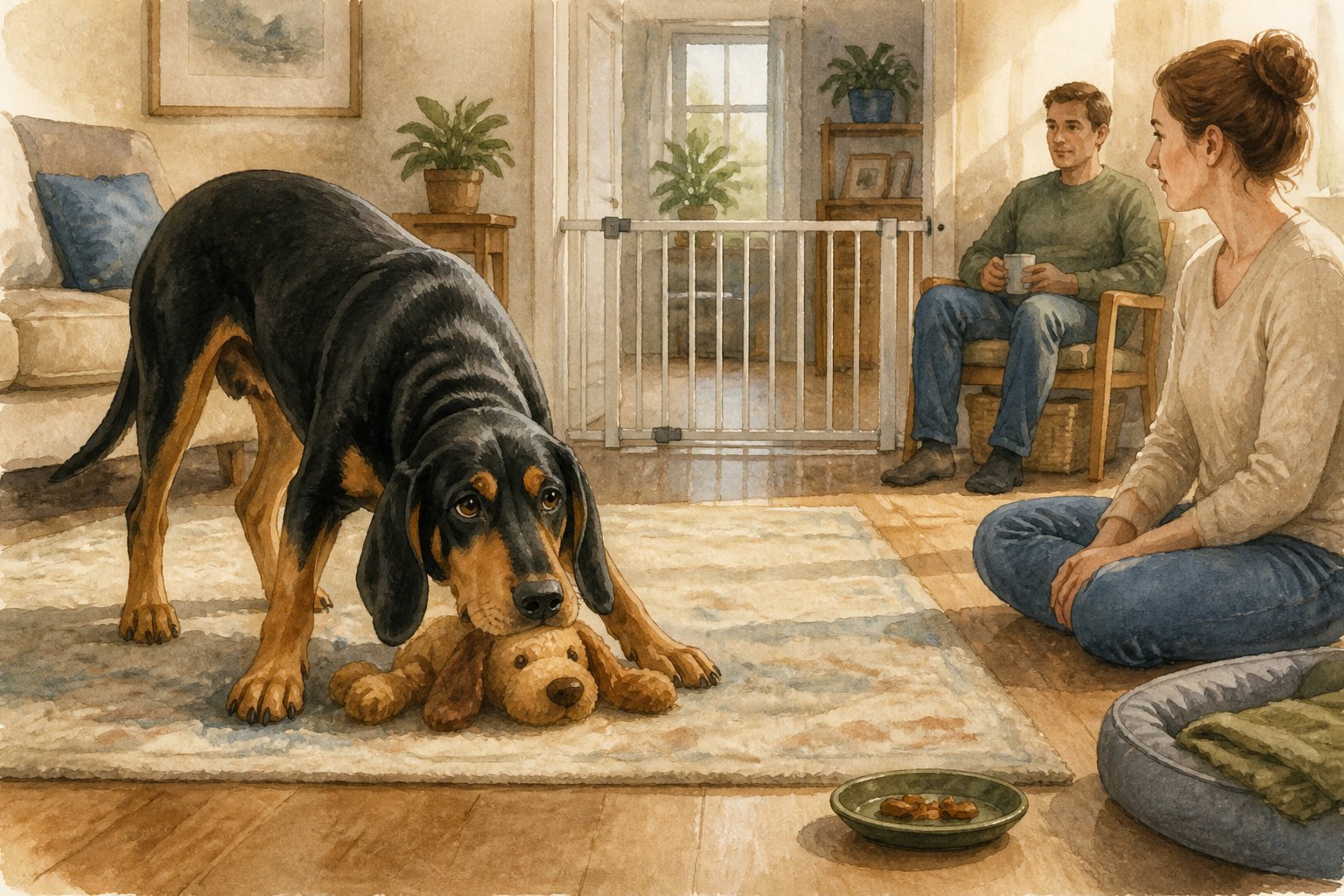
Some Black And Tan Coonhounds become intensely possessive of plush toys, squeakers, bones, or food-stuffed items. A dog that is normally gentle may stiffen, freeze, stare, growl, or snap when someone teases it or reaches toward a prized object.
Watch body language and remove opportunities for conflict. Do not let children or visitors grab, chase, or pull at a guarded toy.
Give high-value items in a quiet area, and use barriers when other pets are nearby. Teach trading with rewards rather than forcibly taking possessions.
Offer something better, wait for your dog to release the item, and return safe toys when appropriate. If guarding includes lunging or biting, stop home experiments and seek qualified behavior support.
Some toys may need to be removed permanently.
6. Punishing Growling Instead Of Respecting Warning Signals
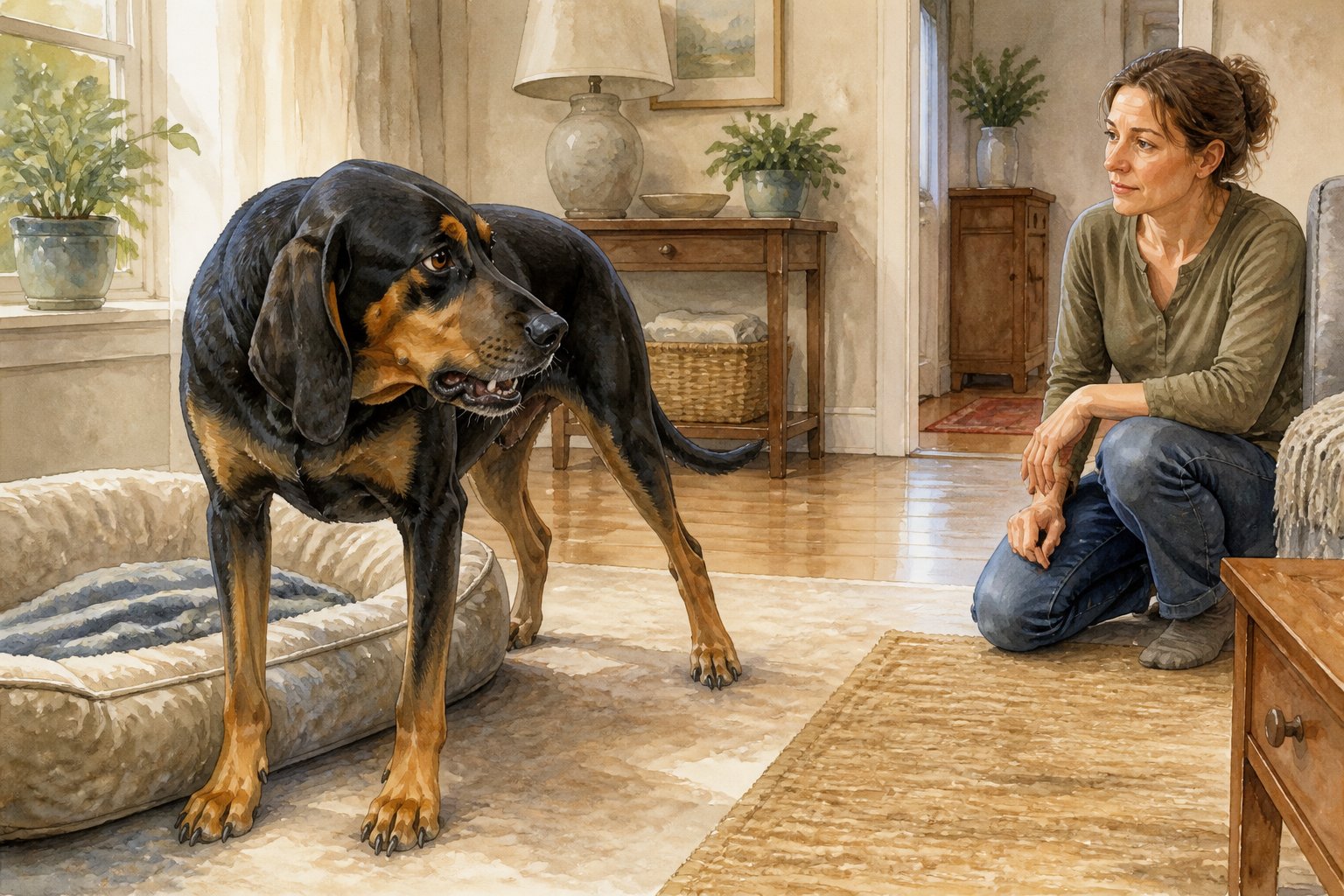
A growl is valuable information. Your dog may be saying that it feels threatened, painful, crowded, or worried about losing food or a toy.
Punishing the sound can teach your hound to skip the warning and react more suddenly. When you hear a growl, stop the interaction and create space.
Notice whether your dog is stiff, leaning away, showing the whites of its eyes, guarding an item, or avoiding touch. These details help you find the trigger.
Calmly manage the situation, then change the setup. Feed pets separately, prevent teasing, and teach children to leave resting dogs alone.
A growl does not automatically mean your dog is dangerous, though repeated warnings deserve professional assessment.
7. Providing Walks Without Scent Work Or Tracking Outlets
A brisk walk may exercise your dog’s body without satisfying its hunting heritage. Black And Tan Coonhounds often need time to sniff, follow trails, and solve simple scent puzzles.
Add structured nose work to ordinary exercise. Hide treats around a room, scatter kibble in grass, create a short treat trail, or use supervised tracking games.
Letting your hound sniff at a safe pace can produce more calm than forcing a fast march. Rotate activities to prevent boredom.
Food puzzles, basic obedience, hiking on a long line, and controlled play can complement walks. Watch for heat, sore paws, and fatigue, especially after long outings.
Mental work should challenge your dog without leaving it frantic or frustrated.
8. Neglecting Long-Ear Cleaning And Infection Checks
Long, heavy ears reduce airflow and can trap moisture, wax, and debris. That makes regular checks important, particularly after bathing, swimming, rainy walks, or muddy outdoor adventures.
Inspect the ear leather and canal routinely for redness, swelling, odor, discharge, or unusual sensitivity. Gently clean only with a veterinary-approved ear product and follow the label directions.
Do not push cotton swabs deep into the canal or use household remedies without veterinary guidance. Head shaking, scratching, rubbing, or a sudden reluctance to let you touch the ear can signal pain.
Ear infections can worsen when treatment is delayed. Ask your veterinarian to show you a safe cleaning method and recommend a schedule suited to your dog’s ear health.
9. Overfeeding A Large-Boned, Food-Motivated Coonhound
Black And Tan Coonhounds can be strongly food-motivated, and extra weight places stress on joints, paws, and stamina. A large frame can make gradual weight gain difficult to notice until your dog is already heavy.
Measure meals instead of filling the bowl by guesswork. Include training treats in the daily calorie total, and use part of the regular meal for reward-based practice.
Your dog should have visible waist definition and ribs that you can feel beneath a light layer of fat. Ask your veterinarian to assess body condition rather than relying only on a scale.
Adjust portions slowly, choose suitable nutrition for your dog’s age and activity, and avoid rewarding every demand with food. Healthy weight supports mobility throughout your hound’s life.
10. Choosing The Breed Without Planning For Its 10-To-12-Year Commitment
A Black And Tan Coonhound is more than a handsome, affectionate companion. You are choosing a large scent hound that may need secure containment, daily enrichment, ear care, training, veterinary visits, and patience with vocal behavior for roughly 10 to 12 years.
Before adoption or purchase, consider your schedule, housing, nearby wildlife, fence quality, noise tolerance, and budget. Plan for food, preventable healthcare, emergency treatment, grooming supplies, training, boarding, and possible mobility care as your dog ages.
Meet adult hounds when possible and ask about temperament, hunting history, prey drive, and behavior around pets. A realistic plan helps you avoid surrender or repeated household conflict.
Breed love works best when it includes practical preparation.
How To Prevent These Owner Mistakes
Match Exercise To The Dog’s Hunting Heritage
Give your hound both movement and purposeful sniffing. Combine walks, long-line outings, tracking games, food puzzles, and short training sessions.
Adjust intensity for age, weather, health, and fitness rather than assuming every dog needs the same routine.
Set Household Rules Before Problems Start
Decide where your dog rests, eats, and plays before it arrives. Keep gates latched, store tempting items safely, supervise children around toys and food, and agree on the same cues and boundaries.
Consistency prevents confusion and makes safety habits easier to maintain.
Use Reward-Based Training And Professional Help When Needed
Reward the behaviors you want, including quiet pauses, check-ins, calm greetings, and releasing objects. Practice in small steps and use a qualified trainer who understands scent hounds.
Seek individual behavior help early when fear, guarding, chasing, or aggression appears.
When To Call A Veterinarian Or Behavior Professional
Sudden Changes In Behavior
A normally tolerant hound that suddenly growls, withdraws, snaps, or resists handling may be experiencing pain or illness. Schedule a veterinary examination before assuming the change is a training problem.
Escalating Resource Guarding
Call a qualified behavior professional when guarding spreads from one toy to food, resting areas, people, or other pets. Lunging, biting, repeated snapping, or guarding that children cannot safely avoid requires prompt management and expert guidance.
Ear, Weight, Or Mobility Concerns
Persistent odor, discharge, or head shaking deserves veterinary attention.
Rapid weight gain, limping, stiffness, or trouble rising also warrant a visit to the vet.