
Bedlington Terriers are bright, athletic dogs with a strong terrier instinct, a sensitive nature, and a coat that needs regular care. Their lamb-like appearance can make them seem easygoing.
Poor routines can quickly lead to lead reactivity, chasing, boredom, or grooming problems.

The following mistakes show where owners commonly struggle and what you can do instead.
1. Skipping Early Lead-Reactivity Training
A Bedlington Terrier may bark, lunge, stare, or pull toward dogs, bicycles, squirrels, or unfamiliar people. Waiting for the behavior to disappear can allow those reactions to become practiced habits.
Start in a quiet area where your dog can notice a trigger without losing focus. Reward your dog for looking at the trigger, turning back to you, walking loosely, and passing calmly.
Increase distance whenever your dog becomes tense. Short sessions work better than long, stressful walks.
Use a well-fitted harness or flat collar, high-value treats, and a simple cue such as “this way.” If reactions are intense, work with a qualified reward-based trainer.
2. Trusting a Bedlington Terrier Off-Leash Around Wildlife
The breed’s terrier history gives many Bedlingtons a strong prey drive. A rabbit, squirrel, deer, or ground bird can override a recall you thought was reliable.
Use a long line in open spaces until your dog responds quickly around real distractions. Practice recall with rewards, then release your dog back to sniff or explore so coming to you does not always end the fun.
Choose fenced dog parks only when appropriate. Check local leash laws, and avoid unfenced areas near roads or wildlife habitat.
A secure harness, identification tag, and updated microchip add important protection if your dog slips away.
3. Leaving a Bedlington Terrier Alone Without Separation Training

Some Bedlington Terriers become distressed when left alone. Vocalizing, scratching doors, chewing, pacing, or house-soiling may signal anxiety rather than stubbornness.
Build alone time in small steps. Leave for a few seconds, return before your dog panics, and gradually extend the interval.
Practice departures without dramatic greetings, and provide a safe resting area, food puzzle, or long-lasting chew. A camera can reveal whether your dog settles or struggles after you leave.
Avoid forcing a distressed dog to “cry it out.” For persistent separation anxiety, ask your veterinarian about a behavior plan and referral to a veterinary behavior professional.
4. Underestimating the Need for Daily Mental Enrichment
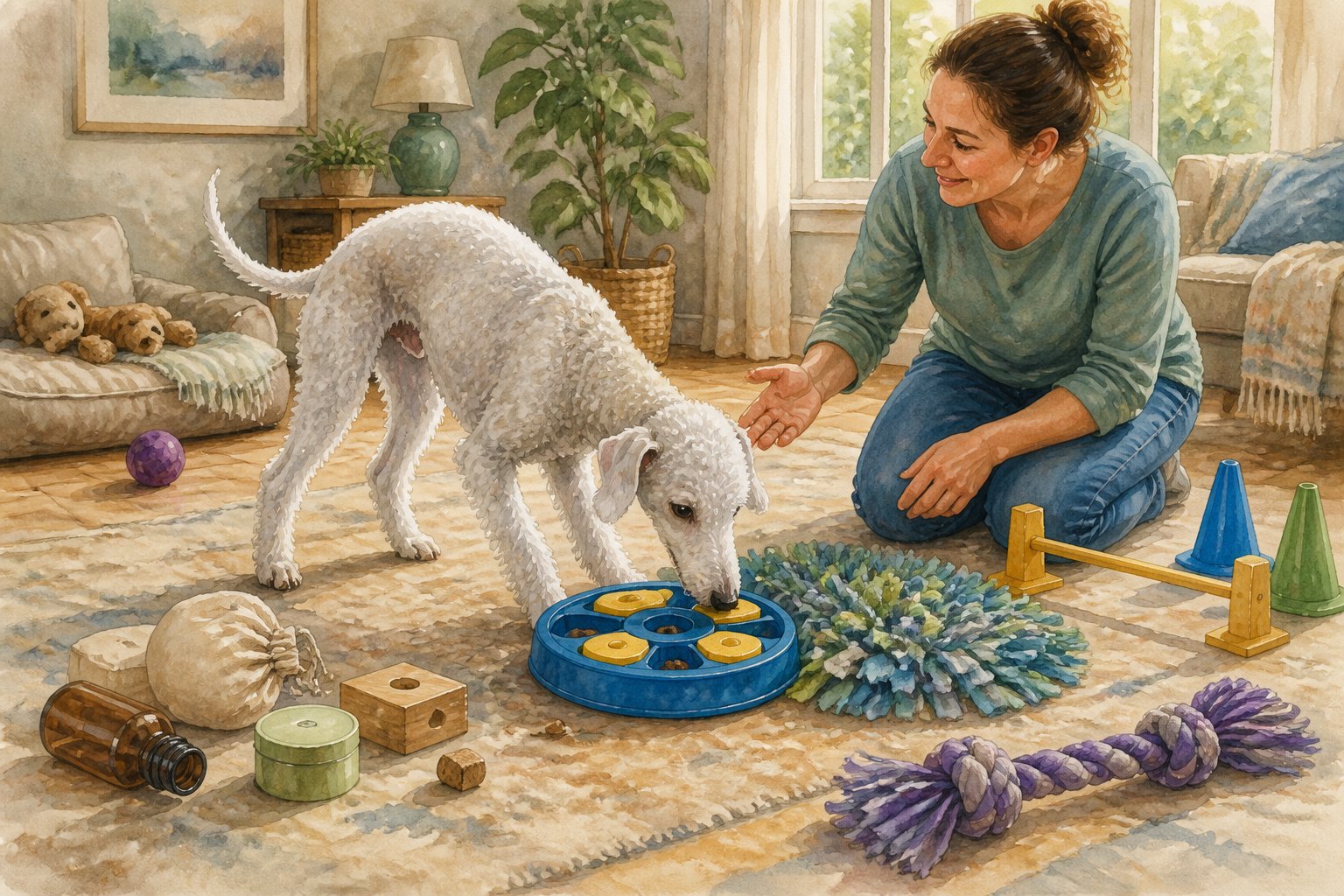
A brisk walk may exercise your dog’s body without satisfying its curious, problem-solving mind. Bored Bedlingtons often invent activities such as barking, digging, stealing objects, or opening containers.
Rotate enrichment rather than offering every toy at once. Use scatter feeding, scent trails, stuffed food toys, simple trick training, cardboard search games, and supervised puzzle feeders.
Let your dog sniff during walks instead of rushing through every route. Five-minute training games can be more useful than a long session that leaves your dog frustrated.
Watch for signs of overstimulation, including frantic movement, nipping, or difficulty settling. Schedule quiet rest after active play.
5. Using Punishment-Based Methods for Barking or Reactivity

Shouting, leash corrections, or frightening tools may stop a sound briefly while increasing fear and tension. A sensitive terrier can learn that other dogs, visitors, or outdoor noises predict punishment.
First identify the trigger and lower its intensity. Close curtains, add background noise, create distance, or guide your dog to a mat before barking escalates.
Reward quiet behavior, calm observation, and voluntary attention toward you. Teach a replacement response, such as looking at you, touching your hand, or settling on a bed.
If your dog has bitten or cannot stay below its reaction threshold, get professional help promptly. Reward-based methods protect trust while changing the emotional response behind the behavior.
6. Delaying Consistent Recall Training

Recall is not a skill you should test only when your dog is already racing away. Begin indoors, then move to a fenced yard and a long line before adding major distractions.
Choose a distinct cue and reward it generously. Occasionally offer several treats, a favorite toy, or permission to resume sniffing.
Never call your dog to punish, cut nails, or end every enjoyable activity. Practice emergency recall separately with a special word used only for urgent situations.
Keep sessions brief and successful. A reliable recall requires repetition across locations, surfaces, weather conditions, and distractions.
7. Ignoring Resource Guarding Around Food, Toys, or People
Resource guarding may appear as freezing, stiff posture, hard staring, growling, snapping, or moving an item away. Guarding can involve meals, chews, resting places, toys, or a favorite person.
Do not grab the resource or punish the warning. Give your dog space, prevent children from approaching during meals, and manage valuable items when other pets are present.
For mild cases, a qualified professional can guide gradual trading exercises in which your approach predicts something better. Serious guarding, sudden behavior changes, or any bite requires veterinary assessment and behavior support.
Pain, illness, and stress can affect tolerance, so do not treat guarding as simple disobedience.
8. Letting the Curly Coat Mat Between Professional Grooms
The Bedlington’s soft, curly coat can form tight mats behind the ears, under the legs, around the collar, and near the tail. Mats pull the skin, trap moisture, and make grooming painful.
Use a slicker brush and metal comb on a regular schedule, working gently in small areas. Check common trouble spots after walks, rain, swimming, and wearing a harness.
Do not cut close mats with household scissors, since skin can hide inside the mat. Plan professional grooming every few weeks based on coat length and your home routine.
Teach cooperative handling early by pairing brief brushing, ear checks, nail care, and clipper sounds with treats. A short, calm session is more productive than waiting until the coat is tangled.
9. Choosing a Breeder Without Copper Toxicosis Health Testing
Copper toxicosis is an important Bedlington Terrier health concern. Abnormal copper accumulation can damage the liver, and responsible breeding requires more than a verbal assurance that a puppy’s parents are healthy.
Ask for documented DNA testing for the known copper toxicosis risk variant, along with clear explanations of each parent’s results. Also request available liver health records and ask whether the breeder tracks related conditions in its lines.
A test result is only one part of due diligence. Review veterinary records, contract terms, health guarantees, and the breeder’s plan for follow-up care.
Be cautious if you face pressure to send a deposit before receiving records or if health questions are dismissed.
10. Assuming a Low-Shedding Coat Means Low Grooming Needs
Low shedding does not mean low maintenance. Loose hair can remain in the coat and combine with moisture, dirt, and skin oils, creating tangles that are easy to miss under a sculpted trim.
Set a weekly grooming routine, with extra checks around the face, feet, ears, armpits, and sanitary areas. Use products recommended for your dog’s coat and skin, and ask your groomer to demonstrate safe brushing technique.
Regular grooming also lets you notice skin irritation, lumps, ear odor, cracked nails, or changes in body condition. Introduce grooming equipment gradually, especially clippers and dryers.
Cooperative care helps you maintain the coat without turning each appointment into a struggle.
11. Failing to Secure the Garden Against Digging and Chasing
A Bedlington Terrier can dig beneath weak fencing, chase movement beyond a boundary, or exploit a gate that does not latch securely. Small gaps deserve attention because a determined terrier may investigate them repeatedly.
Inspect the fence line, gate hinges, latch, and areas where soil has been disturbed. Add secure footing or buried barriers where digging is a pattern, and keep your dog away from toxic plants, chemicals, compost, and unsafe tools.
Provide a legal digging area filled with safe soil or sand, then reward your dog for using it. Supervise outdoor time instead of assuming a fenced yard replaces exercise and training.
Secure fencing reduces escape risk, yet it does not remove the need for recall practice and enrichment.
How to Choose a Responsible Bedlington Terrier Breeder
Copper Toxicosis DNA Testing and Liver Health Records
Ask to see verifiable DNA results for copper toxicosis risk in both parents. Request veterinary records, liver health information, and a clear explanation of how the breeder uses results in its breeding plan.
A responsible breeder discusses testing openly and does not rely on vague claims such as “our line has no problems.” You should receive copies of relevant records before committing to a puppy.
Temperament, Socialization, and Puppy-Raising Practices
Look for puppies raised in a clean home or carefully managed facility with gentle handling, household sounds, varied surfaces, and age-appropriate exposure. Ask how the breeder evaluates confidence, recovery from mild stress, sociability, and energy.
Meet at least the dam when possible and observe whether adult dogs appear healthy, stable, and comfortable with people. Early socialization should support resilience, not overwhelm puppies with uncontrolled experiences.
Contracts, Lifelong Support, and Ethical Breeding Standards
Read the contract before paying a deposit. It should address health guarantees, registration, return requirements, spay or neuter expectations, and what happens if you can no longer keep the dog.
Ethical breeders limit litter frequency, screen buyers carefully, provide vaccination and veterinary records, and remain available after placement. Avoid sellers who offer constant puppy availability, refuse visits, or focus on unusual color claims rather than health and temperament.
What a Well-Prepared Bedlington Terrier Home Needs
Secure Fencing and Safe Exercise Arrangements
Prepare secure fencing, reliable gates, identification, and a microchip before your dog arrives. Plan daily walks, sniffing opportunities, and fenced exercise rather than depending on off-leash freedom in open areas.
Use a long line for recall practice and check harness fit regularly. Keep toxic substances, wildlife attractants, and escape-friendly gaps out of reach.
Grooming Tools and Professional Grooming Plan
Keep a slicker brush, metal comb, dog-safe shampoo, nail tools, ear-care supplies recommended by your veterinarian, and a cooperative-care plan. Arrange a professional groomer familiar with Bedlington Terrier coat patterns before the coat becomes difficult to manage.
Create brief grooming sessions that end while your dog remains relaxed. Regular handling helps you inspect the skin, ears, feet, and nails.
Enrichment, Training, and Alone-Time Routine
Stock food puzzles, safe chew items, training treats, washable bedding, and toys you can rotate.
Schedule daily reward-based training, scent games, and calm rest.
Begin alone-time practice early and use a camera when possible.
A predictable routine that balances exercise, enrichment, grooming, sleep, and companionship helps your Bedlington Terrier.