
Beagles are cheerful, curious scent hounds with plenty of energy and a strong appetite. Those traits make them wonderful companions, yet they can also create problems when daily care, training, or safety rules are overlooked.
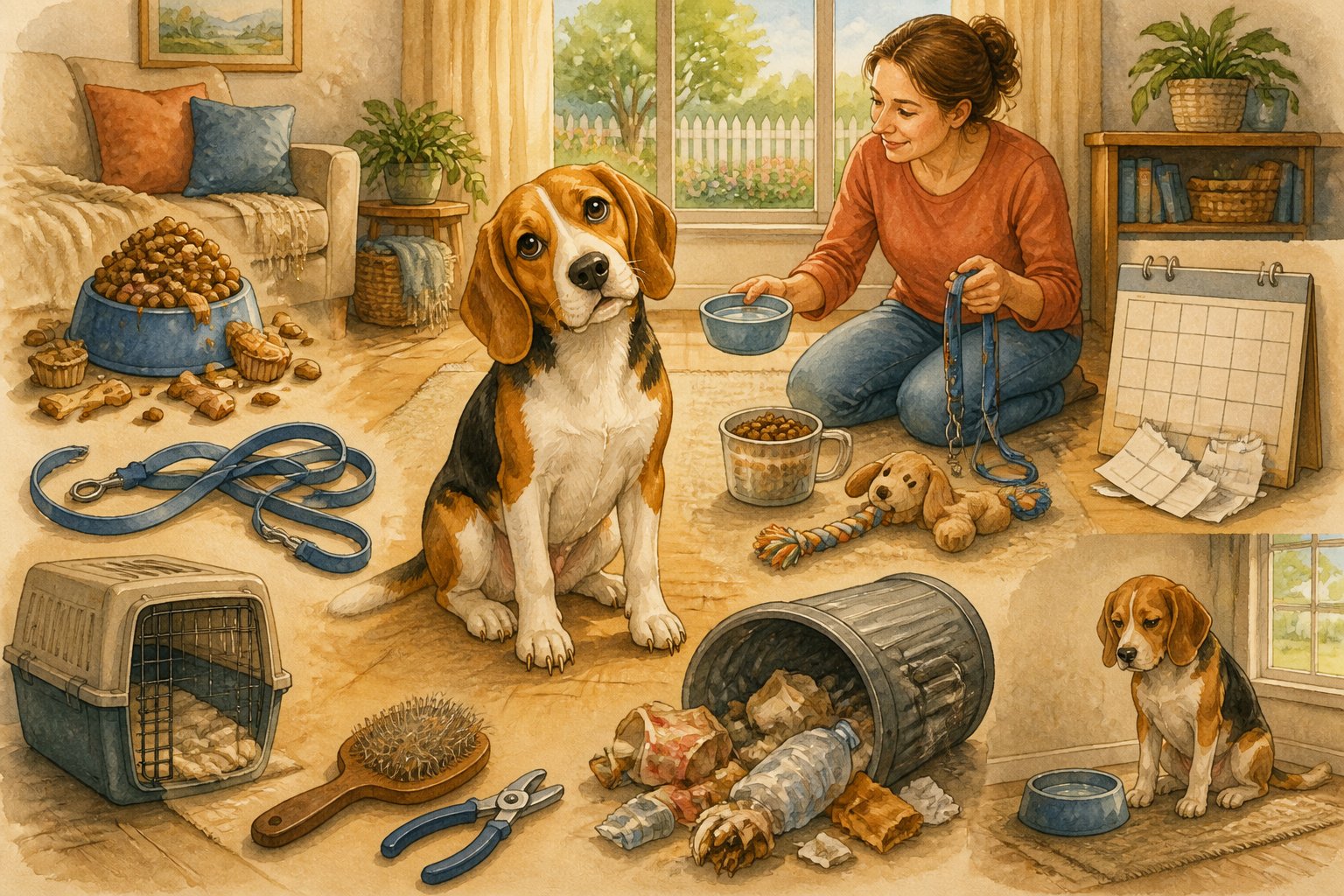
You can prevent most Beagle owner errors by combining secure handling, daily sniffing and exercise, reward-based training, measured feeding, early socialization, and regular mental enrichment. Small changes in your routine can reduce howling, pulling, destructive chewing, weight gain, and escape attempts.
1. Skipping Daily Scent Walks And Vigorous Exercise
A Beagle needs more than a quick bathroom break. This active hound was bred to follow scent, so a short walk around the block may leave unused energy and curiosity behind.
Restlessness can show up as indoor zoomies, barking, digging, chewing, or persistent attention-seeking. Aim for about an hour of daily activity, adjusted for age, health, and weather.
Give your dog time to sniff rather than rushing every walk. Add brisk walking, fetch, gentle hill work, or short agility exercises when your veterinarian approves.
A practical routine includes one purposeful walk, one slower scent outing, and brief play or training. Watch for heavy panting, limping, reluctance, or unusual fatigue, and reduce intensity when those signs appear.
2. Trusting Off-Leash Recall Outside A Secure Fence
A Beagle’s nose can overpower a familiar recall cue. When an interesting trail appears, your dog may follow it across a road or far beyond your view.
Even excellent training cannot remove that breed instinct. Use a leash or a long line in open areas unless you are inside a secure, well-maintained fence.
Check gates, latches, gaps, and fence height often. A GPS tag and current identification information add useful protection if your dog slips away.
Build recall gradually at home, then in a fenced yard, and later in low-distraction spaces. Reward the instant your Beagle turns toward you.
Never call your dog for punishment, nail trimming, or another unpleasant event. Practice emergency recall with a special, high-value reward, and keep sessions short.
3. Using Punishment Instead Of Food-Based Positive Reinforcement

Beagles learn best when the correct choice pays off. Yelling, leash jerks, shock collars, or physical punishment can increase fear and frustration, especially when your dog does not know what behavior you want instead.
Use small treats, praise, toys, and access to sniffing as rewards. Mark the desired action with a calm word such as “yes,” then deliver the reward immediately.
Because Beagles are often highly food-motivated, reduce meal portions slightly when treats make up part of the daily diet. Train in short sessions of three to five minutes.
If your dog stops responding, lower the distraction, simplify the task, or take a break. Reward calm behavior, eye contact, loose-leash walking, settling on a mat, and returning when called.
4. Training With Inconsistent Cues And Household Rules
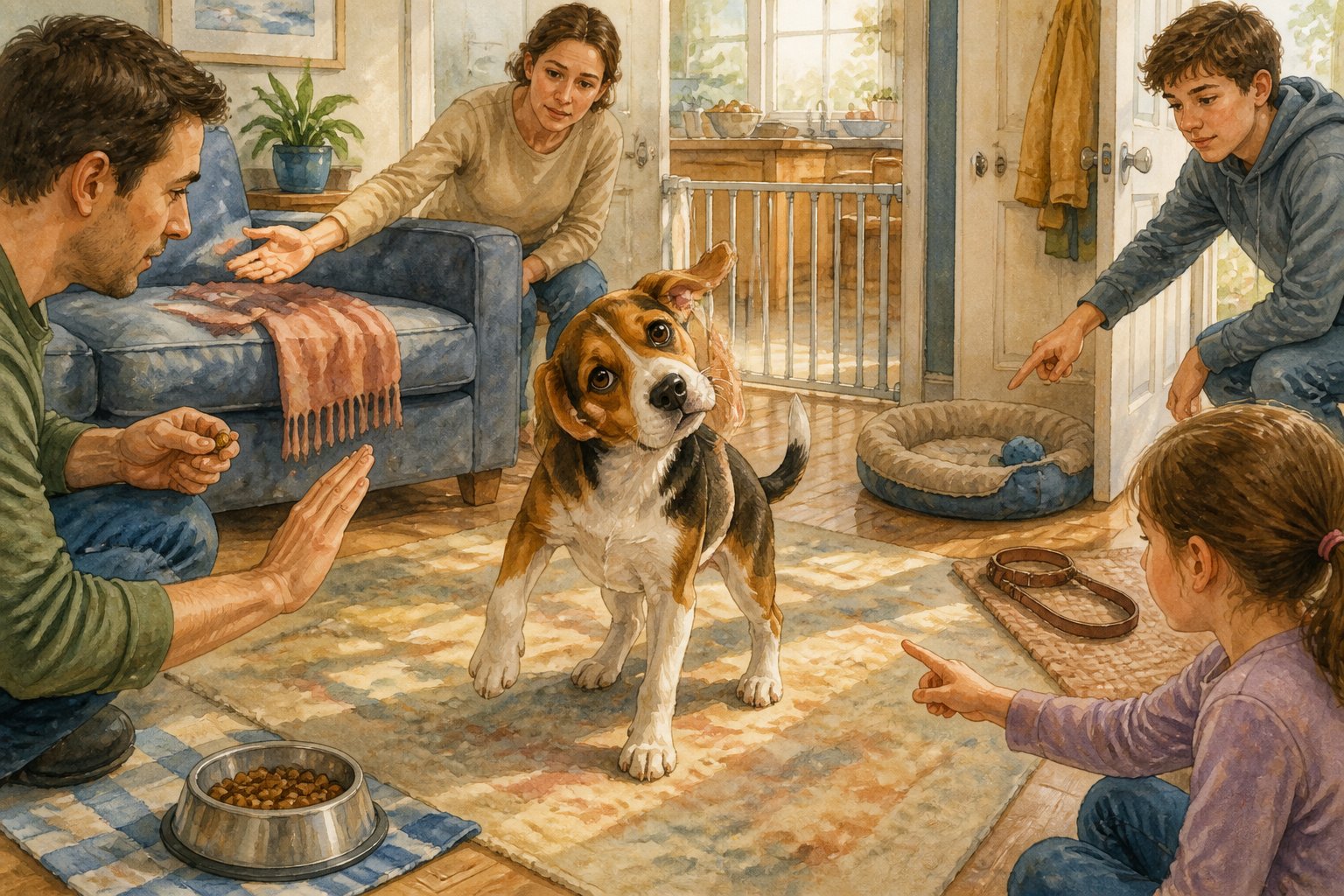
Mixed signals make training harder than a Beagle’s independent nature already does. If one person allows couch access while another scolds it, your dog receives no clear pattern to follow.
Different words for the same behavior create the same problem. Choose one cue for each action, such as “off,” “down,” “leave it,” and “come.”
Write the rules down and share them with every household member. Decide where your Beagle may sleep, whether begging is allowed, and how doors, greetings, and jumping will be handled.
Reward the behavior you want before your dog demands attention. If your Beagle jumps, turn away and reward four paws on the floor.
Consistency does not mean harshness. It means every person responds in a calm, predictable way.
5. Delaying Puppy Socialization And New-Environment Practice
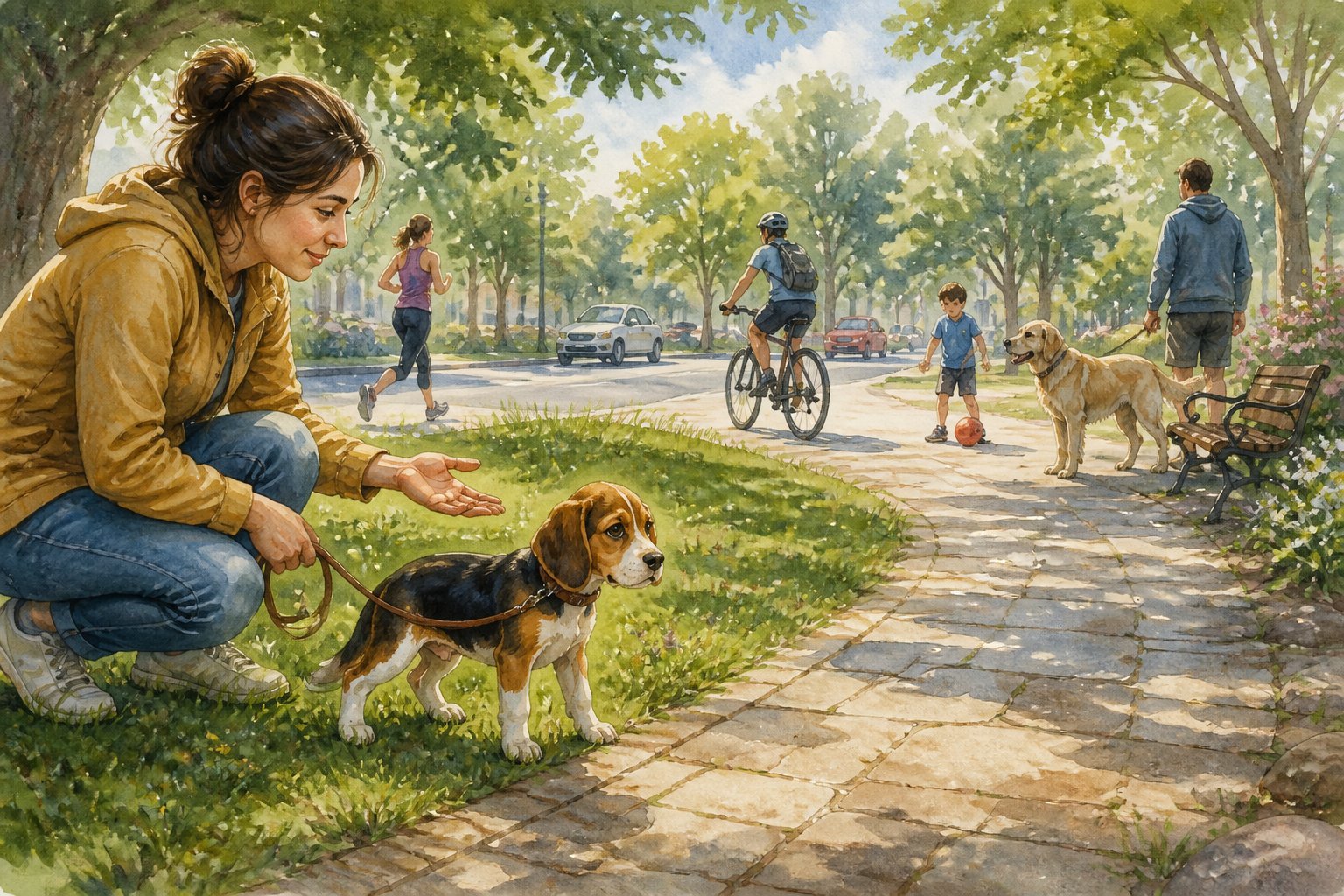
Puppy socialization is not limited to meeting many dogs. Your Beagle also needs safe, positive exposure to people, surfaces, traffic sounds, grooming, car rides, handling, household equipment, and quiet public places.
Start early while following your veterinarian’s advice about vaccines and disease risk. Keep each experience brief and pair it with treats.
Let your puppy observe from a comfortable distance rather than forcing contact. Watch body language such as tucked posture, lip licking, freezing, hiding, or frantic pulling.
Move farther away when your puppy appears worried, then try again at an easier level. Well-run puppy classes can teach focus and polite play while giving you useful coaching.
Socialization continues through adolescence. Regular, controlled practice helps reduce fear, overexcitement, and leash reactivity as your Beagle matures.
6. Overfeeding Treats And Ignoring Weight Gain
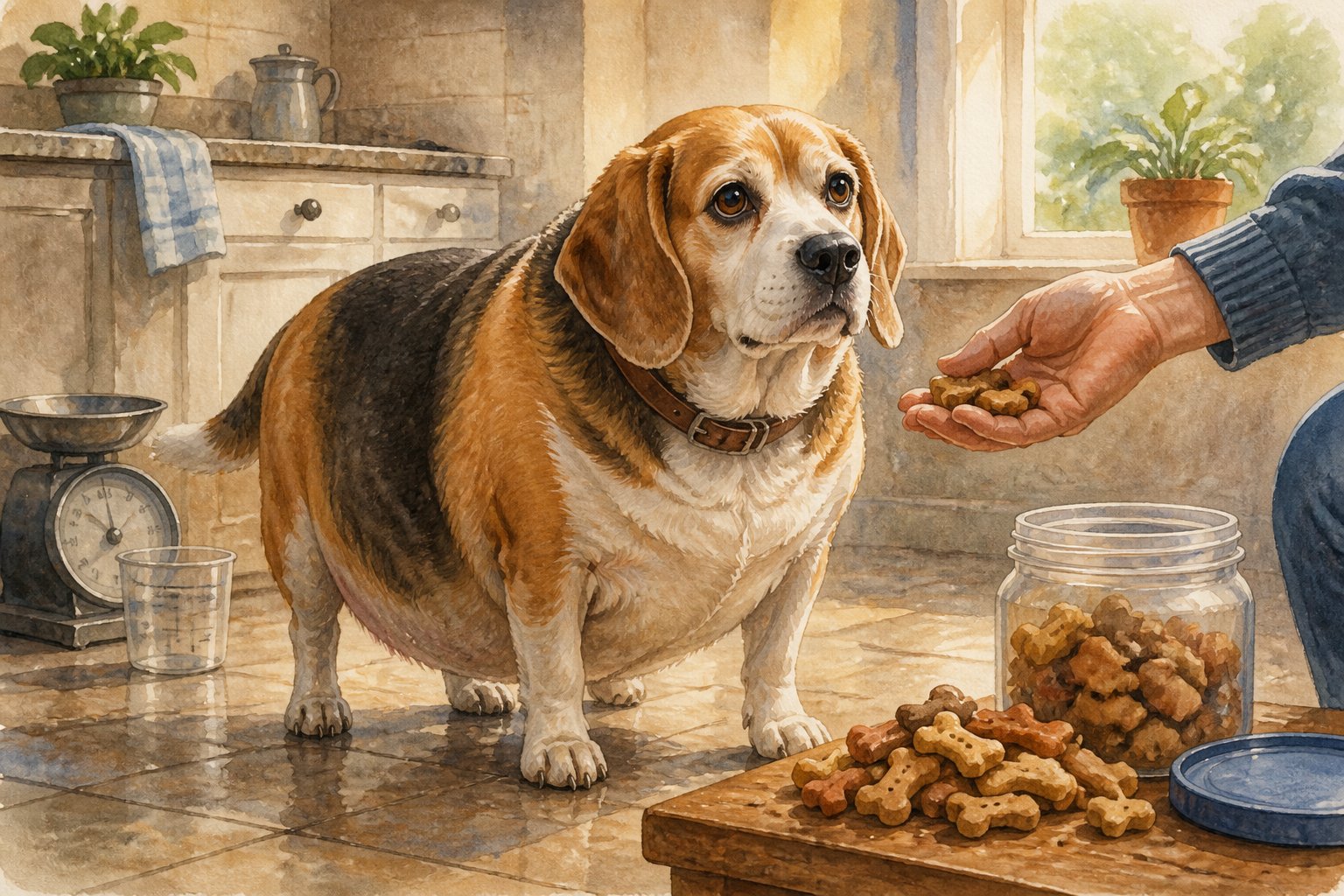
Many Beagles act hungry even after a complete meal. Giving food for every pleading look can quickly lead to excess weight, which puts extra strain on joints and may worsen breathing, stamina, and heat tolerance.
Measure meals with a standard measuring cup or kitchen scale. Include training treats, chews, table scraps, and food used in puzzle toys when you calculate daily calories.
Keep treats modest and choose lower-calorie options, such as part of your dog’s regular kibble. Check your Beagle’s body condition regularly.
You should be able to feel the ribs under a light layer of fat and see a waist from above. Ask your veterinarian to set a target weight and feeding plan if the waist disappears or weight rises.
Avoid sudden food changes, and never use starvation-style dieting. Gradual adjustments protect health and make weight control easier.
7. Leaving A Bored Beagle Without Safe Mental Enrichment
Boredom often turns a Beagle into an inventive problem solver. Chewed shoes, opened cabinets, shredded bedding, digging, nuisance barking, and howling may reflect unused mental energy rather than deliberate defiance.
Offer safe outlets that match the breed’s strengths. Scatter part of a meal in a snuffle mat, use a food puzzle, hide kibble around one room, or create a simple scent trail.
Rotate toys every few days to keep familiar items interesting. Short training sessions also provide meaningful work.
Practice “find it,” “leave it,” name recognition, settling, and polite greetings. Supervise new chews and puzzle toys, and remove anything that breaks into pieces or creates a choking risk.
Mental work should support, not replace, physical activity and rest. A balanced day gives your Beagle time to sniff, move, eat, learn, relax, and sleep.
Build A Beagle-Safe Daily Routine
Exercise And Sniffing Time
Plan activity before your Beagle becomes restless. A morning walk with generous sniffing, a midday potty break or play period, and an evening stroll can work well for many households.
Use a leash, long line, or secure fence whenever escape is possible. Adjust the pace for age, body condition, weather, and medical needs.
Puppies need controlled activity and frequent rest, while older dogs may benefit from shorter walks spread across the day.
Training And Enrichment Blocks
Schedule two or three brief training sessions instead of expecting one long lesson. Practice useful skills such as recall, “leave it,” loose-leash walking, settling, and calm door greetings.
Use meal portions in puzzle feeders or scent games. Rotate enrichment options, supervise equipment, and give your Beagle a quiet place to rest after active play.
Feeding And Rest Schedule
Feed measured portions at consistent times. A regular schedule makes appetite and bathroom patterns easier to monitor, while food puzzles can slow fast eating.
Protect daily sleep and downtime. Puppies, adults, and senior dogs all need uninterrupted rest.
Keep fresh water available, provide a comfortable bed, and avoid rewarding nighttime howling with exciting attention.
When To Get Professional Help
Signs A Trainer Can Help
Seek help when your Beagle repeatedly escapes, guards food, panics when alone, pulls hard enough to injure you, shows fear, or cannot settle despite daily exercise and enrichment. Persistent barking, howling, lunging, or destructive behavior also deserves skilled guidance.
A trainer can observe the trigger, identify what reinforces the behavior, and create manageable steps. Do not wait until a small problem becomes a safety risk.
Choosing A Force-Free Trainer
Look for a certified professional who explains methods clearly and uses rewards, management, and gradual behavior change. Ask what happens when your dog makes a mistake.
Avoid trainers who rely on intimidation, pain, dominance claims, or guaranteed instant results. Your Beagle should appear safe enough to learn.
You should receive written practice steps, realistic goals, and guidance tailored to your home.
When To Call A Veterinarian
Contact your veterinarian for sudden behavior changes, unexplained howling, appetite changes, rapid weight gain, limping, excessive thirst, vomiting, diarrhea, or unusual tiredness.
Pain, thyroid problems, digestive disease, anxiety, and other medical conditions can look like training problems.
Discuss nutrition, body condition, exercise limits, parasite prevention, and vaccine-based socialization advice during routine visits.