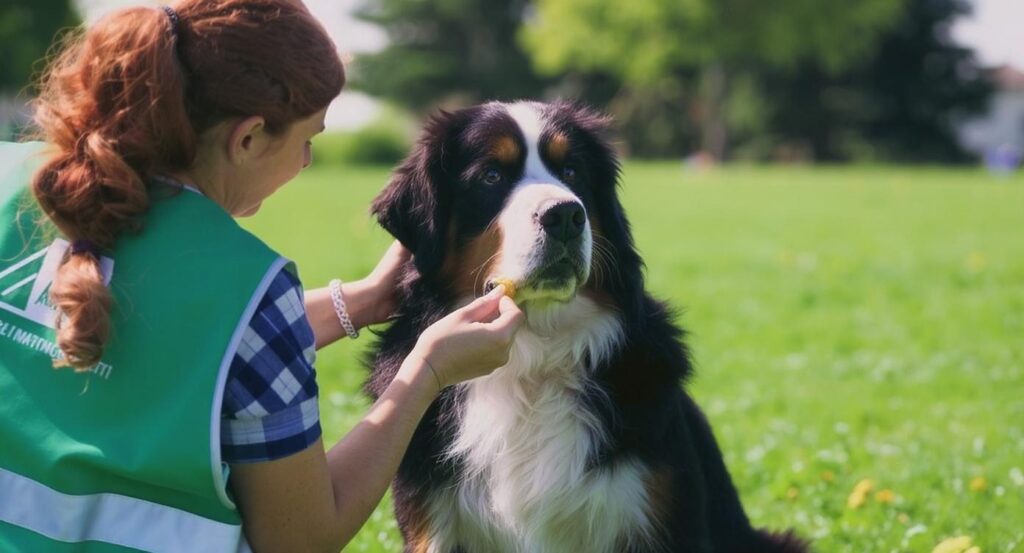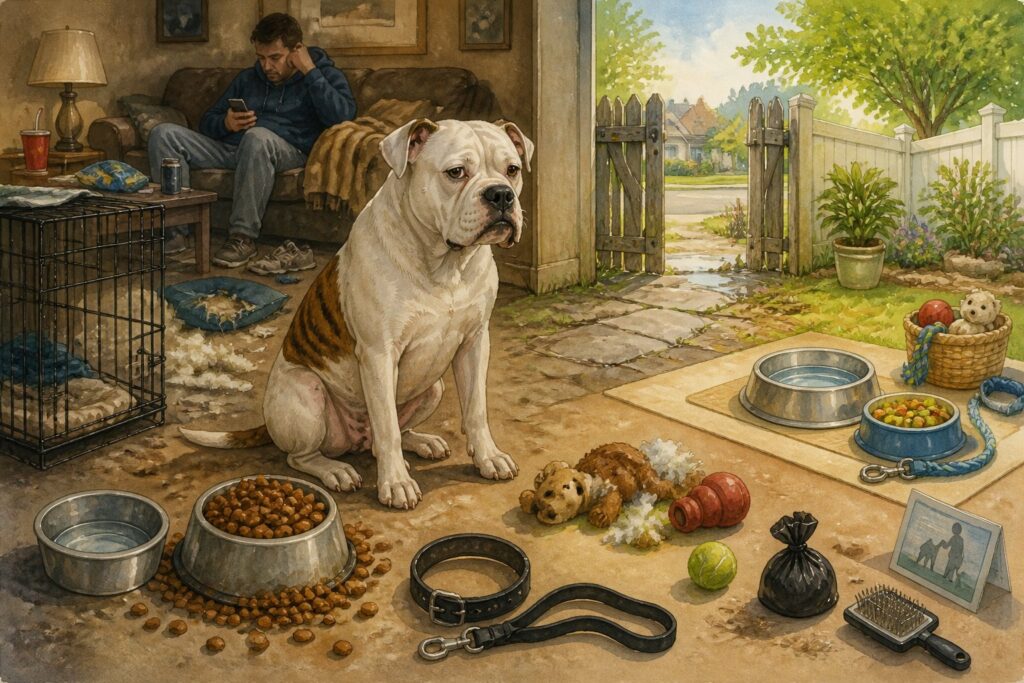
American Bulldogs are strong, athletic, social dogs that need more than food, space, and affection. Small owner mistakes can grow into pulling, reactivity, weight gain, health problems, or unsafe handling.
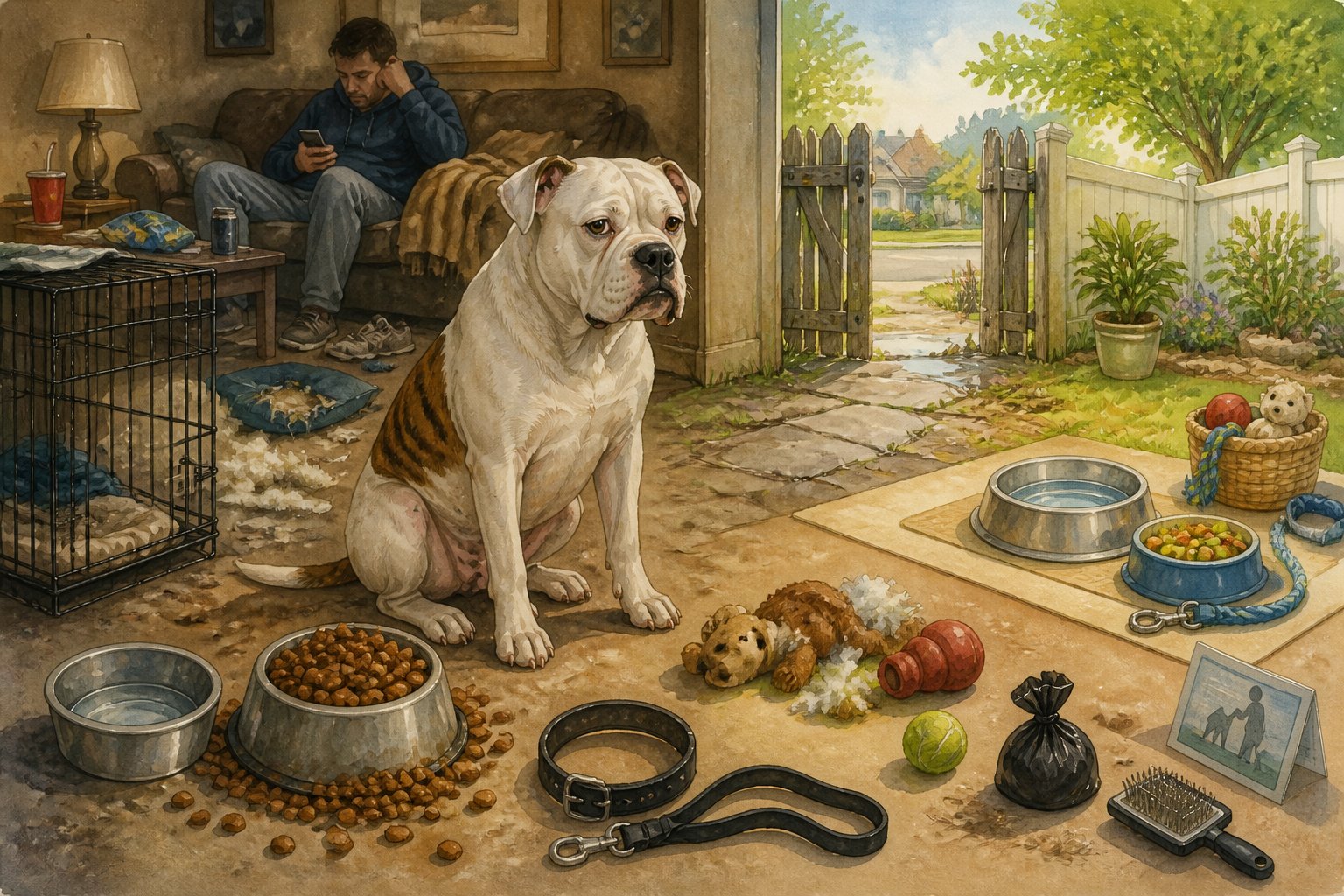
You can prevent most serious American Bulldog owner errors with daily structure, reward-based training, careful health checks, and management that matches your dog’s strength. The goal is not perfection.
You need clear habits that keep your dog safe, engaged, and easier to guide.
1. Underestimating Daily Exercise And Mental-Enrichment Needs
A short bathroom walk rarely meets an American Bulldog’s needs. Without enough activity, you may see digging, chewing, barking, restless pacing, or rough play.
Build a routine around your dog’s age, fitness, and breathing ability. Use brisk walks during cool parts of the day, short games of fetch, tug with rules, scent searches, and brief training sessions.
Mental work can tire your dog without excessive impact. Watch for heavy panting, lagging, weakness, or reluctance to continue.
Offer water and shade, and stop before your dog becomes overheated. Several moderate sessions usually work better than one exhausting workout.
2. Using Inconsistent Rules, Commands, And Boundaries
If jumping earns attention one day and correction the next, your American Bulldog receives mixed information. Different family members may also use different words for the same behavior.
Choose simple cues such as “sit,” “down,” “leave it,” and “come.” Agree on household rules for furniture, doorways, greetings, and food.
Reward the behavior you want immediately, then repeat it in many settings. Consistency does not mean harshness.
It means your dog can predict what earns access, praise, play, or treats. Clear patterns make training less frustrating and help a powerful dog make safer choices.
3. Skipping Early, Controlled Socialization
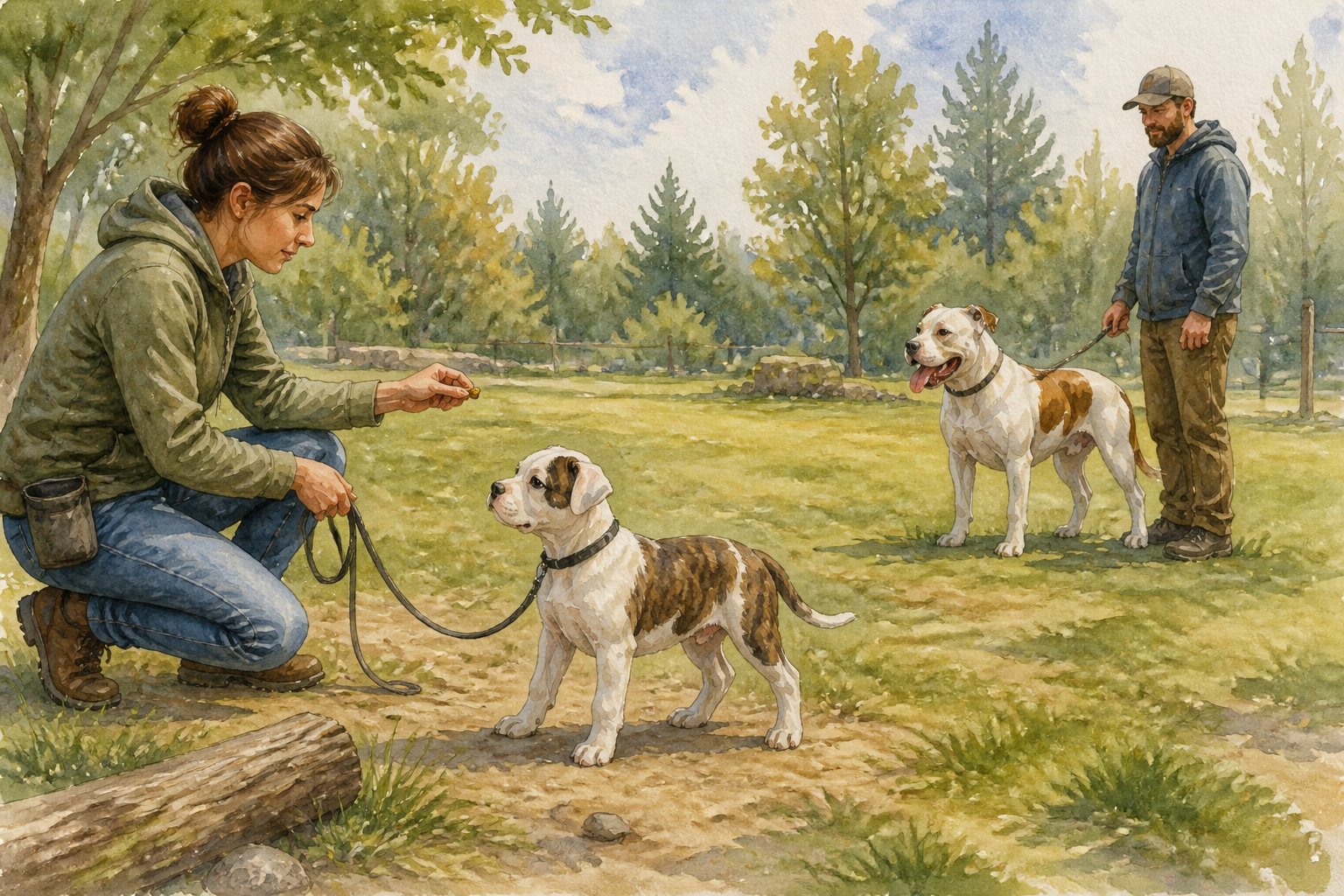
Socialization is more than letting your puppy greet every dog. You need to teach calm behavior around people, dogs, traffic, noises, surfaces, handling, and unfamiliar places.
Start at a safe distance and pair new experiences with small treats. Let your dog watch without forcing contact.
A calm walk past another dog can be more useful than a chaotic play session. Continue socialization as your dog matures.
Choose healthy, compatible playmates and supervised classes. If your dog freezes, hides, stiffens, growls, or lunges, increase distance and seek guidance instead of pushing closer.
4. Waiting For Reactivity, Pulling, Or Chewing To “Pass”
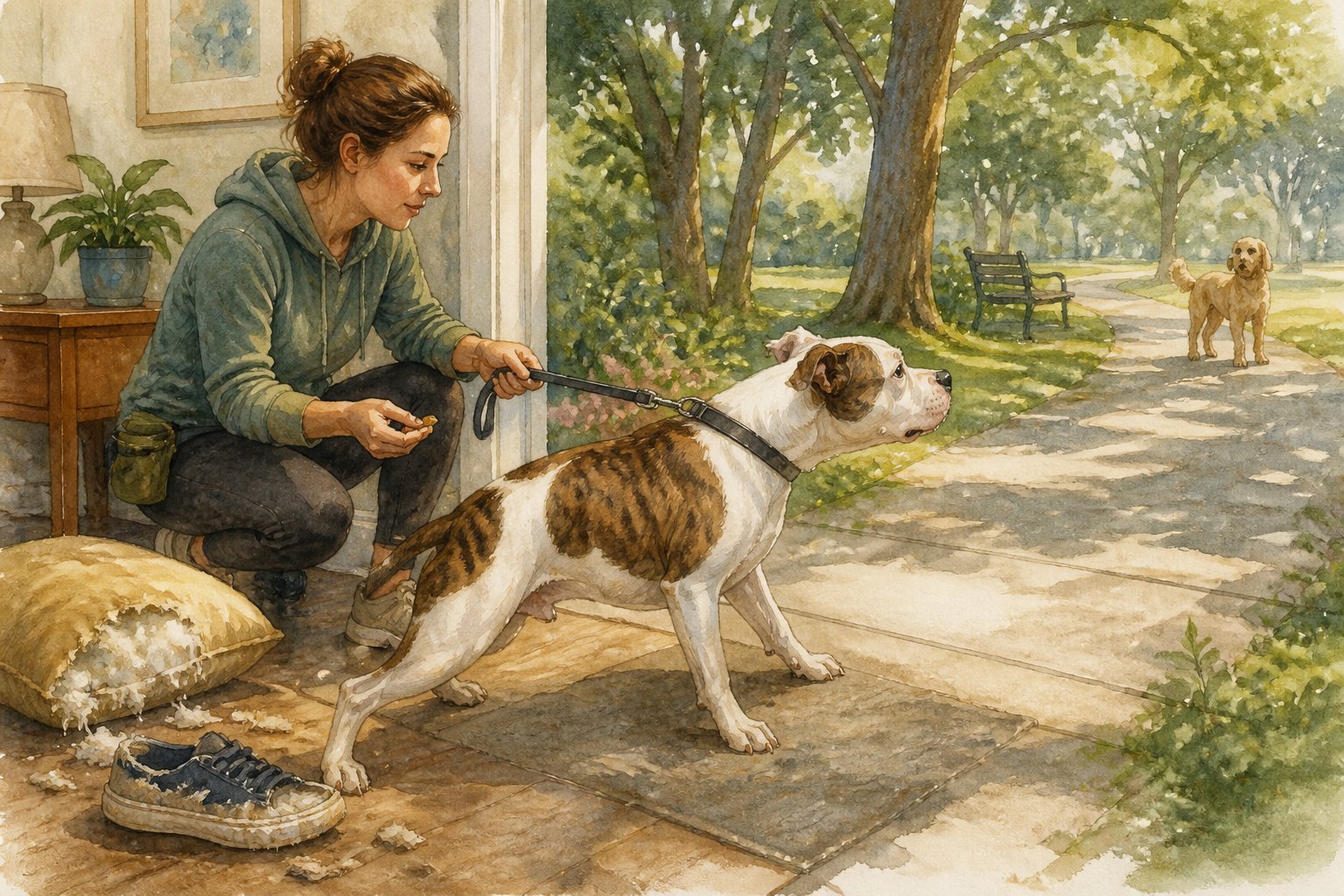
Ignoring early warning signs gives unwanted habits more practice. A dog that pulls toward every passerby may later become difficult to control, while repeated chewing can turn into a safety risk.
Intervene at the first mild sign. Reward your American Bulldog for looking at you, walking beside you, releasing an object, or settling on a mat.
Keep valuable items out of reach and provide legal chew options. Do not wait for a full lunge or bite attempt before getting help.
Track triggers, distance, time of day, and your dog’s body language. Early changes are usually easier to address than established patterns.
5. Overfeeding And Allowing Weight Gain
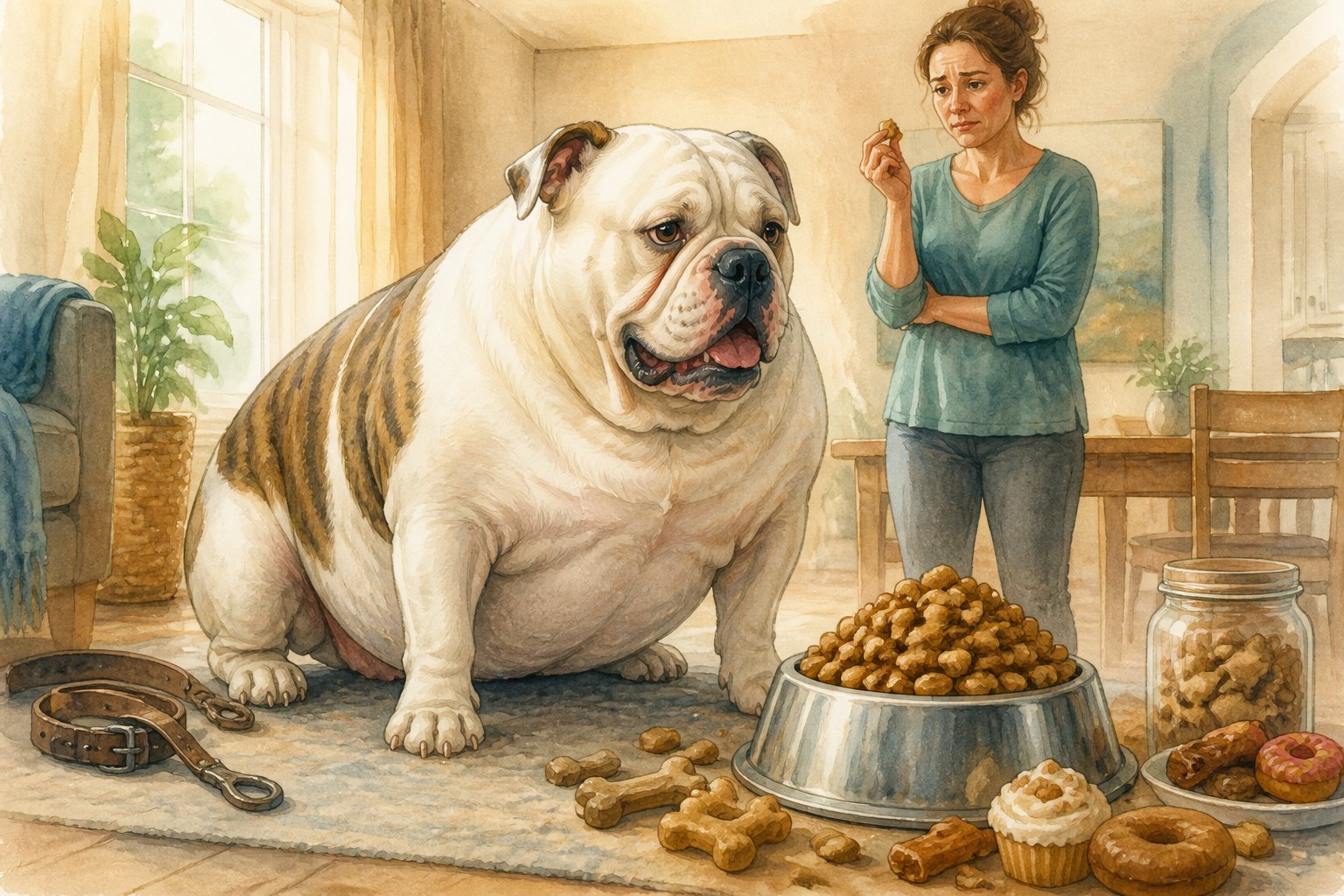
Extra weight stresses your American Bulldog’s joints and can worsen heat and breathing problems. Treats, table scraps, free-feeding, and inaccurate portions often add more calories than you realize.
Measure meals with a standard cup or kitchen scale. Follow your veterinarian’s advice, then adjust portions based on body condition, activity, age, and medical needs.
Keep treats small and count them as part of the daily intake. You should be able to feel the ribs under a thin layer of fat and see a waist from above.
Weigh your dog regularly so gradual gain does not escape notice.
6. Ignoring Early Signs Of Breathing, Joint, Or Skin Problems
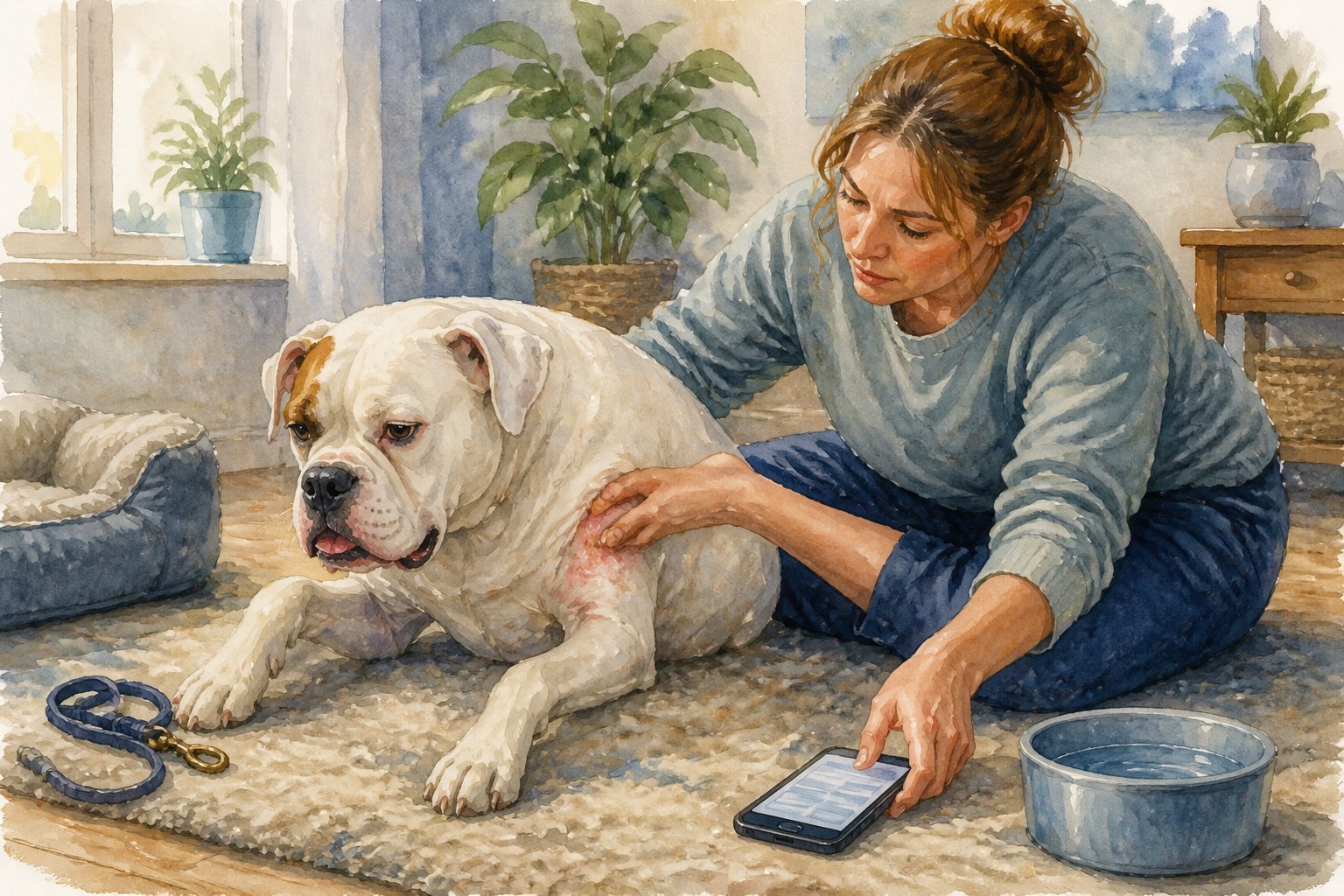
American Bulldogs can develop skin irritation, allergies, joint trouble, and breathing difficulty. Do not dismiss repeated scratching, odor, red folds, limping, stiffness, exercise intolerance, or noisy breathing as normal breed behavior.
Check ears, paws, skin folds, nails, and movement during routine care. Record changes with photos or short videos for your veterinarian.
Early appointments can prevent a minor problem from becoming painful or expensive. Keep your dog cool, maintain a healthy weight, and use gentle grooming products.
Never give human medication unless your veterinarian specifically directs you to do so.
7. Relying On Punishment Instead Of Reward-Based Training
Punishment can increase fear, conflict, and defensive behavior, especially in a strong dog that already feels pressured. Yelling, leash jerks, or physical corrections may stop a behavior briefly without teaching a better choice.
Use rewards to show your American Bulldog what works. Food, toys, praise, access to sniffing, and play can all reinforce calm behavior.
Mark the desired action quickly, then reward it. When a mistake happens, manage the setting and reset.
For example, move away from a trigger, trade a forbidden item for a toy, or guide your dog to a mat. If training repeatedly breaks down, involve a qualified professional.
8. Accidentally Rewarding Jumping, Barking, Whining, Or Pulling
Attention can reward behavior even when you mean to discourage it. Pushing a jumping dog, opening the door while whining, or moving forward during leash pulling may teach your dog to repeat those actions.
Decide what your dog should do instead. Ask for four paws on the floor, quiet waiting, eye contact, or a loose leash.
Reward those choices quickly and consistently. Manage greetings with a leash, gate, or tether when needed.
Tell visitors to pause attention until your dog settles. Progress may seem slow at first, yet repeated calm practice creates a reliable greeting routine.
9. Failing To Teach Leash Manners And Impulse Control
A muscular American Bulldog can make ordinary walks unsafe if you do not teach leash skills early. Pulling toward dogs, wildlife, or people gives your dog control of the route and increases your risk of falling.
Begin in a quiet area. Reward your dog for checking in, walking beside you, stopping, and changing direction.
Use a well-fitted harness or collar that you can handle safely, and avoid retractable leashes near traffic or crowded paths. Practice impulse control at doors, food bowls, gates, and during play.
Ask for a brief pause, release your dog, and gradually increase the distraction. Short daily practice builds more reliable control than occasional long sessions.
10. Choosing An American Bulldog Without Planning For Strength And Management
Before bringing home an American Bulldog, plan for its size, power, energy, and need for steady guidance. A weak fence, unsecured door, flimsy equipment, or careless introduction can create immediate safety problems.
Use sturdy barriers, secure identification, properly fitted walking gear, and crates or gates for management. Teach every household member how to handle greetings, feeding, doors, and emergencies.
Consider your schedule, housing rules, budget, travel plans, and access to veterinary and training support. Choose an individual dog whose energy and temperament fit your life, rather than relying only on appearance.
When To Get Professional Help
Choosing A Qualified Trainer
Look for a trainer who uses reward-based methods, explains each step, and has experience with strong, athletic dogs. Ask how the trainer handles fear, reactivity, aggression, equipment, and setbacks before booking.
Avoid anyone who promises instant results or relies on pain, intimidation, or forced obedience. Your trainer should welcome veterinary input and adjust the plan to your dog’s health and temperament.
When Veterinary Assessment Comes First
A sudden behavior change can signal pain, illness, hormonal changes, or medication effects. Schedule a veterinary assessment for new aggression, unusual withdrawal, sleep changes, limping, touch sensitivity, or a sharp drop in activity.
Health support and behavior training often work together. Treating discomfort can make learning and handling much easier.
Urgent Behavior And Health Red Flags
Seek urgent help after a bite, repeated attempts to attack, or escape behavior near traffic.
Act quickly if you observe collapse, severe breathing trouble, blue or pale gums, heat illness, or suspected poisoning.
Separate people and animals safely without putting your hands near a fighting dog.
Contact emergency veterinary care when breathing remains difficult or your dog cannot stand.
Seek help if symptoms worsen quickly.